In 1942, the world held its breath as Japan’s war machine seemed unstoppable. Pearl Harbor had been shattered, Singapore had fallen, and the Japanese flag flew over half the Pacific. Australia, isolated and vulnerable, faced the terrifying prospect of invasion. The fall of Singapore on February 15, 1942, delivered a devastating blow: 15,000 Australian soldiers became prisoners of war, and the nation’s confidence crumbled. Just four days later, Japanese bombs rained down on Darwin, killing at least 235 people and destroying countless ships and aircraft. It was the first of nearly 100 raids across northern Australia, and the message was clear—Australia was on the front line.
Prime Minister John Curtin faced an impossible strategic dilemma. Britain, reeling from its own defeats, could not help. Australia’s elite divisions were far away in North Africa and the Middle East, leaving only partially trained militia units to defend the homeland. These citizen soldiers, legally restricted to defending Australian territory, were all that stood between Japan and the mainland. The Japanese objective was equally clear: seize Port Moresby in Papua New Guinea, just 300 miles from Queensland, to neutralize Australia and cut the sea lanes to America.
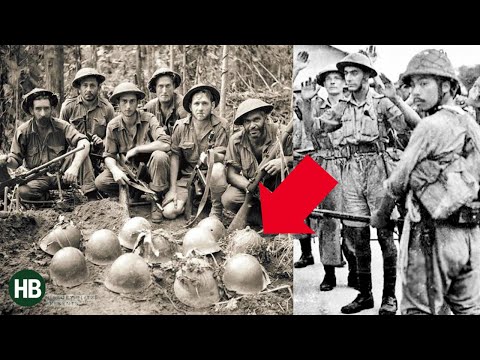
In May 1942, the Battle of the Coral Sea thwarted Japan’s naval invasion, but the enemy simply changed tactics. On July 21, 1942, Japanese forces landed at Gona and Buna on Papua’s northern coast—veterans of Malaya and Singapore, hardened and relentless. Between them and Port Moresby lay 60 miles of mountain jungle and a single, treacherous track: the Kokoda Track. It crossed the Owen Stanley Range, a vertical wilderness of ridges, flooding rivers, and knee-deep mud. It wasn’t a road; it was barely a path.
Defending this track was the 39th Battalion, a militia unit of around 500 men, average age 18, with only six months of training. They had never seen combat. The Japanese force approaching numbered over 5,000. On July 23, first contact at Awala. The 39th engaged, then withdrew. They were outnumbered ten to one. Over the following weeks, it became a fighting retreat. The Japanese advanced; the Australians fell back to prepared positions, fought, and fell back again. Kokoda village fell on July 29, was recaptured on August 8, and lost again on August 14 when Japanese reinforcements arrived. The pattern repeated: small unit actions, ambushes, fighting at ranges measured in meters.
The terrain was as deadly as the combat. Malaria struck entire companies; dysentery was universal. Tropical ulcers developed on minor cuts and ate to the bone. Wounded men were carried on stretchers for days through mountains, and some died during evacuation. Supply lines stretched to breaking. By early September, Japanese forces reached Ioribaiwa Ridge, just 30 miles from Port Moresby—the closest they would get. But their supply lines were overextended, and disease was decimating their ranks as severely as it was hitting the Australians. They were starving.
Reinforcements arrived for the Australians: battalions from the 7th Division, veterans rushed back from the Middle East. Hardened, experienced, and finally here. On September 26, the Australians counterattacked at Ioribaiwa. The Japanese withdrew. The pursuit began. Both armies were broken by disease and exhaustion, but both kept fighting. Templeton’s Crossing, Eora Creek—battles where companies were reduced to platoons, platoons to squads. From October 28 to November 2, at Oivi and Gorari, the 25th Brigade encircled Japanese positions, destroying the force. Nearly 600 Japanese were killed. The Australians took heavy casualties but broke through.
On November 2, 1942, Australian forces recaptured Kokoda village. The track was secured, but the campaign wasn’t finished. While Kokoda dominated attention, another battle occurred simultaneously. On August 25, 1942, Japanese forces landed at Milne Bay on Papua’s eastern tip, intending to seize the airfield. Around 2,000 troops landed, including elite special naval landing forces. They expected light opposition. What they encountered was the 18th Brigade—Australian infantry veterans from North Africa, experienced, battle-tested, and recently redeployed to the Pacific.
The battle lasted 12 days in monsoon conditions, with constant rain and near-zero visibility. The terrain was coastal jungle and swamp. The Japanese pushed hard, but the Australian line held. On September 5, 1942, the Japanese withdrew, evacuating by sea. Defeated. It was the first time in the Pacific War that a Japanese amphibious assault had been thrown back. The strategic and psychological impact was significant: Japan was not invincible on land.
November 1942. Australian forces advanced toward the northern coast where Japanese forces initially landed. Three fortified positions—Buna, Gona, and Sanananda—stood in their way. The Japanese had constructed elaborate defenses: bunkers built from coconut logs, interlocking fields of fire, positions hidden in dense jungle. Australian forces, now operating alongside American units under MacArthur’s command, began the assault. Progress was measured in meters. Casualties mounted rapidly. Gona fell on December 9. The 21st Brigade conducted the assault in close-quarters fighting, clearing buildings and bunkers individually. Buna fell on January 2, 1943, as combined Australian and American forces coordinated armor and infantry. Sanananda was the strongest position, with spider holes, bunkers, and interconnected trenches. Every position required direct assault. It didn’t fall until January 22, 1943.
The Papua campaign concluded with Japanese casualties exceeding 12,000, mostly from disease and starvation. Australian losses were over 2,000 killed and wounded, with thousands more evacuated due to disease. Some units lost 75% of their effective strength to malaria and dysentery. Japan’s advance toward Australia had ended. The immediate threat of invasion or isolation was eliminated. The strategic situation shifted. Australia was no longer defending. MacArthur’s Southwest Pacific Command began advancing up the New Guinea coast, with Australian forces conducting most of the ground operations.
In January 1943, Japanese forces attacked the inland town of Wau and its airfield. The 2/5th Independent Company defended until the 2/6th Battalion was flown in as reinforcement. The Japanese assault failed, with over 1,200 Japanese casualties. From June to September 1943, the Salamaua-Lae campaign saw coordinated operations involving the 3rd and 7th Divisions. Multiple simultaneous assaults. On September 4, the 9th Division conducted an amphibious landing east of Lae. The next day, American paratroopers were dropped inland. Lae fell on September 16. The 7th Division advanced north toward Finschhafen, which fell on October 2. Japanese forces counterattacked through October and November, with heavy fighting at Sattelberg and surrounding positions. The counterattacks failed. By January 1944, the Huon Peninsula was secured.
The pattern was established: amphibious landings, air support, coordinated infantry advances through jungle terrain. Japanese defensive positions were bypassed or destroyed. The advance continued. American forces advanced across the central Pacific—Tarawa, the Marshall Islands, Saipan. Two offensives converged toward Japan from different directions. Australian forces secured MacArthur’s southern flank in New Britain, relieving American units and conducting sustained operations against isolated Japanese garrisons. The fighting was continuous but didn’t produce decisive battles. It was attrition warfare in jungle conditions.
On Bougainville, late 1944, the Australian 3rd Division took over from American forces and pushed Japanese defenders inland, cutting them off from resupply. The enemy was starving and diseased, but still fought. The campaign dragged on until the war’s end, generating no headlines, no dramatic turning points—only the grim, necessary work of tying down Japanese forces and protecting the flanks of the main advance.
By 1945, American forces were approaching Japan’s home islands. Iwo Jima fell in March, Okinawa in June. The Philippines were liberated, and Japan was being bombed directly. The outcome was no longer in doubt. Yet Australian forces were ordered into three final operations in Borneo—Tarakan in May, North Borneo in June, and Balikpapan in July. The stated objectives were to secure oil installations, deny Japan resources, and liberate prisoner-of-war camps.
The strategic necessity was debated at the time and remains controversial. On May 1, the 26th Brigade assaulted Tarakan Island, encountering stronger resistance than anticipated. Japanese forces fought from prepared positions, and the island wasn’t secured until mid-June. Australian casualties were significant relative to the strategic gain. On June 10, the 9th Division landed at Labuan Island and Brunei Bay in North Borneo. Opposition was initially light but intensified as operations moved inland, with Japanese forces conducting defensive actions from jungle positions.
July 1, Balikpapan. The 7th Division conducted Australia’s largest amphibious operation of the war. A heavy preliminary bombardment preceded the landing, and the town fell relatively quickly. Japanese forces withdrew inland and continued resistance. Fighting continued until August 15, when Japan surrendered. Even after the announcement, some Japanese units didn’t receive word or refused to accept it. Combat actions occurred sporadically for several days afterward.
In the end, the cost was high. Around 8,000 Australians were killed fighting Japan in the Pacific. Tens of thousands were wounded. Disease casualties exceeded combat casualties in most campaigns. Malaria, dysentery, scrub typhus, and tropical ulcers incapacitated more men than enemy action. Units regularly operated at 50% strength due to disease. Men were evacuated weighing under 100 pounds, skeletal from repeated malaria infections and dysentery. Some never fully recovered.
Post-war, many veterans struggled with recurring illness and what’s now recognized as post-traumatic stress—but then went largely untreated. The Japanese lost approximately 200,000 dead in the New Guinea and surrounding campaigns. Most died from disease and starvation as supply lines were cut. Isolated garrisons were left to die slowly. No resupply, no evacuation. They fought until they collapsed.
The Australian campaigns in the Pacific achieved their objectives. After 1942, Port Moresby was never again seriously threatened with capture. The sea lanes between Australia and America remained open. Japanese forces were pushed progressively north, away from Australian territory. The campaigns demonstrated several realities: jungle warfare requires specialized tactics, disease is as dangerous as combat, supply lines determine outcomes as much as battlefield success, air superiority is essential, and amphibious operations require precise coordination.
Australian experience in New Guinea helped shape Allied jungle doctrine, especially in the Southwest Pacific, and influenced later operations across the theater—in the Philippines and eventually in the approach to Japan itself. The alliance with American forces formalized during this period became a permanent strategic relationship. The ANZUS Treaty, signed in 1951, codified defense commitments that continue today.
The Papua New Guinea campaigns, particularly Kokoda, became central to Australian military identity. The militia soldiers who held against overwhelming odds became emblematic of national resilience. The battles were commemorated. The Kokoda Track became a pilgrimage site. Other campaigns received less attention. Buna, Gona, and Sanananda faded from public memory. The Huon Peninsula operations were largely forgotten. Bougainville became a footnote, and Borneo remained controversial, seen by many historians as unnecessary fighting after Japan’s defeat was assured.
Veterans returned home to mixed reception. Those who fought in 1942 were celebrated as defenders. Those who fought in 1945 faced questions about whether their campaigns mattered. The psychological impact was lasting. Many carried the physical and mental scars for decades. The cemeteries across Papua New Guinea and the surrounding islands contain thousands of Australian graves—many young men, teenagers who enlisted straight from farms or factories. The war memorial in Port Moresby lists names of those with no known grave, lost in jungle, buried in unmarked locations, or consumed entirely by the environment.
From 1942 to 1945, three years of continuous operations across the Pacific. They stopped Japan’s advance at Kokoda when invasion seemed imminent. They won the first Allied land victory at Milne Bay. They secured the flanks that allowed MacArthur’s advance to continue. They fought the final campaigns in Borneo when victory was already certain.
The cost was 8,000 dead, thousands more wounded or broken by disease, entire battalions decimated by malaria, men who came home carrying the jungle with them in recurring fevers and nightmares. But in 1942, when Singapore fell and Darwin burned, the question wasn’t about strategy. It was survival.
The soldiers who fought on the Kokoda Track, most of them militia boys with minimal training, answered that question. They held. When they should have broken, they held. And that changed everything.
From that moment, Australia wasn’t just defending. It was fighting back. From Papua to Borneo, from the darkest days of 1942 to the final operations of 1945, Australian forces were there—fighting, dying, winning. These are the battles that secured Australia’s survival. Their names are on memorials from Port Moresby to Canberra. Some in marked graves, some with no grave at all, just names on bronze panels.
They fought so Australia would survive, and Australia did. That’s the legacy. That’s what the Pacific Campaign meant.
But as the last veterans fade and the jungle reclaims the old battlefields, a question lingers: will we remember not just the victory, but the cost—and the men who paid it?






