The night was split by the scream of sirens and the roar of engines. In the cramped cockpit of a Lancaster bomber, a young pilot gripped the controls, his eyes fixed on the glowing target ahead—a German city about to be engulfed in a firestorm. Miles below, in the cold, black waters of the Atlantic, another young man sat in the steel hull of a U-boat, listening to the distant thrum of a convoy’s propellers. Both were part of a desperate gamble to end World War II, and both would pay a terrible price.
As the war raged, the Allies and the Axis powers sought a decisive blow—a weapon or tactic that would shatter the enemy’s will and bring a swift victory. For Hitler’s Germany, the answer lay beneath the waves: a fleet of submarines to strangle Britain’s lifelines. For the Western Allies, it was the bomber: a way to rain destruction on Germany’s industrial heartland and crush civilian morale. Two strategies, two worlds apart, yet both aimed at the same goal—to save their own troops and force a surrender.
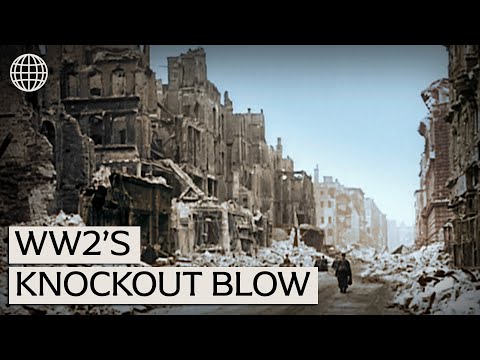
Ironically, it was the Germans who first took to the skies in strategic bombing. In August 1940, Luftwaffe bombers accidentally hit London, and the RAF retaliated by bombing Berlin. By autumn, Germany was pounding British cities almost daily, convinced the British would crack. But the Blitz never broke their spirit, and by summer 1941, it was fading as the Luftwaffe turned east to Russia. For the British, bombing remained the only way to strike directly at Hitler’s Germany. By early 1941, the RAF began receiving a new generation of four-engine bombers—the Short Stirling, the first of a new breed that could carry up to 18,000 pounds of bombs, four times the capacity of earlier aircraft.
But precision was a fantasy. A secret report in August 1941 revealed that over the Ruhr, only 10% of British bombers got within five miles of their target. Meanwhile, German air defenses were taking a terrible toll—up to 10% of bombers on any raid were shot down, a loss rate that could not be sustained. So the RAF changed tactics. They abandoned precision and embraced area bombing—a euphemism for carpet bombing—deliberately targeting entire city areas regardless of civilian casualties. The goal, in the chilling words of the Air Ministry, was to “destroy the morale of the civilian population and in particular of industrial workers.” The leading advocate was Air Marshal Sir Arthur “Bomber” Harris, who famously declared, “They sowed the wind, and now they are going to reap the whirlwind.”
In spring 1942, Harris launched a massive public relations stunt: a thousand-bomber raid on Cologne. The city’s defenses were overwhelmed; 600 acres were destroyed, and only 39 British aircraft were lost. It was a turning point. Harris now had the full support of Churchill and a new weapon—the Avro Lancaster, the finest heavy night bomber of the war. By summer, the United States joined the air war with the B-17 Flying Fortress, heavily armed and equipped with the Norden bombsight, which promised precision. The Americans were convinced they could succeed where the British had failed.
But the Germans were adapting. In March 1943, British bombers hit Essen, and the RAF lost only 14 aircraft. Yet subsequent raids over the Ruhr saw losses climb to 1 in 10. Harris was forced to pause. Then came a new invention: Window—clouds of aluminum foil strips that jammed German radar. Harris seized the opportunity. In July 1943, he launched Operation Gomorrah against Hamburg. Bombers dropped Window to blind the defenses, while others dropped incendiaries. A firestorm engulfed the city. 40,000 people died, and half a million were left homeless. It was a shock to the German people, but still, morale did not crack.
Harris followed with attacks on Berlin, but the Germans learned to counter Window, and losses mounted again. By spring 1944, British losses were back at nearly one in ten, and there was no sign of German morale breaking. Carpet bombing was not working. Neither was the American alternative. Daylight precision raids by B-17s were reaching deeper into Germany, but losses climbed to one in fifteen. Then came a disaster: an attack on Regensburg and Schweinfurt. Without fighter escort, 380 Flying Fortresses were mauled, with a loss rate over 16%. The US was forced to suspend its bombing campaign. The air war had reached a stalemate.
But in early summer 1944, as the Allies prepared for D-Day, the air forces were tasked with disrupting German communications and oil supplies. This time, they had a new weapon: the P-51 Mustang, fitted with a British Rolls-Royce Merlin engine, giving it the range to escort bombers all the way to Germany. With surgical precision, Allied bombers hit bridges, roads, and oil supplies. German fighters were outmaneuvered, and much of the Luftwaffe was grounded for lack of fuel. Targeted bombing was finally paying off.
Yet Bomber Harris remained obsessed with carpet bombing. In late 1944, Britain returned to area bombing, devastating city after city. Then, in February 1945, Harris attacked Dresden, a city with virtually no military significance, swollen with refugees. The city was flattened, and some 50,000 people died. It was a raid too far. Questions about the morality and efficacy of carpet bombing finally surfaced. It had failed to break German morale, and 60% of RAF crews had died before completing 30 missions. Carpet bombing had not delivered the knockout blow.
Meanwhile, Germany had put its faith in a different technology: the U-boat. For Hitler, Britain’s island status was a problem—his tanks could not blitz across the Channel. The only way to defeat her was to strangle her sea supply routes. In the first 18 months of the war, German raiders sank more than 130 British merchant vessels. The pocket battleship Graf Spee became notorious, sinking nine ships before being cornered. Then came the battleships: Bismarck and Tirpitz. In May 1941, Bismarck squared off against HMS Hood. A shell from Bismarck plunged through Hood’s deck armor, penetrating a magazine. The ship exploded, and only three of her 1,200 crew survived. It was round one to Bismarck. But two days later, Swordfish torpedo bombers jammed her rudder, and British battleships pounded her to a wreck. Bismarck was sunk, with only 110 survivors. Her sister ship, Tirpitz, spent the war hiding in Norwegian fjords, finally sunk by Lancaster bombers with Tallboy bombs in late 1944.
But the real threat came from below the waves. Germany’s U-boat fleet was designed to cut Britain’s supply lines. In the early months, U-boats harassed convoys, often attacking on the surface. By the end of 1939, over 100 Allied merchant ships had been sunk. Then, after the fall of France, Germany gained Atlantic bases, and Admiral Dönitz organized his submarines into wolf packs. By October 1940, up to 40% of Allied merchant shipping per convoy was being sunk. It was the “Happy Time” for U-boat crews, and Britain faced disaster.
But Britain fought back. A crash program built escort vessels—corvettes—and equipped patrol aircraft with depth charges. Then came technological breakthroughs: centimetric radar, small enough to fit on ships and aircraft, could detect U-boats on the surface. Huff-Duff radio detectors could pinpoint their transmissions. In May 1941, the British captured a U-boat with an Enigma machine and code books, giving them vital intelligence. Losses fell, and top U-boat commanders were killed. Yet Germany kept building more U-boats, and by winter 1941, the outlook was still grim.
Then, in December 1941, Hitler declared war on the United States. Dönitz sent U-boats to the American seaboard, where they found easy pickings. Over three months, more than 400 US merchant ships were sunk. The US Navy resisted convoys, but eventually adopted them. The Germans then concentrated on the “Black Gap” in the mid-Atlantic, beyond the reach of land-based aircraft. In October 1942, 56 Allied ships were sunk in the Black Gap; by March 1943, losses reached 120 ships in a single month. It seemed the U-boats might win the war.
But the Allies upped their game. Admiral Max Horton set up permanent support groups of destroyers and frigates. New weapons like the Hedgehog mortar and the Leigh Light searchlight were introduced. Long-range Liberator bombers closed the Black Gap. In May 1943, a quarter of Germany’s operational U-boats were sunk. The tide had turned. The Allies dominated the Atlantic, and great waves of troops and equipment could now flood across the ocean. Victory in the Battle of the Atlantic would change the course of the war.
But the question remained: which strategy was more effective? The bombing campaign had failed to break morale, and the U-boat campaign had failed to starve Britain. Both had cost terrible lives. Yet in the end, it was the Allies’ ability to adapt—to combine technology, tactics, and sheer numbers—that won the day. The bomber and the U-boat were both gambles, and both had failed to deliver the knockout blow. But the war was far from over, and new weapons and tactics would soon emerge.
As the war entered its final year, the lessons of the bomber and the U-boat were clear. Neither weapon alone could win the war, but together with overwhelming industrial power and technological innovation, they helped tip the balance. The Allies had learned to adapt, to combine their strengths, and to never underestimate the enemy.
In the skies over Germany, the P-51 Mustang and the Lancaster bomber became symbols of Allied might. The Mustang, with its British engine and American airframe, was a testament to cooperation. The Lancaster, with its massive bomb load, was a testament to British resolve. Together, they pounded Germany’s infrastructure and broke the back of the Luftwaffe.
In the Atlantic, the U-boats were finally defeated. The wolf packs were hunted down, and the convoys sailed safely. The Battle of the Atlantic was won, and with it, the lifeline to Britain was secured. The troops and supplies that would liberate Europe were now flowing across the ocean.
But the cost had been staggering. Tens of thousands of airmen and sailors had died. Cities had been reduced to rubble, and civilians had suffered terribly. The war had shown the terrible power of modern weapons, and the even greater power of human resilience.
As the war in Europe drew to a close, the world looked back on the bomber and the U-boat as symbols of a new kind of warfare—total war, where civilians were targets and technology was the key to victory. The lessons learned would shape the Cold War and beyond.
In the end, the knockout blow was not delivered by any single weapon, but by the combined might of the Allies. The bomber and the U-boat had both failed to win the war on their own, but they had paved the way for victory. And as the guns fell silent, the world wondered: what new weapons would the next war bring?






