August 1975, Madrid. Dozens of German veterans raise their arms in Nazi salutes over Otto Skorzeny’s coffin. Hitler’s favorite commando, the man who rescued Mussolini from an Italian mountaintop, is dead. But hidden in that crowd of saluting Nazis is an Austrian Jew named Yosef Ran—a man who lost most of his family in the Holocaust. He’s not there for revenge. He’s paying his respects to the Nazi war criminal he personally recruited as a Mossad assassin.
And that’s not even the strangest part of what happened to Skorzeny’s family. If you think Nazi families kept their wealth and carried on the legacy, Skorzeny’s story will shatter that assumption. His daughter erased herself. His widow died bankrupt. His archives were sold off piece by piece. Stick around to see how it all fell apart.
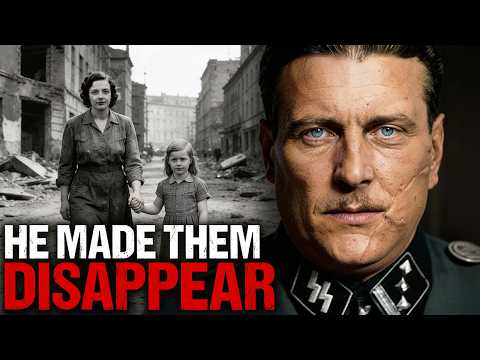
Otto Skorzeny wasn’t born dangerous. In May 1934, he was just an ambitious young Austrian engineer looking for his next opportunity. He found it in Margarita Schreiber—or more precisely, in her father’s successful scaffolding company. The marriage wasn’t about love. It was acquisition. Within three years, Skorzeny had secured controlling interest in the business. And once he had what he wanted, he discarded what he didn’t need. He divorced Margarita and walked away with the company that would fund his rise through Nazi circles.
This pattern—using people, extracting value, moving on—would define every family relationship Otto Skorzeny ever had. His wives weren’t partners. They were resources. His daughter wasn’t an heir. She was a complication.
But here’s the first twist in this story. Margarita, the discarded first wife, didn’t collapse. She remarried twice. She lived quietly in Vienna for decades. And in April 2011, researchers confirmed she was still alive at 97 years old—outliving her predator by more than 35 years. The woman Skorzeny used and threw away simply refused to disappear.
Skorzeny didn’t stay single long. By 1939, he had found a more valuable connection: Emmy Linhardt, niece of Hjalmar Schacht, Hitler’s finance minister and the architect of Nazi Germany’s economic recovery. This wasn’t just a marriage. It was a strategic alliance linking Skorzeny directly to the regime’s financial networks.
In February 1940, Emmy gave him his only child, a daughter named Waltraut. For most men, this would have been a defining moment—a legacy, something to protect. For Skorzeny, it was barely a footnote.
When Allied forces closed in on Nazi leadership in 1945, Skorzeny went underground. He was captured, tried at Nuremberg for war crimes related to Operation Greif—his famous mission where German soldiers wore American uniforms behind enemy lines. He was acquitted, largely because a British officer testified that Allied forces had used similar tactics. But acquittal didn’t mean freedom. The Americans held him anyway. And in 1948, he escaped from an internment camp with help from former SS officers.
He needed to vanish completely—and a wife and young daughter were liabilities. By 1950, Skorzeny divorced Emmy. She took their daughter and disappeared. Not into hiding, but into something more absolute.
Emmy Linhardt vanishes from the historical record entirely after the divorce. No death date, no remarriage record, no obituary—nothing. The niece of a Reich minister simply evaporated. We don’t know if she died young. We don’t know if she remarried under a new name. We don’t know if she fled to another country. The woman who bore Otto Skorzeny’s only child became a ghost.
Waltraut Skorzeny is the true mystery at the center of this story. Born in 1940, she grew up as the daughter of the man newspapers called “the most dangerous man in Europe.” Hitler’s favorite commando, the scarred giant who’d pulled off the impossible rescue of Mussolini. That’s not a legacy you can easily escape.
Children of other Nazi leaders have filled libraries with their struggles. Albert Speer’s son became an architect haunted by his father’s crimes. Gudrun Himmler defended her father until her death in 2018. Niklas Frank wrote books condemning his father, Hans Frank, as a monster. These children couldn’t avoid their inheritance. They had to wrestle with it publicly, painfully, for their entire lives.
Waltraut did something different—something almost impossible in the modern age. She disappeared completely. At some point, she married a man named Ree and took his name. And that’s the last verified fact we have about her. No interviews, no photographs after childhood, no memoirs, no documentary appearances, no descendants in public records.
Did she have children? Are there Skorzeny grandchildren alive today carrying his genes but not his name? No one knows. Researchers have tried to trace her. Journalists have searched. The trail goes cold. In an era of social media, digitized records, and obsessive genealogy websites, Waltraut Skorzeny achieved what no amount of Nazi wealth could buy: total erasure.
She didn’t defend her father. She didn’t denounce him. She simply ceased to exist as his daughter. Whether this represents escape, shame, or something more complicated, we’ll probably never know. The one person who could tell us chose silence—and kept choosing it for more than 60 years.
While Skorzeny was hiding from Allied authorities in 1948, moving between safe houses maintained by former SS networks, he met a woman who would become far more than a wife. Ilse was intelligent, sophisticated, and extraordinarily well-connected. She was renting a Bavarian farmhouse specifically to shelter him—already complicit in his escape.
Like Emmy before her, Ilse was a niece of Hjalmar Schacht. Skorzeny had a type, and that type was strategically valuable. They married in Madrid in 1954, after Skorzeny had established himself in Franco’s Spain—one of the few countries that wouldn’t extradite former Nazis.
But this marriage was different from his previous ones. Ilse wasn’t just a resource to be exploited. She was a partner in building something new. While Skorzeny cultivated relationships with dictators, arms dealers, and intelligence agencies across the Middle East and Latin America, Ilse became the public face of their business empire. She traveled internationally promoting tourism investments in the Bahamas. She cultivated high-society connections across Europe. She managed their properties in Spain, Ireland, and Mallorca.
Mossad files, declassified decades later, described their relationship as open. This wasn’t a traditional marriage by any standard—and that openness created an unexpected opportunity.
In the early 1960s, Israeli intelligence was hunting Nazi scientists working for Egypt’s missile program. They needed someone inside the network—someone with connections to former SS officers scattered across the Middle East. They needed Otto Skorzeny.
The approach came through Ilse. A Mossad agent named Rafi Eitan cultivated her friendship—a friendship that intelligence files suggest became intimate. Through Ilse, Mossad reached Otto. And somehow, impossibly, Hitler’s favorite commando agreed to work for the Jewish state.
The details of what Skorzeny did for Mossad remain partially classified, but Israeli sources confirm he provided intelligence on Nazi scientists in Egypt. He may have participated in intimidation campaigns. Some accounts suggest he was involved in at least one assassination. Did Ilse know? Did she help facilitate her husband’s transformation from Nazi war criminal to Israeli asset? The archives that could answer these questions are scattered now—but we’ll get to that.
On July 5th, 1975, Otto Skorzeny died of lung cancer in Madrid. He was 67 years old. His postwar life had been extraordinary by any measure: acquitted at Nuremberg, escaped Allied custody, built businesses across three continents, advised governments from Argentina to Egypt, secretly worked for the intelligence service of the state his former comrades tried to destroy.
But look at what he left behind. No sons. One daughter who refused to acknowledge his existence. A widow with no children of her own. And an archive—sixty years of photographs, letters, passports, medals, and documents sitting in their Madrid villa with no heir to receive it.
Ilse Skorzeny was now the sole guardian of the most dangerous man in Europe’s legacy. Every photograph of him with Mussolini. Every letter from his SS comrades. His collection of thirteen different passports from his years as a fugitive. The wristwatch Mussolini gave him after the rescue. Decades of correspondence that could illuminate his postwar intelligence work. All of it belonged to Ilse now.
And what happened next would have made Otto Skorzeny—the man who built his fortune by exploiting others—appreciate the bitter irony.
Here’s where everything you’d expect about Nazi legacies falls apart. The standard assumption is that these families protected their wealth, that loyal descendants preserved the archives, that the money and property passed down through generations, carefully guarded. The Skorzenys had no generations to pass anything to.
By the 1990s, Ilse was elderly and increasingly isolated. Her husband was twenty years dead. She had no children. Her stepdaughter had erased herself from existence. The network of former Nazis who’d attended those funeral salutes in 1975 had largely died off. She was alone in Madrid with a villa full of historically significant documents—and no one to leave them to.
A Spanish businessman recognized the opportunity. He befriended her. Gradually, over months or years, he became indispensable—handling her affairs, managing her finances, keeping her company. In 1998, Ilse granted him full power of attorney.
In 1999, she signed a new will. Leaving him everything. The villa. The archives. The Mussolini wristwatch. The thirteen passports. The letters spanning six decades of correspondence with former SS officers, intelligence contacts, and business partners across three continents.
By the time Ilse Skorzeny died around 2002, she was bankrupt. She spent her final years in a nursing home in Tres Cantos outside Madrid, supported by the charity of the same man who had systematically defrauded her.
The most dangerous man in Europe’s legacy wasn’t preserved by devoted descendants. It wasn’t protected by Nazi networks or far-right organizations. It was stolen by a con artist who saw an old woman with valuable possessions and no one to protect her.
So what happened to Skorzeny’s personal archives after the con artist inherited them? They were sold piece by piece, auction by auction. His photographs appear at estate sales—Skorzeny with Mussolini, Skorzeny with Hitler, Skorzeny in his SS uniform. His passports surface at militaria auctions, each one documenting another identity he used during his fugitive years. Military documents end up in private collections. Personal letters get scattered across dealers in three countries.
The intimate correspondence that could have clarified his postwar motivations—why he worked for Mossad, what he actually did for them, how he justified it to himself—dispersed across the antiquities market.
No museum holds the complete collection. No institution stepped in to preserve it. No family member cared enough to keep it together. A unified historical record that could have answered questions about one of the twentieth century’s strangest figures was broken apart for profit. Researchers now have to piece together fragments from auction catalogs and private collectors, never certain what they’re missing.
The man who stole everything from a dying widow made his money and moved on. The history got scattered to the winds.
Back to that funeral in Madrid—the Nazi salutes over the coffin, the Hitler songs, Skorzeny’s fourteen medals displayed on velvet, swastikas catching the light. And hidden among the true believers, Yosef Ran, born Kurt Weissman in Austria, survivor of a family largely destroyed in the Holocaust, now paying respects to the Nazi he’d recruited as an asset.
Skorzeny’s ashes were interred in the family plot at Döblinger Cemetery. Group 32, row 7, number 32. But what family? His first wife was still alive in Vienna and wanted nothing to do with him. His second wife had vanished decades earlier. His daughter had erased herself so thoroughly that no one even knew if she attended. His widow would be systematically defrauded over the next two decades and die in poverty.
The grave is a monument to a legacy that no one wanted to carry. The name Skorzeny—once synonymous with daring, danger, and Nazi loyalty—ends there. No descendants visit. No family maintains the plot. It’s just a marker in a Viennese cemetery, visited occasionally by historians and military enthusiasts, ignored by anyone who shares his blood.
Otto Skorzeny built his career on ruthlessness. He used his first wife for her father’s company. He abandoned his second wife and daughter when they became inconvenient. He survived by making himself useful to whoever held power—the Nazis, then Franco, then various dictators, and finally the Israelis. But empires need heirs. Legacies need someone willing to carry them. Skorzeny’s family refused.
In the end, the most dangerous man in Europe left behind nothing but silence, scattered documents, and a grave that no family wanted to visit. So tell us—if you discovered you were descended from a man like Otto Skorzeny, would you break the silence, or would you vanish too? Let us know in the comments below.
Report this article
Select a reason for reporting:






