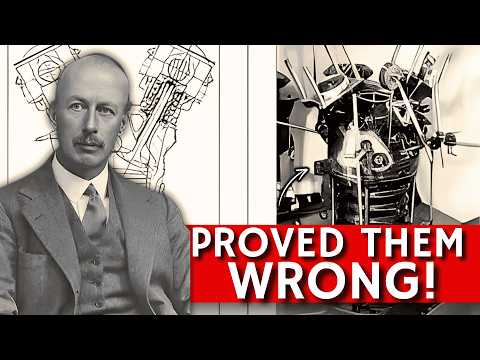
In the winter of 1935, a six-year-old girl named Hildigard Domag lay dying in a modest house in Wuppertal, Germany. A simple prick from an unsterilized needle had turned into a lethal streptococcal infection, and in that era, before antibiotics, such a wound was a death sentence. Her father, Gerhard Domagk, a pathologist at Bayer Laboratories, had been quietly testing a red dye compound called Prontosil on infected mice. Desperate, he gave it to his daughter. She survived, her skin permanently stained red, but alive—and her recovery marked one of the most important medical breakthroughs of the 20th century.
That drug, sulfonamide, would go on to save countless lives. But a decade later, on the battlefields of World War II, it would expose a profound cultural divide between two armies. American infantry sergeants carried sulfa powder in their pockets, trusted to treat wounds on their own initiative. German officers, capturing these men, were baffled: why would a rifleman be entrusted with medicine that their own army reserved for trained medics? The answer lies not in the drug itself, but in two opposing views of human capability and trust.
Gerhard Domagk was born in 1895 in Brandenburg, Germany. He served as a medic in World War I, where he watched young soldiers die from infected wounds that no doctor could cure. That experience drove him to find a “magic bullet”—a chemical that could kill bacteria without harming the patient. At Bayer, he worked with chemists Fritz Mietzsch and Josef Klarer to synthesize azo dyes, testing them on mice. In 1932, they found Prontosil, which protected mice from lethal streptococcal infections. After years of rigorous testing, Domagk published his results in 1935, and the medical world changed forever.
But the real breakthrough came from France. At the Pasteur Institute, a team led by Ernest Fourneau discovered that Prontosil was a prodrug: inside the body, it broke down into sulfanilamide, the actual bacteria-killing agent. The red dye was just a carrier. Crucially, sulfanilamide was not patentable—Bayer had patented it in 1909 but let it expire. So the drug belonged to the world. By 1937, American companies were producing 350,000 pounds of sulfa drugs annually; by 1942, that number had exploded to over 14 million pounds. The United States had taken a German discovery, cracked open by French science, and turned it into an industrial powerhouse.
The irony deepened in 1939 when Domagk was awarded the Nobel Prize in Medicine. But Hitler, furious over a previous Nobel Peace Prize given to a German pacifist, forbade him from accepting. Domagk was briefly arrested by the Gestapo and forced to decline. He finally received his medal in 1947, after the war. Meanwhile, the German military, despite inventing the drug, failed to distribute it widely to its frontline soldiers. Instead, they relied on a centralized medical system where only trained medics could administer sulfa drugs. The American approach was the opposite: they put sulfa powder and tablets into the hands of every soldier.
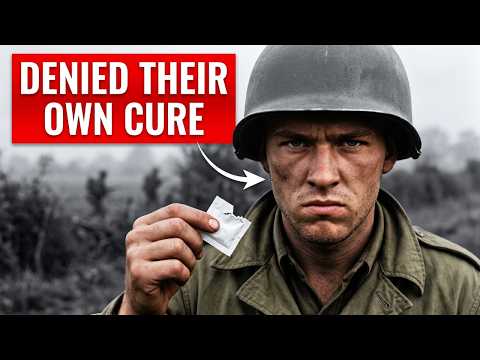
In 1940, the U.S. Army introduced the Carlisle bandage, a first-aid packet containing gauze and a shaker of sulfanilamide powder. By 1942, they added sulfadiazine tablets. Every soldier was trained to sprinkle the powder into wounds and swallow the tablets. The manual was explicit: “You are the first line of defense.” This decentralized system reflected American culture—a belief that ordinary citizens could handle problems without waiting for experts. German officers, products of a hierarchical society, found this incomprehensible. To them, medicine was the domain of doctors, not riflemen.
The results were stark. In North Africa, after the disastrous Battle of Kasserine Pass, American forces reorganized and refined their medical logistics. By the Italian campaign, the aidman system had become a lifeline, and sulfa drugs were credited with saving countless lives. On D-Day, medics like Robert Wright and Kenneth Moore set up aid stations in French churches, treating both American and German wounded. Their actions embodied the American ethos: act first, ask permission later.
But the story takes a twist. By late 1944, clinical evidence showed that sulfa powder could actually harm wounds by acting as a foreign body and causing kidney damage from excessive doses. The practice was phased out in favor of penicillin. Yet the principle endured: every soldier responsible for his own first aid and that of his buddy. That principle lives on today in the modern IFAK and combat lifesaver training.
So why did German officers fail to grasp the American way? Because it wasn’t about the drug—it was about trust. The American system assumed that the man on the ground could be trusted with life-saving tools. The German system, for all its professionalism, could not bring itself to do the same. And that difference, born in a German laboratory and perfected on American battlefields, would shape the future of military medicine.
But to leave the story there would be to miss the strangest chapter of all—the one that unfolded not in the foxholes of Europe, but in the factories and patent offices of the United States, where the drug’s journey took a turn that neither Domagk nor the German High Command could ever have anticipated.
When the French team at the Pasteur Institute published their findings on sulfanilamide in late 1935, they did so with a kind of scientific idealism that would prove almost quaint in the years that followed. They believed they were giving a gift to the world. What they were actually doing was firing the starting gun on a pharmaceutical race that would reshape the global economy of medicine.
The American response was swift and characteristically pragmatic. Within months of the French publication, the Massengill Company of Tennessee—a small manufacturer of veterinary medicines—began producing a liquid sulfanilamide preparation. They called it Elixir Sulfanilamide. It was sweet, pink, and tasted like raspberry. It was also, unknown to its makers, a poison.
To dissolve the sulfanilamide into a liquid form, Massengill’s chemists had used diethylene glycol—a compound closely related to antifreeze. They performed no animal testing on the finished product. They were not legally required to. In 1937, American law did not mandate safety testing for new drugs. The elixir was shipped to pharmacies across the country in September of that year.
By October, the reports began arriving. Patients were dying—not from their infections, but from the medicine. Kidneys failed. Livers shut down. The symptoms were agonizing and unmistakable. A total of 107 people died, many of them children. The public outcry was ferocious. The Massengill company’s owner, Samuel Evans Massengill, offered a defense that would become infamous: “We have been supplying a legitimate professional demand and not once could have foreseen the unlooked-for results. I do not feel that there is any responsibility on us.”
The tragedy of Elixir Sulfanilamide did something that no amount of scientific argument had been able to accomplish. It forced the United States government to act. In 1938, Congress passed the Federal Food, Drug, and Cosmetic Act, which for the first time required manufacturers to prove the safety of their products before selling them. The age of unregulated medicine was over.
And here is where the story circles back in a way that seems almost too neat to be true. The same bureaucratic machinery that the Elixir Sulfanilamide disaster had created—the machinery of safety testing, of clinical trials, of government oversight—would, just a few years later, become the instrument by which American industry would mass-produce the very drug that had killed those 107 people, this time safely, this time by the millions of pounds, and this time in a form that could be carried in the pocket of every soldier who stormed the beaches of Normandy.
The Germans, meanwhile, had watched the American sulfa boom with a mixture of envy and disdain. Their own pharmaceutical industry, dominated by IG Farben, was technically superb but structurally rigid. The company had the capacity to produce sulfanilamide in enormous quantities, but the Nazi state’s approach to medicine was shaped by ideology as much as by science. The regime’s fixation on “Aryan” science and its suspicion of foreign discoveries meant that German production of sulfa drugs, while significant, was never organized with the single-minded efficiency that the American war economy achieved.
More importantly, the German military’s medical doctrine had no place for the kind of decentralized distribution that the Americans embraced. To the German mind, the idea of giving a rifleman a packet of sulfa powder and telling him to treat himself was not just medically unsound—it was culturally incomprehensible. Medicine was a profession. It required training, licensure, and hierarchy. A soldier’s job was to fight. A doctor’s job was to heal. The boundary between them was not to be crossed.
That boundary, however, was about to be tested in the most brutal way imaginable.
On the morning of December 16, 1944, the German Ardennes offensive slammed into the American lines in Belgium with a force that stunned the world. Within days, the 101st Airborne Division was encircled at Bastogne, its only surgical hospital captured, its supplies running out. And yet the medics inside that frozen perimeter kept working—by candlelight, with plasma frozen solid, with morphine syrettes warmed under their armpits before the needles would penetrate frozen skin.
They treated 943 American casualties and 125 German prisoners with almost nothing. When cargo planes dropped supplies, soldiers crawled under artillery fire to retrieve the bundles. When five surgeons were flown in by glider to replace the captured medical company, it was improvisation at an institutional scale. The system was not the building. It was not the surgeon. It was the man with the packet.
That was the difference the German officers could never understand. Their system asked how to get the wounded man to the medicine. The American system asked how to get the medicine to the wounded man. The German answer was evacuation. The American answer was the Carlisle packet.
Gerhard Domagk died in 1964, never having seen the inside of an American foxhole. But the chain from his laboratory bench to a frozen hillside in Belgium is direct and unbroken. Robert Wright and Kenneth Moore survived the war and returned to Angoville-au-Plain, where a plaque outside the church still honors them. Desmond Doss came home with the Medal of Honor and a shattered arm, and lived quietly until his death in 2006. He never carried a weapon.
Private Henry Sullivan, the medic killed when German tanks overran the hospital tents at Bastogne, never came home. He is a name in the records, a footnote. But he volunteered to save lives, and he died in a tent with a red cross on it.
The question that runs through this entire story is not really about sulfur powder. It is about what a country believes its ordinary citizens are capable of. Germany built one of the finest military medical services in the world and placed it in the hands of trained specialists. America built a simpler one and placed it in the hands of everyone. The German approach was logical. The American approach was messy. And in the end, the messy approach saved more lives—not because the drug was better, but because the man who needed it already had it in his pocket, and he did not need to ask anyone for permission to use it.
That assumption, carried across an ocean in a wax-coated packet no larger than a deck of cards, turned out to be the most powerful piece of medical equipment either army ever fielded.
So here is the question that remains, decades later, as armies still debate how much to trust the individual soldier: if your life depended on a wounded man in the next foxhole, would you rather he had the tools to act—or the discipline to wait?
Report this article
Select a reason for reporting: