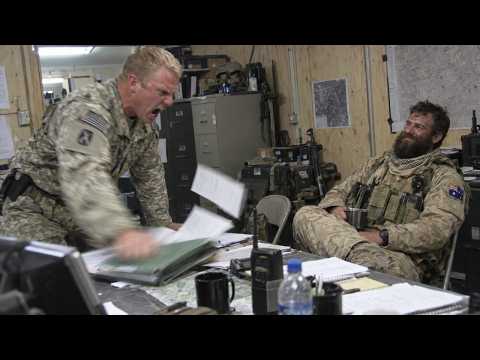
Four Australian SAS operators walked into the same Kandahar village three times in sixty-one days without shaving once—and walked out with the village’s name and map coordinates that a full battalion of clean-shaven, by-the-book soldiers had failed to obtain in eight months of patrols.
This is not a rhetorical flourish. The conventional battalion’s patrol summaries for the same area—Shah Wali Kot—record over ninety foot and vehicle movements through the same corridors. Thousands of liters of bottled water distributed. Two medical visits. And a cumulative total of actionable intelligence that a staff officer at Kandahar Airfield later described in writing as “practically zero.”
The Australians spent less than eleven hours inside the village. They drank tea twice.
Eleven kilometers from that village, inside the wire of Kandahar Airfield, a US Army officer named Pruett was responsible for something entirely different. Discipline, standards, and compliance for every coalition element transiting the base. Short gray-blond hair, a sunburn line that appeared precisely where his helmet strap sat, reading glasses he removed whenever he wanted to be believed, and a habit of squaring the papers on his desk before speaking.
And here was the question that sat beneath the entire conflict. The one no one at that airfield could answer at the time. If it was real, and valid, and enforced daily from Kandahar Airfield, then who exactly authorized the Australians to stop shaving? And why was there not a single piece of paper anywhere that said so?
The same thing was neither myth nor ambiguity. The appearance and grooming directives for coalition forces enforced from Kandahar Airfield during that period were explicit. Personnel were to maintain a shaved face, a neat mustache aligned with the upper lip, short hair off the collar, and correct uniform outside living areas.
The version circulated to units transiting the base included a line that became infamous among the Australians. That shaving facilities and shower units were available at multiple points across the airfield. And that access to those facilities meant no excuse existed. Razors were stocked at the base store. There was no ambiguity, and there was no exception listed for special operations personnel.
That directive lived under a very specific command climate. ISAF at the time was under General Stanley McChrystal. His senior enlisted advisor, Sergeant Major Michael T. Hall, was pressing hard and publicly on standards, discipline, and appearance across the theater. On the argument he repeated in his guidance: that a force that tolerates slack in its appearance tolerates slack in other things too.
Embedded journalists in Kandahar that year noted the tangible result. Haircuts at a base taking mortar fire, and a sergeant major inspecting collars in a war zone.
Pruett believed that argument completely. And he kept a record to prove it. An actual ledger, its lines drawn by hand. Columns ruled with a straightedge across a green accounting book, because the digital reporting system produced numbers he didn’t trust. Unit, date, nature of the infraction, and a final, widest column titled “Corrective Action Taken.”
The ledger filled every week with entries from the special operations side of the wire. Australians with beards reaching their collarbones, hair covering their ears, non-standard trousers, local boots, no rank or name tapes. The entries accumulated in his handwriting week after week with the same blue pen.
And beside every line concerning the Australians, the corrective action column stayed empty.
That empty column is where this story ends years later, in a place Pruett never would have expected. But not yet.
Walk through the airfield during that period and you’d find the standards enforcement mechanism tangible and visible. The shower units they spoke of were white shipping containers on concrete pads, where water reached near-ambient temperature by midday, and the floor turned sandy underfoot an hour after cleaning.
The air carried that smell everyone who served there remembers and no one can describe politely, coming from the open sewage pond at the northern edge. Twenty thousand people, a boardwalk with a coffee chain, aircraft taking off and landing every few minutes, and inside, a system measuring water quality by how smooth a man’s chin was.
Pruett’s position had a logic that was easy to mock and hard to actually refute. Standards aren’t decoration. A soldier permitted one waiver will assume the next. Coalition elements sharing one airfield must be legible to one another. You must be able to look at a man and know his identity, who commands him, and what rules govern him in one second.
A beard is not a simple matter on a base where the man in local dress walking toward a checkpoint is the most dangerous shape anyone can see. His argument was never about vanity. It was about the difference between an army and a collection of armed individuals.
What he did not possess, sitting at that desk, was any conception of what had happened at close range inside a mud-walled compound in Shah Wali Kot.
The special operations task group patrol that changed his ledger belonged to the Special Air Service Regiment operating in the area and Uruzgan borders in 2010 and 2011 in partnership with Afghan territorial forces. Four men. A patrol commander, a signaller, a medic, and a scout who had already completed two tours in the same province, carrying in the dust and sweat of it a beard from which a clear streak grew down below the right corner of his mouth.
They entered the village on foot. That detail is not incidental. It was the entire method. Vehicles stopped far back at the edge of cultivated ground, and the four dismounted onto the track while the dust their wheels raised still hung at chest level. Thick enough that the legs of the man in front disappeared below the knee.
Stand on that track at midday and modern engineering takes over. The compound walls are mud and straw. Roughly two meters high. Smooth to the touch in horizontal ridges where someone’s palms shaped them wet. The passage between them narrow enough that two men cannot pass a wheelbarrow. Grape-drying huts cast clipped shade through their ventilation slots, and the lines move across your boot as you walk.
Sound behaves strangely between those walls. A goat’s cough forty meters away arrives clear and close, while a voice from a roof above you seems to come from behind. They walked with weapons pointed down, hands empty and visible. No sunglasses, no covered faces. The patrol commander walked first, one step ahead of the interpreter, and stopped at the compound threshold rather than entering, waiting for the invitation that took three or four full minutes to arrive.
Every one of those movements was a decision taken against the direction coming from eleven kilometers away.
The Australians in that area wore local scarves over their body armor, carried no rank insignia, and let their beards grow to a length that would have triggered immediate restriction in the green accounting ledger. Chris Masters, who spent long periods with Australian special forces in Afghanistan and documented their culture in his book No Front Line, recorded the internal justification plainly. It was never about resembling Afghans, which is impossible, but about not appearing as a passing machine.
His doubts at that stage had not yet developed a single crack. Inside the courtyard, the floor was compacted earth swept in overlapping arcs by a broom of tree branches, and those arcs were still visible where no one had walked. There was a well with a rope and bucket, its metal rim polished by forty years of rope friction. Pomegranate peels dried on a low mud shelf. A child’s plastic sandal sat at the threshold, and a rusted Chinese motorcycle leaned against the inner wall, its stand sunk into the dirt.
Flies circled the goat pen in the corner, producing a faint, continuous hum that never stopped throughout the visit.
The first meeting produced nothing. The elder in question was absent. A younger relative sat with them, accepted the greeting, brought a metal tray with glass cups and hard sugar, poured green tea so hot it could not be held, and answered every question with a phrase every patrol in that province had learned was a locked door. He didn’t know, he was just a farmer, the village had no problems.
On the way out, in the passage, the interpreter said the thing that turned out to matter more than anything else in the patrol commander’s notebook. He said it casually, half-turning, as an observation rather than a report—that these people don’t use names. They don’t exchange names with strangers, and they don’t remember the names given to them. They use faces. And he added that they had already described one of the Australians in the courtyard to him. Not by rank or role or weapon, but as the oldest one with the gray in his beard on the right side.
That passing remark was the core of the operational issue no memo at Kandahar Airfield would ever accept. And by the third visit, it would lead to the only meeting eight months of compliant patrols had failed to achieve.
Because the village had been watching the conventional battalion move through that ground for over a year, and had reached the only conclusion available to it. The district had been written off the coalition task matrix as a closed area. A conventional company operating from a patrol base on the northern edge of Shah Wali Kot district had run presence patrols through the same two hundred meters of corridor on more than thirty occasions across two rotations.
The patrols were textbook by every measurable standard. Body armor worn to regulation, radios checked, interpreters briefed, medical supplies carried, route timings logged, and shura attempts documented and sent up the chain of command. According to the district assessment later summarized in Australian reporting on Kandahar operations, those patrols produced no practical product whatsoever. No names, no coordinates, no money, nothing convertible into a mission.
What they did produce was a deeply hostile shura record, to the point that elders stopped attending entirely by the second rotation, and meetings came to be held with whoever could be gathered from the passage in a hurry.
There was one engagement in particular that stayed in the records as a model of everything correct and pointless. A military platoon entered the village mid-morning, fully compliant with instructions, faces shaved as at the patrol base, and positioned itself in the shade of the gray huts. Bottled water was distributed from a folding table. Two elders attended, accepted the water and drank it in front of the soldiers as custom required, listened to the prepared talking points about the district development plan, agreed to everything, offered nothing, and left before the tea was poured a second time.
The interpreter’s note on that engagement was a single sentence, and it was the most valuable sentence in the district file. The elders asked which of the soldiers had been here the previous time, and no one could answer, because none of them had been there before.
This is the mechanism no one wrote down anywhere at Kandahar Airfield. Here is what the village experienced. Every three or four weeks, a different group of faces came through the passage. The same uniform, the same weapons, the same armor, the same promises, but different men. Sometimes the intervals were shorter and the faces changed too, because platoons rotated through the patrol base on a schedule that was operationally logical on the whiteboard but meaningless inside a mud-walled compound.
To a family in Shah Wali Kot in 2010, this meant one thing and nothing else. These people are passing through. They will leave. But the men who come at night with a hose and a list of names will not leave. Giving a name to a passerby is not courage. It is arithmetic. And it is arithmetic performed by a man with children sleeping four meters away.
Stand in that passage at eleven in the morning and the nature of the place will make the truth evident. It is barely wide enough for two men and a handcart. The mud walls reflect heat to chest level. The dust of the last vehicle hangs motionless in the air at a density that makes you taste it before you see it. And the narrow slots in the grape-drying huts draw lines of shadow on the ground like prison bars. Every conversation in that passage is clearly audible from the rooftops. Everyone who speaks to a foreigner is seen speaking to a foreigner.
And that is why the Australian response to the entire dispute, when it was finally said aloud in the courtyard, took eleven words and had nothing to do with defiance. The patrol commander told the interpreter: the face the elders can recognize on repeated visits is the only identification document we carry.
There were no cards, no stamps, no letters from the governor, no biometric devices that meant anything inside the walls of that compound. The means of accreditation was the man’s own head. A striped gray beard, a patu shawl covering the shoulders, and the same two eyes appearing above it on the second and third visits. That was the document. The completely shaved face that morning was, in that place specifically, like a stamp that read temporary. It identified the man as someone who would be elsewhere by the time consequences appeared.
Eleven kilometers away, across the wire and the runway and the gravel roads of Kandahar Airfield, Pruett was preparing the counter-argument, and preparing it correctly. His instrument was a compliance memorandum, drafted in the dry official style that administrative business demanded, distributed to every element transiting the base, with a copy sent to the Australian liaison officer.
It did not order anyone to shave, because he had no authority to issue orders to any Australian. What it did was quieter and much sharper. It restated the coalition grooming and standards directives in force, noted that base facilities, transient billets, shower areas, the dining facility, and the gym were provided on the basis of users complying with those standards, and stated that joint tasking recommendations for non-compliant elements would be reviewed case by case at the discretion of the standards unit.
Simply put: shave your beard or your access and joint tasking prospects become negotiable. He squared the papers on his desk before signing them, removed his reading glasses, and told a colleague he expected the matter to be resolved within a week.
He was wrong about the week, and wrong about the mechanism by which he would lose.
Because the Australians did not reply to the memo. There is no counter-memo in any archive. What exists instead, according to the task group papers Chris Masters later described in his account of the special operations task group, is a single line entered by a patrol commander in the pre-mission documents for the second village visit under the heading “Operational Necessity,” stating that “personal appearance must remain consistent with previous engagements, this being a task dependent on recognition.”
That line was initialed by the squadron commander, filed, and never elevated to any higher level. No exemption was ever requested, because requesting it would have forced a decision, and the decision could have come back the other way.
The entire sixty-one days of dispute, for the Australian side, came down to that repeated phrase.
The second visit began on foot in daylight with the same four men and four additional days of beard growth. Two hundred meters into the passage, it nearly ended in the first fifteen minutes. A boy of about nine, barefoot on the dirt and carrying a plastic sandal in each hand, burst from the shade of a gray hut and ran ahead of the patrol, disappearing around the bend where the first compound wall jutted out.
Then, from the far end of the passage, a motorcycle started but did not move. It idled there. The sound of a rusted two-stroke Chinese engine bouncing between two mud walls does not sound like one motorcycle. It sounds like something coming from three directions at once. The patrol stopped in the open, under the striped shadows, muzzles down, hands visible, and stood perfectly still for eleven minutes while that engine ran at the end of the passage and a man in a patu sat on it, looking directly at them.
They did neither of the only two tactical options available. They stood, hands empty, and let the village look at them for as long as it wanted. The motorcycle cut off. The boy came back around the bend carrying a metal teapot and a glass someone had sent—the son-in-law of the man they had come to see.
The visit lasted a little over two hours and produced almost nothing of intelligence value. Some talk about water rights, a complaint about a drainage channel, tea poured twice, almost nothing. The only thing it produced was stored in the interpreter’s head, and it was worth more than the district’s entire file. Someone in that compound asked, without prompting, whether the man with the gray beard had come back. Not the sergeant. Not the Australians. Not the foreigners. That man.
And this is the point where the story stops being about grooming standards and starts being about a piece of equipment identifiable from a rooftop forty meters away.
On the walk back through the strange market at the district’s edge—shuttered storefronts under tarpaulin, plastic buckets hanging, a butcher’s frame in the sun, dust suspended at chest height after every vehicle—one of the four entered a stall with the interpreter and came out with a paper roll about the size of a cigarette pack. Henna. A coarse dark dye of the kind sold everywhere in Kandahar province for a few afghanis.
The soldier’s beard had been showing distinctly red. Red is not unknown in northern Afghanistan, but in a Kandahar village it draws the eye, and it had already drawn a child’s pointing finger on the first visit. His teammates had ribbed him for two weeks about vanity and about the kind of man who grooms before a mission. He mixed the roll in a food bowl with cold water and used it anyway. No one wrote that down, and no one thought about it again for the next six weeks.
They were wrong to forget it.
The third visit began at eleven-eleven in the morning, the worst possible hour to stand in an open courtyard in Shah Wali Kot, and exactly the hour the patrol chose. Midday heat in that district in late summer reaches forty-four degrees in the shade, and there is no shade. The patrol commander carried a small thermometer mounted inside his chest rig, not for the record, but to regulate water intake. He logged forty-four and a half at the compound threshold, and forty-six against the south-facing wall where the mud had been baking since dawn.
The rule inside the patrol was three-quarters of a liter an hour, sips not gulps, and no man drinks in front of the family unless the family drinks first. That last part is in no manual. It came from an observation he had spent two tours learning: the man who pulls out his own water in another man’s courtyard tells everyone he does not trust the well. The well was four steps from where they sat, with a rope and bucket, its metal rim polished bright by forty years of hands. That shine is the most honest thing in an Afghan compound. It tells you how long people have lived there, how many, and whether they plan to stay.
Four men entered on foot. Weapons muzzles down at the thigh, hands visible, no sunglasses. The interpreter had been blunt about sunglasses on the first visit. Because the man whose eyes you cannot see is a man hiding something. And the district had already decided that foreigners hide things.
Then came the part no compliant patrol had ever managed, and it looked like nothing at all. They sat at a lower level than the man who owned the compound. This is physical discipline, and it costs the body. The elder sat on a folded blanket over a raised mud step. The operators sat on the swept earth with their backs to the open side of the courtyard. The exposed side, the side a trained soldier never leaves to his back. With their knees up and their weapons across their laps, their heads below the level of his.
They held that position on the packed dirt at forty-four degrees for two hours and nineteen minutes. Not one of them shifted to kneel on a knee. The man who rises to kneel in a courtyard is a man preparing to move, and everyone here reads that instantly.
Tea came on a tin tray. Three glass cups, green tea, and a cracked bowl holding hard sugar broken with the back of a spoon. It was scalding, over-boiled, with a faint smell of cardamom and of the dung-fire smoke it had been boiled over. The correct amount is two cups. One is an insult, and three makes you a guest who intends to stay. The patrol drank two cups each and took the sugar with their teeth instead of the cup, exactly as the men in front of them did.
Twenty-six minutes into the meeting, the second near-catastrophe of the sixty-one days walked onto a roofline and stayed there. On the flat roof of the adjacent compound, to the northeast, about thirty-one meters away and two meters above the courtyard wall. Close enough that the patrol’s rear scout could see the wooden furniture of the rifle against the white sky, and the way the man braced his forearm on it. He was not moving. He was not signaling. He simply stood where he could see all of them, and he stood there for fifty-one minutes.
Here is what the patrol did about it, and it is the whole story in one decision. Nothing. They did not raise a weapon. They did not send an explicit description over the radio. They did not change where they sat. The scout logged the position, the height, and the time by pressing his thumb twice against his knee. A pre-agreed signal. And the commander acknowledged it with one slow blink. And the conversation about irrigation and canals and diesel prices continued in a courtyard where four Australians sat on the ground in the open, with an armed man in a high position behind them and no air cover above them.
Any reaction would have ended the meeting. Everyone in that courtyard would have understood, in the instant a muzzle rose, that these men were soldiers executing a mission and not visitors making an ordinary visit. And the district would have returned to eight months of deadlock.
It turned out later that the watcher belonged to the family of one of the relatives, and had been placed there as soon as the foreigners entered the passage. Standard precaution in a valley traversed by more than one armed group, and villages hedge against everyone.
Fifty-one minutes is enough for a man’s shirt to soak through with sweat twice. It is also enough time for news to reach two residential compounds up the passage.
And that is when the man they had come for entered through the gap in the wall. He had attended the first meeting six weeks earlier. Listened for eleven minutes, said nothing of value, and left before the tea was finished. Which in that valley is a message written in capital letters. He had not attended the second visit at all. On this day he entered without warning, stood at the gate with his shawl thrown over one shoulder, and looked from face to face down the row of seated Australians.
He stopped at the third man. The interpreter had said it on the first day, offhandedly, while the patrol was still knocking the passage dust from their trousers. The elders do not use names, they use faces, and they had already given him a description of one of the elements. The one with gray in his beard. The gray line ran from the corner of his mouth down across the jaw on the left side, about three centimeters wide, and its owner was a signaler in his mid-thirties who had never asked for it and could not have removed it if he had wanted to.
That patch was the most valuable piece of equipment in the entire courtyard. It was also, under the directives in force eleven kilometers away at the airfield, a violation.
The old man crossed the courtyard and sat beside that man specifically, and spoke to him. Not to the patrol commander, not to the interpreter’s employer, not to the officer with rank on his sleeve, because there was no visible rank, and that was deliberate. He spoke to the face he had known from a visit six weeks before, because it was the same face, and because in a district where every foreign patrol arrived with a different set of clean-shaven strangers, the same face meant exactly one thing. This man came back and will come back again. Therefore what I say to him has consequences and has a witness.
The meeting that eight months of disciplined patrols had never produced happened in the next forty minutes on the hard ground over a third cup of tea no one had planned to drink. What was said in those forty minutes was entered in the patrol report under three categories, and only one of them was ever disclosed publicly. A name linked to a family linked to a compound beside which coalition forces had twice encamped.
Chris Masters, who spent more time inside Australian special operations units than any other correspondent of that period, wrote about exactly this dynamic in his work on the regiment. That the currency in those valleys was continuity of individuals, and that such continuity was nearly impossible under rotation schedules and grooming standards designed for garrison armies.
The patrol commander tapped his signaller’s boot twice at the two-hour mark, a signal for speed, meaning we have what we came for, and meaning let us leave this courtyard while the opportunity still exists. Which is the moment the radio ruined everything.
The message came through the earpiece in three parts over six minutes and changed the course of the day entirely. First, helicopter air support was finished. Both aircraft had been redirected to a higher-priority incident elsewhere in the province, and with them went the quick reaction force that had been on standby twenty-two minutes’ flight time away.
Second, the vehicle pickup point on the northern track was closed. A buried device had been reported on the road, unconfirmed, which in that district meant it was treated as real until engineers proved otherwise, and no engineer was coming that evening.
Third, and this is the part that turned a good day into the worst tactical dilemma of the entire sixty-one days, the only remaining withdrawal route ran through the district market on foot in daylight, through a corridor lined with tarpaulin-covered storefronts, where two men cannot pass a wheelbarrow together, and at a proximity that allows conversations to be heard from every person in that market, for roughly nine hundred meters.
It got worse before they even rose from their places. The Afghan partner commander they had worked with across all three visits—the man whose presence made four foreigners in a courtyard a legitimate regional activity rather than an incursion—had been replaced overnight. No one in the patrol had been told. The regional appointment had been issued. The previous man had been transferred to another district. The new commander had arrived that morning with his men and his own rules.
His first decision, relayed through the interpreter while the patrol was still inside the compound walls, was that the foreigners would be identified in his ground face-to-face, individually, at the manned checkpoint on the market road. Not allowed to pass, not checked inside the vehicle, but stopped and confronted and looked at in the open, in front of a market containing armed men who had known them for only four hours.
The gray-bearded signaller finished his tea, set the cup upside down on the tin tray as the family had done, and rose slowly enough that no one in the courtyard would read his movement as an alarm.
What happened in the next nine hundred meters is why this story survives at all. Nine hundred meters in daylight on a road with a manned checkpoint at two-thirds distance, and a strip of tarpaulin-covered storefronts after it.
The patrol did not form a single file. They came out of the compound gate one at a time, spaced as men leaving a family courtyard space themselves, and the last man turned at the threshold and said something to the boy in the plastic sandals. The interpreter walked at the front, not the middle. Weapons stayed pointed down along the thigh, hands open and visible, and no one’s pace changed when the first motorcycle passed and the dust rose to chest level and hung there.
This is the physical truth of that passage at three in the afternoon. The mud walls are close enough that two men cannot pass a handcart together. The packed earth reflects heat up into the face as hard as the sun brings it down, and every word spoken between those walls carries forty meters in both directions. There is no way to walk it quietly. There is only a way to walk it that does not merit a second look.
The element with the red beard walked second from the rear, wearing a borrowed patu over his shoulders, and his beard was no longer red. That paper roll of henna and coarse dark dye he had bought from a market stall for the price of a bottle of water, which had been regarded inside the base as mere vanity, was the most important item of equipment in the next four minutes.
The checkpoint was under the control of the replacement Afghan commander’s men. And the replacement commander had demanded the Australians be verified face-to-face. Which is exactly what he got. Two of his men looked at four sun-scorched, dust-coated individuals with gray and brown beards, moving at the pace of people who live nearby. And one of them raised two fingers off his rifle’s receiver in a local greeting. And the barrier stayed up.
The market strip was worse and easier at the same time. Worse because it held maybe sixty people in two hundred meters. Flapping tarpaulins, a running generator, pomegranates stacked in pyramids. Any one of those people could make a phone call. Easier because a market looks at foreigners, then ignores men it has decided are ordinary. No one stopped them. No one photographed them. A shopkeeper offered the interpreter a plastic bag of dried mulberries, and he declined politely.
That was the entire mechanism. It was not stealth. It was ordinariness, earned across three visits, with a command eleven kilometers behind the wire at Kandahar Airfield.
Pruett received the mission report as a six-hourly summary, stripped of descriptive qualities. He did not learn about the dye until the debriefing stage. And when he heard, he asked the question a staff officer is paid to ask: had anyone approved an element altering his appearance with a local preparation? The answer he received was less than one sentence.
What the patrol produced was three things. And none of them was material. A name. A mid-level facilitator moving IEDs and pressure plates south out of Shah Wali Kot territory, with a marriage link to a family in two residential compounds on the same network. The compound where he slept when he was in the area. Not located by coordinates, but by a description of a wall and a well and a dead mulberry tree, which the patrol converted into a ten-digit grid on the way back by matching it against imagery. And a cache. A grape hut whose ventilation slots had been bricked shut from the north side, which no farmer does because a grape hut with sealed vents ruins its fruit.
Within nine days, the task force had acted on all three. The report that went up to command logged the source as a joint engagement in the Shah Wali Kot area. It logged the exploitation that resulted. It logged the quantity of homemade explosives removed from that grape hut, estimated in the hundreds of kilograms, and it logged the removal of the facilitator from the network.
What the report did not log anywhere was that an elder had walked back into a courtyard because he recognized the gray in one man’s beard. The method was not in the papers. Only the product.
The bill arrived on the base side, and it arrived on time. Throughout that period, the Australian special operations element’s weekly grooming infraction entries accumulated in Pruett’s ledger. A column of dates and unit designations running down the page in his own ruled lines.
Then came the practical consequence. Access restrictions. Gym access run by the coalition, and one of the temporary shower units on the American side of the airfield, were withdrawn from personnel who did not meet the standard. It sounds trivial written down. It is not trivial when you come off a seventy-two-hour mission and the nearest usable shower is a vehicle ride away.
Then the part that stopped being administrative. One operator—not the red-bearded one, but a signaller—went to a promotion board with a note about standards in his file resulting from unresolved enforcement actions, because no one on the Australian side had signed a correction for something they had been ordered to do. His board was deferred. He waited most of a year for the next one. He was, by the testimony of everyone who served with him, the most technically proficient signaller in that squadron. And he had spent sixty-one days convincing a village that he lived nearby.
Now compare that record to the numbers, because the numbers settled the argument. Analysis of engagement in Kandahar and Uruzgan during that period, and the pattern described in the Australian Strategic Policy Institute’s work on population-centric operations and in Chris Masters’s reporting from inside the task group for his book on the regiment at war, showed a gap that was not marginal.
Patrols returning to the same settlement with the same familiar faces produced actionable intelligence in seven out of ten sustained engagements. Patrols passing once through the same area, conducted by compliant, properly groomed conventional elements, produced an actionable product in fewer than two out of ten. In some months in that district, they produced nothing at all.
The numbers that leaked went in the same direction and surprised more people. Repeated patrols with the same faces, the thing that looked reckless on the whiteboard, and the same men entering the same routes on a predictable rhythm, were exposed less than the one-pass model, because a village that knows who is coming does not need to call anyone to find out who it is.
Major General John Cantwell, commander of Australian forces in the Middle East during that period and author of a memoir that spared no one including himself, described the nature of this friction precisely. Coalition command imposes discipline metrics unrelated to what its soldiers were asked to achieve. And its daily decision about which of those fights is worth having and which should merely be survived. This fight was survived. It lasted sixty-one days.
Pruett’s turn came in two moments, and both were short. The first was a photograph. Attached to the exploitation file that reached his desk was an image of a courtyard. Dirt floor swept in arcs by a branch broom, a tin tray, three glass cups, hard sugar, a well with a rope and bucket with a polished rim, and in it an old man with kohl-darkened eyes sitting on a low mud shelf, with one hand resting on the forearm of a foreign soldier.
Pruett could not stop looking at that hand. In eight months in that district, he had never once seen an old man in that area voluntarily touch a coalition soldier.
The second was a single sentence, spoken after an interrogation in a corridor by the patrol commander, after he had removed his glasses. “I was enforcing a rule that made my soldiers look exactly the way the enemy described them to that village.” Then he squared his papers and went back to work.
And the weekly entries kept accumulating, because the directive remained in force, and he was the man responsible for it.
Which raises the question on which all of this depends. The question worth waiting for. Because if the directive was real, and standing, and enforced every day from Kandahar Airfield, then someone, somewhere, must have signed a piece of paper permitting four Australians to ignore it for two consecutive months.
No one did. There is no exemption. No waiver. No understanding. No annex. No coalition-level exception for the appearance of Australian special forces in Kandahar province. The entire thing rested on a verbal decision by a task group commander. Issued once, repeated as needed, and recorded in the patrol papers under two words: operational necessity. Which is the phrase a commander uses when he intends to carry the consequences himself, rather than request a permission he knows will be refused.
That is why the only document that survives from this entire dispute is an American enforcement record. Not an Australian order, not a policy file, but a handwritten ledger by a staff officer of grooming violations sorted by unit and date, with a final column for corrective action left blank beside every Australian entry for sixty-one consecutive days.
Two years later, that ledger was photocopied and attached as a proof annex to a US working paper on appearance and grooming exceptions for partnering and advisory teams. It was not cited as a record of indiscipline, but as the clearest available evidence that the standard was unenforceable against units operating face-to-face, and that no commander in the field had ever wanted to write that correction down.
So here is what we are left with. A green accounting book with an empty column. A gray streak in a beard that a village remembered. Four men who refused to shave and one staff officer who refused to stop writing it down. And a question that never got a signature.
If the rule was real, and no one ever waived it, then who actually lost that argument—the men who broke it, or the system that couldn’t write down why they were right? What do you think?
Report this article
Select a reason for reporting:






