On the night of April 27, 1945, Benito Mussolini was no longer the feared leader who once inflamed crowds. Captured by partisans after a failed attempt to flee to Switzerland, he spent the following hours in Giulino di Mezzegra under heavy guard. At his side was Clara Petacci, who had refused to abandon him, offering words of comfort that barely received a response. The dictator remained silent and dejected, his gaze distant, as if he had already understood the inevitability of his end.
Outside, tension grew. The partisans argued heatedly. Some demanded a public trial to expose his crimes, others called for immediate execution, fearing a rescue by remaining fascists or intervention by the Allies. Hour by hour, new reports arrived. Cities being liberated, Germans in retreat, fascist officers taken prisoner. The regime, once absolute, was collapsing before their eyes like a sandcastle.
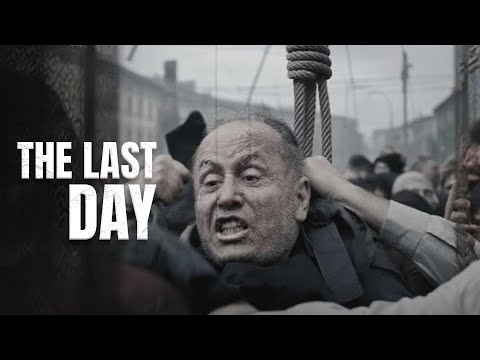
Meanwhile, Mussolini appeared resigned. To some, it was cowardice; to others, merely the exhaustion of a man who had lost his power, his followers, and even the myth of his own greatness. When the dawn light began to replace the night, everyone knew that Il Duce’s final hours were running out, and that the outcome was only a matter of time.
On the morning of April 27th, 1945, Benito Mussolini was in Como, near the Swiss border, traveling within a German convoy, seeking refuge. The dictator, who until just weeks earlier had still nourished illusions of resistance in Gardone, was now witnessing the collapse of the Italian Social Republic. The Gothic Line had been broken, the Germans were in retreat, and the partisans controlled the roads.
The convoy consisted of SS officers, fascist ministers, and their families. Amid hastily packed luggage, wives carried jewelry and documents, while children silently observed the adults’ fear. Mussolini, abandoning his iconic uniform, wore an overcoat and a German helmet in the hope of passing unnoticed through roadblocks. The contrast was striking. The man who had once addressed vast crowds in Piazza Venezia was now hiding under foreign insignia, reduced to a fugitive.
Clara Petacci, his mistress, traveled separately, refusing to abandon Mussolini’s fate after more than a decade at his side. The chosen route followed the shores of Lake Como, once the setting of elegant villas, now transformed into an escape corridor for the defeated. Alarming news arrived at every stop. Partisan roadblocks were advancing, and Swiss border guards were beginning to refuse Italian refugees, overwhelmed by the influx of fugitives. Switzerland, which had maintained neutrality throughout the war, would not offer asylum to the man whose regime had plunged Italy into chaos. For Mussolini, capture meant certain death. The partisan movement had promised immediate justice, no negotiations, no mercy for those who collaborated with the German occupation and brutally repressed the resistance.
Inside the convoy, the atmosphere was one of distrust. The German officers prioritized their own survival and no longer saw any reason to protect the dictator. They whispered about abandoning him if it increased their chances of crossing the border. To them, Mussolini was no longer a strategic ally, but a burden. The Third Reich was collapsing. Hitler was isolated in Berlin, and loyalty had given way to the instinct for self-preservation.
Thus, surrounded by allies who no longer wanted him and pursued by enemies driven by vengeance, Mussolini continued along the narrow road skirting the lake. All that remained was the fragile hope that disguise and luck might grant him a few more hours of life. Colonel Hans Fallmeier, the German commander of the convoy, had already calculated what to do if a crisis arose. He would sacrifice the Italians to save his men. This logic reflected the dissolution of the Axis in its final days.
At noon on April 27th, 1945, the convoy encountered a major obstacle: a partisan checkpoint near Dongo. Armed fighters carefully inspected the vehicles. They were not regular soldiers, but peasants, workers, and students who knew every detail of the region and carried personal grudges against the regime. Many had lost family members or suffered at the hands of the fascist police. The checkpoint had been set up by the 52nd Garibaldi Brigade, composed of communist resistance fighters who saw themselves as heirs to Giuseppe Garibaldi. Just hours earlier, they had received radio reports about suspicious convoys fleeing toward Switzerland. The order was to inspect all vehicles, even those belonging to the Wehrmacht.
At first, they almost let the trucks pass, since German troops were still moving through the area, but Urbano Lazaro, a former Italian army officer and partisan commander, noticed strange signs. The supposed German soldiers were too nervous, their uniforms ill-fitting, and they were sweating excessively despite the cold. Lazaro ordered a thorough inspection. The partisans demanded documents in both Italian and German. The German officers presented proper credentials, but the disguised fascists could not sustain the charade. Some still wore Italian insignias under their coats. Others spoke German poorly, and one dropped Italian papers mixed with German documents.
The situation escalated when a partisan recognized a fascist officer who had taken part in reprisals against civilians. The man had tried to hide a scar with bandages, but was identified by his voice and gaze. In this tense atmosphere, the inspection became even more intense. Then came the decisive revelation. Despite the large helmet and stooped posture, one of the partisans recognized familiar features in a passenger. The unmistakable jaw and eyes. It was Benito Mussolini.
The recognition spread among the fighters, changing the mood at the checkpoint. What had seemed like a routine inspection turned into the moment when the capture of Il Duce became reality. Giuseppe Negri, a young partisan who had grown up seeing Mussolini’s image in schools and public buildings, was the first to identify Il Duce, sending shockwaves through the checkpoint. The fighters, who had dreamed of that moment for years, suddenly found themselves face-to-face with their greatest enemy.
Mussolini realized his disguise had failed and made one last attempt. He straightened his shoulders, trying to assume the authoritarian posture that had once inspired respect and fear throughout Italy. For an instant, he tried to project the same presence that had hypnotized crowds from palace balconies and dominated international conferences, negotiating with world leaders as an equal. But the magic was gone. The context had completely changed. The gestures that once inspired admiration now seemed pathetic and desperate. In the eyes of the partisans, the man who had once captivated crowds from palace balconies was no longer the imposing Il Duce, but a frightened old man in an ill-fitting coat, trying unsuccessfully to recover an authority that no longer existed.
The capture was swift and decisive. The partisans surrounded the vehicle, ordering everyone out at gunpoint. The occupants became valuable prisoners. German officers were separated from the Italians, and the true nature of the convoy became clear. It was not an ordinary military retreat, but the escape of some of the most wanted war criminals in Italy. Colonel Hans Fallmeier, the German commander, immediately distanced himself from the Italian passengers, presenting documents proving the legitimate military status of his unit. His attitude demonstrated the complete dissolution of Axis solidarity in the final weeks of the war. Each ally was now concerned only with their own survival.
Clara Petacci, traveling in another vehicle, was also identified and detained. Her presence confirmed to the partisans that they had captured not just any fascist, but the former dictator himself, along with his inner circle and the woman who had shared his last years in power. Petacci’s identification added another layer of meaning. She was not unknown to the Italian public, having appeared in fascist media as an example of femininity. Although her relationship with Mussolini had been carefully concealed, her decision to remain with the dictator demonstrated a personal loyalty that would ultimately cost her everything.
The news of the capture spread quickly through the resistance communication network. Within hours, resistance leaders throughout northern Italy knew that Il Duce was finally in their hands. Radio operators sent coded messages to partisan headquarters, while couriers carried the news to isolated units that had been fighting for months in the mountains without hope of achieving such a meaningful victory. The psychological impact of the capture went far beyond its immediate military importance. For the fighters who had risked their lives, often suffering terrible losses, Mussolini’s capture represented the validation of their entire struggle.
The capture also brought immediate practical problems. The partisans now held the most wanted man in Italy and needed to decide his fate quickly, given the constantly changing military situation. When night fell on April 27th, Mussolini was imprisoned in a small farmhouse in the village of Bonzanigo. The building was modest and cramped, a stark contrast to the palaces and grand residences he had once occupied in power. The house was remote, avoiding attention from fascist sympathizers or German patrols, yet close enough to headquarters for quick communication. It belonged to a local family who had suffered under fascism, making them trustworthy allies in guarding the most important prisoner of the war.
Mussolini faced the most powerless night of his life. Confined with Clara Petacci and watched by armed partisans, he was no longer seen as a former head of state, but as a war criminal responsible for countless deaths. The guards took shifts to ensure that someone was always watching the prisoners. Throughout the night, his behavior alternated between desperate attempts at dignity and visible moments of terror. The man who had dominated European politics for more than two decades, negotiated as an equal with Hitler and commanded the loyalty of millions, now paced nervously back and forth in a small suffocating room. His fate was entirely in the hands of peasants and workers he had once despised.
Mussolini tried to engage his captors in conversation, appealing to Italian nationalism, recalling territorial achievements and infrastructure works, or negotiating for his life by offering information about fascist gold reserves and the whereabouts of other fugitive officers. The partisans, however, remained unmoved. They had witnessed too many horrors and carried memories of fascist repression. Many had lost family members, others had seen brutal reprisals against civilians, keeping alive the memory of the regime’s violence.
The presence of Petacci added another dimension. She had chosen to remain with Mussolini, facing the same uncertain fate. Her loyalty was both moving and tragic. A woman who could have escaped safely, yet chose to share her lover’s destiny. The partisans debated her fate. Some saw her as a victim of circumstance, others as a symbolic accomplice of the regime. During the night, Petacci tried to comfort Mussolini while struggling with her own fear, confronting the harsh reality of her association with power.
Meanwhile, urgent communications flowed among partisan commanders. Capturing Mussolini represented both an opportunity and a challenge. They had achieved the impossible, taking alive the man who had led Italy into its darkest chapter. But now came the question of what to do with him. Some leaders advocated a public trial to expose his crimes and legitimize the resistance. Others argued that the military situation demanded swift action to prevent a rescue by remaining fascists or liberation by Allied troops who might resort to international tribunals. The debate reflected deep tensions about justice and Italy’s future. Communist partisans favored immediate revolutionary justice, believing execution was necessary to prevent any return to power. Liberal and moderate fighters leaned toward legal proceedings, seeking to set precedents for the democratic Italy they hoped to build.
As the night advanced, new reports reached the partisan leadership. Accounts indicated that other high-ranking fascist officials were being captured at various points along the escape route. The feeling was that the entire leadership of the Italian Social Republic was finally falling into the hands of the resistance. This increased the pressure on partisan commanders who had to decide quickly the fate of their prisoners. With each passing hour, the arrival of Allied forces became more likely, forces that could demand custody of Mussolini and his collaborators. Among the captured were key figures of the regime, such as Alessandro Pavolini, the fanatic who had helped organize the Republic of Salò, and Achille Starace, the former secretary of the National Fascist Party, notorious for his brutality. For the partisans, the success exceeded expectations. Not only had Mussolini been detained, but practically the entire remaining core of the fascist government.
During that night of vigil, Mussolini seemed to feel the weight of defeat and the nearness of the end. Closely guarded, he alternated between moments of defiance and apparent remorse. At times, he declared with conviction that history would one day absolve him, defending his attempt to restore Italy’s greatness. On other occasions, darker reflections escaped his lips, acknowledging the suffering that the war had brought upon the Italian people. He also showed concern for his family, constantly mentioning his children, especially Vittorio and Edda, recalling the tragic fate of his son-in-law, Galeazzo Ciano, executed for treason after breaking with him. The weight of his political choices seemed to press upon him with unprecedented intensity.
Mussolini also reflected on his relationship with Hitler and Nazi Germany. He recognized with frustration that Italy had been treated as a lesser partner within the Axis. He seemed to understand that his decision to align himself with Berlin had been a fatal mistake, leading him to that dead end. However, there was no longer time for philosophical revisions. As the dawn of April 28th approached, the partisan commanders had already decided his fate.
The morning brought the final decision. There would be no lengthy trial nor any handover to the Allies. The leadership of the resistance feared that a legal process would allow time for reorganizations or serve as a rallying point for remaining fascists. Immediate execution seemed to them the only solution. The man charged with carrying out this decision was Walter Audisio, known as Colonel Valerio, a communist fighter who had lost close friends to fascist repression. For him, the mission was both a military duty and an act of justice.
Arriving at the farmhouse in Bonzanigo with a small group, Audisio entered the room where Mussolini and Clara Petacci were being held. Without ceremony, he informed them that the dictator had been sentenced to death by the National Liberation Committee. Mussolini reacted with shock, attempting to negotiate in desperation. He offered information about gold reserves and promised to reveal the whereabouts of fugitive officers, but there was no longer room for bargaining. The decision was irrevocable. Clara Petacci, in turn, also had her fate sealed. Even without holding an official position, her closeness to Mussolini made her a symbol of the regime. Her pleas for mercy found no echo. The partisans were determined to end, once and for all, the fascist chapter of Italy’s history.
The preparations for what was to follow were carried out meticulously and swiftly. Walter Audisio and the men under his command organized the transport of the prisoners, Benito Mussolini and Clara Petacci, to the site where the execution would take place. There was no room for hesitation. The dictator and his companion’s destinies were already decided. They were placed in a simple vehicle, which began a short journey to a point that would enter history as the setting for the end of Italian fascism. It was only a few minutes’ drive, but every kilometer represented the definitive transition between Mussolini’s desperate flight and his reckoning with the weight of his actions.
The car moved along the narrow mountain roads near Lake Como. Inside the vehicle, silence reigned. Mussolini, once the most powerful man in Italy, seemed finally to grasp that his rule of more than two decades was about to end, not in a grand ceremony, an international tribunal, or an act of power he so often cultivated, but in a small village unknown to most Italians. The location chosen for the final act was Villa Belmonte, situated in the municipality of Giulino di Mezzegra. It was a modest property surrounded by an ornate gate on a quiet street lined with simple houses and well-tended gardens. Nothing in that everyday setting suggested that one of the most defining dictatorships of the 20th century would end there. Yet, it was precisely in that contrast between the banality of the surroundings and the gravity of the moment that the symbolic power of the event took shape.
Around 4:10 p.m. on April 28th, 1945, the vehicle arrived at its destination. Audisio ordered Mussolini and Petacci to step out and stand before the iron gate. The dictator tried to maintain a semblance of dignity, standing tall and projecting composure. However, witnesses noticed the trembling of his hands and the unmistakable fear in his eyes. Clara Petacci, in shock, seemed unable to accept the reality that her attachment to the fascist leader would cost her life. She tried to speak several times, but was interrupted. The partisan commander would not allow final speeches.
The execution was swift and direct. Audisio raised his weapon and fired at close range. Mussolini fell immediately, followed by Clara Petacci. There were no memorable last words, no theatrical gestures, only the abrupt end of a cycle of power that had shaped the fate of millions of Italians.
After confirming the deaths, Audisio ordered the bodies to be placed back into the vehicle. The plan was clear: to transport them to Milan, where they would be publicly displayed as proof that fascism had been defeated. The journey from Giulino di Mezzegra to Milan stretched over the following hours. As the car moved on, the partisans reflected on the irony of the scene. They were now hastily transporting the corpse of the man who, in life, had traveled those same roads in lavish parades and armored convoys, greeted by cheering crowds. The supreme symbol of the regime was now reduced to a lifeless body, carried in secret to become testimony to the definitive fall of fascism.
But the leadership of the resistance knew that death alone would not be enough. For more than 20 years, Mussolini had cultivated a myth of invincibility, supported by massive propaganda that portrayed him as a near superhuman figure. Many Italians, even in the face of the regime’s collapse, still believed that somehow Il Duce would escape to lead a new resistance. Something definitive would be needed to dispel any illusion. That is why the choice of where to display the body was loaded with symbolism. The commanders decided to take it to Piazzale Loreto in Milan. That square held a special significance. Months earlier, it had been used by the fascists to humiliate the resistance when the bodies of 15 executed partisans had been displayed there as a warning to the population. To exhibit Mussolini and his collaborators in that same place would be a powerful inversion of roles, a gesture that would transform a space of intimidation into a stage of liberation.
On the night of April 28th, the convoy arrived in Milan. Although the city still had a German presence, real control was already in the hands of the partisans. The streets that had once witnessed fascist parades were now preparing to receive the final scene.
The dawn of April 29th brought with it images that would remain forever engraved in Italian memory. The bodies of Mussolini, Petacci, and other fascist leaders were laid out in the square. The news spread quickly and crowds gathered to witness the historic moment. The popular reaction was explosive. Italians of different backgrounds and social classes flocked to Piazzale Loreto. Many looked on in silence, still incredulous before the dictator’s definitive fall. Others spat on the corpses, kicked them, or insulted the figure who had dominated their lives. For some, it was catharsis, an emotional release after years of suffering. For others, it was an opportunity to settle accounts with the recent past.
More than revenge, that public exhibition carried political and symbolic meaning. It served as irrefutable confirmation that fascism was over. For the people, it was the materialization of the collapse of a myth. Before their eyes, the man once portrayed as an absolute and infallible leader was now nothing more than a lifeless body. For the resistance, it was proof that their struggle, fought with blood and sacrifice, had achieved its greatest goal. Foreign journalists present described the scene as one of the most dramatic endings of the modern era. The photographs taken that day spread rapidly around the world, reinforcing the idea that the Axis powers were doomed. For the Allies, the images from Piazzale Loreto had immediate propaganda value. The defeat of fascism was visible and undeniable.
The exhibition continued for hours. Residents of Milan and nearby cities came to the square to witness the scene. However, as the day went on, authorities began to worry about the risks posed by the crowd and the growing popular violence. By late afternoon, Allied forces intervened and ordered the removal of the bodies, which were buried in anonymous graves. The spectacle came to an end, but its marks would remain in the Italian collective memory.
The fate of Mussolini was immediately and continuously debated. For some, the summary execution represented direct justice against a man who had never shown mercy. For others, it was a missed opportunity to put him on trial and reveal in court the crimes of the regime. But regardless of opinion, the impact was undeniable. The myth of Il Duce had crumbled irreversibly.
Internationally, the dictator’s death was received with relief. Churchill celebrated, Soviet leaders praised the Italian resistance, and the United States saw in the episode yet another confirmation that final victory was near. Although the propaganda machine still tried to function in some places, there was no longer any leadership capable of organizing resistance. The last garrisons loyal to Salò, isolated and unsupported, surrendered within days.
For the partisans, the scene in Milan symbolized victory after years of clandestine struggle, but also the beginning of a monumental task: rebuilding a country devastated by war and purging the institutions of fascist elements that remained deeply rooted. The news spread swiftly beyond Italy’s borders. In Berlin, Hitler, confined in his bunker, received the report of Mussolini’s capture and execution as a devastating psychological blow. Only two days separated their destinies.
While Mussolini was being displayed in Milan, Hitler was living the final moments of his regime, surrounded by Soviet troops who had already entered the German capital. The Führer, according to eyewitnesses, saw Mussolini’s death as an inescapable omen of his own end. The humiliation suffered by his ally reinforced his decision to avoid capture alive. Thus, the Italian execution had a direct impact on the corridors of the Berlin bunker, accelerating Hitler’s resolution to take his own life.
For the Allies, Mussolini’s death represented a moment of triumph. The British government under Winston Churchill highlighted the courage of the partisans, acknowledging their decisive contribution to the defeat of fascism. The Soviet Union, in turn, used the news as propaganda, praising the people’s struggle against dictators and presenting the Milan scene as proof that the masses had the power to crush oppressive regimes. The tone varied between relief at the end of one of Hitler’s allies and discomfort at the brutality of the public display. Even so, the images fulfilled a crucial role. They dispelled any remaining doubt that Mussolini might escape and reorganize resistance in exile.
In Italy, however, the episode divided opinion from the beginning. Many Italians, especially in the north, greeted the dictator’s death with joy and vengeance. Families who had lost relatives to fascist repression saw the act as the only possible form of justice. Others, however, questioned whether the summary execution represented a missed opportunity. Some wished to see Mussolini stand before a court, exposed in a public trial that would reveal in detail the regime’s crimes. For them, the quick death spared him the humiliation of formally facing his victims and left many questions unanswered.
The partisans’ decision, however, reflected the chaotic atmosphere of the time. There was fear that any delay could open the door to rescues, Allied interventions, or even the reorganization of remaining fascist forces. Meanwhile, dozens of captured fascist collaborators faced swift justice. Alessandro Pavolini, secretary of the Republican Fascist Party, was captured and executed alongside Mussolini. Achille Starace, once one of Il Duce’s most fanatical supporters, also fell into the hands of the resistance and was killed. The series of executions aimed to eliminate once and for all the hardcore of the Salò regime. Within a few weeks, most of the remaining leaders of Italian fascism had disappeared, creating a political vacuum soon filled by the resistance and Allied forces.
However, Mussolini’s death did not immediately mark the end of fascism as an idea. Many Italians still found themselves divided between remorse, silence, and nostalgia. The violence of the civil war that accompanied the regime’s final two years left deep scars, with families split between partisans and fascists. The spectacle at Piazzale Loreto, with all its symbolic weight, was intended precisely to send a definitive message. Fascism was dead, and its downfall had to be witnessed by all. Yet, in the shadows, sympathizers persisted, and some sought narratives to justify or soften the dictator’s crimes.
The public display of the bodies also sparked ethical and political debates abroad. Foreign correspondents described the scene as grotesque, though they understood its value as a cathartic act for a population oppressed for more than two decades. Later, historians would emphasize the ritualistic nature of the act. Reversing the fascist gesture of Piazzale Loreto, when partisans had been displayed as trophies, was a way to transform vengeance into a national symbol. The square, once marked by fear, became a place of liberation and popular justice.
At the same time, Italy’s political transition was moving forward at an accelerated pace. The National Liberation Committee temporarily assumed leadership in various regions, coordinating with the Allies who occupied the central and southern parts of the country. The Milan episode served as a catalyst to strengthen the narrative that the resistance had liberated Italy from within, not merely through external support. For the partisan leaders, this was essential. The country needed to assert itself as the protagonist of its own liberation, avoiding the impression of mere subservience to the victorious powers.
The immediate aftermath also reached Mussolini’s family. His children were hunted, imprisoned, or forced into exile. His daughter Edda, widow of Galeazzo Ciano, already lived in isolation, scarred by the execution of her husband, ordered years earlier by her own father. Vittorio Mussolini, who had been involved in film propaganda, sought refuge. In the following years, the family’s memories would serve as material for debates on the legacy of fascism. But at that moment, they bore the heavy burden of a name that had plunged Italy into tragedy.
From a military perspective, the execution marked a turning point. Within days, the remaining German troops in the north surrendered en masse. General Karl Wolff, commander of the SS in Italy, had already been secretly negotiating capitulation with the Allies. And the news of Mussolini’s death hastened the collapse of the last Nazi formations in the region. The Italian front, which for months had consumed lives and resources, rapidly dissolved between late April and early May 1945.
The symbolism of the episode did not escape the partisans themselves. Many recorded in diaries and memoirs that the moment in Milan was not just the end of a dictator, but the closing of an era of suffering. Italy had been the laboratory of European fascism, inspiring authoritarian regimes across the continent. To see its creator dead in such humble and brutal circumstances represented for many a sign that the fascist age had truly ended, even if the scars remained.
Later that same week, Milan and other liberated cities experienced a mixture of celebration and mourning. Streets decorated with flags celebrated victory, while hospitals still received the wounded from recent combat. The memory of Piazzale Loreto began to circulate in pamphlets, newspapers, and even popular songs, crystallizing as a symbol of the end. For those who lived through the moment, it marked an irreversible turning point. From then on, Italy could no longer return to its fascist past.
The execution of Mussolini, therefore, served as an immediate catalyst for political, military, and social change. It did not merely represent the death of one man, but the visible collapse of an ideology that had profoundly marked the 20th century. At the same time, it left open wounds that would accompany the country for decades. Memories of violence, internal division, and moral dilemmas about justice and vengeance that would not be resolved that night in Milan, but would echo throughout Italy’s post-war history.
In addition to high-ranking leaders, ministers, soldiers, and minor collaborators faced swift trials or summary executions. Partisan justice was relentless. Any direct connection to the Italian Social Republic could mean death. Many tried to disguise themselves as civilians or hide in monasteries, but few succeeded in escaping. The hunt for fascists spread across northern Italy, even as the Allies advanced through the cities, consolidating liberation.
This context of persecution against fascist leaders unfolded amid the final collapse of the war on the peninsula. By the end of April 1945, the German armies in northern Italy were surrounded. The Allied spring offensive had broken through the German defensive lines in the Po Valley, and cities such as Bologna and Verona fell one after another. British, American, and Brazilian troops advanced rapidly, while the partisans intensified acts of sabotage, attacks on convoys, and occupations of urban centers even before the Allies’ arrival.
On April 29th, only two days after Mussolini’s death, Field Marshal Albert Kesselring and other German commanders signed the surrender in Caserta, which took effect on May 2nd. This act officially ended the war in Italy, marking the complete defeat of the Axis on the peninsula. For Italians, however, victory came with a bloody reckoning. Estimates indicate that in the final days of April and the beginning of May alone, more than 10,000 people linked to fascism were summarily executed. This brutal process reflected not only the pent-up hatred against two decades of dictatorship, but also the determination to prevent any possibility of fascist reorganization after the war.
As the dust settled over Piazzale Loreto, the question that would haunt Italy for generations remained: was this swift, public justice the only way to break the spell of a dictator, or did it plant the seeds of a silence that would never fully heal? What do you think—was the execution of Mussolini a necessary act of liberation, or a missed chance for a nation to confront its darkest truths in the light of a courtroom?
Report this article
Select a reason for reporting:






