In the weeks after January 1969, a document moved through the North Vietnamese Army’s regional command in Phuoc Tuy province. It contained no troop movements, no supply lines, no artillery coordinates. It was a standing order, short and specific, and it said one thing plainly: “Do not set deliberate ambushes against suspected Australian Special Air Service patrols. The trap will be reversed before it can be sprung.”
Think about what it takes for a military command to write an order like that. NVA regional commanders in Phuoc Tuy were not men who frightened easily. They had fought Australian forces for years, buried their own, adjusted their tactics, and kept fighting. They understood guerrilla warfare at a level that made them among the most dangerous light infantry forces on Earth. And yet, after January 1969, the formal decision was made that the standard playbook could not be used against one specific unit.
This is the story of how that order came to be written. And it starts not with the January 1969 engagement, but with the years of jungle work that made it inevitable.
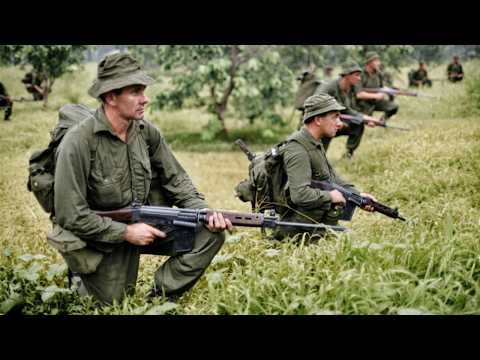
The first thing to understand about the Australian SASR in Phuoc Tuy is how they moved. 300 meters per hour. Not three kilometers—300 meters. The length of three football fields covered across 60 full minutes of walking. American long-range reconnaissance patrols moving through the same jungle traveled at roughly one kilometer per hour. The Australians moved at less than a third of that pace and considered it acceptable progress.
On difficult ground, with signs of enemy activity close by, they moved slower still. They taped their dog tags flat against their skin so the metal could not clink with each step. They wore boots with soles shaped to leave Viet Cong sandal prints in soft mud, rather than military boot tracks. They ate cold food on every patrol because cooking produces smell, smoke, and sound—any one of which would end a small team deep inside enemy-held territory.
They did not smoke. They did not cough if they could help it. They breathed shallowly enough that a sentry ten meters away could not hear them. When a bird stopped singing in the canopy above them, they stopped moving and stayed stopped—not out of caution alone, but out of hard-earned knowledge. Three years of patrolling Phuoc Tuy had taught each of those men that sudden silence in the trees was not the absence of something. It was the presence of men nearby holding their breath.
Forty-five minutes to cross ten meters of open ground. An hour of total motionless waiting if the canopy went quiet at the wrong moment. A five-man team that could pass through the jungle, looking to anyone watching from the wrong angle, like it was simply not there.
The North Vietnamese Army had a name for them because of it. Ma Rong. In English, it translates roughly as ghosts of the jungle. It was not given in admiration. It was the kind of name you give to something you cannot find, cannot track, and cannot trust the stillness around.
NVA patrol leaders in Phuoc Tuy were briefed on Australian SASR movement discipline the same way they were briefed on minefields—as a constant invisible danger that would kill them before they understood what was happening. That name had been earned through years of bodies left on trails where nobody had seen anything.
Couriers were dying on jungle routes that had been cleared the previous day. Men who had walked the same path a dozen times, who knew the ground, who had families waiting for them, gone without a sound and without a witness. Resupply parties were being cut apart by attackers whose withdrawal nobody ever tracked. NVA units sent to investigate Allied reconnaissance activity in the western province went silent and never sent a final report.
And when survivors did make it back and describe the Australian force they had faced, the numbers never matched what the casualties suggested. A five-man SASR patrol would be reported as thirty men. A four-man team described as a full infantry platoon. The NVA soldiers reporting these contacts were not exaggerating for effect. They could not accept that the coordination, the volume of fire, and the tactical precision they had survived was coming from that few people. It did not fit any frame of reference they had been trained to prepare for.
By late 1968, a regional NVA commander in the Hat Dich area on the western edge of Phuoc Tuy had made a decision. He was going to stop absorbing losses and start creating them. He had been watching his own operations degrade for over a year. He had sent good men out and gotten silence back. He understood from his own intelligence gathering that the Australians were running small reconnaissance teams through his area in near-constant rotation, moving slowly and invisibly, hitting targets of opportunity whenever they found them.
He could not stop what he could not see. So he decided to make it visible. The plan was to build a trap that the SASR would feel compelled to investigate, then destroy the team that walked into it. Done correctly, the operation would accomplish several things at once. It would eliminate an active patrol, recover weapons, radio equipment, and operational documents. And it would prove to every unit under his command, in the clearest possible terms, that the Ma Rong were five men with rifles and could be killed the same as anyone else.
What he built was not sloppy work. The trap he designed was competent and carefully thought through. And the fact that it failed so completely is the reason the standing order eventually got written.
He chose a small base camp, recently abandoned but showing clear signs of fresh use. Bamboo sleeping platforms still upright. Cooking ash still gray rather than bleached white. A bunker network with freshly turned earth visible at the perimeter. From a hundred meters away through dense undergrowth, it looked exactly like what an SASR reconnaissance team would have been dispatched to locate and assess. Active enemy infrastructure. A live target. Something worth investigating.
From a distance, it was not an invitation. It was a room with the light deliberately left on.
Eighty-four soldiers from a regular NVA infantry company were moved into the surrounding jungle over three nights, traveling in small groups to avoid the kind of movement signature SASR patrols had been trained to detect from a kilometer away. These were not nervous conscripts. They were experienced soldiers who had fought in this province before, men who understood the ground and the work they had been asked to do.
They dug shallow firing pits arranged in an inverted L, with machine guns at each corner so their fields of fire overlapped cleanly across the most likely approach route. Cutoff teams were placed on both practical approach paths and on the only viable withdrawal corridor to the east. Claymores were wired facing inward toward the kill zone. A pursuit element stood ready to move on any survivors who broke through the outer ring.
Then they waited. Lying in the dirt, listening to the jungle around them, thinking about whatever soldiers think about when they have been told not to move for two full days.
On the morning of the third day, a five-man Australian SASR patrol was inserted by helicopter approximately three kilometers east of that clearing. They had no knowledge of what was sitting in the jungle to their west. What they had instead was three years of collective experience in Phuoc Tuy, a patrol leader who had seen every way that small teams die in that province, and a set of movement habits so deeply ingrained they functioned not as conscious decisions but as instinct.
The insertion was fast and textbook clean. The Iroquois came in low over the elephant grass, hovered for less than ten seconds over a natural gap in the cover, dropped the five men, and climbed away. The rotor wash flattened the grass around them, and then the helicopter was gone and the jungle swallowed the sound and there were five men crouching in the heat with their weapons up and the smell of aviation fuel fading around them.
They did not move for nearly twenty minutes. Anyone watching the landing site would now be moving toward it. The Australians waited in silence until they were certain nothing was coming. Then they started west.
The patrol leader was a sergeant with three full tours behind him. He had walked more ground in Phuoc Tuy than most battalion commanders covered in a career, and he carried that knowledge in the way he moved, in the angle of his head, in the way he read the light through the canopy above him.
His forward scout, the corporal at the front of the column, had been with the regiment since the Borneo campaign. He moved through jungle the way water moves downhill, finding the path of least resistance and least noise without appearing to think about it, his body making hundreds of small decisions per minute that he had long since stopped being conscious of.
The signaller walked third in the column with the patrol radio on his back. The weight of it familiar against his shoulders after years of carrying it. He could reach Nui Dat and request artillery, gunships, and extraction from memory in under ten seconds.
The medic walked fourth, carrying morphine and field sutures and a 7.62 mm self-loading rifle. He could shoot accurately at four hundred meters. He had used both the medical kit and the rifle on previous patrols and was at peace with that.
The fifth man watched the path behind them the entire time, his head on a slow swivel, because more SASR patrols had been compromised by being tracked from the rear than by being spotted from the front.
Five men in a line. The jungle pressing in on both sides. The heat building toward midday. They covered ground slowly—painfully slowly. By midday they had moved just under a kilometer to the west, and every meter of it had been earned in sweat and stillness. The smell of the jungle around them was thick and green and alive. The sound of their own breathing felt too loud. It always felt too loud out there.
That was when the corporal at the front of the column raised his closed fist.
The signal passed down the column without a sound. The signaller had his left boot six inches off the ground when it reached him. He held it there for forty seconds, the muscle in his calf beginning to burn, before he was certain he could set it down without noise. He set it down with the care of a man defusing something.
The corporal pointed two fingers at his own eyes, then directed them forward into the bamboo. Then laid his hand flat in a slow horizontal sweep.
He had seen something.
The patrol leader moved up to him over the next three minutes, placing each foot with the care of a man crossing ice he is not certain will hold. The bamboo ahead was bent at knee height—not snapped, not cut. Bent. The kind of bend that forms when a man crouches behind stalks and presses his back against them for a long time, and the stalks slowly give under the weight.
The patrol leader looked at it for a long moment and felt his heartbeat change. Then the rest of it assembled itself. The jungle was completely silent. No birds. No insects. Not the silence of an empty place—the silence of a full one.
He signaled a slow withdrawal into a dense stand of bamboo six meters behind them. The five men sank into the cover and became still. For forty minutes, none of them moved. Sweat ran down their faces and they did not wipe it away. And as their eyes adjusted, the trap began to show itself piece by piece.
A canvas boot, NVA issue, half buried under leaf litter twenty meters ahead. A rifle barrel resting in the fork of low scrub, dark with fresh oil. A cough pressed hard against a sleeve somewhere to the right—the smothered cough of a man who had been suppressing it for hours.
The corporal counted what he could positively identify and stopped at twenty. Twenty NVA soldiers visible inside the kill zone the patrol had been walking toward. He could not see the cutoff teams, but he knew with certainty they were there. The patrol was surrounded by a force more than sixteen times its size, and the men surrounding them had no idea the Australians were sitting thirty meters away watching them breathe.
An ordinary infantry patrol would have called for immediate extraction. The patrol leader did not reach for the radio. He looked at his four men, one at a time, and signaled a flanking loop to the south. He was going to walk his team quietly around the entire southern edge of the NVA company and come in from behind—from the one direction the enemy commander had not built a fighting position to cover.
In military terms, it was a reversal of the ambush. In human terms, it meant asking four men to follow him through dense jungle in a wide arc around eighty-four armed soldiers, close enough in places to hear the men they were circling shift their weight in their firing pits, without making a sound for over an hour.
The four men looked at him and they went. Single file, one step every fifteen seconds, no radio calls, no spoken words—communication only through pressure on a shoulder or a glance exchanged over three seconds in the green half-light.
They curved south, then west, then north, bending their line gradually around the flank of the NVA formation like a hand curling around something it intends to take hold of. When they stopped, the patrol leader was almost directly behind the NVA company commander’s own firing pit. The man who had spent three days building this kill zone was sitting thirty-five meters in front of him with his back turned, watching the empty bamboo he had told his soldiers the Australians would walk through.
The patrol leader looked at his four men. He looked at each face. Then he raised three fingers, then two, then one.
The self-loading rifle is a Belgian-designed 7.62 mm battle weapon. In trained hands it is accurate, powerful, and lethal at any range from close contact to four hundred meters. The SASR carried it in Phuoc Tuy because the round it fired killed cleanly and could punch through the light cover that would stop a smaller cartridge. The 9 mm submachine guns the patrol carried could empty a full magazine in under four seconds.
Five men. Two submachine guns sweeping through the rear of the formation. Three self-loading rifles picking individual targets with single shots. Thirty-five meters. The company commander’s back filling the sights.
In the first thirty seconds of the contact, somewhere between twelve and eighteen NVA soldiers died. The men in the forward firing pits never turned around in time. They had been lying in the dirt staring west for three days, their whole bodies oriented toward a threat that was supposed to come from that direction. By the time the firing started behind them, the time to react had already passed. They died facing the direction their commander had drawn on his diagram.
The sound was enormous in the jungle, filling the air with something the NVA soldiers still alive had never prepared for. Soldiers at the rear turned to face the new direction of fire and found nothing to aim at. The vegetation absorbed the Australians between shots. The five men were already repositioning, moving fifteen to twenty meters between firing points, appearing to come from different directions with each burst.
To the surviving NVA soldiers in that shattered formation, it sounded and felt like a full Australian company had appeared inside their own lines from ground that was supposed to be safe behind them. The kind of confusion that produces is not tactical. It is physical. It lives in the chest. It makes the hands shake and the training dissolve.
The cutoff teams on the original withdrawal routes were pointing the wrong way. They had been watching east all day, waiting for a patrol to break and run toward them. The patrol was not running east. It was working through the rear of the company from the south. By the time those teams understood what was happening and tried to maneuver back into the engagement, they were moving across their own beaten zone, running into rounds their own machine gunners were firing into the jungle in panic.
The NVA company commander was hit by two rifle rounds within the first ninety seconds. He died in the firing pit he had personally selected three days earlier, looking at the jungle he had believed the Australians would never come from.
The signaller had already raised Nui Dat on the radio before sixty seconds had elapsed. The call was under ten seconds. Contact, coordinates, extraction. His voice was flat and controlled the way voices get when a man has spent enough time in contact that the adrenaline no longer shakes them, only sharpens them. The voice on the other end did not ask for clarification.
Within minutes, two Royal Australian Air Force Iroquois helicopters and a pair of gunships were inbound from the south.
The patrol fought a controlled withdrawal east, back the way they had originally come. Moving in pairs with one element holding ground while the other advanced. They were not running. They had never run. They moved with the same measured control they had used all day, only faster now. The bush crashing around them, additional dead left behind them along the withdrawal route. Every man in that patrol was still alive. Every man was still shooting.
By the time the helicopters arrived overhead, all five Australians had pushed back to within four hundred meters of the original insertion clearing. The gunships went in first, making two strafing runs through the bamboo canopy to suppress what remained of the NVA company. The Iroquois could not land in the heavy vegetation, and the five men went out on ropes, ascending one at a time while the others covered the tree line below.
The last man up was still firing single aimed shots from his self-loading rifle back through the canopy as the helicopter climbed away from the jungle and turned east toward Nui Dat. He stopped firing when the trees dropped below him and there was nothing left to shoot at. He looked down at the jungle getting smaller beneath the helicopter. It looked peaceful from up here. It always did.
The after-action report, classified for a significant period following the engagement, recorded confirmed NVA dead of between twenty-four and thirty. The probable dead, accounting for those killed during the helicopter gun runs on the extraction, was assessed as ranging considerably higher. Australian casualties across the entire engagement: zero.
Among the documents recovered from the NVA company commander’s location was a hand-drawn diagram of the kill zone. It showed the bait camp, the firing pits in their inverted L arrangement, the cutoff teams on the eastern routes, and the projected approach line of the Australian patrol through the bamboo. A detailed document made by a man who had thought carefully about how this would go. The patrol’s approach from the east. The ambush springing. The cutoff teams closing the escape route. The pursuit element running down survivors. Not one of those assumptions had survived contact with five men who had learned to move through Phuoc Tuy like smoke through a closed room.
The story of what had happened did not stay inside a single report. It moved through the NVA regional structure the way certain stories do. Not as a statistic, but as an explanation. Captured NVA soldiers in Phuoc Tuy in the weeks following the engagement described the contact to interrogators using language that translated roughly as the ghost came out of the ground behind us.
That phrase traveled. It reached patrol leaders across the province. It reached company commanders in the Hat Dich area. It reached the regional command level. And at the regional command level, someone made a decision that is almost without precedent in the conduct of the entire Vietnam War. They put it in writing.
A formal acknowledgment that their tactics did not work against this unit. That the ambush—the foundational tool of guerrilla warfare in Southeast Asia, the technique that had been defeating larger and better-equipped forces in that country for decades—could not be reliably used against Australian SASR patrols. That the trap would be found. That the patrol would go around it. That the attack would come from behind before the first shot of the prepared ambush was ever fired.
The standing order went out. Do not set ambushes against suspected Australian Special Air Service patrols. The trap will be reversed before it can be sprung.
The Ma Rong had earned that order the same way they earned everything in Phuoc Tuy province. With movement that the men receiving intelligence reports about it found difficult to believe was physically possible. With forty minutes of complete stillness in a bamboo stand while a corporal counted soldiers twenty meters away and kept his hands from shaking. With a decision to walk five men around eighty-four and come in from behind on a Tuesday morning in January 1969, from thirty-five meters, with five weapons, through jungle that was supposed to be the enemy’s ground.
Sixty kilometers east at Nui Dat, the patrol’s equipment was stripped, checked, cleaned, and stored. The five men ate a hot meal, slept in beds, and did not talk much about what had happened—the way men who have been through something do not always need to talk about it. Within a week, they were back in the air, inserted deeper into the same province, moving west at three hundred meters an hour through the same bamboo and elephant grass, reading the same silences, looking for the next sign.
That was the war the Australian SASR fought in Phuoc Tuy province. Five men at a time. Three hundred meters to the hour. Forty-minute freezes in thick cover. And on the days when an enemy commander finally believed he had figured out how to kill them, an answer that came from the last direction anyone had thought to defend.
That is why the NVA stopped trying to ambush them.
So here is the question worth sitting with: when an enemy rewrites his entire playbook because of five men moving at a walking pace—what does that tell us about the wars we think we understand?
Report this article
Select a reason for reporting:






