No signal preceded it. No report announced it. Yet something shifted in the jungle long before Allied intelligence noticed. Routes that had been used for years went quiet. Messengers stopped traveling alone. Units delayed movement even when orders demanded speed. It was not fear of bombs or artillery. It was something narrower and more precise. The enemy had learned that when Australians were present, the jungle no longer behaved as expected. Men disappeared without warning. Familiar ground betrayed them. Survival began to depend not on strength or numbers, but on avoidance. That lesson, once learned, spread faster than any command directive.
This account unfolds in deliberate stages because the phenomenon itself did. First, the arrival, when Australian forces entered Vietnam, carrying a reputation that neither impressed nor alarmed their allies. Second, the divergence, when their methods began quietly departing from prevailing NATO norms. Third, the adaptation as Australian patrols reshaped their behavior to suit the land rather than dominate it. Fourth, the reaction when the enemy began altering movement patterns in ways that defied conventional analysis. Fifth, the erosion as fear seeped into command structures and discipline faltered. Sixth, the confusion when American doctrine struggled to explain outcomes that produced no clear metrics. And finally, the consequence. What Vietnam learned about Australians and why that knowledge unsettled both enemy and ally alike.
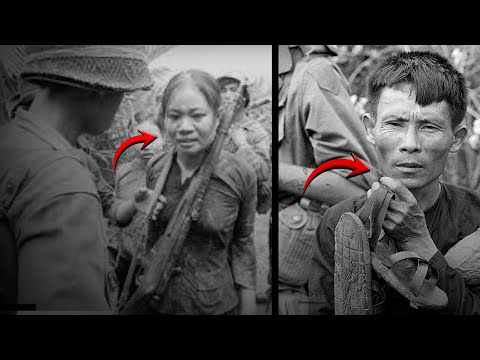
When Australian units were assigned responsibility for Phuoc Tuy province, expectations were restrained. They were viewed as competent conventional soldiers experienced in small wars but operating on the periphery of the main effort. Their area of operations was important yet not decisive. American planners assumed that success would follow the familiar pattern. Pressure, contact, attrition. What they did not anticipate was how little the Australians seemed interested in that pattern at all.
Patrols were small. Movements were quiet. Time was spent observing rather than engaging. To many American officers, this appeared cautious, even passive. But that perception was rooted in a misunderstanding of intent. Australian patrols were not designed to provoke reactions. They were designed to absorb information. Men moved slowly enough to notice what others missed. Changes in ground texture, disturbed vegetation, silence where sound should have existed. The jungle was not treated as an obstacle, but as a system that responded predictably if read correctly.
Patrol leaders did not seek contact as proof of effectiveness. They sought certainty. Who moved where, how often, under what conditions. Patterns mattered more than firefights. As weeks passed, small inconsistencies began appearing in enemy behavior. Viet Cong units arrived late to planned movements. Courier routes shifted without obvious reason. Areas previously assessed as active went dormant without evidence of displacement. Initially, this was interpreted as success attributed to broader allied pressure. Yet Australian reports suggested something more specific. The enemy was not withdrawing. They were rerouting. They were making choices that indicated anticipation rather than reaction.
These adjustments were subtle, but they accumulated. Australian patrols increasingly encountered signs of aborted movement. Camps abandoned hastily, trails that showed hesitation rather than routine use. Engagements, when they occurred, were brief and disorienting for the enemy. Fire came from unexpected angles, ceased abruptly, and was followed by silence. There was no pursuit to anchor retaliation, no obvious trail to follow. The Australians were present just long enough to leave doubt behind.
What made this particularly effective was that it did not rely on repetition. The Australians did not seek to condition the enemy through predictability. They varied timing, approach, and response. Some patrols observed for days without action. Others struck once and vanished. The enemy could not determine whether absence meant safety or preparation. Over time, that uncertainty began influencing decisions at levels far above the point of contact. Captured fighters later described a growing reluctance to trust assumptions. Familiar paths were questioned. Orders were debated. Men hesitated before moving, not because they had seen Australians, but because they might be there.
This hesitation was not dramatic, but it was corrosive. It slowed operations. It complicated coordination. It introduced doubt into a system that depended on confidence and routine. American advisers, focused on quantifiable outcomes, struggled to interpret what was happening. There were fewer engagements to report, fewer casualties to tally. On paper, activity appeared reduced. In reality, the enemy was adapting to a presence that refused to announce itself. The Australians were not dominating territory in the conventional sense. They were shaping behavior. And that distinction, subtle as it was, marked the beginning of a lesson Vietnam would learn slowly and at great cost.
The warnings did not remain isolated impressions shared by shaken survivors. They began hardening into doctrine. Enemy units started issuing informal guidance that never appeared in written orders. Movement after dark was restricted in certain areas regardless of operational need. Supply schedules were altered to favor longer exposed routes over shorter jungle corridors. Patrol leaders were told to pause before entering forested zones and observe longer than necessary, as if time itself might reveal danger. None of these measures made sense within classical guerrilla logic. Yet they persisted because men who ignored them tended not to return.
What made the situation more troubling for the enemy was the absence of a clear trigger. Australians did not announce their presence with preparatory fire or helicopter noise. There was no reliable signal that indicated when danger had increased. A valley might be safe for weeks, then suddenly lethal, then quiet again. This irregularity undermined confidence in experience. Veterans could no longer reassure new recruits. Familiarity with terrain ceased to guarantee survival. The jungle, once an ally, had become unreliable inside Viet Cong units.
This produced subtle but serious fractures. Discipline relies on trust. Trust in commanders, trust in routines, trust in the logic of previous success. Australian operations eroded that trust without confronting it directly. Fighters began questioning instructions that conflicted with their instincts. Political officers noticed a rise in quiet defiance. Men complying outwardly while privately adjusting behavior. Meetings grew shorter. Units moved in tighter formations, sacrificing dispersion for psychological comfort. These changes were defensive, but they carried costs.
At the same time, Australian patrols showed no visible escalation. There was no increase in force size, no shift toward aggressive clearing operations. If anything, they became more selective. Some areas were deliberately left untouched, reinforcing uncertainty. Others were visited repeatedly, but never on a schedule. The Australians appeared less interested in territory than in memory. They allowed the enemy to remember specific places as dangerous even when no recent contact had occurred.
American observers found this difficult to reconcile with established doctrine. Reduced contact was interpreted as reduced pressure. Requests were made to increase operational tempo, to push harder, to exploit perceived enemy weakness. Australian commanders acknowledged these requests politely and continued operating as before. They understood that pressure was already being applied, just not in a form that produced immediate visible results.
The enemy, however, felt it clearly. Reports captured later revealed growing concern about what was described as an invisible opponent. Fighters complained that precautions no longer guaranteed safety. Traditional countermeasures, noise, discipline, camouflage, movement at night, were failing without explanation. Some units attempted to respond by increasing numbers, sending larger patrols into contested areas. These formations moved more confidently, but also more predictably. When contact occurred, losses were sharper and more demoralizing.
By this stage, the warning had become explicit. Not dramatic, not shouted, but firm. Avoid areas where Australians operate. Delay if you must. Detour if possible. If movement is unavoidable, move quickly and do not linger. The Australians were no longer just another Allied force. They were a condition, something to be accounted for even when unseen.
This development unsettled American command more than enemy fear itself. Fear could be exploited, but it could also be misunderstood. The Australians were achieving effects that did not align with reporting metrics. Enemy strength estimates remained stable. Supply caches still existed, yet operational freedom was shrinking. Something was constraining the enemy without destroying them outright. And that constraint did not respond to traditional escalation.
As the months passed, the gap between American interpretation and Australian intent widened. One side sought decisive engagements. The other sought cumulative doubt. Vietnam, as a battlefield, began reflecting that difference. In Australian areas, the war slowed, stretched, became hesitant. Elsewhere, it remained loud and violent. The contrast was impossible to ignore, even if its cause remained uncomfortable to admit.
The spread of these warnings did not stop at unit level. They began influencing regional behavior in ways that intelligence analysts initially misread. In areas adjacent to Australian zones of operation, enemy activity became uneven. Some districts showed a sharp decline in movement, while others experienced sudden short-lived surges as units attempted to relocate before becoming trapped. This pattern did not resemble retreat. It resembled displacement under pressure. Pressure that could not be directly identified or countered.
Regional commanders struggled to explain why forces remained intact yet increasingly ineffective. Orders were issued to reassert control, to resume night movement, to reestablish courier routes that had gone silent. Compliance was inconsistent. Fighters obeyed reluctantly, often modifying orders to minimize exposure. Movement that once occurred in darkness shifted to early morning or late afternoon when visibility was higher but predictability increased. These adjustments made units more vulnerable to observation, but they were perceived as safer than entering jungle corridors associated with Australian patrols.
Australian forces continued operating with minimal visible change. Patrol sizes remained small. Engagements remained rare. When contact occurred, it was decisive but brief. There was no attempt to exploit success through pursuit. This restraint puzzled both enemy and ally. To the Viet Cong, it suggested confidence bordering on indifference. To American observers, it suggested missed opportunity. Yet the cumulative effect was unmistakable. Enemy initiative was declining not because of losses but because of hesitation.
Captured documents from this period revealed a growing emphasis on internal security. Units devoted more time to vetting movement routes, posting additional sentries, and conducting counter-tracking measures. These activities consumed manpower and attention that would otherwise have been directed toward offensive action. The enemy was investing effort in avoiding contact rather than seeking advantage. In a war of endurance, this shift mattered.
Australian patrol leaders understood that fear alone was not the objective. Fear could provoke reckless behavior. What they cultivated instead was doubt. Doubt about timing, doubt about safety, doubt about whether the jungle could still be trusted. This doubt forced the enemy into constant reassessment, slowing decision-making and increasing friction at every level. Orders took longer to execute. Plans required more contingencies. Simple movements became logistical problems.
American commanders increasingly demanded explanations. Reduced enemy activity was interpreted as opportunity. Pressure was applied to capitalize on it through larger operations. Australians resisted these interpretations, arguing that visible inactivity masked a deeper effect. The enemy was still present, still armed, but increasingly constrained by self-imposed limitations. To disrupt that process with large-scale operations risked restoring clarity to the battlefield, something the Australians believed would benefit the enemy more than themselves.
This difference in perspective led to quiet tension within Allied command structures. Australians were not insubordinate, but they were selective. They accepted coordination without surrendering autonomy. Their reports emphasized behavior rather than numbers, intention rather than contact. This language did not translate easily into American planning frameworks, which favored measurable outputs.
Meanwhile, the enemy continued adapting. Some units attempted to study Australian methods, sending observers to watch trails for extended periods, attempting to detect patterns. They found little. Australians did not operate on schedules. They did not repeat routes. They did not respond predictably to provocation. Attempts to lure them into ambushes failed because the Australians rarely took bait. They observed, recorded, and withdrew.
By this stage, the warning had become embedded knowledge. New recruits were briefed informally by veterans. Areas were described not by terrain features, but by risk. Certain forests were spoken of with caution. Certain paths were avoided regardless of efficiency. The Australians had achieved something rare: a reputation that functioned independently of presence. Even when they were not there, behavior changed as if they might be.
This posed a dilemma for American command. How do you scale an effect that depends on patience, restraint, and ambiguity? How do you replicate a method that relies on resisting the urge to act? Vietnam had learned something about Australians that did not fit prevailing assumptions. The enemy had learned it first. The allies were still catching up.
As this pressure accumulated, its influence reached the level where decisions were no longer tactical but political. Enemy commanders began weighing not just the feasibility of operations, but the psychological cost of attempting them in areas associated with Australian presence. Requests for reinforcements increased, not because of casualties, but because confidence had eroded. Units asked for additional men simply to feel secure enough to move. In several instances, planned operations were postponed indefinitely, justified by vague references to conditions not yet suitable.
These delays frustrated higher command. From a distance, the situation appeared stable. Supply lines existed. Manpower had not collapsed. Yet momentum was fading. Australian influence was not destroying capacity. It was draining will. That distinction was subtle but critical. It meant that traditional solutions—more men, more weapons, more pressure—would not address the problem. In some cases, they would make it worse by increasing predictability.
Australian patrols continued exploiting this hesitation without acknowledging it. They remained focused on observation, mapping behavior rather than terrain. Patterns of fear were tracked as carefully as movement routes. Patrol leaders noted which paths fell silent after contact, which villages altered routines, which areas showed signs of hurried abandonment. These indicators mattered more than body counts. They revealed how the enemy was thinking.
American planners, increasingly aware that something unconventional was occurring, attempted to integrate Australian insights into broader operations. The effort was uneven. Some officers understood the value of behavioral intelligence. Others dismissed it as anecdotal, insufficiently rigorous. The absence of dramatic engagements made it difficult to justify operational priorities to higher command. Pressure mounted to demonstrate results in familiar terms.
This disconnect produced a quiet irony. The Australians were achieving what counterinsurgency doctrine claimed to value: population control, denial of enemy freedom, reduction of hostile initiative. Yet, because these outcomes did not manifest as clear victories, they were undervalued. The enemy, meanwhile, had no such difficulty recognizing the threat. Their internal communications reflected growing anxiety about an opponent who could not be fixed or fought decisively.
In response, some enemy units attempted to provoke contact deliberately, hoping to expose Australian patrols through noise or aggressive movement. These efforts usually failed. Australians avoided unnecessary engagement, allowing provocations to pass unanswered. This restraint reinforced the enemy’s sense of powerlessness. There was no reliable way to force a confrontation. Control of tempo remained with the Australians.
At this stage, fear began altering leadership behavior. Junior commanders hesitated to take initiative, aware that mistakes carried invisible consequences. Senior leaders issued broader, less specific directives to avoid responsibility for losses they could not explain. This diffusion of accountability weakened command cohesion. Orders became ambiguous. Execution became cautious.
Allied command could observe the effects but struggled to articulate them. Reports noted reduced enemy aggression, improved security in certain areas, fewer incidents. Yet no decisive moment marked the change. There was no battle to point to, no operation to commemorate. The Australians had produced an environment rather than a victory. That environment favored control through uncertainty, not dominance through force.
Vietnam as a battlefield responded accordingly. In areas influenced by Australian operations, the war became quieter but not safer. It became slower, heavier, psychologically demanding. The enemy remained present but increasingly reactive. They moved because they had to, not because they wanted to. That distinction, invisible on maps, defined the Australian impact.
That legacy became uncomfortable precisely because it exposed contradictions. If a small number of Australians could alter enemy behavior without large-scale destruction, then it raised an unspoken question about the necessity of everything else. The war had been framed as a contest of capacity—who could deploy more troops, deliver more firepower, absorb more losses. Australian operations suggested that capacity mattered less than comprehension. That was not a popular implication inside a system built on scale.
Some American officers quietly sought Australian advice, often unofficially. These were not formal exchanges recorded in doctrine, but late-night conversations, shared patrol reports, and informal observations traded over maps stained with sweat and rain. The Australians did not lecture. They explained what they watched, what they waited for, and what they avoided. Their answers were rarely satisfying to those looking for clear formulas. Much of what they described sounded subjective—intuition, judgment, patience. These were difficult things to brief and nearly impossible to quantify.
Attempts to replicate Australian methods at scale frequently failed. Larger units could not disappear into the environment the same way. Increased numbers brought noise, logistics, predictability. The Australians’ effectiveness relied on limits—limited manpower, limited objectives, limited exposure. Once those limits were removed, the method collapsed. This reinforced the perception that their approach was impractical, even though the enemy experience suggested otherwise.
Meanwhile, enemy commanders adjusted again. Direct confrontation declined in Australian-influenced zones, replaced by avoidance. Routes were rerouted. Camps shifted deeper into marginal terrain. Supply movements became irregular, slower, more costly. None of this appeared dramatic, but each adjustment added friction. Over time, friction accumulated into fatigue. Fighters spent more effort evading than operating. Morale suffered not from defeat, but from constant uncertainty.
Captured enemy documents from later periods reflected this strain. References to Australians were brief, rarely detailed, but consistently cautious. Instructions emphasized withdrawal, observation, delay. Engagement was discouraged unless overwhelming advantage could be assured. This language contrasted sharply with directives concerning other Allied forces, which focused on harassment, attrition, and exploitation. Against Australians, patterns were considered unreliable.
This asymmetry created a strange equilibrium. Australians did not dominate territory in a traditional sense. They influenced it indirectly, shaping behavior rather than controlling space. Villages adapted subtly, learning which movements drew attention and which passed unnoticed. Some communities benefited from reduced fighting. Others felt increased tension, aware that silence itself could be dangerous. The war became quieter but more watchful.
Within Allied headquarters, the discomfort persisted. Success that could not be explained could not be fully endorsed. Australian casualty figures were low, but that only deepened skepticism. Some interpreted it as luck. Others suspected exaggeration. Few were willing to accept that restraint could be more lethal than aggression. The institutional bias toward action remained strong.
As the conflict progressed, political pressures intensified. Metrics were demanded. Progress had to be shown. The Australian contribution, effective but understated, resisted easy representation. Their impact existed in absences—attacks that never came, routes never used, bases never rebuilt. These absences did not photograph well. They did not translate into headlines. Yet on the ground, the lesson was clear to those who faced them.
The Australians had not frightened the enemy by overwhelming him. They had unsettled him by refusing to behave as expected. They did not escalate when provoked. They did not pursue when baited. They waited, observed, and intervened only when the outcome was certain. This consistency created a psychological boundary. The enemy learned not to cross.
By the time Australian forces began withdrawing, their influence lingered in habits and fears rather than scars on the landscape. The jungle did not remember battles, but it remembered caution. Paths once used confidently remained abandoned. Camps once rebuilt quickly were left empty. The enemy adjusted to a threat that was no longer present, unsure when it might return. This was perhaps the most telling outcome. Even in absence, Australian methods continued shaping decisions, not because of reputation alone, but because of learned experience.
Vietnam had absorbed a lesson about Australians that no doctrine could fully capture: that the most dangerous opponent was not the loudest or the strongest, but the one who forced you to doubt your own instincts.
That quiet adoption happened without ceremony. There was no declaration that methods had changed, no acknowledgment that earlier assumptions had been flawed. Instead, fragments of the Australian approach began appearing in unexpected places. Small-unit emphasis increased in certain reconnaissance elements. Greater attention was paid to movement discipline, to time spent observing rather than advancing. Language in after-action reports shifted subtly from describing what had been destroyed to noting what had been denied. These were not revolutions. They were concessions.
The enemy noticed this, too. As Australian influence faded physically, its psychological imprint remained. Fighters who had never encountered Australians firsthand still carried inherited caution. Stories circulated without embellishment because none was needed. They spoke of patrols that did not chase, of ambushes that ended before they could be understood, of areas where nothing happened but everything felt watched. These accounts were not heroic. They were instructional. They warned younger fighters how to survive.
In Hanoi, analysts reviewed years of reports trying to isolate what made the Australians different. Numbers did not explain it. Equipment did not explain it. The conclusion, when it appeared, was understated but revealing. Australians disrupted decision-making. They imposed uncertainty where certainty was essential for guerrilla operations. Guerrilla warfare depended on initiative, on choosing when and where to act. Australians reversed that equation. They forced reaction.
This realization reshaped enemy doctrine quietly. Units were instructed to reduce movement in certain conditions, to prioritize concealment over harassment, to avoid patterns altogether. Ironically, this made operations less effective. The effort to avoid Australians slowed the entire system. Momentum, once lost, was difficult to recover.
Allied forces, meanwhile, continued wrestling with their own contradictions. The war demanded visible effort. Political realities required action that could be shown, counted, justified. Australian methods, effective precisely because they avoided spectacle, remained marginal. Their success was real but inconvenient. It challenged the idea that wars were won by pressure alone.
Veterans would later reflect on this disparity with mixed emotions. Some admired the Australians’ discipline. Others resented the implication that restraint could outperform force. A few recognized the deeper lesson that understanding the enemy mattered more than overwhelming him. This realization arrived too late to alter the broader outcome.
When the war ended, official histories focused on campaigns, offensives, and negotiations. The Australians appeared as footnotes. Their impact dispersed across timelines rather than concentrated in moments. Yet among professionals—soldiers, planners, intelligence officers—the memory persisted, not as myth, but as reference. Their approach became a case study quietly cited when conventional solutions failed elsewhere.
Decades later, conflicts in different terrain revived the relevance of those lessons. Small teams operating with limited visibility, emphasizing patience and precision, proved effective again. The language changed, the equipment evolved, but the underlying principles remained. Influence without dominance, pressure without exposure, control through understanding.
Vietnam had not been won by Australians nor claimed by them. But it had learned from them. It learned that fear could be induced without brutality. That silence could shape behavior. That predictability was the most dangerous weakness. These lessons endured because they were earned, not imposed.
In the end, perhaps the most telling acknowledgment came not from allies, but from enemies. Warnings passed quietly through ranks. Avoid them. Do not engage. If they are present, withdraw. These were not orders born of panic, but of experience. They reflected an understanding that some opponents could not be fought on familiar terms.
The Australians left without spectacle. No victory parade marked their departure. The jungle closed behind them as it always had. But the war they left behind was different from the one they entered. More cautious, more uncertain, more aware that sometimes the most dangerous presence is the one you cannot see, cannot predict, and cannot force to fight on your terms. That was the lesson Vietnam learned about Australians, and it was learned the hard way.
So the question remains for those who study such things: if an army can win battles without ever forcing one, and shape a battlefield without ever claiming it, what does that say about how we measure victory—and what might we still be missing in the wars we fight today?
Report this article
Select a reason for reporting:






