He was known as the Angel of Death, the man who decided who would live and who would die at Auschwitz. Dr. Joseph Mengele, the Nazi doctor who performed unspeakable experiments on children, was the most hunted man in the world. But in 1958, he was living openly in Buenos Aires, his name listed in the telephone book. How could a mass murderer vanish so completely—and why did it take decades to find him?
In the bustling streets of Buenos Aires, Mengele moved with chilling confidence. He met with fellow Nazis, including Hitler’s most decorated pilot, and lived a life of relative luxury. “This was not a life on the run that was terrible. It was quite luxurious,” one historian noted. But his world shattered in 1959 when West Germany indicted him for mass murder, demanding his extradition. Mengele fled, but not before Israeli agents, who had already captured Adolf Eichmann, set their sights on him.
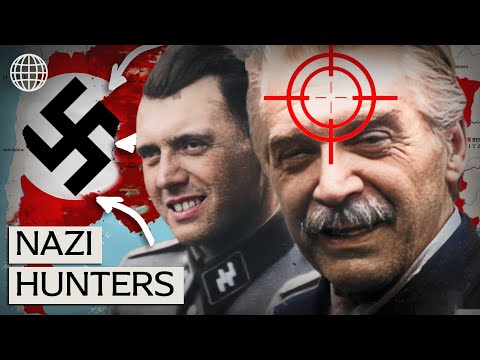
The Mossad’s hunt for Mengele was relentless. They tracked him to a boarding house in Buenos Aires, but he had already slipped away—this time to Paraguay, then Brazil. “The idea was that I should go now and try to find Mengele,” recalled Zvi Aharoni, a senior Mossad agent. For years, they chased shadows, following tips that led to dead ends. Mengele, meanwhile, grew increasingly paranoid, living in squalid farmhouses and chewing his mustache to the point of developing a hairball.
But the world had not forgotten his crimes. In 1985, a mock trial in Jerusalem brought 106 survivors face to face with their tormentor’s memory. The pressure mounted, and a raid on a Nazi sympathizer’s home unearthed a stash of letters—and a stunning revelation: Mengele had died in 1979, drowned after a stroke while swimming off the Brazilian coast. “With deep sorrow, I tell you of the death of our common friend,” the letter read.
Yet doubts lingered. Could Mengele have faked his death? The world demanded proof. Forensic experts exhumed the skeleton, and DNA testing finally confirmed the truth. The Angel of Death was gone, but the hunt had taken decades—and the question remains: how many other Nazis escaped justice for so long?
The confirmation of Mengele’s death brought a strange sense of closure, but for the survivors, it was a hollow victory. “There is no punishment for a fellow like Mengele. Even if he’s caught and he’s executed, the second at the end of the hangman’s noose isn’t justice for what he did,” said one Mossad agent. The Angel of Death had cheated the gallows, dying an old man in Brazil, never forced to answer for his crimes in a courtroom.
But the hunt for Nazi war criminals was far from over. While Mengele’s story ended, others remained at large, hiding in plain sight across South America. One of them was Gustav Wagner, the Beast of Sobibor, who had been living comfortably in Brazil for decades. “Wagner was one of the most vindictive, sadistic mass murderers in the world. He just glorified in playing God,” said a historian.
Simon Wiesenthal, the world’s most famous Nazi hunter, had been tracking Wagner for years. In 1978, a newspaper article about a Hitler birthday party in Brazil gave him a crucial lead. Though Wagner’s face wasn’t in the photos, Wiesenthal devised a cunning plan. He sent a photo to the Brazilian press with Wagner’s name and SS number, claiming the man in the picture was the wanted murderer. The ploy worked: Wagner, terrified that his fellow Nazis might turn on him, turned himself in to the police.
But the Brazilian Supreme Court refused to extradite him, citing technicalities. Wagner was released, and just days later, he was found dead—stabbed in the chest. “He committed suicide by stabbing himself,” a survivor said with a sly smile. The circumstances were murky, and many believed it was an act of vengeance. “If one believes in a certain sense of biblical poetic justice, he certainly met it,” one observer remarked.
Wagner’s death was a stark reminder that justice often came too late—or not at all. For the survivors, the wounds never fully healed. “I would like to kill him, but I wouldn’t do it because I would go to jail. First of all, my family would be ruined,” said Shlomo Szmajner, one of the few who survived Sobibor. His words echoed the pain of thousands who had watched their tormentors escape punishment.
As the years passed, the generation of Nazi hunters grew old, and the trail grew colder. Yet the stories of Mengele, Wagner, and others like them served as a chilling reminder: the perpetrators of the Holocaust did not simply vanish; they lived among us, often protected by networks of sympathizers and indifferent governments. The hunt for justice was a race against time, and for many, time had already run out.
But the pursuit of justice did not end with Mengele or Wagner. In France, a husband-and-wife team, Serge and Beate Klarsfeld, had dedicated their lives to hunting Nazis who had escaped punishment. Their target was Kurt Lischka, the former Gestapo chief of Paris, who had orchestrated the deportation of 33,000 Jews—including 4,000 children—to Auschwitz. “Lischka was not scuffling under rocks. Lischka was living very openly,” Beate recalled. He was now a prosperous businessman in Cologne, and German law protected him from prosecution.
The Klarsfelds tried everything: they staged protests, filed lawsuits, and even attempted a bungled kidnapping. “We wanted to force Germany to see that they had in their midst a major Nazi criminal,” Serge explained. Their efforts culminated in the Klarsfeld Law, which finally allowed German courts to prosecute Nazi war criminals. In 1979, Lischka was brought to trial and sentenced to ten years in prison. “Justice had been served in some ways,” Beate said, though he only served five years before being released on health grounds.
The Klarsfelds’ work exposed a uncomfortable truth: many Nazis had been protected by the very institutions that were supposed to uphold justice. “There was no will to bring the Nazis to justice,” Serge said. But their determination inspired a new generation of Nazi hunters, including a young French investigator named Jean-Louis Recordon, who would take on one of the most notorious French collaborators of all: Paul Touvier.
Touvier had been the head of intelligence for the Milice, the Vichy regime’s paramilitary police, and had personally ordered the execution of seven Jewish hostages in 1944. After the war, he was sentenced to death in absentia, but he vanished. For decades, he was sheltered by fundamentalist Catholic groups. “I was concerned about potential leaks because I was fully aware that in the French administration, but not only there, Touvier had supporters,” Recordon said.
The hunt for Touvier led Recordon to a monastery in Nice, where the war criminal had been hiding for years. “When I saw this guy standing in the middle of the room, instantaneously I recognized him as Paul Touvier,” Recordon recalled. “He had piercing blue eyes. I remembered war films with blue-eyed Nazis, and that shook me up.” Touvier was arrested in 1989, and in 1994, he became the first French citizen to be convicted of crimes against humanity.
Yet the trial revealed deep divisions in France. “Anti-Semitism is alive and kicking in modern France,” one observer noted. Within days of Touvier’s arrest, the words “Death to Jews” were scrawled on a synagogue in Rouen. The past, it seemed, was never truly past.
As the 20th century drew to a close, the generation of Nazi hunters began to fade. Simon Wiesenthal died in 2005 at the age of 96, having outlived most of the men he hunted. “The satisfaction came from the world now knows,” he said in his final years. But for the survivors, the scars remained. “I feel that part of myself was in a way arrested, and I share the fate of all those who were arrested and disappeared,” said one survivor of the Vel’ d’Hiv roundup.
The hunt for Nazi war criminals had always been a race against time, and for many, time had already run out. But the stories of those who pursued justice—often at great personal risk—served as a testament to the power of memory and the enduring human quest for accountability. “We were leading a war against these Nazi criminals,” Serge Klarsfeld said. “They had found a way to use their own ingenuity, their own courage, their own lack of fear about what might happen to them to accomplish great things.”
And yet, as the last of the Nazi hunters passed away, a new generation faced a different kind of battle: the fight against Holocaust denial and the rising tide of extremism. The lessons of the past were clear, but the world seemed determined to forget them.
The hunt for the architects of the Holocaust had always been a war of attrition—a slow, grinding pursuit against men who had mastered the art of disappearing. But the Klarsfelds, Wiesenthal, and Recordon had proven that even the most elusive monsters could be dragged into the light. “The satisfaction came from the world now knows,” Wiesenthal had said, and that knowledge was a weapon no network of sympathizers could disarm.
Yet the work was never truly finished. As the last of the Nazi hunters passed away, their files and photographs became a different kind of ammunition—evidence for historians, educators, and prosecutors who would inherit the fight. The men they hunted were dead or dying, but the ideology that had fueled them was not. “Anti-Semitism is alive and kicking in modern France,” one observer had warned after Touvier’s arrest, and those words echoed through the decades that followed.
In the end, the hunt for Mengele, Wagner, Lischka, and Touvier was never just about punishment. It was about memory—the refusal to let the world forget what had happened at Auschwitz, at Sobibor, at the Vel’ d’Hiv. The survivors who testified at the mock trial, the Klarsfelds who risked their lives, the agents who chased shadows across continents—they had all fought for the same thing: a reckoning that would outlast them.
But as the 21st century unfolded, the world faced a new question. The generation that had witnessed the Holocaust was fading, and with it, the living memory of the atrocities. “I feel that part of myself was in a way arrested, and I share the fate of all those who were arrested and disappeared,” one survivor had said. When the last voice falls silent, who will carry the weight of that memory—and will the world still listen?
Report this article
Select a reason for reporting:






