December 2001. Kandahar had just fallen. The Taliban’s rule was over, and the airport outside the city had become the most crowded and dangerous patch of ground in southern Afghanistan. Inside the wire, American special operations units were getting their first look at who else had shown up to fight. Navy SEALs, Delta operators, and Green Berets were meeting the men of the Australian Special Air Service Regiment for the first time on the battlefield.
And almost immediately, a story began to circulate through the tents. A story still told two decades later, yet almost nowhere written down. If you were an American operator and the Australians were going out after dark, you didn’t go with them unless you absolutely had to.
This wasn’t a warning born of incompetence. It wasn’t a security briefing. It came from men who had spent their entire careers conducting night raids and had nothing left to prove to anyone. When operators like that step back, the reason is never doubt. The reason is that they recognized a standard they didn’t want to pretend to meet.
That is the reputation. And this is the story of where it came from.
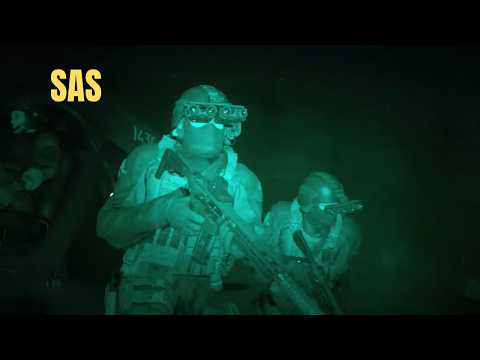
I want to be honest about what we know and what we don’t. There is no document recording a formal refusal. No order ever stated that Navy SEALs were not to accompany the SASR at night. What exists is a pattern of working relationships, of joint task forces, and a style of operating that made the Australians look different even to the most capable special forces on earth.
This is the story of the Australian SASR—where it came from, how it selects its men, and what it did in Vietnam, East Timor, Iraq, and Afghanistan. And why the idea that the best in the world preferred to let them work alone after sunset has persisted for so long.
To understand why that reputation exists, you have to start at the beginning. And that beginning is a long way from Kandahar.
The SASR is based at Campbell Barracks in Swanbourne, a quiet coastal suburb of Perth, Western Australia. Perth is one of the most isolated major cities on the planet. It’s closer to Bali than to Sydney. The nearest comparable city of its size lies thousands of kilometers across desert and ocean.
The unit was born there on July 25, 1957, when the Australian Army formed a small group known as the 1st Special Air Service Company. The idea was borrowed from Britain, where the Special Air Service had earned a legendary reputation during World War II behind enemy lines, then in the jungles of the Malayan Emergency, where small, patient patrols achieved results entire battalions could not.
Australia studied that model closely. It took what worked, discarded what didn’t suit its country and its character, and began building a force in its own image. The company grew, and in 1964 it expanded into the Special Air Service Regiment—the formation that still carries the same name today.
The founding principles were simple and have barely changed. Work in small teams, usually patrols of four to six men. Be self-sufficient for long periods without resupply or contact with higher command. Move through terrain that conventional forces avoid. Gather information, and strike only when the moment is right.
Above all, build the entire organization around the individual soldier. Because in a five-man patrol deep in hostile ground, there is nowhere for the weak link to hide. A battalion can carry a few passengers. A five-man patrol days away from help cannot afford even one.
That single fact explains almost everything about how the regiment recruits, trains, and thinks.
The test that decides who gets in is the Selection Course, and it has become part of the regiment’s mythology. It’s run in the harsh jungle of Western Australia—a region of heat, thorny scrub, and dry earth—and lasts about three weeks. Candidates walk enormous distances carrying heavy loads, navigating on their own, with very little sleep and minimal information about what comes next.
They are often not told how long a particular phase will last, how far the next march will be, or when the course will end. That ambiguity is deliberate. Because ambiguity strips away the things a man leans on when he gets tired. When you remove the finish line and the clock, all that’s left is character.
Most candidates who start do not finish. In many years the pass rate has been well below half. The numbers vary by intake and aren’t published by the regiment, but the principle is constant. The course isn’t trying to find the fastest or the strongest man. It’s trying to find the man who keeps making good decisions when his body is begging him to stop.
Veterans describe a moment that comes to everyone, usually in the late hours of the night, when the mind constructs a perfectly logical argument for quitting. You’re cold. You’re in pain. No one would blame you. And the staff don’t shout at you because they don’t need to. The decision is yours alone—and that is exactly what they’re watching.
The man who quits in that moment isn’t a bad soldier. He has simply proven that, in the conditions the regiment will one day ask of him, he will make a different choice. The men who pass have proven the opposite, and they’ve proven it under the same conditions in which it’s hard to fake.
Passing Selection doesn’t make a man an SAS soldier. It earns him the chance to begin the real training. The reinforcement cycle that follows lasts many months and hones the actual skills of the trade. Patrolling, navigation, signals, medicine, demolition, close-quarters battle. And the long, patient discipline of reconnaissance.
By the end of it, the men who remain have acquired the skills. And they have spent so long together, under such pressure, that they function almost as a single body. They know how one another breathes when tired. They know who goes quiet when afraid and who gets loud. That intimacy matters enormously in the dark, because in the dark you cannot see anyone’s face. You have to trust that the shape moving beside you will do exactly what you expect without a word being spoken.
The regiment’s first great test came in the jungles of Borneo, where Australian SAS soldiers conducted secret cross-border reconnaissance during the Indonesian Confrontation of the mid-1960s. They worked alongside British and New Zealand special forces in terrain so dense and wet that a patrol might cover only a few hundred meters in a day.
Then came the war that forged the legend.
Australia sent troops to Vietnam in the 1960s, and the SASR arrived in 1966, based at Nui Dat in Phuoc Tuy Province. Over the next five years, its squadrons would mount more than a thousand patrols. They did not sweep the jungle looking for a fight. They went in quietly, often inserted by helicopter, and stayed for days at a time, watching enemy trails, counting the men who moved along them, and learning the rhythms of a force that believed the forest belonged to it.
Most accounts credit the Viet Cong with naming the Australian patrols. They called them the ghosts of the jungle. The name has stuck in Australian history, and while it is impossible to verify exactly who coined it or how widely it spread, the idea behind it is well documented.
Small groups of Australians were appearing in places the enemy believed were safe, hitting hard, and vanishing before a response could be organized. Enemy units began changing where they moved and how they moved—and that kind of behavioral change is the highest compliment in special operations. You hadn’t just killed the enemy. You had made him afraid to act normally on his own ground.
The patrol system the regiment developed in Vietnam became the template for everything that followed. A small team goes out, stays concealed, observes, and decides on the spot whether to act. The team carries the minimum of equipment, because every extra kilogram is a liability. The team makes its own decisions, because a radio call to a headquarters hours away is useless when the patrol is meters from a trail being walked by armed men.
What the regiment learned at Phuoc Tuy was that the best weapon in the jungle was not the rifle. It was patience—and the willingness to stay in place longer than the enemy believed any human being could.
The next test was not in a jungle at all.
In September 1999, Australia led the international force sent to East Timor after the violence unleashed by pro-Indonesian militias following the territory’s vote for independence. The SASR was among the first Australian units on the ground, securing Dili airport and moving into a city where no one was entirely sure who was a friend and who was an enemy.
The situation was tense. The mission was unfamiliar, and the force had to deploy quickly into a place where a single misstep could turn a peacekeeping operation into a war with the Indonesian military. The regiment’s role was to be firm without being reckless—to control key sites and show the militias that the force had come to confront that it was serious.
By most accounts, militia leaders recalculated quickly. East Timor was not the regiment’s most violent campaign, but it proved something important about its character. The same men who could disappear into a jungle for a week could also move openly through a troubled city and project a quiet authority. That range is rare.
Then came September 11, 2001. On the 14th of that month, Australia invoked the ANZUS treaty for the first time in its history. The regiment was among the first elements sent.
Within weeks, Australian special forces were assembled for operations in Afghanistan as part of a task force that would not be led by an Australian, but by an American.
This is the context in which the SEALs and the SASR worked together at scale for the first time. Task Force K-Bar, as the joint special operations task force—South was known, was commanded by a Navy SEAL, Captain Robert Harward. It combined elements from U.S. Navy Special Warfare, Army Special Forces, and Air Force Special Tactics, alongside special operations units from Australia, New Zealand, Germany, Norway, Denmark, Canada, and Turkey.
It was a gathering of nearly every serious special operations force in the Western world, living on the same ground under a single command, hunting the same enemy.
Task Force K-Bar conducted a long list of missions through early 2002, including special reconnaissance, sensitive site exploitation, and the grinding work of clearing cave complexes in the mountains of eastern and southern Afghanistan. It was later awarded the U.S. Presidential Unit Citation, and the Australian squadron was among the units recognized.
That matters for our story because it tells us something the folklore cannot. The Americans who ran that task force saw the Australians working up close, and they saw enough to recommend them for the highest unit award the United States bestows. They were not strangers being thanked out of politeness. They were colleagues whose performance was measured against the best.
It is worth stating clearly what the SEALs brought to that partnership, because the Australian legend can distort the picture unfairly.
American naval special warfare is one of the most capable communities on the planet—exceptional fitness, superior training, and experience from maritime interdiction to night raids on compounds. They had mobility, aircraft, intelligence support, and the firepower of the largest military on earth. Their style of combat was built on speed, surprise, and overwhelming support.
The Australian system was built on the idea that none of that might be available. An American raid usually looked like a carefully designed event—helicopters dropping a team near the target, an assault element breaching, intelligence gathered, then the force leaving the way it came. An Australian patrol was smaller, stayed longer, moved on foot when others flew, and was prepared to make decisions without asking anyone.
Neither approach was wrong. They were answers to different questions. And anyone accustomed to one would naturally hesitate to join the other.
In early March 2002, the war changed shape. Operation Anaconda began in the Shahi Kot valley, and it quickly turned into harder fighting than planners expected. Australian special forces operated alongside American and allied units in the high mountains, where altitude, cold, and a determined enemy made every movement costly. In that kind of work—long hours of patient discomfort followed by sudden violence—the Australian approach fit best, and it earned the respect of the units who watched it.
The squadron withdrew from Afghanistan later that year, then Iraq demanded its attention. In the opening days of the 2003 invasion, SASR squadrons were sent deep into western Iraq, far from the main coalition advance, to secure the desert region from which Iraq might launch Scud missiles at Israel. They traveled in light vehicles across open desert with limited support and no easy rescue. They found and secured the ground, helped seize the vast Al Asad air base, and ensured the western desert would not become a launch site that could widen the war. American commanders praised them publicly.
By the time the regiment returned to Afghanistan in full strength in 2005, it was no longer a newcomer to the coalition. It was a known force. Australia deployed a special operations task group built around SASR and commando squadrons, and by 2006 it was based in Uruzgan province, in the town of Tarin Kowt.
Uruzgan was among the harshest places the coalition worked. It was a former Taliban stronghold—land of mountain passes, dry riverbeds, green agricultural strips between barren hills, and mud-walled compounds that could hide a fighter or a family with equal ease. The population had lived under Taliban rule and had good reason to be wary of any foreign force. This was counterinsurgency in its purest form, and the enemy knew the ground intimately.
The task group’s mission was not to control territory. It was to find and disrupt the Taliban networks that made the province dangerous for everyone—including the Dutch task force that would take command in Uruzgan, and the Afghan communities caught in between.
That meant intelligence-driven operations. Teams slipped into an area, often at night, and spent days observing. They mapped the movements of commanders, supply sources, the compounds hosting meetings, and the villages being intimidated. When the picture was clear, they struck. And because the patrols were small and the movement silent, the Taliban often had no idea the Australians were there until the fight began.
Night was where the difference showed most clearly. Most armies treat darkness as a risk to be managed. They have night vision and they train on it, but they still move slower, communicate more, and stay closer to support lines at night. The regiment treated darkness as its preferred time to work. Its patrols rehearsed night movement until it became routine—moving over rough ground almost silently, communicating with hand signals and a few whispered words, keeping spacing and discipline that left the enemy no gap to exploit.
A night patrol in Uruzgan might cover an astonishing distance without a stumble or a sound, reaching an observation post before dawn without the enemy sensing anything. That quiet competence was the product of habit, not genius. The regiment spends a very long time mastering unglamorous basics: navigation, field craft, noise discipline, and movement drills that keep a patrol cohesive in the dark. Old soldiers often say the secret of special operations is that there is no secret. It is the same basic skills performed better, more often, and under more pressure than others bother to attempt.
In the dark, the gap between a well-trained patrol and an ordinary one is enormous. One group moves like water. The other moves like a crowd.
The second element was how Australian teams behaved when compromised. When a patrol is contacted in hostile ground, there are two main options. You can break contact, withdraw, and call for help. Or you can seize the initiative, close the distance, and crush the enemy before he can organize. The regiment’s doctrine leaned heavily toward the second option, and its training instilled it until it became instinct.
A small team that violently attacks an ambush can sometimes break it, because the ambushers expected to be the hunters and suddenly find themselves the hunted. But it is a high-risk approach, and it requires every man in the patrol to commit instantly and without hesitation. If one man hesitates, everything can collapse. That is why Selection and the long training matter so much. They produce men who will commit to one another.
Nothing illustrates the demands of that environment more clearly than the actions of Trooper Mark Donaldson. In September 2008, during a patrol in Uruzgan, his unit was ambushed and pinned down by Taliban fighters in a violent, prolonged firefight. Donaldson repeatedly exposed himself to fire, drew attention away from his wounded mates, and at one point ran across open ground to rescue an Afghan interpreter left in the line of fire. For his actions he was awarded the Australian Victoria Cross—the first ever presented.
It is one story from a regiment that has many, but it embodies the character the regiment spent half a century building. A refusal to abandon a mate, and a willingness to move toward danger rather than away from it.
So why does the idea persist that Navy SEALs, or American special forces generally, would hesitate to follow the SASR into the dark? There are several reasons. The first is that the idea itself is a compliment, and special forces rarely trade compliments. When a unit has a strong reputation among its peers, it spreads. The second is that it reflects a real difference in style. The regiment’s patrols were built to operate without the support structure American units routinely relied on. A team expecting an aircraft overhead and a quick-reaction force on call would be nervous about following a team that expected neither. The third is that these hard men were being honest. Combat veterans know the limits of what their training prepared them for, and the best of them don’t pretend otherwise. Saying the Australians operated at a level they wouldn’t choose to follow in the dark was not an insult to their own skills. It was a statement about the difference between two philosophies of war.
That is the honest answer closest to the question in the title. It is not that the SEALs were afraid, and it is not that they were forbidden. The two forces were designed for different missions, and anyone who understands both would hesitate to mix them without reason.
The myth simplifies this, as myths always do, into a single line: don’t follow the Australians after dark. It is a good line. It is also a compressed version of a more complicated truth—that special operations forces respect one another most when they acknowledge the limits of their own capabilities.
But the regiment’s full story cannot end with admiration alone. It would be dishonest to pretend it could.
In 2016, the Australian Defence Force began an investigation into allegations about the conduct of its special forces in Afghanistan. Major General Paul Brereton led the inquiry, and his report was released in November 2020. The findings were devastating. The report found credible information about 23 incidents in which 39 people were unlawfully killed, plus two further incidents of cruel treatment involving 25 current or former Australian special forces members. Most were from the SASR. The report concluded the killings were not the result of the fog of battle. In many cases, it found, they included prisoners who no longer posed any threat. It described a culture in which junior soldiers were pressured to commit killings so they would be considered blooded. The report noted that this behavior was confined to a small number of patrol commanders and their close associates, and that the vast majority of special forces members served honorably. But it also made clear the problem was real, and that aspects of the regiment’s culture allowed it to happen.
The 2nd Squadron of the SASR was later disbanded and removed from the Australian battle honors. The country began a long, painful process of accountability—investigations, prosecutions, and a broad public debate about what the nation asked of its soldiers, and what it failed to see.
This is the part of the story the myth leaves out. And it matters for a reason beyond simple fairness. The very traits that made the regiment so effective—its independence, its secrecy, its tight bonds, and its willingness to operate with minimal oversight—are the traits that make misconduct possible when leadership fails. A force trusted to make decisions alone in the dark will, in a few cases, make the wrong ones. The regiment’s greatest strength and its greatest vulnerability turned out to be the same thing. Anyone who wants to understand the Australians honestly has to accept both truths together. They were among the most capable fighters of their generation, and some of them betrayed the standards that capability was supposed to represent.
It is also worth noting that the investigation itself was possible because the Australian Army was willing to conduct it. Soldiers came forward to give evidence. Witnesses spoke. A senior officer spent years examining the conduct of an elite unit and laid the findings before the public. Whatever else is said about it, that is the behavior of an institution willing to confront its own failures—and that matters for the regiment’s long story, which is still being written.
So where does this leave us with the myth? The rule nobody wrote down was never really about the night, and it was never about fear. It was about professionals recognizing that a certain style of war demands a certain kind of man, and that those men are made slowly in a remote place through a process most people would not survive.
The Australian SASR earned its reputation in the jungles of Phuoc Tuy, the streets of Dili, the deserts of western Iraq, and the mountains of Uruzgan. The SEALs, Green Berets, and Delta operators who worked alongside them recognized what they were seeing, and were honest enough to say so. But the full story is bigger than a legend. It includes the quiet courage of men who did the hardest jobs in the worst conditions. It also includes the shame of those who dishonored it. It reminds us that elitism is not a guarantee of virtue, and that the greatest military units are those with the courage to look honestly at themselves.
The gap between a good soldier and a great one was never mostly physical. It lies in the decision made in the dark when no one is watching, and when stopping is the easy option. The Australians spent half a century proving they could make that decision. The harder question, which the regiment is still answering, is whether they will always make the right one.
If you want to go deeper into special operations in Afghanistan—including what American units were doing during the same years—consider subscribing. There is a great deal more to say.
What do you think—can a unit’s greatest strength and its greatest failure truly be the same trait? Share your thoughts in the comments below.
Report this article
Select a reason for reporting:






