Don’t touch their knives. Three words whispered across American bases in Vietnam. Three words that could save your life or end your career in a heartbeat. In 1968, when a US Marine reached for an Australian SAS operator’s blade, what happened next wasn’t just a warning—it was a glimpse into a terrifying truth the Pentagon didn’t want you to know.
Because that knife wasn’t just a weapon. It was a contract written in blood, a tool that had done things in the long high jungles that would make your stomach turn. And the man who owned it? He’d spent five days straight living three meters from enemy soldiers, silent as death, waiting for the perfect moment to move.
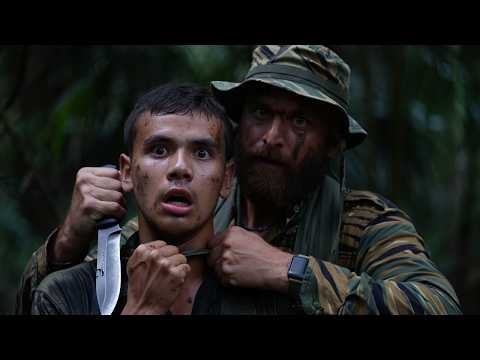
The Australian SAS in Vietnam had a kill-loss ratio that made American special forces look like amateurs. Over 1,200 reconnaissance patrols with casualty rates so impossibly low that US intelligence suspected they were cooking the numbers. They weren’t. They were operating on a different level—a level where touching another man’s knife could get you teeth on the ground and a lifetime ban from joint operations.
And the Americans who ignored the warning? Let’s just say some lessons are only learned once.
This wasn’t about respect. This wasn’t about military protocol. This was about survival. The men who carried those knives had stripped away every comfort, every rule, every shred of civilization. They lived in the jungle like ghosts, communicating through hand signals, eating cold rations in silence, letting the mud and sweat of the rainforest claim them until they smelled like the enemy’s own backyard.
Their gear wasn’t equipment. It was the only thing standing between them and a body bag twenty kilometers from the nearest friendly position. Every magazine, every ration, every blade had a precise place and purpose. Touch it without permission, and you were gambling with a man’s life.
Why did the knife become the ultimate taboo? Because unlike rifles or radios, the knife was the last resort—the moment when stealth replaced firepower and silence meant survival. In those moments, there was no backup, no artillery, no extraction. Just a man, his blade, and the darkness.
American soldiers who witnessed SAS patrols preparing to deploy talked about it like watching monks perform a ritual. Every item inspected with obsessive precision. Every weapon function tested and retested. And God help the outsider who disrupted that ritual by touching something that wasn’t his.
The stories circulated through bases and mess halls: curious GIs who picked up an SAS knife to admire the blade and found themselves slammed against a wall with a very calm, very serious Australian explaining that if he ever did that again, the knife would be the last thing he’d see. These weren’t threats. They were statements of reality.
But the knife taboo wasn’t just about practicality or cultural difference. It was about what those knives represented—and what they had done. The true earthquake hit in 1966 when Australia deployed the first Australian Task Force, a self-contained brigade with its own province, its own rules of engagement, and its own slice of Vietnamese hell to pacify.
Buried inside that task force was a weapon so precise and so terrifying that even mentioning it made Viet Cong commanders change their routes. The Special Air Service Regiment had arrived, and the jungle would never be the same.
At peak deployment, the entire SAS squadron numbered fewer than 100 men, split into reconnaissance patrols of four or five. They inserted by helicopter into enemy-controlled jungle and vanished for days at a time. No resupply, no reinforcement, no backup plan except a radio and the hope that extraction helicopters could reach them before the Viet Cong did.
They mapped enemy trails, counted soldiers moving south, photographed bunker complexes hidden under the forest canopy. And sometimes, when circumstances demanded it and escape routes were secure, they set ambushes that wiped out entire enemy squads without firing more than a handful of shots.
The Viet Cong gave them a name that captured the existential dread of fighting an enemy you couldn’t see: Ma Rung—the phantoms of the jungle.
But phantoms don’t need knives. And SASR operators were very, very human. The difference between survival and catastrophe came down to details so small that outsiders dismissed them as paranoia. A knife carried in a sheath that rattled slightly when the wearer moved. That tiny metallic click could be heard twenty meters away in the dead silence of a jungle night and bring a dozen enemy soldiers crashing through the brush.
A piece of equipment moved by a curious American who then put it back in slightly the wrong place. The Australian operator whose life depended on that equipment being exactly where his trained reflexes expected would discover the problem at the worst possible moment—in darkness, under stress, with hostile forces closing in.
This is where the legend stops being a legend and becomes something far more dangerous. Because in the world SASR inhabited, there was no such thing as a harmless mistake.
The statistics bear this out in numbers so stark they seem impossible. Over six years of continuous operations, SASR squadrons conducted nearly 1,200 reconnaissance patrols deep into enemy-controlled territory. 1,200 times, small groups of men inserted into places where discovery meant almost certain annihilation.
The casualty rate? One operator lost to enemy action. One to wounds. Three to accidents. One missing. One to illness. Against an enemy that controlled the jungle, knew every trail, and had spent years fortifying the province.
Those numbers aren’t luck or divine intervention. They’re the dividend of absolute, unforgiving discipline in every microscopic detail of preparation.
American special forces operators who rotated through joint operations with SASR came back changed. They stopped making jokes about the Australians’ obsessive gear checks. They stopped questioning why a patrol spent two hours arranging equipment before a five-day mission. They understood, really understood, that they were watching craftsmen practice a deadly art—where the penalty for imperfection wasn’t a bad grade, but a body bag and a flag-draped coffin flying home to grieving families.
And they spread the word through the American ranks with the urgency of men passing along information that could save lives. Don’t touch their knives. Don’t touch their magazines. Don’t touch anything that belongs to an Australian SAS operator, unless you want to learn a lesson you’ll never forget.
But why knives specifically? Why did that particular piece of equipment become the symbol of the untouchable boundary around SASR gear? Because unlike rifles or radios or rucksacks, knives represented the absolute last resort—the moment when stealth replaced firepower and silence meant survival.
And what happened in those moments remained locked in the memories of the men who lived them. Never discussed openly, never celebrated in official reports, but always there in the way an operator’s hand moved instinctively to check that his blade was exactly where it needed to be.
The silence was absolute, unnatural, and utterly terrifying to anyone who witnessed it. Australian SAS patrols operated under a code of noise discipline so extreme it bordered on the supernatural. Men who could spend five consecutive days in the jungle without uttering a single spoken word, communicating entirely through hand signals, touch cues, and pre-arranged gestures drilled into muscle memory during months of selection and training.
They didn’t whisper. They didn’t murmur. They didn’t even breathe loudly. Every sound was a potential betrayal. Every careless rustle of fabric or clink of metal, a possible sentence of annihilation for the entire patrol.
American soldiers who joined SASR on exchange operations reported feeling like they’d stepped into a mime performance conducted in hell—where breaking character meant everyone paid the ultimate price.
But silence was only the beginning of the transformation. SASR operators in the field didn’t cook food, because the smell of heated rations carried for hundreds of meters through humid jungle air, announcing their presence to every Viet Cong tracker within smelling distance. They ate cold, pre-portioned meals straight from the tin, chewing slowly and methodically to avoid the sound of rapid eating.
They didn’t smoke, even though nicotine withdrawal tortured men who’d been chain smokers before selection. Tobacco odor lingered in clothing and hair for days, and a single whiff could alert an enemy patrol that Westerners had passed through recently.
They didn’t wash with soap, didn’t use deodorant, didn’t apply insect repellent that smelled of chemicals. Instead, they let the jungle claim them—covered in mud, sweat, and the organic decay of the rainforest until they blended into the environment. Not just visually, but olfactorily. The enemy couldn’t smell what smelled like jungle itself.
This is the disgusting truth the transcript promised—and it made them the deadliest hunters in Southeast Asia.
Movement became a ritual of glacial patience. A patrol covering two kilometers in a single day was considered good progress. Sometimes an entire afternoon passed while the group advanced less than a hundred meters, each step requiring visual inspection of the ground ahead, weight transferred slowly to test for booby traps, constant scanning of the vegetation for signs of enemy activity.
When they heard enemy soldiers approaching, they froze in place—not crouching behind cover like soldiers in movies, but simply stopping midstride and becoming statues until the danger passed. And sometimes the danger didn’t pass. It walked within arm’s reach.
Declassified patrol reports describe encounters where Viet Cong soldiers moved along trails within meters of concealed SASR patrols, completely unaware that they were being watched, counted, and assessed. The Australians lay in the undergrowth, controlling their breathing, ignoring the insects crawling across their faces, and they didn’t shoot. Didn’t ambush. Didn’t reveal themselves unless absolutely unavoidable—because opening fire meant mission failure.
The Viet Cong developed a visceral, almost superstitious dread of areas where SASR operated. They called the Australians Ma Rung—jungle ghosts—and the name carried real psychological weight. Enemy soldiers reported finding signs that someone had observed their camp from close range. Broken twigs arranged in patterns. Disturbed vegetation suggesting long-term concealment. You were watched. You were studied. You were known. And you had no idea when the watchers would finally decide to strike.
That uncertainty ate at morale worse than conventional bombardment, because at least with artillery, you knew when the attack was coming. The phantoms struck on their own schedule, and only when conditions guaranteed success.
When they did strike, it was with overwhelming violence concentrated in seconds. Command-detonated claymore mines shredding enemy columns. Precisely aimed rifle fire dropping key targets. Immediate withdrawal before the stunned survivors could organize a response. By the time reinforcements arrived, the patrol had vanished back into the jungle, leaving only bodies and confusion.
And in those brief, savage encounters, equipment failures meant catastrophe. A four-man SASR patrol twenty kilometers inside enemy territory had no reinforcements, no resupply, no medical evacuation measuring response time in minutes. Everything they needed to survive existed in what they carried and nothing else. Each item was a link in a chain of survival—and disrupting any single link could unravel the entire system when seconds mattered most.
So the knife lived in a sheath attached exactly where the operator’s dominant hand expected it. Left-handed men positioned blades differently than right-handed ones, and trying to use another man’s configured kit felt as wrong as writing with the wrong hand. Edge sharpening became a pre-patrol ritual—blades had to cut through tissue and windpipe with minimal resistance, because multiple strokes meant noise, and noise meant detection.
Handle modifications separated professionals from those merely carrying knives. Paracord wraps. Grip tape. Checkering carved directly into handles. Lanyard holes and retention cords so losing grip didn’t mean losing the weapon in vegetation. These modifications violated appearance standards, but made perfect sense to anyone maintaining weapon control while exhausted, soaking wet, fighting for survival in darkness.
Touch one of these personalized knives without permission, and you violated an entire survival system refined through life-threatening experience.
The knife taboo survived Vietnam and outlived most of the men who created it. Modern Australian special operations maintain strict equipment protocols tracing direct lineage to the Vietnam-era SASR culture. New operators learn during selection that touching another’s gear without permission represents one of the fastest ways to fail, regardless of physical performance.
Veterans who deployed to Vietnam and now range from their mid-seventies to mid-eighties still maintain knives with obsessive care learned five decades ago. Many react with visible tension when anyone reaches toward their kit, even in safe civilian contexts.
Because certain lessons can only be learned once, and forgetting them dishonors the operators who paid the ultimate price to teach them.
The warning echoes across generations through stories of soldiers who learned through hard experience. Don’t touch their knives. Don’t handle their magazines. Don’t interfere with gear. Not because Australians are unreasonable or aggressive, but because professionals recognize that survival systems must be respected absolutely. Personal boundaries exist for operational reasons. And some traditions carry wisdom purchased with blood.
Respect the blade. Respect the operator who carries it. Respect the silence he brings to darkness where others fear to tread.
So here’s the question that lingers long after the last helicopter fades over the canopy: if a single careless touch could unravel a man’s entire survival system, what else in your own life are you handling without understanding the price it was built to pay?
Report this article
Select a reason for reporting:






