May 3rd, 1967. A hangar in Van Nuys, California, hums with anticipation. The curtain rises on a machine that looks less like a helicopter and more like a fighter jet that lost its way. This is the Cheyenne—the U.S. Army’s bet on a revolution in rotary-wing flight. Its rigid main rotor, stubby wings, and rear pusher propeller promise speeds exceeding 200 knots, a leap that could redefine close air support. But behind the polished fuselage and optimistic smiles, a storm is brewing. The Vietnam War is bleeding the Pentagon dry, and every dollar spent on this futuristic gunship is a dollar not sent to the troops in the jungle.
The first flight on September 21st, 1967, is a triumph of engineering—a brief, shining moment before the cracks appear. Funding for 375 aircraft is approved on January 8th, 1968, with initial operating capability targeted for 1972—optimistically, late 1970. The Army wanted 600, but the war’s insatiable appetite forced a compromise, driving unit costs skyward. As prototypes roll out, the pressure mounts. Test pilots push the Cheyenne to its limits, and the machine responds with dazzling speed. Yet, for every milestone, a delay lurks. The September 1968 flight test is not a deployment—it’s a rehearsal for a battle that may never come.
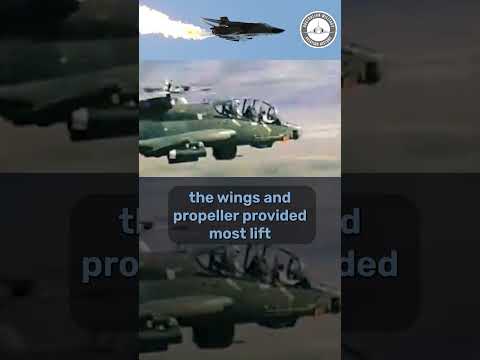
The Cheyenne’s compound design is its greatest asset and its biggest gamble. At high velocity, the wings and propeller provide most of the lift, reducing the rotor’s strain to just 20% of total lift. The gunner’s station is a marvel: the entire seat, sighting system, and controls rotate to align with the turret, linked to a periscopic sight for direct targeting. The pilot, seated behind, uses a helmet-mounted system to aim weapons—a glimpse of the future. Six external hard points carry a deadly arsenal: BGM-71 TOW missiles on the inner wing pods, rocket launchers on the outer wings, and fuel tanks on the fuselage. This is not just a helicopter; it’s a weapons platform designed to dominate.
But as the Cheyenne takes shape, so do the obstacles. The Vietnam War’s financial strain looms large, and the Army’s hopes for 600 units shrink to 375. Each prototype completed by 1969 brings the dream closer to reality, yet the war’s drain on resources casts a long shadow. The Cheyenne is a technological marvel, but technology alone cannot win a war—or a budget battle. The stage is set for a showdown between ambition and reality, and the first major milestone in September 1968 will decide the Cheyenne’s fate. Will this radical gunship soar into history, or become a cautionary tale of promise unfulfilled?
The September 1968 milestone arrives not with a triumphant roar, but with the whine of a turbine and the quiet tension of engineers holding their breath. Test pilots push the Cheyenne to 200 knots and beyond, the pusher propeller biting the air as the rigid rotor unloads. The wings generate lift, the rotor spins freely, and for a moment, the machine is everything its designers promised. But the cheers are short-lived. Vibration creeps in at high speed, a shudder that rattles the airframe and the nerves of the Army observers. The compound design, so elegant on paper, reveals its complexity in the air.
Back in the hangar, the maintenance crews curse the rigid rotor. Every flight hour demands hours of inspection, and the T64 engine’s appetite for fuel is matched only by its appetite for spare parts. The Army’s accountants sharpen their pencils. The Vietnam War is not just draining funds—it’s demanding simpler, cheaper, more reliable machines. The Cheyenne, with its exotic rotor head and pusher propeller, is none of those things. Yet the promise of speed and firepower keeps the program alive, if only barely.
The gunner’s station, once a marvel, becomes a source of debate. The rotating seat and periscopic sight work, but the complexity overwhelms the crews trained on simpler gunships. In the field, where mud and monsoon rain rule, the Cheyenne’s sophistication feels like a liability. The pilot’s helmet-mounted sight, a glimpse of the future, is also a glimpse of a maintenance nightmare. Each new system adds weight, cost, and failure points.
Then comes the news that shakes the program to its core. The Army, facing budget cuts and the war’s unrelenting demands, begins to question whether the Cheyenne is worth the price. The 375 units shrink further in quiet meetings, and the initial operating capability slips from late 1970 to 1972 and beyond. The September 1968 flight test, meant to be a milestone, becomes a warning. The Cheyenne is fast, deadly, and revolutionary—but it is also expensive, complex, and fragile. In the jungles of Vietnam, the Army needs a workhorse, not a racehorse.
Yet the engineers refuse to give up. They tweak the rotor, adjust the wings, and promise fixes. Each prototype flight brings new data, new hope, and new problems. The Cheyenne’s story is far from over, but the clock is ticking. The war’s shadow grows longer, and the budget axe hangs by a thread. The next test will not just measure speed and agility—it will measure the Cheyenne’s very survival.
By the spring of 1969, all ten prototypes are complete, lined up in a row like metallic soldiers awaiting inspection. Each airframe is a testament to ambition—and to the mounting cost of that ambition. The Army’s original vision of 600 Cheyennes has been whittled down to 375, and even that number feels less like a commitment and more like a hostage negotiation. Every briefing in Washington carries the same unspoken question: can this machine justify its price tag while soldiers in Vietnam are fighting with decades-old Hueys?
The answer, increasingly, is no. The T64 engine, for all its power, guzzles fuel at a rate that makes logistics officers wince. Field maintenance on the rigid rotor requires specialized crews and specialized tools—neither of which exist in the mud and chaos of a forward operating base. The rotating gunner’s station, once hailed as a revolution, draws skeptical glances from combat veterans who know that simplicity keeps men alive. In the Pentagon’s corridors, the Cheyenne’s advocates fight a different war: a war of memoranda, budget hearings, and shifting priorities.
Meanwhile, the competition is closing in. The Army’s own Advanced Attack Helicopter program begins to take shape, promising a simpler, cheaper, more rugged machine built around proven technology. The Cheyenne, for all its speed and firepower, suddenly looks like a costly detour—a technological showpiece without a clear battlefield role. Its 200-knot dash and TOW missiles are impressive, but the war in Vietnam demands helicopters that can loiter for hours, absorb punishment, and fly again tomorrow. The Cheyenne is a sprinter in a marathon.
Then, in a meeting that few outside the program will ever know about, the decision is quietly made. The Army slashes the Cheyenne order to a mere handful of aircraft—enough for testing, enough to save face, but not enough to equip a single combat unit. The announcement, when it comes, is buried in a routine budget briefing. No dramatic cancellation, no public outcry—just a slow, bureaucratic fade. The engineers who poured years into the compound rotor and the pusher propeller watch their dream shrink to a footnote.
But the Cheyenne does not die quietly. Its legacy lives on in every attack helicopter that follows—the Apache’s helmet-mounted sight, the emphasis on speed and firepower, the lessons learned from its failures. The machine itself may be destined for museum halls and technical manuals, but its DNA threads through the next generation of gunships. The Army wanted a revolution; what it got was a cautionary tale wrapped in aluminum and ambition.
As the last prototype rolls into storage, one engineer lingers by the hangar door. He runs a hand along the Cheyenne’s stubby wing, feeling the smooth metal that once promised to change everything. Somewhere in the distance, a Huey lifts off, its familiar rotor slap echoing across the tarmac—a sound that will outlast the Cheyenne by decades. The engineer turns away, and the hangar lights click off, one by one.
The final chapter of the Cheyenne is written not in the skies over Vietnam, but in the cold, quiet archives of the Pentagon. By 1970, the program is officially a shadow of its former self—a handful of prototypes, a mountain of technical reports, and a budget line item that no one wants to defend. The Army’s Advanced Attack Helicopter competition moves forward without it, and the Cheyenne’s advocates, once fierce, fall silent. The revolution that began in a Van Nuys hangar ends with a filing cabinet and a signature.
Yet the machine itself refuses to be forgotten. Its rigid rotor technology and pusher propeller concepts feed directly into later experimental programs, and its helmet-mounted sight becomes standard equipment on the Apache. Engineers who worked on the Cheyenne scatter to other projects, carrying with them the hard-won lessons of ambition unchecked. The gunship that could have changed everything becomes a ghost, haunting the design reviews of every helicopter that follows.
Decades later, aviation historians gather around the last surviving airframe in a museum storage facility. They point to the rotating gunner’s station and the stubby wings, marveling at what might have been. The Cheyenne never fired a shot in anger, never deployed to a combat zone, never proved its worth in the mud and blood of war. But it pushed the boundaries of what rotary-wing aircraft could do—and paid the price for flying too close to the future.
The engineer from that final day in the hangar is long retired now, but he still remembers the feel of the metal under his hand. He knows that the Cheyenne was not a failure—it was a necessary step, a bold experiment that paved the way for others. The Army wanted a revolution, and it got one, just not in the form it expected. The Cheyenne’s story is a reminder that progress is rarely linear, and that the machines that fail often teach us more than the ones that succeed.
So the Cheyenne rests, a silent sentinel of what could have been. Its rotors are still, its engine cold, but its legacy hums through every attack helicopter that thunders across modern battlefields. The dream of 1967 did not die—it simply transformed, waiting for the next generation to take up the challenge.
What do you think—was the Cheyenne a tragic waste of resources, or a vital stepping stone to the machines that followed? Share your thoughts in the comments below.
Report this article
Select a reason for reporting:






