Summer 1944. Eight Soviet fighters dive into a formation of sixty German aircraft. When the dust settles, four Messerschmitt Bf 109s and three Stukas are falling toward the earth—and not a single Soviet plane is lost. This should not happen. On paper, the Bf 109 is one of the finest fighters in the world, flown by men who will end the war with 352 kills. Yet across the Eastern Front, loss reports keep streaming in from low altitude, and commanders cannot explain them.
Then an order goes out to German pilots: “Do not engage these Soviet fighters at low altitude.” Something is very wrong here.
To understand that order, you have to strip away the assumption lurking behind it—the belief that the better aircraft wins. By every number the German High Command documented, the Bf 109 was still the superior machine. It climbed faster. It fought higher. Its cannon fired through the propeller hub and could tear a fighter apart with a single burst. And the men flying it were scoring numbers no air force in history had ever seen.
So when squadrons began falling over the battlefield, the reports made no sense. The machine was winning and losing at the same time. The men reading those reports were not stupid. They were looking at the wrong sky.
To understand why, we have to go back roughly ten years, to the moment the Bf 109 was designed—because the aircraft losing at low altitude in 1944 was built from the very first pencil stroke for a completely different battle.
In 1934, the German Air Ministry wrote requirements for a new fighter. Look at what it actually asked for: maximum speed at 6,000 meters, rapid climb to high altitude, a ceiling of 10,000 meters. The entire document pointed upward. This was a machine meant to intercept bombers in the stratosphere, to rule the top of the sky. Everything that made it exceptional was tuned for thin air.
The man who answered those requirements held one idea he refused to abandon. Willy Messerschmitt believed in lightness the way some people believe in religion. His philosophy was simple and a little brutal: take the smallest, lightest airframe you can build and strap the most powerful engine you can get to it. Do not add. Subtract. Wrap metal tight around the engine and the pilot and nothing else.
That thinking gave the 109 its blade-like performance. It also gave it those famously narrow, spindly landing gear mounted in the fuselage instead of the wings to save weight—gear that killed pilots in ground accidents for the rest of the war. Even its strengths came at a price.
Here is the strange part. When the first prototype flew in 1935, it did not have a German engine. The Junkers powerplant was not ready, so the first Bf 109 took off with a British Rolls-Royce Kestrel. The aircraft that became the symbol of the Luftwaffe was born with an engine from the country it would spend years trying to destroy. But that is a story for another day. What matters here is the aircraft’s DNA: light, fast, climbing, and built for altitude.
Now move to the war in the East and watch how that DNA became a problem. The air war on the Eastern Front was not the air war over Germany. In the West, bombers lined up above 20,000 feet and fighters climbed to meet them—cold, thin-air combat. That was the fight the 109 was designed to win.
But in the East, the fighting happened on the deck. It was a war of ground armies, tanks and infantry grinding across a thousand miles of front, and the aircraft that mattered were the ones supporting them. Dive bombers, ground-attack planes, the Soviet Il-2 like a flying tank hunting German columns, fighters escorting them, and others trying to shoot them down. Most combat took place below 4,000 meters—often far lower, over the mud where soldiers watched dogfights unfold above their heads.
The Soviets had already learned what low altitude does to high-altitude designs. Early in the war they fielded the MiG-3, built for the stratosphere. Up high, it was fast. Down low, where the real fighting happened, its advantage simply evaporated, and it maneuvered worse than the 109 it was meant to fight. The lesson was harsh and clear: on this front, the best fighter in the world was the one that was best at low altitude. High-altitude performance was a luxury nobody needed.
Meanwhile, the Germans were walking the wrong direction—and doing it for perfectly logical reasons.
As the war dragged on, the Bf 109 got heavier. It had to. Threats kept multiplying, so the aircraft received more cannons and more armor. The light, simplified Friedrich gave way to the Gustav, the G-series built around a larger, heavier Daimler-Benz engine. Then came the add-ons.
A heavier machine gun in the cowling demanded bulges over the breech blocks. Pilots called the G-6 the “Beule”—the bump. Bigger tires meant more fairings on the wings. Armored glass, a 30mm cannon. And when they needed to knock down hard targets, they hung a pair of 20mm cannons in pods under the wings.
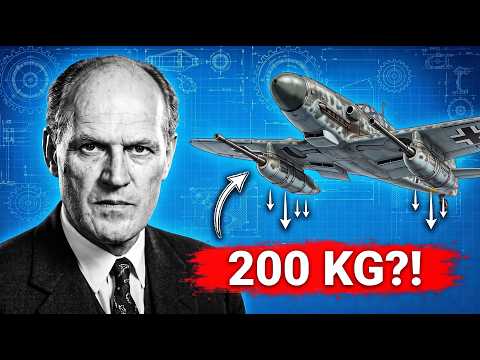
Those pods are where you can actually feel the trap closing. Each one, loaded, added over 100 kilograms to a wing. Together, roughly 200 kilograms to an airframe Messerschmitt had spent his life trying to keep light. Pilots hated what the pods did to handling. The aircraft began to wallow in flight like a pendulum. It grew sluggish exactly where a fighter needs to be sharp—in the turn, in the roll, in the snap of close combat. Under hard maneuvering, the pods could tear away entirely.
The Germans had a name for these cannon-heavy versions: “Kanonenboot”—gunboat. The name tells you everything. A gunboat is not a dogfighter.
And that is the trade-off at the heart of the whole story. The extra cannons were not a mistake. They let the 109 shred an armored Il-2 or break up a heavy bomber. Real firepower, bought for real reasons—but every kilogram of it made the aircraft worse at low-altitude turning combat. The very thing that made the late-war 109 lethal against big targets made it vulnerable to a small, light enemy that wanted nothing more than to circle.
Plenty of German pilots said so plainly. They would have preferred the older, lighter Friedrich back. The aircraft was getting stronger and worse at the same time, and what you noticed depended entirely on who you were fighting.
Now put yourself on the other side of the front, in a Soviet design bureau staring at the same problem from the opposite end.
Alexander Yakovlev could not get the engine he wanted. Soviet engine development lagged, and there was simply no powerful, reliable high-altitude powerplant to be had. So he made a decision that looked like surrender and turned out to be the solution. If he could not have a bigger engine, he would build the lightest possible airframe that could carry the one he already had.
He took Messerschmitt’s own philosophy—subtract, subtract, subtract—and pushed it further than the Germans dared. The result was the Yak-3, and its numbers only make sense once you know what it was chasing.
Empty, it weighed just over 2,000 kilograms—hundreds of kilograms lighter than the fighters it would meet. Small wing, short fuselage. With roughly 1,300 horsepower, it reached about 646 km/h, but top speed was never the point. The point was what that light weight did to everything else. Acceleration, climb, roll, and above all, turning.
Below 4,000 meters, the Yak-3 could out-maneuver anything the Luftwaffe had in the East. Pilots who transitioned from the older Yak-9 said it felt like a different class of machine entirely.
Yakovlev paid the price, and he knew exactly where he was spending it. The Yak-3’s range was short. Its armament was good, not heavy, and above 5,000 meters in that thin air the little fighter lost its punch and became ordinary. He deliberately sacrificed high-altitude performance. On this front, in these fights, nobody needed it. He optimized the aircraft precisely for the sky where the war was actually being fought, and left it mediocre everywhere else. It was a photographic negative of the Bf 109’s entire life story.
So put them in a line abreast in the summer of 1944, at 2,000 meters over the battlefield. One aircraft built for altitude and grown heavy with cannon. One aircraft built for exactly this and stripped of everything else. The German pilot has high-altitude performance he cannot use and firepower for targets that are not there. The Soviet pilot has the tightest turn in the sky and does not care about anything else.
Put those two in a turning fight at low altitude, and the result becomes unambiguous. It becomes almost mechanical.
The Yak-3 reached the front in large numbers during the Soviet offensives of summer 1944, and what happened next became legend—which means we have to be careful.
Soviet accounts describe a series of one-sided battles. In one, roughly 18 Yak-3s tangled with several dozen German fighters and claimed 15 shot down for the loss of a single Yak. In another, that famous engagement, eight Yaks against 60 German aircraft, three Stukas and four Bf 109s went down with no Soviet losses.
Then the crown jewel: an order said to have been issued to German pilots telling them to avoid combat below 5,000 meters with Yakovlev fighters that lacked an oil cooler under the nose—a precise physical description of the Yak-3. In other words, the enemy was claimed to have written down that he did not expect to win against this aircraft in the low sky. That is the highest praise ever given a Soviet fighter, and you will see it repeated everywhere as hard fact.
So here the good story has to slow down and check its sources, because the truth is more interesting than the myth.
Those lopsided kill numbers come from Soviet unit experiences, from the regiment that tested the aircraft. They are claims. They are what the Soviet Air Force believed happened, not figures cross-referenced against German loss records. Aerial victory claims in that war ran high on every side. Even the dates do not quite line up. English-language sources tend to place the famous fight in June, while Russian ones put it in July, and both cannot be right.
And the famous German order—if you trace its origin, it does not lead to a captured Luftwaffe document, but to a British aviation historian writing about it in 1957, more than a decade after the war. It is a secondhand report. It may reflect something real that was said to German pilots, but it is not the smoking gun people treat it as.
So does the legend collapse? No—it gets replaced by something more solid. Strip away the unverified numbers, and one hard fact remains standing. For the first time in the East, the Germans were on the defensive in the low air, and they knew it.
For most of the war, a Bf 109 pilot over Russia had enough of a performance margin to pick his fights—to climb when he wanted, dive when he liked, fight on his terms. The Yak-3 took that choice away at low altitude. Whether that order was ever written down or not, the reality behind it was real. In one slice of the sky, the Luftwaffe lost the initiative.
That is the thing commanders could not explain, because they were still measuring the war in speed and altitude and pilot scores, while the war had quietly moved somewhere those numbers decided nothing.
And that is the part no design story alone can cover. A brilliant aircraft means nothing if you cannot build it. Here the Yak-3’s ugliest trait became its greatest strength: it was primitive. Where the Messerschmitt was a precision instrument, the Yak was wood and plywood—easy to make, easy to fix, and above all, easy to fly.
The Soviets produced over 4,000 of them and handed them to barely trained young pilots who could survive and even win. The Germans kept perfecting a demanding machine while running out of experienced men to fly it. One nation optimized the aircraft. The other optimized the number of ordinary pilots who could bring it home.
By early 1945, Yak squadrons owned the low sky over the advancing armies. It was no longer plane against plane—it was system against system.
Was the Yak-3 a magic sword? No. It bled too, and the 109 remained deadly up high until the end. But the low sky belonged to the little wooden fighter, and the low sky decided the Eastern Front.
So here is the question that lingers: if you had to choose, would you fly the better machine—or the one built for the war you were actually fighting?
Report this article
Select a reason for reporting:






