In the summer of 1996, Atlanta was buzzing with Olympic excitement. But amid the cheers and celebrations, a security guard named Richard Jewell noticed something suspicious—a backpack abandoned near the concert stage. Little did he know that his quick thinking would save hundreds of lives, but also make him the prime suspect in one of the most infamous FBI investigations in American history.
Richard Jewell was a simple man with a dream of being a police officer. Working as a security guard at the 1996 Summer Olympics, he took his job seriously. On July 27, he spotted a suspicious backpack and alerted authorities. The bomb inside exploded, killing one person and injuring over a hundred others. Jewell’s actions were initially hailed as heroic, but within days, the media and the FBI turned against him.
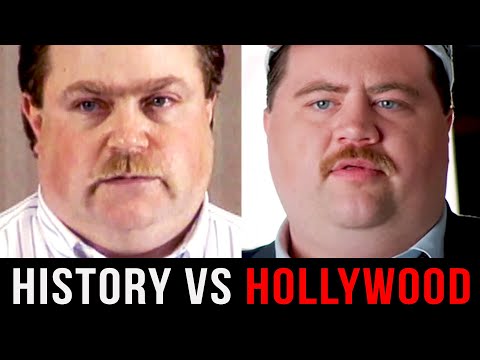
The FBI’s investigation focused on Jewell, leaking his name to the press and painting him as a ‘lone bomber’ who fit the profile of a failed law enforcement wannabe. His life was turned upside down as journalists camped outside his home, and his mother, Bobi, feared for their safety. “I didn’t do it,” Jewell insisted, but few listened.
Clint Eastwood’s film, Richard Jewell, dramatizes these events, but how accurate is it? The movie portrays Jewell as a gentle, naive man manipulated by the FBI and media, with Kathy Scruggs, a journalist for the Atlanta Journal-Constitution, trading sex for information—a claim the real Scruggs’s colleagues deny. The film also highlights the role of attorney Watson Bryant, who stood by Jewell when few others did.
The real story is just as compelling. Jewell was eventually cleared of all charges in 1997, but he never fully recovered from the ordeal. He struggled with health issues and died in 2007 at the age of 44. The film’s release sparked renewed interest in his case and debates about media ethics and the presumption of innocence.
As we delve deeper into the Richard Jewell story, we’ll separate fact from fiction, exploring the heroism, the betrayal, and the ultimate vindication of a man who was punished for doing the right thing.
Watson Bryant, Jewell’s attorney, was a sharp-tongued lawyer who initially took the case as a favor but soon became his fiercest defender. “They’re trying to make you the bad guy, Richard,” Bryant warned him. “But we’re not going to let them.” The film shows Bryant’s relentless pushback against the FBI’s tactics, including their use of a fake training video to pressure Jewell into a confession.
In reality, Bryant was indeed a key figure in clearing Jewell’s name. He exposed the FBI’s mishandling of evidence and their premature focus on Jewell. The movie takes some liberties—Bryant’s role is amplified for dramatic effect—but his dedication to Jewell is accurately portrayed.
Kathy Scruggs, the journalist who broke the story, is depicted as unethical, trading sex for tips. This portrayal has been fiercely criticized by her former colleagues at the Atlanta Journal-Constitution. “She was a tough reporter, but she never slept with a source,” one colleague stated. The film’s director, Clint Eastwood, defended the scene as a “dramatic device,” but many see it as a unfair smear on Scruggs, who died in 2001.
Another controversial element is the film’s depiction of the FBI’s investigation. The movie shows agents coercing Jewell and ignoring exculpatory evidence. While the FBI did leak Jewell’s name and subject him to intense scrutiny, the film simplifies the complexities of the case. “The FBI wasn’t the villain here,” a former agent commented. “It was a perfect storm of media frenzy and public fear.”
Jewell’s mother, Bobi, is portrayed as a stoic, long-suffering figure. In truth, she was a pivotal advocate for her son, speaking out against the media and the FBI. Her pain and resilience are captured well, but the film glosses over the financial ruin the family suffered.
The movie also omits the role of other suspects and the eventual confession of Eric Rudolph, the real bomber, who was captured in 2003. This omission allows the film to focus on Jewell’s personal journey, but it leaves out a crucial part of the story.
As the film reaches its climax, Jewell is finally exonerated, but the damage is done. He struggles to find work, his health declines, and he dies young. The movie ends on a bittersweet note, honoring his heroism while condemning the system that failed him.
But the story doesn’t end with the credits. In the years since the bombing, the full weight of what happened to Richard Jewell has come into sharper focus, and some of the most damning details never made it to the screen. The FBI’s file on Jewell ran to thousands of pages, and internal memos later revealed that agents had referred to him in private as an “unusual suspect” simply because he lived with his mother and collected guns—details that fit no real profile but fed a narrative.
What the film also compresses is the sheer duration of the ordeal. Jewell was under a cloud of suspicion for eighty-eight days, not the weeks the movie implies. During that time, he lost job offers, was hounded by tabloid photographers, and watched his mother break down on national television. “My son is not a bomber,” Bobi Jewell pleaded to reporters. “He’s a hero.” Few believed her at first.
The media frenzy was fueled by more than just one journalist. The Atlanta Journal-Constitution ran a headline—“FBI Suspects ‘Hero’ Guard May Have Planted Bomb”—that essentially convicted Jewell in the court of public opinion overnight. The newspaper later issued a partial retraction, but by then the damage was irreversible.
What’s often forgotten is how the real bomber, Eric Rudolph, slipped away in the chaos. He spent five years on the run, hiding in the Appalachian wilderness, before a rookie police officer caught him rummaging through a grocery store dumpster in 2003. Rudolph later confessed to the Olympic bombing and a string of abortion clinic attacks, finally closing the loop that the FBI had left open for years.
By then, Jewell had already been declared innocent, but his reputation never fully healed. He took a series of low-paying jobs—deputy sheriff, dispatcher—and was dogged by his health. He developed diabetes and kidney problems, and friends said the stress of the accusation had aged him decades in a few years.
When he died in 2007, his mother said simply, “He died of a broken heart.” The official cause was heart failure and complications from diabetes, but those who knew him believed the wounds from 1996 never truly closed.
Clint Eastwood’s film gave Jewell a posthumous moment in the spotlight, but it also reopened old wounds for the people who lived it. Bobi Jewell praised the movie for showing her son’s humanity, yet she also criticized it for turning Kathy Scruggs into a villain. “Two wrongs don’t make a right,” she said in an interview.
The debate over the film’s accuracy is really a debate over how we remember—and who gets to tell the story. For Richard Jewell, the truth was always simpler than the headlines: he saw something wrong, he said something, and he saved lives. Everything else was noise.
In the end, Richard Jewell’s story is a cautionary tale about the price of heroism in a media-saturated age. The film’s dramatization may have introduced him to a new generation, but the real man was more complex than any screenplay could capture.
His mother, Bobi, continued to speak out about the injustice until her death in 2020, always insisting that her son was a hero, not a villain. “He deserved better,” she said. “We all did.”
The FBI never formally apologized to Jewell, and the Atlanta Journal-Constitution has never fully retracted its coverage. The scars of 1996 remain raw for those who lived through it.
But perhaps the most enduring lesson is the one Jewell himself embodied: doing the right thing, even when the world turns against you. As Watson Bryant later reflected, “Richard was a hero long before anyone called him one.“
So, what do you think? Was Richard Jewell a victim of circumstance or a man failed by the very institutions sworn to protect him? Share your thoughts in the comments below.
Report this article
Select a reason for reporting:






