The dust had barely settled from the Predator’s last pass when the first shot cracked the afternoon heat. Colonel Thorn pressed his body into the rocky outcrop, the weight of the radio pressing against his ribs, and watched the chaos unfold below. He had spent the morning certain of one thing—that the drone saw everything. Now he lay behind enemy lines, following the orders of a sergeant he had publicly humiliated just hours earlier.
“You’re following my orders now, Colonel,” Sundowner had said, his voice flat and slow, almost disinterested. The words were a mirror image of what Thorn had told him at dawn: “You’re not paid to think, Sergeant. You’re paid to drive my vehicle through that road.”
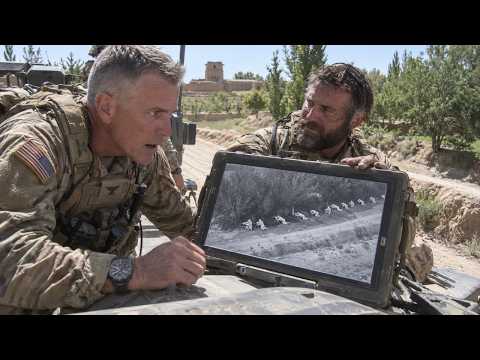
The valley stretched below them like a green tongue between brown hills. Fourteen men had slipped into the dry canal before noon. Nine remained now, flat on their stomachs, every muzzle pointed south toward an empty dirt road. A belt of linked ammunition lay coiled beside the nearest PKM. No one in the canal looked up at the hill.
Thorn’s plate carrier pressed against his ribs. His watch showed two time zones, and neither was any use. He had spent the entire morning confident in one thing, and now he found himself lying behind the enemy based on another man’s word.
Sundowner turned his head a few degrees. His voice was flat and slow, almost disinterested. “You’re following my orders now, Colonel.”
Six hours earlier, the same words had been said in reverse. That morning, this colonel had taken command of an Australian special forces patrol in front of both crews and led it on the route he wanted. How did the sergeant know where these men were lying before the drone, which had been watching since dawn, saw anything?
It began with a map pulled from his hands. The patrol base sat south of the valley, a square of Hesco walls and gravel north of the Deh Ra forest. It was May 2011, late in the war in Uruzgan. At 0840, Sundowner lay on his back under the lead vehicle. The six-wheeled vehicle was called Matilda, and fuel plates hung from its sides, coated in gray dust. He tapped the steering arm with a wrench and listened to the ring. The squadron had given him that nickname years ago. He arrived everywhere last, and he did it on purpose after everyone else had finished searching.
His patrol consisted of eight men in two vehicles. Matilda carried him with a driver, an interpreter with an Icom scanner, and a forward air controller named Rover who never left his Rover device. Rover bent at the front wheel with the screen tilted to avoid the glare. He had carried the hill route. A slow line over the eastern heights that kept the patrol well away from the canal and the orchards. Sundowner slid out from under the truck and wiped his hands. The hill route, mate? Five hours, every minute of it worth it. Rover nodded. No one in the patrol objected to the plan.
Then a dusty armored MaxxPro entered through the gate alone. Colonel Thorn dismounted before it stopped shaking. He was thin, clean-shaven up to here, with very short gray hair close to the scalp. The rest of his convoy was stuck on the highway with a broken axle. He carried an order from the task force placing the Australian patrol under his tactical control for one day. He looked at his watch before saying a word. His general had promised village elders at the end of the valley a peace council at 1400. The village sat at the far end of a single dirt road. Thorn intended to arrive on time in his own vehicle within the convoy, and the Australians were now his guard.
Sundowner had spread the map on Matilda’s hood. Thorn reached out and took it. The Australian crews stood at a short distance watching, as did the three Americans from the armored vehicle. Thorn did not lower his voice. “You receive your orders from me, Sergeant.” He uncapped a planning pen. He drew one heavy line straight across the valley floor along the canal road, through the narrows, to the village. The hill route remained on the map unmarked and now unused.
Sundowner looked at the line for a while. He said the valley road ran between a canal and a wall of orchards and there was no room to turn a vehicle. Thorn told him the convoy crawling through the valley would take fire. He said momentum saves lives, and that spending 5 hours on the hills would cost him the peace council. Then he added the sentence neither crew would forget. “You’re not paid to think, Sergeant. You’re paid to drive my vehicle through that road.”
Tub, the rear vehicle’s gunner, looked at his soot-stained gloves. Sundowner crossed his arms. “Your peace council, mate. And your road.” Thorn put the map in his thigh pocket. With it went the hill route and the five hours it would have taken.
At 0930 the convoy moved. Matilda took the lead. The armored vehicle positioned in the middle, and the rear truck came last with Tub on the gun. Inside the MaxxPro were Thorn, the radio operator, a specialist holding a radio on his knees, a bald driver, and a turret gunner wearing glasses. The friendly force tracking system on Thorn’s screen showed three icons in a neat line heading north. He used the radio almost immediately. A US Predator was watching from above until 1530. It had been watching the valley since first light. It had seen only a tractor, some goats, and a man driving a donkey. Nothing else. “The bird is tracking your entire route, Sergeant. Maintain your speed.”
Sundowner said nothing over the radio. Matilda held her pace. The valley opened before them like a green tongue between brown hills. The road ran north over a raised bank of compressed dirt. On the left, an irrigation canal ran alongside it, lined with old mulberry trees. On the right were mud-brick compounds, pomegranate orchards behind burned walls, and a single mud tower above one farm. About three and a half kilometers ahead, the hills narrowed to form a defile. Beyond that, at the head of the valley, lay the village and the council site. Every few hundred meters, the road crossed a side canal over a culvert. The culvert was a short pipe under the road, packed with mud and plastered over. It was also the easiest place in the valley to plant a bomb.
At the first culvert, at the valley entrance, Matilda stopped. The whine of armored vehicle brakes came from behind her. Sundowner dismounted and walked to the edge of the road bank. He knelt beside the culvert face, where the mud plaster had been smoothed over the pipe. He pressed his thumb into it. The surface was hard and the color of dry bread. It crumbled to dust under his nail. He examined the pipe ends and the grass along the canal bank. Then he pressed the radio button for every Australian in the patrol to hear. “Wet mud dries pale, mate. Fresh mud stays dark.” Anyone digging at a culvert had to re-plaster it. In this heat, old plaster fades to the color of the road. New plaster stays dark and damp for hours. “This culvert hasn’t been touched since last season.”
He returned to Matilda and requested the hill route for the second time. The heights were still reachable from the valley entrance. After the next kilometer, that would not be possible. Thorn’s voice came over the radio, sharp and steady. “Eight minutes, Sergeant. I’m logging it.” He said it again for the radio operator to note. Then he refused the hill route. “Negative. Valley road. Move.”
Matilda pulled away from the culvert. The convoy entered the green zone. On the flat roof of the mud tower, an old man leaned his weight on a steel cane. His right leg had troubled him since fighting the Russians, and it set the pace of everything he did now. He watched a thread of dust rise at the valley entrance. Three vehicles. Two long and narrow. One heavy and square. He had seen the first stop at the culvert. He saw a man kneel beside it for a long time and touch it. He kept that information in his memory.
Higher up the channel, a wooden board had been set in the drainage gate, holding back the morning water. This was the time when farmers opened the channels and the canal filled. He sent an order down the ladder that the board stay in place. The canal under the mulberry trees would remain dry, and his men would lie in it like trenches. He counted again. The man who examined the culverts was in the first vehicle. The square truck in the middle carried long antennas and the US flag on the door. He decided to let the first vehicle pass through the narrows untouched and hit the big American truck in the middle.
Matilda moved north on the road bank, the canal to her left and the orchards to her right. Sundowner rode high behind the gun platform, one foot on the fuel can rack. The time was approaching 1030, the water hour. In this valley, every farmer had his turn at the channels, counted in hours and disputed for generations. At this time of morning, men should be out with their shovels breaking the small mud dams and letting the flow reach their land. The fields were green, wet from the previous cycle, and empty. A donkey stood tied at the edge of a field with no one near it.
At a crossroads, four sheet-metal kiosks faced the road. Three were open and unattended. The fourth was closed with a metal door on a market morning, a padlock on the latch. Sundowner tapped the driver’s shoulder twice and pointed down. Matilda slowed to walking pace. The interpreter beside Rover pressed the earpiece deeper into his good ear and said nothing. Behind them, the MaxxPro closed up until its nose almost filled Matilda’s rear door. The radios clicked. “Lead vehicle, your speed is below 15. Increase speed.” Sundowner did not answer. The driver glanced at him and kept his foot light on the pedal. Thorn called twice more, the second time with the code name and rank, the way a man speaks when he wants the order documented. Matilda continued her slow crawl. The convoy bunched behind her, three vehicles packed on a bank with no room to turn.
At 1112, the road curved around a low shoulder of the eastern hills. Ahead, the valley narrowed. Sundowner raised his fist and Matilda stopped just before the bend. The narrows lay beyond it, out of sight, and the road ran straight toward them. Thorn came forward on foot. He walked along the bank with his M4 hanging across his chest, sweat soaking his shirt around the plate carrier. He did not look at the fields. He went straight to Rover and the device. Rover’s screen showed a thermal image from the Predator of the road ahead. It was gray from edge to edge. By late morning, the sun had baked the ground to human body temperature, and the thermal camera saw one flat temperature everywhere. A goat would look like a rock. So would a man.
Thorn studied the image for a few seconds. He straightened and spoke to both vehicles together. “The bird sees nothing, Sergeant. Mount up.” The rear vehicle’s engine revved. Two dismounts who had been securing the flanks climbed back in. Rover began folding the device’s antenna because the order had been given and the colonel was leading the patrol. For about a minute, the convoy was back under Thorn’s command and everyone on the bank knew it.
Sundowner stayed on the ground. He reached behind Rover and tilted the screen back toward the light. He said the camera was pointed at the road because the colonel had tasked it to watch the road. The road was in full sun and read body temperature everywhere. The canal ran under the mulberry trees, and that shade was cool all day. Any man lying in the cool mud would glow on that screen like a lamp. “You’re looking in the wrong place, mate. Point the bird at the trees.”
Thorn refused. Predator hours came through his task force, and they were allocated to sweep the road. This road, the village, and the general’s helicopter landing site. Turning the camera to a ditch meant a gap in the sweep at the worst possible time. He said Australians did not get to redirect American aircraft just because a sergeant had a hunch about some trees. They argued on the bank with the engines running. Thorn’s points were logical and he made them all. Sundowner answered in short replies and left long silences between them. Rover stood holding the device between two men who held authority above his opinion. Thorn checked the second hand on his watch, the one set to the general’s time. The general wanted a security cordon around the village an hour before his helicopter landed. Every minute spent at this bend was subtracted from that hour.
When the argument ended, the camera was still pointed at the sunlit road and 12 additional minutes had been lost. The interpreter raised his hand. The Icom scanner on his chest was a cheap handheld that scanned local radio bands. The fighters in the valley used the same radios farmers bought from the market. The interpreter listened, frowned, and turned up the volume. A man’s voice came through the device, unhurried and almost polite. The interpreter translated what he heard word for word. “The guests are resting.”
Thorn heard it and shook his head. He said the valley was full of radios. It had been a market day. Someone’s relatives had arrived from Tarinkot and were drinking tea. He said he would not stop an American convoy because of a sentence about visitors. Sundowner looked down the road toward the sheet-metal kiosks they had passed. “It’s market day, mate. The shop is still closed.”
He did not argue further. He walked to the western side and looked at the canal. It was the same canal the convoy had driven alongside for three kilometers. Here, after the bend, it continued toward the narrows in the shade of the mulberry trees. Its bed was cracked and gray. There was no water in it, not even a puddle at the bottom of the bank. He had seen that earlier and said nothing. The troop had warned him about that habit more than once. He kept things to himself until he was sure, and by then those around him had stopped listening.
Now he called Thorn and told him clearly, it was the water turn hour. The whole valley lived on that canal, and this was the hour it should run full from bank to bank. The fields were wet from the morning, so the water had flowed at dawn. Someone upstream had put the board back in the gate and stopped the flow. “No farmer cuts water from his land on his turn. The dry canal with banks higher than a man is a trench, and it runs under the only shade the drone can’t see into all the way to the narrows.”
Thorn listened to the end. His expression did not change. He asked what Sundowner wanted to bet. Sundowner touched the rank on his chest. “10 minutes, mate, and then you can have the rank.” Thorn accepted the bet in front of the same audience he had had that morning. He said Sundowner had 10 minutes from now. If nothing appeared, he would be relieved of command at this bend, and the lead armored MRAP with its own turret gunner would take over. Matilda would follow the convoy at any speed Thorn set. He pressed a button on his watch, and the second hand began counting down.
Sundowner walked back to the rear vehicle. Tub stayed on the gun, his black gloves already on the firing handles. Two operators dismounted. Dusty had a red beard that had grown beyond regulations. Blue was the tallest man in the patrol and moved as if trying to hide it. Sundowner pointed to the eastern hill. It rose barren and gray above the bend. An edge of broken rock climbed toward the narrows. From there, one could see beyond the hill’s shoulder and down into the depression. The two operators would go on foot with their rifles and one radio between them, and the rear vehicle would be short two men.
They climbed the rocks bent over, Blue in front and Dusty a few meters behind and to the left. Stones slid from under their boots and rolled toward the road. Every sound on that slope was audible. They slowed until the slope was completely quiet.
On the bank, Thorn stood beside the MaxxPro with his watch hand raised. The radio operator sat at the open rear door with the handset on his knee. The truck driver had his elbow out the window. Up in the turret, the gunner pushed his glasses up his nose and pointed the gun toward the orchards because no one had told him where to point it.
From above his tower, the commander watched the bend. He had expected the convoy to arrive by now. He had planned for the dust to curl around the hill and enter the narrows very slowly. Instead, the dust had settled. The three vehicles had stopped with their engines running. Men stood on the bank and others walked as if they had all the time in the world. His men in the canal had begun to fidget. Young fighters who had lain in a ditch for hours began to want to shoot at anything. If the American truck with the antenna stayed where it was, it would be out of range of the narrows and any early shot would ruin everything. He tapped the tip of his steel cane on the wall once, thinking. He could not see the eastern hill from where he sat. The hill itself blocked the view. He sent no fighter. Any fighter walking that road would be stopped and searched. Instead, he called a boy from the ladder, a farm child, nine or ten years old. The boy climbed up carrying a black bicycle on his shoulder as if he could not bear to leave it below. The commander told him to ride to the bend and keep riding past it. “Count the trucks. Count the men standing outside them. Notice what they are looking at. Then come back the long way, slowly, like a boy with nothing to do.”
The boy carried his bicycle down, pushed it out the compound gate, and pedaled south along the road bank toward the stopped convoy. The boy came down the road slope standing on the pedals, the bicycle chain clicking beneath him. Tub saw him first and pointed his gun at him slightly, then moved the muzzle away. From the MaxxPro turret, the gunner with glasses called down that a lone child was coming, nine or ten years old. The specialist rose half up from the rear door of the armored vehicle. A boy riding his bicycle toward a stopped convoy had to have been sent by someone. The Americans had a procedure for this. Stop him, search him, detain him until the convoy moved.
Sundowner walked to the middle of the road and turned his back to the eastern knoll. He waved the boy over with a lazy hand, the gesture any bored soldier makes to village children. “Let him pass, mate. No one touches him.” The specialist looked at Thorn. Thorn looked at the countdown on his wrist and said nothing. And so the sergeant’s order stood. A boy who returned late or never returned would carry more information to whoever sent him than just the number of trucks. The boy slowed until he almost stopped. His eyes moved from Matilda to the armored vehicle and then to the last truck, and his lips moved as he counted. He looked at the antennas, the gun, and the men on the bank. Then he looked at where they were looking. Every man on that bank was looking at him, and no one was looking at the hill. He passed the rear truck on his pedals without a wobble. A hundred meters on, he turned onto a field track toward the orchards. That cost the patrol a real price. Within a quarter hour, the man in the tower would know the convoy’s exact position. He would know there were three vehicles stopped below the bend, one behind the other, with a water canal on one side and orchard walls on the other. Sundowner had paid that price so the boy would not see two men climbing the hill.
High on the rocky spur, Blue reached the top on his knees and flattened himself. Behind the hill line, schist rock replaced the narrow path cut into the stone. It was barely wide enough for a boot, polished smooth by cattle hooves, and scattered with goat droppings that had dried and blackened under the sun. The Kuchi nomads had walked their flocks on this path for generations, on the hidden side of the hill away from the farms and their dogs. Dusty followed him north, bent over. The path held its line behind the narrows and began to descend toward the head of the valley behind them. There was nothing in the valley floor he could see. Blue crawled to a gap in the top. Below, the narrows stretched out. The road passed between the canal and a rock face, barely wide enough for one truck. Just past the culvert stood a truck decorated with paintings of birds and mountains, chains hanging from its bumper. Its hood was raised. There was no driver, no tools on the ground, and no one waiting with a fuel can. It stood at an angle that blocked the road completely. Any convoy meeting it would have to stop with its middle vehicle directly over the culvert. Blue pressed the radio and whispered the report in two short parts. Rover repeated the report aloud on the bank, word for word, for the colonel.
Thorn listened to the full report. A broken-down truck on an Afghan road was not conclusive proof. He had passed hundreds of them before. But his watch now showed less than two minutes. And he had heard about a dry canal, a closed shop, a voice over the radio, and a truck blocking the only road. He stared at the row of mulberry trees for a long moment. Then he ordered Rover to point the camera at the trees for sixty seconds, then return to the road after that. Rover called the aircraft crew on the other side of the world and gave them the correction coordinates. The sensor operator turned the camera west toward the row of trees along the canal. On Rover’s screen, the gray road left the frame. In its place was a dark strip. The cool shade under the mulberry trees looked black in white-hot mode. White shapes appeared inside it one after another, like beads on a string. Rover counted them aloud, quiet and steady. He reached 14 and stopped. The sensor operator zoomed in. Two of those shapes were behind short straight bars on bipods, machine guns (PKMs), both pointed toward the road. Beside several other shapes were long tubes. Then the camera moved north along the canal bank. From the end of the slope, a thin straight line ran across the grass to the culvert where the narrows began.
Thorn watched the scene without a word. On his wrist, the countdown reached zero and began to ring. He let it ring for a while before stopping it. He unbuttoned his thigh pocket, took out the map, and spread it over the device. “You’re the patrol sergeant, give me options.” Sundowner took the map and spread it on Matilda’s hood, where it had been lying at dawn. But Thorn had already done his own calculations. The Predator carried two Hellfire missiles. Firing one at the slope now would open the narrows road. With the road clear, the convoy could still reach the village by 1400. Maybe twenty minutes late. And a 20-minute delay was something the general could forgive. He told Rover to prepare the strike.
Sundowner put two fingers on the edge of the screen and tilted it so the colonel could see the full picture. The canal did not run alone. At the narrows, it ran close to the western wall of the tower compound. So close that the mulberry roots extended under the mud brick. Inside that wall, there were warm shapes moving in the courtyard. A tall figure kneeling at a bread oven. Three small ones chasing each other around a post. “Not with kids behind that wall, mate.”
The aircraft belonged to Thorn’s task force and would execute the strike in his name. Rover said quietly that it would never pass a collateral damage estimate. Any blast in the narrows would bring the wall down with it. And it would bring the courtyard down with the wall. Thorn stood over the screen watching the small shapes run. His order to Rover was to cancel the strike. He took the handset from the communications specialist and called his general’s headquarters himself. He told the operations officer that the council would be missed. A silence fell on the net long enough to fill with noise. The voice came back asking if the colonel realized the general had given his word to the elders. Thorn said he realized it. The voice said the general would be informed, then the line went dead. Thorn handed the handset back. No one on the bank had ever heard a colonel report his own failure to higher command. And no one looked at him while he did it.
The boy reached the tower compound via the orchard path, sweating. He carried the black bicycle up the ladder again. The commander listened without interrupting. Three trucks stopped before the bend. One behind the other. Men standing on the road around a box with a bright screen. The thin American commander with the watch. And another man the boy described with his hand. A soldier in front who waved at him like an uncle. Then the boy added something else. On the way back between the orchard walls, he heard the aircraft. Its buzz was no longer over the road. It was over the trees beside the canal.
The commander had hidden under Soviet helicopters for years in valleys like this. He knew the sound of an aircraft that had stopped searching and started watching. He leaned on his steel cane and looked west toward the mulberry trees, toward the narrows where his fourteen men lay. They had been discovered. So he weighed two options. He could pull the canal men out now across open ground under an aircraft already watching them. Or he could leave them where they lay and make the convoy come to them. There was no other way to the village. The Americans wanted that meeting, and sooner or later they would have to pass through the narrows to reach it. A convoy stopped at the bend could be pushed. He sent for the three young men with RPG launchers. He ordered them out the back gate and east through the orchards along the walls. They would appear behind the convoy at the bend and hit it from the rear, and the trucks would have only one way to escape. North toward the narrows over the culvert. The fighters in the rock cleft would stay exactly where they were.
The three moved quickly between the pomegranate rows, rocket tubes on their shoulders, staying bent under the dry mud walls. Their path ran along the base of the eastern spur. One of them glanced at the top and stopped. Blue was still in the gap, the tallest shape on the barren gray skyline. A bullet struck the rocks beside Blue’s knee and sprayed grit into his face. A second ricocheted off a rock and faded into the sky. Dusty threw himself sideways behind a refrigerator-sized boulder and pulled his legs in after him. Blue rolled away from the top and came to rest on one knee in a goat path gully. He spotted the muzzle flash in a gap in the orchard wall below. He fired two bursts at that gap. Dust rose there and the flash stopped. They did not wait to see if it would start again. Dusty came out from behind the rock and they went back down the path they had come. Half running, half sliding. A torrent of loose stones preceded them toward the road. Blue reported the contact as he moved, pointing to an engagement from the east, from the orchards behind the convoy.
On the bank below, every head turned east at once. Tub’s gloves were already on the gun handles. In the MaxxPro turret, the gunner with glasses swung his gun toward the hill. Sundowner spread the map on Matilda’s hood again before the echo of Blue’s bursts faded. The rear of the convoy was now the front. The biggest target in it was the MaxxPro. Long and square, with every communication antenna in the valley mounted on its roof. About 50 meters east of the road, in a shallow depression below the bank, stood the remains of an old mud tower. Its top had collapsed long ago, and only twice a man’s height remained. The contour lines on his map rose between the orchards and that depression. According to the map, no one in those trees could see the base of the tower. He signaled the MRAP to pull off the bank and down into the depression. The driver hid the vehicle behind the trunk until only the tower showed above the mud. Matilda positioned at the edge of the field to the south with the escort truck facing east beside her.
The specialist jumped from the back of the MaxxPro with the radio on his back. The mud trunk blocked the vehicle’s line of sight to the repeater, and the force needed to know the engagement order. The map was wrong by one terrace height. Behind that broken stretch of wall, the ground was a meter higher than the contour lines showed. A rocket launched from the gap with a muffled thud and gray smoke rising. It exploded in the tower trunk directly above the MRAP’s hood. Mud and metal fragments sprayed across the rear door. The specialist turned half a circle and fell into the open field before reaching Matilda. The radio on his back took its share of shrapnel. Its cover hung open and the handset settled in the dirt at the end of its cord. He lay on his side, his leg amputated below the knee, trying to crawl without success.
Then fire opened from the southern end of the canal. The PKM gunner, who had been silent since morning, could no longer hold back. His first burst passed high over the field. The second walked toward the wounded man, kicking up small dust clouds. Thorn was kneeling behind Matilda’s front wheel beside Rover. He watched his man lying in the open. Sundowner ran past him. “This one’s on me, Colonel.” Tub poured fire into the orchard gap, forcing any next gunner to face his barrage. Sundowner crossed the field bent over. He grabbed the specialist by the drag handle of his plate carrier and pulled him back through the furrows, heels first. A second rocket fell short and exploded in the field behind them. Something hot pierced Sundowner’s left forearm and his grip slipped once. He switched hands and kept pulling. Forty meters had never taken so long. They fell together on the protected side of Matilda. The interpreter bandaged the specialist’s leg while Rover tied a high tourniquet on the thigh. Sundowner held his arm against his chest until someone brought a bandage for him. The shrapnel had entered and lodged inside. His fingers still closed. He tested his grip on the HK416 and said nothing about his hand at all.
Thorn did not wait for anyone to hand him a radio. He climbed into the back of the MaxxPro and pulled the spare set, which he had carried all day for the council. He set it himself. He sent the casualty report line by line, slowly and clearly, the way he must have learned long ago. He became his own radio operator and did the work without complaint. Then he said one thing to Sundowner without emotion. If the convoy had moved straight and fast that morning, the reserve force would not have had time to flank them. Sundowner did not argue. The boy, the bet, the ten minutes, and the drone had all cost time, and the enemy had used it well.
Rover turned the Predator toward the orchard. The rocket men appeared clearly on the cool ground under the pomegranate trees. Two of them moving along the wall, one kneeling, the other lying motionless. No women or children appeared anywhere near them. Thorn prepared the strike himself, reading the coordinates from the device to the spare handset while the clearance climbed the chain of command. It took most of the hour. Twice the orchard fired again, and twice Tub answered. At 1330, the first Hellfire flew into the orchard. The wall bulged outward and collapsed in a long brown slide. After that, nothing fired from the east. The Predator had only one missile left.
On the tower roof, the commander called the orchard on his handset and got no reply. He tried again, then stopped. He had heard the aircraft change its tone, then that long hiss, then the explosion among his trees. The reserve force was gone, and with it the attack that was supposed to push the convoy into the narrows. He looked at the southern end of the canal, where the fidgety gunner had revealed his position. Five men lay in that end of the canal closest to the bend, and now the Americans knew exactly where they were. The aircraft would come for them next. A field of wheat stubble stretched between that part of the canal and a side gate in his compound wall. Inside the walls, the aircraft would not strike them. He decided to bring the five through the wheat field. The nine at the narrows would stay. Whatever the Americans did at the bend, any truck heading north still had to cross that culvert. He sent the order to the canal.
On Rover’s screen, the five thermal shapes at the southern end began to move. Thorn saw it immediately. He wanted the last missile in the canal now, while the five were still bunched in it. The southern tail was well away from the compound wall, and that is what he said. Sundowner leaned forward and looked at the image. The five were turning in the mud, gathering their weapons, men about to stand. “Not in the ditch, mate. Wait until they stand.” He said a missile in a ditch would kill the man nearest the blast and the rest would survive. In the open, the five men would find no bank to hide behind. Thorn’s hand stayed on the handset. Five minutes passed on the screen. It was the first order he had taken from the sergeant all day, and he obeyed it without asking him twice.
At 1418, the first fighter climbed over the canal bank and began running across the barren ground. Four others followed in a loose line, heading for the side gate. Thorn gave the signal. A Hellfire fell in the middle of the field, 200 meters from the nearest house. When the dust drifted south over the bend, nothing moved in the barren ground. Further north, nine warm shapes still lay in the cleft under the mulberry trees. None of them turned. Their weapons stayed pointed at the empty road, and the wire still ran from the cleft to the culvert.
Thorn looked at his watch. The second dial showed the general’s time. The council had begun 18 minutes ago at the head of the valley, without him. Without a word from the general, and without any American in the room. He unfastened the watch, turned its face down, and strapped it back on. The aircraft’s missiles were now spent, and its time on station was running out. The road to the village still passed over the culvert, under nine men and a buried charge.
Sundowner looked east toward the spur, where Blue and Dusty had come down under fire, and toward the goat path hidden behind its top. He gave his orders in a few words. The vehicles would stay at the bend with their engines running, and the drivers would rev them from time to time. From the narrows, it had to look like a convoy preparing to move. Rover would stay with the screen and the wounded man. Blue and Dusty knew the path, so they would come. The patrol would walk behind the narrows and come down on the cleft from above. Thorn was already lifting the spare radio onto his back over his plate carrier. He said someone had to talk to the vehicles from the hill, and his radio operator could not do it. He did not ask permission. He checked his M4 and stood waiting at the base of the rocky slope. A colonel ready to follow a sergeant. Sundowner gave him one look. The heavy plate carrier, the radio, and the clean-shaven face streaked with dust from the orchard fight. “Keep up then, mate.”
They climbed in the afternoon heat. Five men on a barren gray slope. Sundowner in front, then Blue, then the third truck’s operator, then Thorn, with Dusty at the rear. The gravel shifted under each man’s boots. It was not the climb that slowed them. Thorn carried the spare radio on a mount designed for a vehicle seat, and the weight pressed his chest into the rocks every time he lay flat. He lay flat often because Sundowner stopped often. Below them, the valley was exposed in both directions, and anything standing on that spur could be seen from the tower. Thirty meters from the top, Thorn’s boot dislodged a plate-sized rock from the slope. It rolled down the hill and started a dozen more. The noise of it reached the road. Everyone stayed still for two minutes. No one answered them. Thorn regained his breath with difficulty and said nothing about the weight on his back, and no one offered to help.
They crossed the top on their stomachs and dropped into the goat path behind it. In that passage, the air was still and smelled of dung. The patrol moved north in single file below the skyline, bent under a rock lip. After 400 meters, Blue stopped and raised his hand. A shepherd was coming south on the same path with about 40 head of goats. He was about sixty, wearing a brown vest and a stick across his shoulders with his wrists hanging over it. The animals filled the passage from wall to wall. There was no way off the path without standing and showing on the skyline. Blue looked back. The third operator was raising his rifle and watching the man’s hands. Detaining him meant staying with him for an hour, taking two men out of the assault force and 40 goats wandering a height the tower could count from. Letting him go meant he would walk into the valley carrying the image of five soldiers in his head.
Sundowner stepped off the path onto the rock face and signaled the others to do the same. The patrol pressed into the rocks and let the flock pass. The goats pushed between their knees and plate carriers, bumping and shoving and smelling foul. The flock passed through five armed men without slowing. He looked at Thorn’s gray scalp, then at the ground, then past him. “He’ll talk tonight, mate. Not in time.”
They moved north. Behind them, the flock shuffled down the slope toward the fields. On the tower roof, the commander stood leaning on his bad leg and listened south. He could not see the bend from there. The hill’s shoulder blocked the view, but he could hear the noise. Three engines had been idling there all afternoon, and now their sound changed. One revved and settled, then another. Someone was raising RPM the way drivers do before moving. He had been waiting for that since noon. Two air strikes had cost him seven men, and he had not fired a shot at a vehicle. The square truck with the antennas was still there, and the only road to the village still ran over the culvert. He took the handset and spoke to the canal. Nine men lay in the cleft under the mulberry trees. None of them would fire at the lead vehicle. None would fire at the dismounted men. They would let the first truck cross the culvert to the bend beyond, and they would wait until the big American truck settled over the pipe. When the pipe blew, they would fire on what remained. He said it twice, slowly, because the young ones were tired and had been lying in the dry mud since before noon. Then he put the handset aside, looked at the orchard where a pile of brown wall still smoked, and began thinking about the cattle shed.
The goat path ended at a rock shelf above the narrows, well north of the culvert. Sundowner reached it on his hands and his good arm and looked down at the back of the ambush position. The canal cleft stretched south below him, a gray crack under the line of mulberry trees. The shade in it was deep. From here, he could see into it exactly as the camera had. But these were men, not white beads. Nine of them. They stretched along 40 meters of the bottom, spaced apart. All lay flat on the eastern bank with their weapons pointed toward the road. The two machine guns were at the ends of the line, both aimed south at the empty dirt road the convoy would have to take. A tube lay beside the nearest man’s boot. Another man had his head on his arm, sleeping. None of them faced north. There was nothing on the northbound road but their decorated truck, hood up, and 140 kilometers of hills.
The patrol came down the last rocky slope and took firing positions along a low stone runnel. Blue took the left side with his long rifle. Dusty and the third operator took the center. The ground fell away in front of them in unsteady steps. Thorn arrived last and lay down on the rocks 60 meters above the back of the nearest fighter. The plate carrier pressed his ribs into the stone. His watch showed two different times, and neither helped. Sundowner rested his cheek on his HK416 and let his breath all the way out. “You’re following my orders now, Colonel.” Thorn nodded once and did not take his eyes off the cleft.
Rover’s voice came faintly over the spare radio. The aircraft had only 19 minutes of fuel before leaving station. After that, there would be nothing above the valley at all. Sundowner’s first bullet passed through the body of the nearest gunner. The sharp crack of the shot echoed off the rock face and rolled down the valley. The gunner’s elbows slid out from under him. The man turned onto his side, sat up in the cleft, and looked the wrong way, south, toward the empty road, where everything had been for 5 hours. The sleeping man was on his feet before he was fully awake. Blue fired twice. Dusty and the third operator dealt with the far end of the cleft, where the second machine gun was. That gunner lifted his bipod out of the mud and tried to swing the barrel, but the ammunition belt was on the wrong side, and the cover he had sheltered behind all day was behind him and useless. Thorn aimed his M4 at the cleft and fired short bursts, three after three. Dust rose from the cover in puffs. The defense broke in both directions. Two men crossed the western bank toward the mulberry roots and kept running into the field. Four ran north up the channel, stumbling in the cracked mud, toward the truck and the culvert. One sat down in the open and put his hands on his head, leaving his rifle a meter from his knee. Another dropped a rocket launcher on the bank and followed the runners without it. It took about 90 seconds. When the firing stopped, the smell of burned dust hung in the narrows and the mulberry trees were still. Three fighters came out of the channel onto the eastern side with nothing in their hands. Dusty dealt with them one by one and ordered them to lie on their faces on the rocks. Blue walked the length of the ditch and cleared the weapons from it. The two machine guns, the belts, the three tubes, and threw it all over the far bank into the field where no one could reach it quickly.
On the tower roof, the commander heard the firing coming from behind his line and understood in one second what the goats had seen. He did not shout into the radio. There was no one left in the ditch to answer him. He put the set in his vest and went to the ladder. The descent on a leg that had not bent properly since the Russian days took 8 minutes. He did it leaning on his forearms with the steel cane hooked in his belt. In the courtyard, his wife’s sister was gathering the children near the wall by the bread oven, and he passed them without stopping and went out the side gate. The cattle shed stood 40 meters behind the wall, low, with a mud roof over poplar posts. Inside were two cows. In the corner, under a plastic cover weighted with bricks, were a motorcycle battery and a roll of red and white telephone cable. He limped toward it on his cane, one short step after another, listening south. The engines were still running down there. The aircraft was still circling somewhere above him, and there was nothing to be done about that. But any truck going anywhere in this valley still had to cross this pipe.
At 1530, the Predator turned west and left the valley. Rover reported it in four words, and the sky above the narrows went empty. Two minutes later, Thorn’s driver came up on the net from the bend. The wounded specialist had been lying in Matilda’s shade for 3 hours with a high pressure bandage on his thigh. The interpreter had been talking to him but had stopped getting answers. His lips were gray, and he was cold despite the forty-degree heat. The base and the helicopter were south, 26 kilometers away on the only available road, which meant the convoy had to go back through the narrows. Thorn lay down on the gravel and did the calculation aloud, once, in the flat voice of a man who had already decided. The culvert was still rigged. The firing point was still somewhere east of it. If the convoy came now, the big truck would cross that pipe in about 7 minutes. He looked across at Sundowner. Sundowner was already up on one knee with his bandaged arm against his chest, watching the canal bank at the row of mulberry trees, where two culverts crossed the ditch 300 meters apart. “How long do you need, Sergeant?” “Four minutes, mate.”
Thorn used the spare radio and ordered his driver to wait at the bend for four minutes, keep the engines running, and not move until he himself gave the order. The driver asked him to confirm. Thorn confirmed. Then he lay down on a rock that smelled of goats, put his thumb on the transmit button, and began to count. On the sergeant’s order that he had taken from him with the map that morning in front of both crews. Sundowner did not wait for him to start counting. He went over the edge of the shelf and slid down the dirt slope on his heels, his bandaged arm held against his chest. Blue slid into the gap he left and put his long rifle on the cleft below. Dusty stayed with the three men lying on their faces. The third operator turned north to watch the channel the runners had taken.
Below, Sundowner dropped onto the western bank of the canal and ran south. The bank was a ridge of piled earth, one step wide and knotted with mulberry roots. Every root was a trip hazard. He ran bent over so the trees would hide him from the compound wall on the other side of the ditch. His HK416 hung from his belt and banged against his thigh. His left hand could no longer hold it steady, so he did not try. Thorn’s voice came in his earpiece, calm and slow. “One minute down, Sergeant.”
Ahead, two pipes passed under the ditch. From the aircraft’s height, the wire had run toward the mouth of the narrows. And here below, among the long grass under the trees, it could have run to either of them. The charge was in one, and every truck in the convoy had to pass over both. The nearer pipe appeared first. Sundowner knelt at its mouth and looked at the plaster. It was gray and full of cracks, and a lizard lay on it in a patch of sunlight. No one had dug here this year. “Not this one, mate,” Sundowner said into the radio. “On to the next.” He was up again before the lizard moved.
Above the bank, Thorn lay with the spare radio against his cheek and watched Dusty’s body fade among the mulberry trunks. He had no display now. Rover had the device at the bend, and its picture had gone dark when the aircraft returned to base. For the first time that day, the colonel had only his eyes. He used them well. The fighter who had surrendered lay on the rocks now and had not stopped looking east. His gaze passed the tower and settled on a low roof among the poplar trees behind the compound wall. He looked away and then back to it twice. Thorn pressed the radio button. “The prisoner keeps looking at a low shed east of the wall. That’s the firing point, Sergeant. Two minutes.”
Halfway to the second culvert, the bank ended abruptly. A side ditch came out of the canal, too wide to jump. Its sides were sharp and vertical. Sundowner sat on the edge and slid down. He landed in the bottom of the canal among the scrapes where the nine had lain all day. There was an ammunition box dropped in the mud, a plastic sandal, and a flat spot where a man had slept with his head on his arm. He climbed the other side using his right hand and knees. His wounded arm struck a tree root on the way. The bandage reddened at one edge, and he swore softly without stopping.
Rover came up on the vehicle net. The interpreter was still talking to the specialist, but the specialist had stopped answering him. His breathing was fast and shallow now. Rover said that plainly and asked for nothing. Thorn did not answer him at once. He looked at his watch and kept counting. The second culvert lay deep in the trees where the shade was thicker. Sundowner reached it at a run and dropped beside the pipe. The plaster here was dark brown, almost black, smoothed as the trowel had left it. The finger marks were still visible on one edge. Under the mulberry trees, away from the sun, the morning’s work had not had a chance to fade. He pressed his thumb into it and it was soft as bread dough and stuck to his skin. In the lower corner, the leveling was different. Someone had shaped the mud around something there into a small collar and pressed it flat. From that collar, a ridge the width of a finger ran toward the grass and away along the bank toward the wall and the poplar trees behind it. “Found it,” Sundowner said. “Wire runs east, mate.” “Copy,” Thorn said. “Four minutes, Sergeant.”
Back in the shed between the cows, the commander lowered himself onto an upturned bucket. He stretched his bad leg straight in front of him and waited for the pain in it to settle. He pulled the plastic cover off the corner and moved the bricks aside. The battery was there, and the cable, exactly as his men had left it before dawn. He fixed one bare wire end under the clamp on the first terminal and wrapped it tight. He held the second wire between his thumb and forefinger, a palm’s width from the other end. Then he leaned the cane against the wall beside him, where he could reach it, and listened. Two cows shifted in the straw behind him. Beyond the wall in the orchard, three engines idled slowly at the bend, as they had idled all afternoon. He had told the young men in the canal to let the first truck pass and wait for the big American truck. The young men were gone now. From inside a shed, behind a wall, he could not tell one truck from another. Whatever crossed the pipe first would carry men the foreigners wanted back home. That would be enough. He decided he would hit the first engine to reach the culvert.
On the hill, Thorn watched the second hand go around. Four minutes was the time the sergeant had set. The sergeant had found the right pipe and the wire’s path. But he had not found its end. The stopped trucks still held a man who had stopped answering. He pressed the radio button. “Time, Sergeant?” “One more minute, mate,” Sundowner said. He was already moving east along the bank on his knees, brushing the grass aside with his good hand as he went. The ridge ran under the roots, came up again, and dipped into a crack. Twice he lost it and found it again a meter on. Thorn held the radio, ready to press it. Every instinct told him that a stopped convoy exposed men to harm, and that the wounded man in the rear door was proof of it. That morning he had said so and taken the map to make his point. He gave the sergeant his minute anyway. He watched every second of it pass.
Then Rover came up again. The specialist’s eyes had rolled back. The interpreter was slapping his cheek and getting no response. Thorn changed the channel and spoke to the three vehicles. “All calls, this is Thorn. Matilda in the lead, casualty on board. MRAP in the middle, tow truck last. Move now. Do not stop for anything until you reach the narrows.” His driver acknowledged in two words. At the bend, the bald man put the MaxxPro in motion. Matilda’s driver had the specialist stretched in the back with Rover holding his head, while the interpreter wedged in beside him with a hand on the man’s chest. The lightest and fastest truck in the convoy went first because it carried the man who could not wait. Thorn released the push-to-talk and lay still. His orders now drove three vehicles toward a pipe his sergeant had not finished dealing with.
Sundowner heard Matilda’s engine before the colonel finished speaking. He knew that engine well. He had lain under it that morning with a wrench in his hand, listening to its ring. Now the sound of it came around the hill and struck the rocks of the narrows, bouncing back louder. Behind it came the deeper drone of the MaxxPro. The grass ridge ran toward a thick tuft below the bank and disappeared. He dug his good hand into the roots and tore the tuft apart. There, under a layer of dust, ran the cable from the shed. It was thinner than he expected. Two wires, red and white, twisted together, the cheap kind sold in coils in any market in Tarin Kot. One end of it ran back toward the culvert. The other ran east toward the roof the prisoner had kept looking at.
Matilda’s engine changed gear at the bend and began to climb. Sundowner could hear the dust it raised scraping against the mulberry leaves. He could not pull the cable out of the pipe. A hard yank on a live circuit was a gamble he was not prepared to take with his truck coming up the road. He could not pull it back to the shed either. The shed was behind a wall and an orchard, and Matilda was seconds away. He pinned the cable flat against the roots with his wounded hand. His fingers would not close on it, so he leaned his whole weight on them until they flattened. His right hand went to the pocket on his chest and came out with a pair of old fence pliers. They were the kind every farmer in western Australia keeps under his truck seat. Their handles were wrapped in black tape that had gone soft in the heat.
Matilda’s engine was on the straight now, 100 meters from the pipe and closing. In the shed, the commander heard the engine coming around the hill. He lifted the loose wire toward the second terminal. Sundowner put the pliers’ jaws on the red and white cable and squeezed with everything his right hand had. The commander pressed his thumb down on the copper against the battery. Matilda’s front tires rolled over the dark fresh plaster that covered the pipe.
If you made it to the end, there are three links on your screen now. The next story in this series, the full playlist of Australian special forces stories, and another one I think you’ll like. Hit the like button if the story earned it, and tell me in the comments which operation you want next, and I’ll see you in the next video.
The commander’s thumb drove the copper home. The current raced east along the cheap red-and-white wire, under the roots, through the dust—and stopped dead in Sundowner’s pliers.
Matilda’s tires rolled off the plaster. The pipe held.
“Wire’s cut, mate. Road’s yours.” Sundowner’s voice cracked over the net. He lay flat on the bank, the pliers still clamped shut, his bandaged arm shaking.
Below, the commander stared at the silent battery. He reached for his cane, and found Blue’s rifle already covering the shed door.
Thorn stood up on the rocks, looked north toward the village he’d never reach, and keyed the radio. “Convoy, push through. We’re coming home.”
What would you have done with the map that morning—trusted the sergeant, or taken the road?
Report this article
Select a reason for reporting:






