March 7, 1945. The banks of the Rhine were a scene of chaos and desperation. German soldiers and civilians flooded eastward across the Ludendorff Bridge at Remagen, their eyes fixed on the safety of the eastern shore. Behind them, the rumble of American tanks grew louder. High above, Hitler’s orders echoed in the minds of the defenders: destroy the bridge at all costs. But fate, and a series of astonishing failures, would intervene.
For the Allies, the Rhine was the last great barrier before the heart of Germany. Eisenhower’s broad-front strategy had pushed the Wehrmacht back, but every bridge across the river had been blown to prevent the advance. Every bridge, that is, except one. The Ludendorff Bridge, a massive railway crossing supported by four stone piers and guarded by twin towers, still stood—damaged but intact. Its capture would be a prize beyond measure, a gateway into the German heartland. Yet, as American troops approached, the Germans were determined to reduce it to rubble.
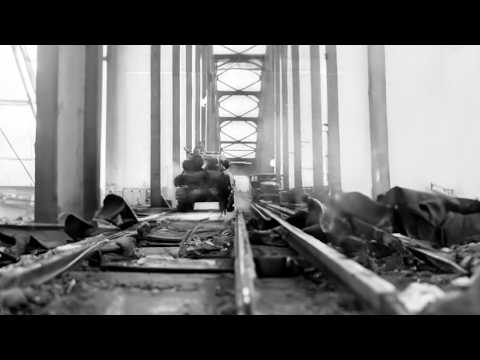
At 1:00 p.m., the leading elements of Combat Command B, 9th Armored Division, crested the hills northwest of Remagen. Below them, through the haze, they saw the impossible: the bridge still standing, German soldiers and civilians streaming across in a frantic exodus. “I couldn’t believe it was true,” recalled Brigadier General William Hoge. “I issued an order right away to go down and grab that bridge.” That order would set in motion one of the most dramatic actions of the war.
Lieutenant Karl Timmermann, a 22-year-old from Nebraska, led Company A of the 27th Armored Infantry Battalion. He had been in command for just one day. As his men moved cautiously into Remagen, they were met not by gunfire but by silence. White flags hung from windows, and civilians wept as they passed. “None of the civilians appeared happy or cheered,” Timmermann remembered. “Many of them wept.” The town was taken without a fight, but the bridge remained.
On the eastern bank, the German defenders were in disarray. Major Hans Scheller, ordered to hold the bridge, had requested explosives, only to receive half the amount needed—and of poor quality. As the Americans closed in, engineers under Captain Karl Friesenhahn raced to rig the charges. But when the order came to blow the bridge, the detonator failed. Friesenhahn cranked the handle again and again. Nothing. In desperation, a volunteer, Feldwebel Anton Faust, dashed onto the bridge under fire to manually light the backup fuse.
At that exact moment, Timmermann gave the order to charge. “We ran down the middle of the bridge shouting as we went,” recalled Sergeant Alexander Drabik, who led the assault. “I didn’t stop because I knew that if I kept moving, they couldn’t hit me.” Behind him, his men followed, their boots pounding on the wooden planks. Then, a massive explosion tore through the air, knocking them flat. Smoke and dust engulfed the river. For a heartbeat, it seemed the bridge had fallen.
But as the smoke cleared, the Ludendorff Bridge still stood—damaged, sagging, but intact. The explosives had detonated, but the bridge had been thrown up and slammed back down, still upright. “We took cover in some bomb craters, then we just sat and waited for others to come,” Drabik said. “That’s the way it was.” With a roar, the Americans surged forward, crossing the Rhine and establishing a foothold on the eastern bank.
Word of the capture raced up the chain of command. When General Omar Bradley informed Eisenhower, the Supreme Commander left his dinner to take the call. “That was Brad,” Eisenhower told his guests. “He’s got a bridge across the Rhine, and he apologized for it, said it was badly located at Remagen.” Badly located or not, it was a bridge—and it was open.
Hitler’s reaction was immediate and furious. He ordered the bridge destroyed by any means necessary. Artillery, aircraft, even V-2 rockets were hurled at the crossing. But the Americans held on, pouring troops and equipment across the Rhine. For ten days, the bridge endured relentless attacks, a symbol of German failure and American determination.
The battle for the bridge became a battle against time itself. While American engineers worked frantically to shore up the sagging structure, German artillery pounded the area day and night. More than a hundred guns zeroed in on the crossing, and a lone forward observer hidden somewhere in Remagen directed their fire with chilling precision. Shells struck the bridge no fewer than twenty-four times over the following days. Each hit sent splinters of timber and stone into the river below, yet still the bridge refused to fall.
Frustrated by the failure of conventional artillery, the Germans turned to their most advanced weapons. On March 9, twin-engine Me 262 jets screamed low over the Rhine, their pilots pushing their aircraft to the limit in a desperate attempt to score a direct hit. The hills surrounding the river, however, forced them into predictable approach paths, and American anti-aircraft gunners were waiting. Nine separate attacks were made. All nine failed.
By now, the Americans had surrounded the bridgehead with an astonishing array of anti-aircraft weaponry—672 guns in all, the largest concentration of aerial firepower assembled anywhere in the war. When German aircraft appeared, the sky above Remagen became a wall of exploding steel. Over ten days, more than 360 enemy planes attacked the bridgehead. American gunners shot down 109 of them, nearly a third of the aircraft committed. The Luftwaffe, already starved of fuel and experienced pilots, could ill afford such losses.
Yet the defenders had one more card to play. On March 17, eleven V-2 rockets were launched from sites in the Netherlands, their targeting crews confident that a single direct hit would obliterate the bridge entirely. The results were catastrophic—for the Germans. The rockets proved wildly inaccurate. One landed in Cologne, fifty kilometers away. The closest any came to the bridge was a strike that fell 270 meters short, hitting the command post of the 284th Engineer Combat Battalion. Three men were killed and thirty wounded.
For the engineers working on the bridge, the strain was beginning to tell. The structure had been battered by demolition charges, artillery, and relentless traffic. It had begun to sag—thirty centimeters in just the last few days. On March 13, the decision was made to close the Ludendorff to all traffic, diverting men and vehicles to the newly constructed pontoon bridges upriver. But repairing the old bridge remained a priority, and two hundred engineers continued their dangerous work on its twisted frame.
Then, shortly after three o’clock on the afternoon of March 17, a long, low groan echoed across the river. Soldiers stopped in their tracks. Drivers leaned out of their truck windows, scanning the sky. The groan deepened into the shriek of tearing steel. The engineers on the bridge knew instantly what was happening. They felt the deck buckle beneath their feet as the Ludendorff Bridge tore itself apart and crashed into the cold waters of the Rhine.
Lieutenant Colonel Clayton Russ of the 276th Engineer Combat Battalion was on the bridge when it went down. He plunged into the river, was pinned briefly beneath the surface, and then swept downstream until he was finally pulled from the water near the pontoon bridge. Others were saved by volunteers who dove into the freezing current to rescue men clinging desperately to pieces of wreckage. Sergeant Newman’s camera kept rolling as the half-frozen victims were carried away for medical attention.
When the chaos subsided, the toll became clear: twenty-eight Army engineers were dead, sixty-three more injured. Eighteen of the dead were never recovered, presumed drowned in the swift current. The bridge that had defied Hitler’s fury for ten days had finally fallen—not to German bombs, but to the sheer weight of its own wounds.
Yet even as the twisted steel settled into the riverbed, the crossing at Remagen had already changed the course of the war. In those ten days, more than 25,000 American troops and thousands of vehicles had passed over the Ludendorff and the two pontoon bridges thrown up beside it. The first Allied bridgehead east of the Rhine was a fact, and it could not be undone.
For the German High Command, the disaster demanded a reckoning. Hitler, still raging in his Berlin bunker, ordered that the failure be punished with maximum severity. A court-martial was convened within days. Major Hans Scheller, who had fled the bridge on a bicycle as the Americans stormed across, was arrested and condemned for dereliction of duty. He was executed by firing squad on March 13, along with four other officers deemed responsible for the debacle. Their bodies were buried in a small churchyard in Birnbach, thirty-five kilometers from the bridge they had failed to destroy.
Captain Willy Bratke, who had surrendered to the Americans in the rail tunnel, was tried in absentia and sentenced to death. He would never face the sentence, remaining a prisoner of war until 1947. Captain Karl Friesenhahn, the engineer whose detonator had failed at the critical moment, was also court-martialed in absentia—but astonishingly, he was acquitted. The court found that he had acted correctly given the confusion of the moment, and he survived the war, eventually returning to Remagen to walk the riverbank where his charges had fizzled.
For the men who had crossed the bridge, the war moved on. Lieutenant Karl Timmermann, the young officer who had led the first charge, returned to the United States after Germany’s surrender. He re-enlisted in 1950 for service in Korea, but before he could deploy, he was diagnosed with cancer. He died in 1951 at the age of twenty-nine, never having returned to Remagen. Sergeant Alexander Drabik, the butcher from Ohio who had sprinted across the bridge with his helmet flying off, was awarded the Distinguished Service Cross. He made several pilgrimages back to the town, the last in 1991. Two years later, en route to a reunion with his old comrades, he was killed in a road accident.
The bridge itself was never rebuilt. Its broken beams were salvaged and fed into the vast reconstruction effort that would rebuild a shattered Germany. The twin black stone towers on the western bank still stand, their dark silhouettes reflected in the Rhine. They are all that remain of the Ludendorff Bridge—a silent monument to the day the Americans came to Remagen and found a bridge nobody expected them to take.
In the decades since, historians have debated the significance of those ten days. Some argue that the bridgehead shortened the war by weeks, perhaps months. Others contend that Eisenhower’s broad-front strategy would have reached the Rhine elsewhere regardless. But for the men who were there—the engineers who died when the bridge collapsed, the infantrymen who charged through smoke and fire, the German officers who faced a firing squad for their failure—the debate matters little. What happened at Remagen was not a matter of strategy. It was a matter of moments—a failed detonator, a lucky sprint, a bridge that refused to fall until it had served its purpose.
The war in Europe would grind on for another seven weeks. Hitler would take his own life in a Berlin bunker as Soviet troops closed in. Germany would surrender unconditionally on May 8, 1945. But the road to that surrender ran through Remagen, across a battered railway bridge that had no business still standing—and across the courage of the men who crossed it.
Today, the twin towers stand as a peace museum, and visitors can walk the quiet riverbank where Drabik once sprinted through machine-gun fire. “The bridge was a gift,” one veteran later reflected. “We just had to be brave enough to take it.”
Every March, a small ceremony is held at the towers. Flowers are laid, taps are played, and the names of the twenty-eight engineers who died in the collapse are read aloud. Their sacrifice, like the bridge itself, has become part of the river’s memory.
What do you think—was Remagen a turning point, or simply a lucky break in a war already won? Share your thoughts below.
Report this article
Select a reason for reporting:






