At approximately 1,100 hours on January 31, 1986, a Soviet air defense radar station on the Kola Peninsula picked up a target it had seen many times before. The return was faint at first, then steady. Altitude above 20,000 meters, speed exceeding three times the speed of sound. Heading east along the Barents Sea coast, just outside Soviet territorial waters, flying as calmly as a scheduled airliner.
A duty officer reached for the bell that would scramble the interceptor crews. The bell was shrill and unmistakable, and one of the men who answered it that morning would spend the rest of his life averse to the sound of bells. He was a captain in the Soviet air defense forces named Mikhail Myagkiy.
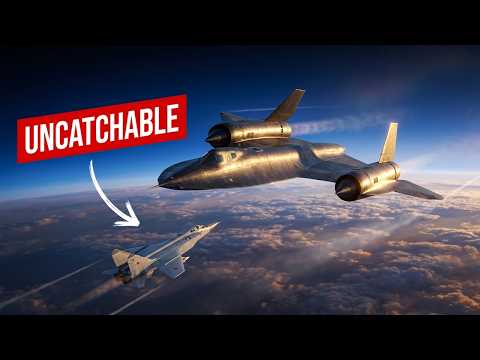
Myagkiy flew the newly fielded Mikoyan interceptor known to the West as the Foxhound, and he was about to carry out his eighth attempt to intercept the aircraft that had been sliding along the edge of the motherland for nearly two decades. He climbed into his cockpit with a burst of adrenaline he would later describe in careful, measured words.
The procedure for intercepting the American aircraft was timed down to the second. His fighter had to launch exactly 16 minutes after the initial alert. Every link in the chain, from the radar operators to the ground-controlled intercept officers to the two-man crew in the interceptor, was driven by the same knowledge. If the timing slipped, the target would be gone.
The target, over the years, had almost always been gone. What Myagkiy did not yet know, but would later describe in his interview with the Russian military aviation writer Valery Romanenko, was that this particular attempt would be different. On this one morning, he would actually see the American aircraft with his own eyes. It would be the only time in his career, in 14 such intercepts, that he would.
The aircraft he was chasing was a Lockheed SR-71 Blackbird, the strategic reconnaissance platform that the United States Air Force had been operating along the margins of the Soviet Union since the late 1960s. By January of 1986, the Blackbird had been flying operational missions for nearly 18 years, and in all that time no Soviet fighter had ever managed to bring one down. No surface-to-air missile had ever managed to track one to engagement range and score a hit.
The aircraft flew past the most heavily defended airspace on Earth, photographed what it wanted to photograph, and went home. For the men on the Soviet side who had spent their careers trying to stop it, the Blackbird had become something that sat between technical fact and professional folklore. It was the aircraft that could not be caught.
The SR-71 Blackbird was a strategic reconnaissance aircraft designed and built by the Lockheed Skunk Works under the direction of Clarence Kelly Johnson, one of the most celebrated aircraft designers in American aviation history. Its development grew out of the earlier A-12 Oxcart program for the Central Intelligence Agency. The first flight of the SR-71 took place on December 22, 1964, at Air Force Plant 42 in Palmdale, California, with Lockheed test pilot Robert Gilliland at the controls.
The aircraft entered operational service with the United States Air Force at Beale Air Force Base in January of 1966. It would remain in front-line service, with a brief gap, until the initial retirement in 1990, with reactivated airframes flying until 1998. And the very last flight of the type taking place at Edwards Air Force Base on October 9, 1999.
The specifications of the aircraft, 60 years after its first flight, still read like a claim that needs to be checked twice. A design cruise speed above Mach 3.2, an operational ceiling above 85,000 ft, a length of 107 ft, an unfueled weight of approximately 60,000 lb, most of it titanium. On July 27 and 28, 1976, two separate Blackbird crews set world records that still stand. Captain Eldon Joers and Major George Morgan flew SR-71 number 617958 to an absolute speed record of 2,193 mph over a 15 to 25 km course. On the same pair of flights, Captain Robert Holt and Major Larry Elliott in 617962 set an absolute altitude record in sustained level flight of 85,069 ft. No operational aircraft propelled by air-breathing engines has matched either number in the half century since.
The airframe was built predominantly from titanium alloy, a choice forced by physics. Aluminum would have softened and failed at the temperatures sustained supersonic flight produced. At cruise, friction with the atmosphere heated parts of the skin well past 500° Fahrenheit. The leading edges glowed faintly. The canopy became too hot to touch without a glove.
The aircraft grew several inches in length during a mission from thermal expansion, and its fuel tanks were deliberately built loose on the ground, so they would only seal properly once the airframe warmed. On the tarmac, a parked Blackbird leaked fuel in steady drips onto the concrete beneath it. In flight at altitude and speed, the seams closed and the tanks held. Most of the titanium ore, in one of the stranger ironies of the Cold War, was sourced through shell companies from the Soviet Union itself, a detail Ben Rich described years later in his memoir of the Skunk Works.
The aircraft was powered by two Pratt & Whitney J58 engines, a hybrid design that functioned as a conventional turbojet at low speed and transitioned to a bleed bypass configuration resembling a ramjet at high speed. At cruise, the variable spike inlet produced more than half the thrust, the ejector nozzle produced another quarter, and the core engine itself contributed less than 20%. The fuel was a special low-volatility kerosene called JP-7, developed specifically for the Blackbird because standard jet fuel would have ignited from the heat of the airframe alone.
JP-7 was so difficult to light that the engines had to be started with a chemical injection of triethylborane, a pyrophoric liquid that bursts into flame on contact with air. Every engine carried 16 shots of starter fluid, and every Blackbird startup produced two small green flashes in the nacelles as the fluid lit the fuel. Crews rehearsed each step of the sequence with the care that astronauts applied to spacecraft procedures. Because at the Blackbird’s operational altitude, the difference between a working systems chain and a broken one was the difference between a landing and a silence.
The SR-71 was not just a machine, it was a statement of intent. It represented what American aerospace engineering could produce in secret at the height of the Cold War, when the budget was effectively unlimited and the mission was existential. Only 32 airframes were ever built. 29 SR-71A reconnaissance aircraft, two SR-71B trainers, and a single hybrid SR-71C assembled from surviving pieces of other airframes. The per-unit cost was widely reported at roughly $34 million in mid-1960s currency, which in modern terms exceeds $200 million.
The aircraft was flown by a small, carefully selected cadre of pilots and reconnaissance systems officers. Most came from the top of the fighter and bomber pools. They underwent months of specialized training, including extensive work in the pressure suits designed by the David Clark Company of Worcester, Massachusetts, suits that were nearly identical to what NASA astronauts wore on orbital missions, because the environment the Blackbird flew in was, in physical terms, the edge of space.
When the Blackbird entered service, the Cold War had settled into its long, grinding middle period. The Cuban Missile Crisis was 3 years in the past. The Vietnam War was escalating. Strategic reconnaissance had become one of the defining activities of the era, because neither superpower could afford to be surprised about what the other was building, deploying, or testing. Before the Blackbird, the United States had relied on the U-2 for deep penetration photography of Soviet territory. But on May 1, 1960, a CIA U-2 piloted by Francis Gary Powers was struck near Kosulino in Sverdlovsk Oblast by an S-75 surface-to-air missile. Powers parachuted, was captured, and was held for 21 months before a prisoner exchange in 1962.
The incident was a political catastrophe for the United States and a profound shock to American reconnaissance planners. President Eisenhower suspended manned overflights of the Soviet Union for the rest of his term at the Paris summit in May of 1960. At his press conference in January of 1961, President Kennedy confirmed the policy would continue. Successive administrations reaffirmed it. When the SR-71 entered service 6 years after the Powers shoot-down, the prohibition on deep Soviet overflights was absolute.
The Blackbird never crossed the Soviet frontier. It flew in international airspace along the Soviet periphery, collecting imagery and signals intelligence from standoff ranges, gathering what could be seen and heard from outside the border. This is a detail that is sometimes misunderstood. The Blackbird did not fly over the Soviet Union. It flew past it, close enough to collect what it needed, far enough to avoid the political consequences of outright violation.
And the fact that the aircraft never crossed the line shaped everything about the Soviet response, because Soviet interceptor pilots were never legally authorized to fire at a target that remained in international airspace. Every encounter was a tracking exercise, a positioning exercise, a rehearsal for a shot that could never be taken. The Blackbird was the answer to the lesson the U-2 had delivered. It was not designed to fight. It carried no weapons of any kind. Its only defense was its performance envelope. The operational doctrine was absolute. If a Blackbird crew detected a surface-to-air missile launch, they were instructed to accelerate and climb. If a fighter attempted intercept, they were instructed to accelerate and climb. The aircraft was built around a single unshakeable idea. Speed and altitude were survival. Nothing else was needed.
By the time Soviet radar stations began tracking SR-71 missions along the Far East periphery in the late 1960s, the Soviet Union had built what was arguably the most comprehensive integrated air defense network in the history of warfare. It included layered surface-to-air missile batteries, long-range early warning radars, ground-controlled intercept stations, and dedicated interceptor aircraft of extraordinary performance. The aircraft at the tip of that spear was the MiG-25 Foxbat, a massive twin-engine interceptor that entered Soviet air defense service in 1970. It could reach Mach 2.83 in sustained flight, and brief Mach 3 dashes were possible at the cost of destroying the engines. Its service ceiling depended on its missile load. With four R-40 air-to-air missiles, its combat ceiling was roughly 67,900 ft. The radar and fire control system could not solve the closure geometry against a target flying Mach 3.2 at 85,000 ft.
The Foxbat had been developed in part to counter American high-speed, high-altitude reconnaissance aircraft. Soviet engineers had believed, when they began the program in the early 1960s, that they were building the machine that would finally close the altitude gap. They were wrong. Not because the Foxbat was a bad aircraft. It was by every measure an impressive achievement. It simply could not reach the envelope the Blackbird occupied. The MiG-25 could touch the edge of that envelope in a zoom climb. It could not cruise in it. And a zoom climb, by definition, ends.
What the Soviet Air Defense Forces, known by the Russian initials PVO, faced beginning in the late 1960s, was a problem they could not solve. An aircraft was transiting the margins of their airspace at will, photographing military installations, naval bases, missile silos, and industrial facilities. And no weapon in their inventory could reliably stop it. The political and institutional pressure this created was immense. Commanders were held accountable for intrusions. Controllers were disciplined for failed intercepts. Pilots were drilled relentlessly. And every time the real target appeared on their scopes, the same thing happened. The target simply flew away.
Myagkiy landed with his missiles still on the rails, and the silence that followed was the sound of a problem that had outlasted its own solution. No SR-71 was ever lost to enemy action—not to a MiG, not to a missile, not to any hostile system on any continent. The Blackbird retired in 1990 not because the PVO finally caught it, but because satellites matured and budget politics won.
Today the surviving airframes sit in museums from Chantilly to Duxford, their titanium skins still black, their intakes still menacing. Visitors ask how fast it went, and the answer requires no exaggeration. The men who flew it and the men who chased it are old now, their testimony preserved in memoirs and interviews. What they left behind is a record with no close parallel: a quarter century of near-weekly encounters in which no shot was taken by the Blackbird, and no shot that was taken ever connected.
It was never a story of combat. It was a story of engineering ambition, of professional restraint, and of an aircraft that came, photographed, and went home every time.
If you had been in Myagkiy’s cockpit that morning, would you have wanted the rules to permit a shot—or were you secretly glad they didn’t?
Report this article
Select a reason for reporting:






