December 1944. The Japanese Army doctors had prepared for torture and execution when they fell into American hands. Instead, the American medics handed them surgical instruments and asked them to save the lives of wounded American soldiers. The enemy doctors could not believe their captors would trust them with the lives of their own men—especially since Japanese military law demanded death before surrender.
Dr. Takashi Nagase had served the Emperor for twelve years. His hands had saved thousands of Japanese soldiers. His small bag of rusty tools and precious medicine bottles was now worth more than diamonds. In his Osaka hospital, ten beds held two hundred wounded men. They used old newspapers as bandages. They performed surgery without painkillers because none were left. Death was honorable. Surrender was not.
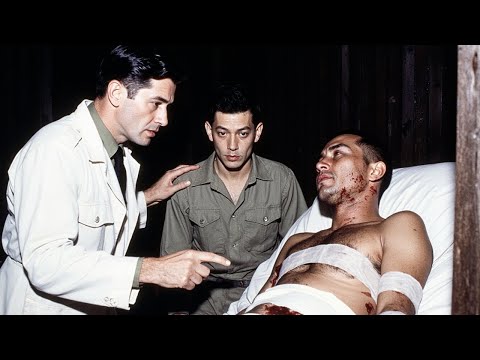
The orders came on a cold December morning. Nagase and his friend Dr. Hiroshi Yamamoto would join the medical unit defending Leyte in the Philippines. They packed their few tools. Yamamoto wrote a letter to his wife saying he would return victorious or not at all.
The transport ship smelled of oil and fear. Two hundred soldiers were crammed into a space meant for fifty. Most were boys barely old enough to shave. They sang songs about dying for the Emperor. They practiced their last words. They sharpened their bayonets and promised to kill ten Americans each before they died.
Nagase and Yamamoto set up a small medical station in the ship’s belly. They had six bottles of medicine, a handful of bandages, and two sharp scalpels. The metal floors were already stained with blood from previous voyages. Wounded soldiers lay on bare steel, biting leather belts to keep from screaming.
American planes found them two days out of the Philippines. The first bomb hit the engine room. The second disabled the radio. Water poured in through holes the size of train cars. Men screamed in the dark. Fuel burned on the water like liquid fire.
Nagase grabbed his medical bag. He helped Yamamoto get wounded men to the few lifeboats. The ship tilted to one side. Everything that wasn’t nailed down became a flying weapon. The smell of burning fuel mixed with blood and salt water. The ship sank in twelve minutes.
Nagase found himself clinging to a piece of wood in the warm waters of the Pacific. Bodies floated around him like fallen leaves. Some were moving. Most were not. He could see other survivors on the horizon, but the current separated them.
American patrol boats arrived before sunset. Nagase tried to swim away, but his strength was gone. His medical training told him he was going into shock. His mind told him to prepare for torture. The Americans would rip out his fingernails. They would make him watch his friends die slowly. They would feed him to wild animals.
American sailors pulled him from the water as if he were made of glass. They wrapped him in warm blankets. One sailor, really just a boy, gave him fresh water to drink. Another examined his wounds with gentle hands. They spoke in quiet voices, like fathers talking to sick children.
This made no sense. Where were the horns? Where were the claws? These Americans looked like ordinary men. They had kind eyes and careful hands. One had a picture of his wife tucked inside his helmet. Another shared his chocolate bar. Nagase felt his world tilting worse than the sinking ship.
Everything he had been taught said the Americans were monsters. But these men treated him like a wounded brother. They checked his pulse. They bandaged his cuts. They gave him dry clothes and hot soup.
Yamamoto was on another rescue boat. His eyes held the same confusion. The same fear that everything they believed might be wrong. They had prepared to die fighting demons. Instead, they were saved by men who seemed more human than many of the Japanese officers they had known.
The trip to the POW camp took three days. American medics checked on them every few hours. They cleaned infected wounds. They shared their food. They asked with genuine interest about Japanese medical training, like students talking to their teachers.
Nagase stared through the window of the transport truck at the first American city he had ever seen. Electric lights everywhere. Cars on every street. Buildings taller than mountains. People who looked healthy and happy. Children playing in clean clothes. This was supposed to be a country at war, yet it looked like paradise.
The POW camp appeared before them, surrounded by high fences and guard towers. Nagase’s stomach froze with fear. Now the real torture would begin. Now he would learn what the American demons truly did to their prisoners. He closed his eyes and whispered a prayer to the Emperor.
But something was wrong with this scene too. The guards were not beating prisoners. The barracks looked clean and solid. Smoke rose from kitchen chimneys, carrying the smell of real food cooking. Men walked around the camp without chains or ropes. What kind of demons were these Americans? And what were they really planning to do?
The camp gates swung open with a loud creak that echoed off the mountains. American guards motioned the prisoners forward with their rifles, but they did not shout or strike anyone. Nagase had seen Japanese guards beat their own soldiers for walking too slowly. These Americans waited patiently as the elderly and the wounded struggled to keep up.
The first building they entered bore a Red Cross symbol. Inside, Nagase’s breath caught in his throat. The medical facility was larger than his entire Osaka hospital. Rows of white beds stretched as far as he could see. Each bed had clean sheets, real pillows, and a small table beside it. Electric lights hung from the ceiling, bright enough to read beneath. The floors were so clean they reflected the lights like mirrors.
A young American medic approached with a clipboard. He spoke in broken Japanese, smiling as he fumbled the words. He wanted to know about their medical training. Were they doctors? What kind of medicine did they practice? Did they have any injuries that needed treatment? The questions came without threats or demands. The medic seemed genuinely interested in their answers.
Yamamoto whispered in Japanese that this must be a trick. The Americans were famous for their lies and deceptions. Perhaps they were preparing for medical experiments like laboratory mice. But the medic kept asking gentle questions and writing down their responses with great care.
The tour continued through corridors that smelled of antiseptic instead of blood and infection. They passed rooms filled with medical equipment Nagase had only seen in textbooks before the war. X-ray machines that could see inside human bodies without cutting them open. Machines that could pump blood through artificial hearts during surgery. Cabinets filled with medicines in bottles. More medicine than existed in all of Japan.
The American medic opened one cabinet and pulled out a small bottle. He said in English: “Penicillin.” Then he tried to say it in Japanese. This single bottle contained enough medicine to cure fifty men of deadly infections. In Japan, such a treasure was reserved only for the most important generals. Here, they had hundreds of bottles lined up like ordinary supplies.
They entered the surgical ward next. Six operating tables sat beneath massive lights that could turn night into day. Each table had its own set of surgical instruments, polished until they gleamed like jewelry. Steam rose from machines that cleaned tools with boiling water. Everything was organized with military precision, but also with extraordinary care for human life.
An older American doctor approached them. His hair was gray and his hands were steady. He spoke through an interpreter, asking if they had surgical experience. The two Japanese doctors nodded cautiously, unsure where this conversation was heading. The American doctor smiled and said something that made the interpreter blink twice before repeating it.
He wanted them to help treat wounded soldiers. Not Japanese soldiers. American soldiers injured while fighting against Japan. The interpreter repeated the request three times because he could not believe the words himself. These Americans wanted their enemies to treat their own men.
Nagase felt dizzy. In Japan, enemy prisoners were barely fed enough to survive. They were never trusted with anything important, certainly not with Japanese lives. The idea of asking Chinese or Korean prisoners to perform surgery on Japanese soldiers was so impossible that no one would have considered it.
But the American doctor was serious. He led them to a ward where wounded American soldiers lay in clean beds. Some had lost arms or legs. Others had deep wounds from bullets or shrapnel. They were all receiving the best possible medical care. Painkillers flowed through tubes into their arms. Nurses checked on them every hour. Their wounds were wrapped in clean white bandages changed twice daily.
The American doctor explained through the interpreter that they were short-staffed. So many wounded were arriving from the Pacific battles. They needed every qualified medical person they could find, even if those people had been fighting against them only days before. He asked again whether the Japanese doctors would help save American lives.
Nagase looked at Yamamoto. Neither spoke, but the same thought passed between them: if this is a trick, it is the strangest trick in the history of war. Nagase nodded slowly. The American doctor led them to a wounded Marine—a boy with shrapnel buried near his heart. His breathing was shallow, his lips gray. Without surgery, he would not see morning.
Nagase scrubbed his hands, slipped on the white coat they gave him, and picked up a scalpel. His hands trembled once, then steadied. The knowledge in his fingers belonged to no nation. He removed three fragments of metal, each smaller than a grain of rice, while American doctors watched without a word of doubt.
When the boy’s breathing eased and color returned to his face, the lead surgeon, Dr. Peterson, did something Nagase never expected. He saluted him—not as a soldier, but as a doctor honoring a master of the craft. The others followed. For one long moment, nationality and war dissolved into the simple fact of a life saved.
That night, Nagase wrote in a small notebook: “Everything we were told was a lie.” These Americans fed us while their own enemies starved. They trusted us with their most precious resource—the lives of their people. What does that say about strength? What does that say about honor?
Months later, the war ended. Nagase returned to a Japan of ashes and rubble. His old hospital was gone. But he carried something back: a small wooden cross given by a Marine named Tommy, and a leather bag of medical supplies from Dr. Peterson. “You will need every help you can get to rebuild,” Peterson had said.
Nagase opened a small clinic in a half-bombed building. He treated everyone—rich or poor, Japanese or American. He taught young doctors the philosophy he had learned in captivity: every patient deserves the best care possible, regardless of who they are. The wooden cross stayed on his desk for the rest of his life.
In his final journal entry, written fifty years after the war, he reflected: “The Americans taught me that the highest form of strength is showing mercy to those who cannot defend themselves, even former enemies. A nation becomes truly strong not when it can destroy its enemies, but when it can afford to heal them.”
What do you think—is true strength measured by the power to destroy, or by the courage to heal?
Report this article
Select a reason for reporting:






