Lambeth, London, October 1891. A young woman dies in agony in a rented room, her body convulsing in a way that would have been unmistakable to any trained eye. Yet the doctor called to her bedside signs the death certificate without a second thought: delirium tremens. Natural causes. Case closed. No autopsy. No toxicology. No investigation. Just another dead prostitute in a crowded slum—a life and death deemed unworthy of scrutiny.
But this was no ordinary death. This was murder. And the killer would have walked free forever, were it not for his own staggering arrogance.
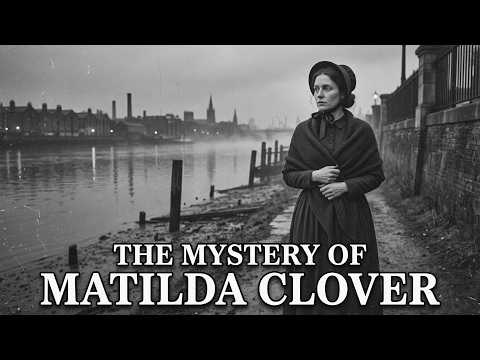
Matilda Clover was twenty-seven years old. She lived in a lodging house near 27 Lambeth Road, a teeming district of laborers, servants, and those clinging to the bottom rungs of Victorian London’s economy. She supported herself through prostitution—a dangerous trade in a city that treated such women as moral failures rather than economic casualties. The official record tells us almost nothing else about her. No birth date. No parents’ names. No childhood. The archive begins with her death and goes silent on everything before it.
On the evening of October 20, 1891, a respectable-looking man visited her room. Witnesses later described him as well-dressed, polite, unremarkable. He stayed for a while, then left. Soon after, Matilda was seized by violent spasms—muscles locking, back arching, convulsions wracking her body in the telltale pattern of strychnine poisoning. The landlady heard the commotion. A doctor was summoned. He arrived to find her in the throes of what he took to be a severe alcoholic episode. She died that night.
The inquest was a formality. A local jury heard the doctor’s testimony, the landlady’s account, and returned a verdict of death by delirium tremens. The file was closed. Matilda Clover was buried—location unrecorded—and the man who had given her the poison walked out of Lambeth and continued his business.
His name was Thomas Neill Cream. He had arrived in London only weeks earlier, fresh from America, presenting himself as a distinguished physician. But behind that respectable facade lay a trail of death stretching from Canada to Chicago. In 1876, his young wife had died suspiciously soon after their forced marriage. In 1881, he had been convicted of poisoning Daniel Stow with strychnine and sentenced to life in Joliet prison. Released after ten years, he had crossed the Atlantic and resumed his deadly work.
Ellen Donworth was his first London victim, dying on October 13, 1891—a week before Matilda. Then Matilda. Then, in April 1892, two more women—Alice Marsh and Emma Shrivell—died in the same horrific manner in Stamford Street. Their convulsions were unmistakable. This time, Scotland Yard could not ignore the pattern.
Inspector John Bennett Tunbridge of the Criminal Investigation Department began piecing together the deaths. He reviewed Ellen Donworth’s case. He pulled a strange letter from the files—one that had been sent months earlier to Dr. William Broadbent, a prominent physician, accusing him of poisoning Matilda Clover and demanding money to prevent scandal. The letter named Matilda Clover as a murder victim at a time when no such murder was on record. Only someone with direct knowledge of the killing could have written it.
The body of Matilda Clover was exhumed. Dr. Thomas Stevenson, the Home Office’s chief analyst and England’s foremost forensic toxicologist, examined the remains. He found strychnine. The original verdict was shattered. A second inquest returned a verdict of willful murder. The case was reopened.
The net closed around Thomas Neill Cream. A woman named Lou Harvey, who had met him and received pills she wisely refused to swallow, identified him. A man named John Haynes testified that Cream had spoken to him about the Lambeth poisonings, showing him newspaper clippings and making statements that revealed knowledge only the killer could possess. In June 1892, Inspector Tunbridge arrested Cream.
The trial opened at the Old Bailey on October 17, 1892, before Mr. Justice Henry Hawkins. Sir Charles Russell, the Attorney General, led the prosecution. The evidence was damning: Stevenson’s toxicology, Harvey’s identification, Haynes’s testimony, and the letter to Broadbent—a confession disguised as an accusation. The defense, led by Gerald Geoghegan, could not overcome the weight of it. The jury deliberated briefly and returned a verdict of guilty.
Thomas Neill Cream was sentenced to death. On November 15, 1892, he was hanged at Newgate Prison by James Billington. Fewer than twelve witnesses attended. The execution was recorded, the body buried within the prison walls, and the case formally closed.
But the official record, for all its neatness, conceals as much as it reveals. The trial of Thomas Neill Cream was not merely a legal proceeding; it was a public spectacle that gripped Victorian London. Newspapers devoured every salacious detail—the respectable doctor who preyed on fallen women, the letters that taunted the police, the exhumation that cracked the case open. The press called him ‘the Lambeth Poisoner,’ a moniker that stuck like tar. Yet for all the coverage, the women he killed remained footnotes in their own murders.
Matilda Clover’s name appeared in print only as a victim—a prostitute, a drunkard (as the first doctor had claimed), a woman whose death had been so unremarkable that it took a second corpse to notice the first. No obituary celebrated her life. No editorial mourned her loss. She was evidence, not a person. And when the trial ended and the gallows did their work, she slipped back into the silence from which she had briefly emerged.
The cultural afterlife of the case belongs almost entirely to Cream. Books, documentaries, and true-crime anthologies return again and again to his audacity—the letters, the disguises, the transatlantic trail of bodies. John Camp’s 1973 study, *The Man from Chicago*, Angus McLaren’s 1993 academic analysis, *A Prescription for Murder*, and Dean Jobb’s 2021 *The Case of the Murderous Dr. Cream* all center the killer. Matilda Clover, Ellen Donworth, Alice Marsh, and Emma Shrivell appear as supporting characters in a drama named for their destroyer.
This is the quiet violence of the archive. A woman can be murdered, her body exhumed, her killer hanged—and still, her story is told as his story. The legal system corrected its error, but the cultural memory did not. The record was amended; the narrative was not.
Yet there are other silences in the file, ones that speak just as loudly. The name of the doctor who first signed Matilda’s death certificate—the man who saw the arching back, the locked jaw, the violent spasms, and wrote ‘delirium tremens’—does not appear in any standard account. The coroner who presided over the original inquest is similarly unnamed. The landlady who heard the screams and called for help remains a shadow. The people who failed Matilda are as anonymous as she is.
What does it mean that a woman can die in agony, her death mistaken for drunkenness, and the mistake itself goes unrecorded? The institutional failure was not malicious. It was routine—the casual application of lesser scrutiny to lesser lives. The doctor did what doctors did in Lambeth. The coroner’s jury did what such juries did. The system worked exactly as designed. And the design was flawed.
By the time Thomas Stevenson found strychnine in Matilda’s remains, more than a year had passed since her burial. The exhumation was ordered only because her name appeared in a blackmail letter—a letter written by her own killer. Without that letter, the case would never have been reopened. The science was available. The legal framework existed. But the will to investigate the death of a Lambeth prostitute was absent until a man’s arrogance made it impossible to ignore.
There is a bitter irony here. Cream’s vanity—his need to taunt, to accuse, to draw attention to his own cleverness—was the mechanism of his undoing. He wrote to Dr. Broadbent, accusing the innocent physician of the very crime he himself had committed. He showed John Haynes newspaper clippings, eager to impress. He could not resist the performance. His ego was the thread that unraveled him.
But what of the women who died without such a thread? How many other Matilda Clovers lie in unmarked graves, their deaths recorded as natural, their murders never suspected? The Cream case is exceptional not because it reveals a unique evil, but because it exposes a systemic blindness. For every killer who writes a letter, there are countless others who stay silent.
The trial itself was a model of Victorian legal procedure. Sir Charles Russell’s prosecution was methodical, Stevenson’s testimony unassailable, Hawkins’s summing-up meticulous. The jury convicted in short order. The sentence was carried out with bureaucratic efficiency. The machinery of justice, once activated, performed flawlessly. But the machinery had to be activated by a fluke—a killer’s mistake—not by the death of a woman.
In the decades that followed, the case entered the annals of forensic science. Stevenson’s exhumation analysis became a textbook example of toxicology’s power to correct clinical error. The legal principle of similar facts—the admission of the other Lambeth murders as evidence—was cited in subsequent poisoning trials. The case made law. It made forensic history. It made Thomas Neill Cream infamous.
It did not make Matilda Clover a person.
Her name survives in the record only because her killer wrote it down. Her death became a murder only because he named it. Her body was exhumed only because he could not resist the urge to accuse another man of his crime. She exists in history as a consequence of her murderer’s psychology.
And yet, there is something in her story that resists the archive’s silence. The landlady who heard her screams. The neighbors who witnessed her convulsions. The doctor who, however mistakenly, attended her in her final hours. These are fragments of a life that mattered to someone, even if the official record does not say so. Matilda Clover was not merely a victim. She was a woman who lived, worked, suffered, and died in a city that had no place for her.
The file on her death is closed. The file on her life was never opened. But in the space between those two absences, something persists—a trace of a woman whose name, spoken aloud in a courtroom, brought down a killer. It is not justice. But it is not nothing.
The archive, for all its silences, cannot erase what the courtroom heard. When Sir Charles Russell rose to address the jury, he did not speak of Matilda Clover as a case study or a cautionary tale. He spoke of her as a woman whose life had been taken by a man who believed her death would go unnoticed. “She was poor,” he said. “She was obscure. But she was murdered.” The words landed in the crowded Old Bailey like stones dropped into still water.
In the gallery that day sat women who had known Matilda—or women like her. They had come to watch the man who had preyed on their sisters, their friends, their neighbors. They heard the testimony about the pills, the convulsions, the letter that named her. For once, a Lambeth woman’s death was treated as if it mattered.
After the verdict, after the black cap and the sentence, after the hangman’s rope was measured and the prison bell tolled, the newspapers moved on. Cream’s story was told and retold. But in the narrow streets off Lambeth Road, the women who walked the same pavements Matilda had walked did not forget. They knew what the court had confirmed: that a woman could be killed and no one would notice—unless the killer made a mistake.
The lesson of Matilda Clover is not that justice was done. It is that justice required a fluke. It required a murderer’s vanity. It required a letter that should never have been written. Without that letter, she would have remained a name in a burial ledger, cause of death: delirium tremens.
Her grave has no marker. Her birth record is lost. The doctor who signed her death certificate is forgotten. But her name, spoken in a courtroom in 1892, brought a killer to the gallows. It is a small thing. It is everything we have.
If you were the one holding the pen, what would you write on Matilda Clover’s grave—a name, a date, or the truth that the record tried to bury? Tell us in the comments.
Report this article
Select a reason for reporting:






