The radio crackled with the grim report: ammunition gone, supplies exhausted, divisions destroyed, and eighteen thousand wounded dying without bandages or medicine. Colonel General Paulus, commander of the Sixth Army, had just sent a desperate message to Hitler, begging for permission to capitulate and save the lives of his remaining men. The reply was swift and merciless: “Capitulation out of the question. Sixth Army is fulfilling its historical role by fighting to the last round.” In that moment, the fate of over 250,000 German soldiers was sealed—sacrificed to a madman’s pride.
Lieutenant Wilhelm Adam, adjutant to Paulus, watched the tragedy unfold from inside the pocket. He had seen the warnings, the ignored memoranda, the creeping sense of doom. Now, as Soviet forces closed in, he would witness the final, agonizing spasms of an army abandoned by its Führer.
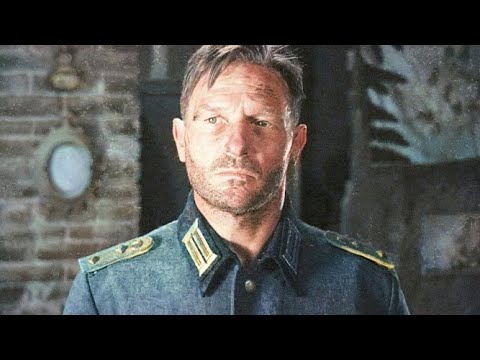
The morning of January 24th broke with the staccato of rifle fire and the crash of grenades. The front line had collapsed to the edge of the gully where the army headquarters huddled in dugouts. Staff officers scrambled to destroy files, pack what little they could carry. Adam stuffed two blankets and a briefcase into his vehicle—his entire worldly possessions. “Get everything ready for moving headquarters!” barked Lieutenant General Schmidt, Paulus’s chief of staff, his voice cutting through the chaos. Bullets whistled overhead as they fled, the Red Army’s shouts echoing from the ravine behind them. A few minutes later, and the entire army staff would have been captured.
They raced through the moonscape of Stalingrad—past bomb craters, rubble, and the skeletal remains of buildings. The city, once a proud industrial center, was now a graveyard of twisted metal and shattered concrete. At the Zaritza bridge, an officer of the 71st Infantry Division guided them to a new headquarters: the cellars of a former hospital. It was a mockery of a command post—damp, cramped, and vulnerable. But it was all they had left.
Schmidt, however, seemed less concerned with defense than with escape. He ordered Adam to prepare a landing strip for a Fieseler Stork aircraft, convinced that a rescue plane would whisk him away. Paulus scoffed: “What nonsense. Where can the Stork come from?” But Schmidt persisted, and Adam dutifully marked the strip with landing lights. That night, no Stork arrived. Only supply planes droned overhead, randomly dropping food that often fell into enemy hands. Schmidt waited in vain, his orderly later confiding that the chief of staff hadn’t slept a wink.
As the days bled into one another, the situation deteriorated beyond repair. Adam, restless in the cellar, took on the role of liaison officer, driving between divisional headquarters. He visited General von Hartmann of the 71st Infantry Division, who greeted him calmly despite the shells exploding outside. “I intend to go to my infantry in the front line by morning,” Hartmann said. “I will see death among their ranks. Captivity for a general is dishonorable.” Adam argued passionately that surrender was not dishonorable, that they had a duty to share the fate of their soldiers. But Hartmann was resolute: “I know that you mean well, Adam, but I will go my own way.” He would die with a rifle in his hand, shot in the head on the railway embankment.
Next, Adam visited Colonel Ross, commander of a regiment holed up in a department store cellar. Ross had a plan: he had captured a Soviet truck, loaded it with petrol cans, and intended to disguise himself and his men as Russian troops to slip through enemy lines. “Join us, Adam,” he urged. “We’ll hide behind the barrels.” Adam was horrified. “Have you lost your senses? What about your soldiers who have held on with you? Are you going to leave them in the lurch?” Ross fell silent, then nodded. “You were obviously right. A commander really belongs with his men.” The escape plan was abandoned.
Back at headquarters, Paulus and Schmidt agreed to move the command post to the department store’s ruins. But the army was disintegrating. Individual units began to surrender on their own terms. The 297th Infantry Division laid down its arms, and its commander, Major General von Dreber, sent Paulus a letter describing humane treatment by the Red Army. Schmidt raged, accusing Dreber of writing under duress. “We are not surrendering!” he shouted. But the end was inevitable. That same day, news arrived that General von Hartmann had fallen, and Colonel Ross was now commanding the 71st. Suicides swept through the officer corps. General Stempel of the 371st shot himself, unable to endure the misery.
Adam watched Paulus crumble. The commander-in-chief, once a model of obedience, was now a broken man—physically and emotionally spent. “You must understand, Adam, that I cannot handle things any other way,” Paulus murmured, refusing to defy Hitler’s order even as the army died around him. Schmidt, ever the enforcer, discovered that a regimental commander had given his officers permission to surrender at their discretion. He demanded Paulus relieve him, and Paulus, in a moment of weakness, agreed. It was a decision he would later regret but lacked the strength to reverse.
By January 26th, the army staff was reduced to a handful of officers, two cars, and a truck. They moved to their final headquarters—the cellars of the department store. The streets were chaos: wounded and sick soldiers crawled toward aid stations that no longer existed, while enemy tanks advanced methodically. In the cellars, hundreds of wounded lay packed together on the bare ground, many already dead. Doctors, exhausted and out of supplies, could do little but watch. Typhus had broken out, spread by lice in the freezing, filthy conditions. More than 90 percent of the remaining troops were infected, and the death rate among the sick exceeded 80 percent. It was a catastrophe within a catastrophe.
As Adam looked around at the wreckage of the Sixth Army—the starving, frostbitten men, the shattered buildings, the stench of death—he could not help but wonder: Why did it have to perish so cruelly on the Volga, two thousand kilometers from home? The answer lay in the orders of a Führer who had long since abandoned them, and in the blind obedience of a general who could not break free.
That evening, a young ordnance officer stumbled into the cellar, his face gray with exhaustion. He reported that Soviet loudspeakers were now broadcasting surrender appeals directly into the German lines, promising food and medical care to anyone who laid down his arms. “They’re offering bread and bandages,” he whispered, as if speaking a heresy. “Some of the men are listening.” Schmidt, overhearing, flew into a rage and ordered the officer arrested for spreading defeatism. But the damage was done—word had already begun to spread through the ruins.
Adam was dispatched the next morning to assess the condition of the 295th Infantry Division, which had been holding a sector near the grain silo. The drive through the city was surreal. The streets, once alive with the roar of battle, were now eerily silent save for the crack of distant rifles and the occasional crump of artillery. Frostbitten soldiers sat slumped against walls, too weak to move, their eyes vacant and unfocused. Some had wrapped their feet in rags and cardboard; others simply stared at the sky, waiting for the end.
At the 295th’s command post—a cramped cellar beneath a collapsed factory—Adam found Colonel Otto Korfes, the divisional commander, hunched over a map with his staff. Korfes was a tall, gaunt man with hollow cheeks and a voice that trembled slightly as he spoke. “We have perhaps three hundred men fit for combat,” he said. “The rest are wounded or too weak to lift a rifle. And the Russians are massing for another push.” He paused, then looked directly at Adam. “Tell me honestly, Adam—is there any hope of relief?”
Adam could not lie. “No,” he said quietly. “There is no relief coming. The Führer has abandoned us.” The words hung in the air like a death sentence. Korfes nodded slowly, as if he had known all along. “Then I will not sacrifice my men for nothing,” he said. “I intend to surrender the division at dawn.” Adam felt a strange mixture of relief and dread. He knew Schmidt would react with fury—but he also knew that Korfes was right.
When Adam returned to the department store and reported the conversation, Schmidt exploded. “That is treason! He will be court-martialed!” But Paulus, sitting in a corner with his head in his hands, said nothing. The commander-in-chief had become a ghost, present in body but absent in spirit. He merely waved a hand and murmured, “Let him do what he must.” Schmidt stared at Paulus in disbelief, then stormed out of the cellar.
That night, the sound of fighting from the 295th’s sector faded, replaced by an uneasy quiet. By morning, reports confirmed that Korfes had surrendered his division to the Soviets. It was the first crack in the dam—and soon, others would follow. The 297th and 371st had already laid down their arms; now the 295th was gone. The Sixth Army, once the pride of the Wehrmacht, was dissolving into a rabble of starving men.
Adam found Paulus standing by a shattered window, staring out at the ruins. “It is over, Adam,” he said softly. “I have failed them all.” For the first time, Adam saw tears in the general’s eyes. But before he could respond, a massive explosion rocked the building, sending chunks of masonry crashing down. When the dust cleared, Schmidt was shouting orders for everyone to move to the northern cellars—the Soviets were less than a hundred meters away.
The move was chaos. Wounded men screamed as they were dragged through rubble; others, too far gone, were simply left behind. Adam helped carry a young lieutenant with a shattered leg, his cries echoing through the cellar corridors. “Leave me,” the boy begged. “I’m dead already.” Adam refused, gritting his teeth until they reached the northern cellars—a labyrinth of darkness and despair.
Inside, Paulus sat on a wooden crate, his uniform soiled, his face unshaven. Schmidt paced like a caged animal, still issuing orders to a staff that no longer existed. “We must hold until the last man,” Schmidt insisted. But the last men were already surrendering in droves. That afternoon, Soviet troops breached the department store’s upper floors. Grenades tumbled down the stairwells, and the crack of submachine guns grew deafening.
Adam found himself beside Paulus as the end came. The general removed his cap and set it on the crate. “I will not give the order to surrender,” he said, his voice barely a whisper. “But I will not stop anyone who does.” It was the closest thing to defiance Paulus had ever mustered. Schmidt opened his mouth to protest, but the words died on his lips as a Soviet soldier appeared at the cellar entrance, rifle raised.
They were herded into the cold, a ragged column of the once-proud Sixth Army. Adam looked back once at the ruins of Stalingrad—the city that had swallowed an entire army. He thought of Hartmann, Ross, Korfes, and the thousands who would never leave this place. The survivors stumbled forward into captivity, into typhus and starvation, into a future few would see.
Of the 250,000 men who had entered the cauldron, fewer than 6,000 would ever return to Germany. Adam survived—but the question that haunted him for the rest of his life was not why they had lost, but why they had been made to fight at all. What do you think—was Paulus a victim of his own obedience, or a coward who refused to save his men?
Report this article
Select a reason for reporting:






