You’d think Hollywood’s biggest stars would want the world to see their palatial estates, right? Wrong. For some of the most iconic names in entertainment history, their homes were more than just places to rest—they were fortresses of secrets, hideaways from the relentless spotlight, and sometimes, the only place they could truly be themselves. But after they passed, the walls came down, and the bizarre, scandalous, and heartbreaking truths behind those hidden mansions began to surface.
From secret tunnels and hidden rooms to ghostly encounters and cursed reputations, these 21 celebrity mansions reveal a side of Tinseltown that the studios tried desperately to bury. What were they hiding? And why did some of these homes vanish from the map entirely? The answers are stranger than any movie plot.
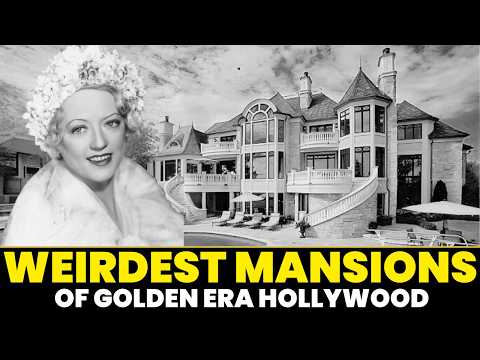
Take Charlie Chaplin, for instance. The genius behind City Lights and Modern Times lived in a Beverly Hills house that was surprisingly modest—but full of whimsy. Beneath its cozy exterior lay a hidden tunnel that reportedly led to a discreet wine cellar. Word has it Chaplin used this passage to dodge nosy reporters or host small private parties away from prying eyes. Even more curious was the miniature stage on the grounds, where he could rehearse comedic bits or test new ideas before filming. Despite being one of the most famous entertainers in the world, Chaplin kept the original 1920s decor, a nod to his humble beginnings. The house also became a personal haven during the McCarthy era—a time that ultimately drove him out of the United States altogether.
Chaplin’s love of fun spilled into the garden too, where he installed playful sculptures and fountains reflecting the light-hearted charm of his movies. Now privately owned, the home isn’t open to public tours, but it remains a quiet monument to his creative spirit—a reminder that even world-renowned stars need a place to recharge and dream.
Then there’s Gloria Swanson. Her Beverly Hills mansion, known as Casa del Sol, was every bit as dramatic as the star herself. Built in the 1920s with eye-catching Spanish Moorish style, it featured arched doorways, beautifully detailed tiles, and even a private chapel. Swanson filled the house with exotic collectibles—Egyptian artifacts, unique antiques from around the world. But behind the glamorous exterior were secrets: a hidden passageway led to a small, out-of-sight room thought to be used for private meetings or a quiet escape. Known for throwing parties that stood out even in a town built on spectacle, Swanson entertained countless notable figures. Yet as her stardom faded in the 1930s, maintaining the estate became a financial burden. She was forced to sell, and over time, Casa del Sol was torn down, erasing the physical remains of her lavish hideaway. Even so, film fans still speak of it as a symbol of her larger-than-life image—a striking reminder that Hollywood’s golden moments can vanish almost as quickly as they appear.
And who could forget Errol Flynn? His Mulholland Farm was the perfect playground for the dashing swashbuckler of Captain Blood and The Adventures of Robin Hood. Perched in the Hollywood Hills and built in the 1940s, the estate boasted a main house, a guest house, and a glimmering pool surrounded by lush landscaping. Flynn added unconventional touches, including a secret passage leading to a hidden bedroom and a two-way mirror that allowed him to observe visitors unnoticed. He also included a pistol range for shooting practice and a private bar for lively get-togethers. But this extravagant home reflected more than just Flynn’s adventurous spirit—it also revealed a darker side. As his career waned in the 1950s and health and money troubles set in, Mulholland Farm fell into neglect, mirroring the actor’s own downward spiral. Eventually, the property was sold and later demolished, erasing the physical testament to Flynn’s untamed lifestyle. However, the legend of Mulholland Farm endures—movie buffs still talk about its mysterious tunnels and raucous parties, seeing it as a direct reflection of Flynn’s bigger-than-life personality.
Not every star opted for a sprawling mansion. Mae West chose a classy but relatively modest apartment in the historic Ravenswood building. Inside, it was hardly plain—West famously decorated her space almost entirely in white, from plush carpets to shiny mirrored walls. One of the most striking features was her seashell-shaped bed, a piece that instantly called to mind the brazen humor and flair she brought to her roles. She also kept souvenirs from her film career, including flamboyant costumes, props, and photographs that traced her rise to stardom. Despite her fame and success, West never felt the need to move to a sprawling mansion. Instead, she stayed put in the Ravenswood for decades, even as the industry changed and new generations of stars came and went. Rumors of ghosts and strange happenings have circulated over the years, with some residents claiming to sense her presence in the halls. Whether or not that’s true, her longtime apartment remains a powerful symbol of West’s fiercely independent nature—she did things on her own terms, refusing to be swept away by the latest trends.
These are just a few of the hidden havens that Hollywood tried to keep under wraps. But the stories get even stranger—and the secrets even darker. From Hedy Lamarr’s secret invention workshop to Howard Hughes’s maze-like estate of paranoia, the truth behind these celebrity mansions will make you see Tinseltown in a whole new light.
John Barrymore’s Bella Vista estate showcased the theatrical charm and complex personality of a man often referred to as “The Great Profile.” Constructed in the 1920s in Beverly Hills, it featured a sprawling layout complete with a grand library stuffed with rare books and manuscripts—some hidden in secret compartments built right into the walls. Barrymore, with his love of classical theater, also set up a private stage where he could rehearse Shakespearean roles or entertain a few lucky friends. The gothic-style furnishings, dark wood panels, and dramatic lighting underscored his flair for the theatrical, hinting that this was no ordinary movie star’s residence.
Animals roamed the halls too—Barrymore famously kept a monkey and a parrot, letting them wander freely like curious guests. Yet despite all this grandeur, Bella Vista became a symbol of decline. As Barrymore’s health worsened and financial pressures weighed on him in the 1930s, he eventually had to give up the home—a devastating blow to a man who once stood at the pinnacle of Hollywood. After changing hands, Bella Vista was demolished, erasing a unique monument to Barrymore’s bright yet troubled legacy. Even so, stories of hidden bookcases and impromptu Shakespeare recitals continue to fascinate fans of old Hollywood.
Hedy Lamarr’s Hollywood house was a mix of gloss and genius—just like the star herself. Built in the 1940s high in the hills, it featured a modern minimalist design with big windows that let in lots of natural light. To many, it looked like any stylish home of a screen siren. What set it apart, however, was the fact that Lamarr was more than just a beautiful face—she was an inventor. Hidden from Hollywood’s cameras, she kept a private workshop in the house where she tinkered with ideas, including the groundbreaking frequency-hopping concept that paved the way for technologies like Wi-Fi and Bluetooth. In a town focused on red carpets and glitzy premieres, Lamarr quietly chased her own intellectual passions. She rarely brought visitors into her workshop, and few people knew about her high-level problem-solving skills. That secretive blend of glamour and brainpower turned her into something of a myth within the film community. Though the home itself no longer stands, its memory still resonates with fans who marvel at how Lamarr balanced stardom and science in a time when few believed a leading lady could also be a serious inventor.
Howard Hughes’s Beverly Hills estate was like a maze that mirrored the brilliant but troubled mind of the man who owned it. Purchased in the 1920s, it sat behind tall walls and dense foliage, offering complete seclusion to a figure who became more and more reclusive as the years passed. Inside, the decor combined sleek luxury with cutting-edge technology, as Hughes was known for pushing boundaries both in aviation and in his personal life. He even built his own airstrip on the grounds so he could come and go without dealing with the outside world. As his fears and eccentricities grew, Hughes added hidden rooms and passageways to the layout, ensuring privacy no matter what. He was rumored to be obsessive about every small detail, from furniture placement to the exact temperature of each room. When his mental health took a downward turn in the 1940s and ’50s, the estate felt less like a glamorous retreat and more like a self-imposed prison. After his death in the 1970s, the house was eventually sold and then demolished, ending its shadowy hold on the neighborhood.
Dolores Del Río’s Los Angeles home demonstrated her deep pride in Mexican culture and her willingness to embrace new ideas. Built in the 1920s by forward-thinking architect Richard Neutra, the sleek structure made a bold contrast against the ornate mansions popular among Hollywood’s elite. Large windows and open floor plans gave the place a clean, minimal feel that resonated with Del Río’s desire to present a modern take on luxury. Inside, the actress displayed art and items from her homeland, crafting a personal oasis that let her celebrate her roots. This setup appealed to other creatives too—painters, writers, and fellow stars like Diego Rivera and Frida Kahlo visited often, finding it a refreshing space compared to the usual Hollywood style. But as Del Río’s career in the United States slowed down in the 1940s, she opted to return to Mexico, where she continued acting and remained an influential figure in her home country’s cinema. Over time, the house changed hands, and various modifications left it looking less like Neutra’s original design. Still, architecture buffs recognize its groundbreaking role in showcasing modernism in Southern California.
James Dean’s final home—a small bungalow in Sherman Oaks—painted a very different picture from the high-speed life he lived on screen. In the mid-1950s, he settled into this unremarkable rental, seemingly preferring a quiet space far from the glitz of Hollywood parties. Yet the home still revealed glimpses of Dean’s restless energy and strong passions. He famously kept his Porsche 550 Spyder in the garage—a sports car that would later become tragically famous in his fatal accident. Inside, Dean showed a more reflective side: he’d spend time sketching, reading scripts, or even experimenting with bongos, hinting at an artistic curiosity that extended beyond acting. Close friends recalled him retreating here to escape the pressure of studio demands, wanting a place where he could just be himself without constantly performing for others. After his shocking death in 1955, the bungalow remained mostly unchanged, standing like a time capsule of that short, brilliant phase in his life. Though modern renovations have come along, fans still pass by out of curiosity, trying to picture Dean off stage—simply a young man grappling with ambition and uncertainty.
Jayne Mansfield’s home, famously nicknamed the Pink Palace, was unlike any other. Built in the late 1950s in Los Angeles, it was impossible to miss with its bright bubblegum paint and flamboyant design. People say it reflected Jayne’s larger-than-life personality, and it certainly showed in every corner. There was a heart-shaped swimming pool with a mosaic that read “I love you, Jaynie,” and the bold use of pink didn’t stop at the carpets—it even covered the walls and ceilings in some rooms. Her husband Mickey Hargitay, who was once Mr. Universe, added his own touch by installing a fountain that Jayne would sometimes fill with pink champagne for her famous get-togethers. While it was definitely eye-catching, the house also hinted at Jayne’s deeper need to stand out in a Hollywood scene that often compared her to Marilyn Monroe. She never settled for blending in, and her Pink Palace made a loud and clear statement about that. Sadly, the home met its end in the early 2000s when it was torn down.
Buster Keaton’s 20-room Beverly Hills estate was a living tribute to silent films, complete with a Roman-style pool, a trout stream, and an aviary. He even built a hidden bar that could transform into a private screening room. But money troubles and a rough divorce cost him the property—a bittersweet reminder of how swiftly Hollywood’s favor can evaporate.
Marion Davies’s Ocean House had over 100 rooms and a 110-foot pool flanked by marble statues. Behind the glittering parties for Churchill and Chaplin, it symbolized her reliance on William Randolph Hearst. When his finances crashed, the main house was demolished in the 1950s.
Rudolph Valentino’s Falcon Lair barely got lived in—he died just months after moving in, at 31. Whispers that the home was cursed only grew after his death. It was finally demolished in the early 2000s.
Mary Pickford’s 42-room Pickfair hosted Einstein and Amelia Earhart, but after her divorce, she withdrew into its lavish rooms. It was demolished in the 1990s amid claims of termite damage and hauntings.
Douglas Fairbanks’s Santa Monica ranch had a private lake and a hidden tunnel linking the main house to the boathouse. Jean Harlow’s modest home became infamous after her husband’s mysterious death—and her own at just 26. Harold Lloyd’s Greenacres boasted a 9-hole golf course and a secret room for film collectibles. Clark Gable’s secluded ranch in Encino became his refuge after Carol Lombard’s death. And Cary Grant’s understated Beverly Hills hideaway had winding paths, a lush garden, and rumors of a hidden alcove behind the library shelves.
So many secrets, so many walls that eventually came down. Which of these hidden celebrity homes would you have wanted to explore before the wrecking ball arrived? Let us know in the comments below!
Report this article
Select a reason for reporting:






