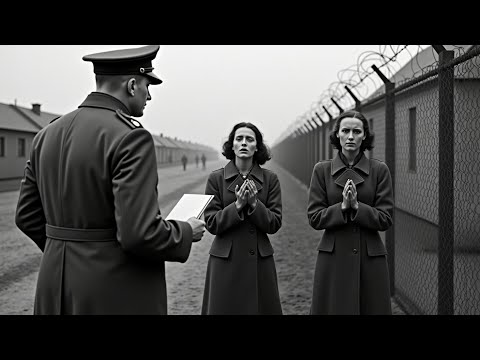
In 1945, a young German soldier sat in a Texas POW camp, weeping into his Thanksgiving dinner. Not from suffering, but from the crushing realization that everything the Third Reich had told him was a lie. The weak, decadent Americans had more food in one meal than his starving mother had seen in months. What could make a captured enemy soldier beg to stay in prison rather than return to his own country?
Just two years earlier, Germany was a nation at war with the world. For twelve years, Nazi propaganda had filled every classroom, every radio broadcast, every newspaper. Children grew up believing their country would rule for a thousand years. They learned that Germans were superior and their enemies weak and corrupt. The Ministry of Propaganda, led by Joseph Goebbels, controlled every piece of information that reached the people.
By 1943, life in Germany had become desperately hard. Families received ration cards for bread, but the portions kept shrinking. In early 1943, each person got enough for about 2,000 calories per day. By winter, it dropped to 1,200. Mothers watered down soup to make it last. Children forgot what chocolate tasted like. In cities like Dresden, Düsseldorf, and Hamburg, people worked in factories at night because Allied bombers came during the day.
The Reichsmark became nearly worthless. People traded bread for soap, soap for coal, coal for anything that might keep them alive one more week. This was the world that shaped young men like Werner, Klaus, and Josef.
Werner was 22, from Düsseldorf, where his father had worked in a steel factory before the war. He joined the Hitler Youth at 10. Like all boys his age, he learned to march, to salute, to believe. He volunteered for the Wehrmacht Infantry at 18, proud to serve.
Klaus was 27, a school teacher from Dresden before he was drafted. He taught geography to children and kept his doubts about the regime quiet, shared only with his wife in whispers.
Josef was 19, from a small farming village in Bavaria. His father raised him on Nazi ideology like it was gospel. Josef begged to join the paratroopers at 17, wanting to prove himself a hero.
All three found themselves in North Africa in 1943, part of the Afrika Korps fighting the Allies in Tunisia. The desert war was brutal. Sand got into everything—guns, food, lungs. Supplies came slowly, or not at all. When the British and Americans surrounded them, resistance became pointless. The order came to surrender.
Werner remembered the fear that gripped his stomach when he raised his hands. He’d heard stories about what Americans did to prisoners. The propaganda films showed them as ruthless gangsters in uniform, ready to shoot surrendering soldiers for sport. Some men wept, certain they would die. Others prayed.
Instead, American medics moved through the surrendered Germans, treating wounded soldiers. They used the same bandages on German injuries that they used on their own men. They gave water to men dying of thirst, regardless of the uniform they wore. Werner watched an American doctor set a German soldier’s broken leg with the same care he would show his own brother. This small act of mercy planted the first seed of doubt, though Werner didn’t recognize it yet.
The prisoners were loaded onto transport ships for the journey to America. The ships had bunks, not cargo holds. Men slept on actual mattresses, thin but real. They received rations twice a day—hard bread, canned meat, water. It was more food than many had seen in months on the front lines.
Klaus wrote in a hidden diary he kept in his boot: “They treat us better as prisoners than our own army treated us as soldiers.”
The ship arrived at night on the American coast. The prisoners were loaded onto trains, still unsure of their fate. As the train rolled through the countryside, the men pressed their faces to the windows. What they saw confused them. Every town they passed blazed with electric lights. There were no blackouts, no fear of bombers. Street lights glowed. House windows shined bright. America seemed to fear nothing.
In Germany, a single light at night could bring death from the sky. Here, light poured out like water.
The train pulled into a camp in Texas, though it could have been Kansas or Mississippi. There were hundreds of these camps scattered across America, holding over 400,000 German prisoners. The men climbed down from the train cars, expecting the worst. They saw barbed wire and guard towers as expected, but the barracks were painted. The grounds were organized and clean. There were no bomb craters, no rubble, no signs of war’s destruction. Everything looked new and maintained.
Guards processed the prisoners efficiently. Each man received a clean uniform, a medical check, and a bunk assignment with real bedding—sheets, blankets, a pillow. Werner kept touching the pillowcase, unable to believe it was real fabric, not straw or rags.
The first meal arrived in the evening. Bread, vegetable soup, coffee. The portions were larger than anything they’d received as soldiers fighting for Germany. The bread was soft and white. The coffee was hot and strong. Men ate slowly, savoring every bite, some crying quietly into their food.
That first night, Werner lay on his bunk, unable to sleep. The barracks were warm. His stomach was full. The blanket was thick. He kept waiting for the trap to spring. This kindness felt wrong, like torture disguised as mercy. What were the Americans planning? Why feed your enemies well? Why give them comfort? In his worldview, shaped by twelve years of Nazi teaching, this made no sense. Strength came from hardness, from making men suffer to make them strong. But here he was, a prisoner of war, sleeping better than he had in two years of service to the Reich.
The contradiction gnawed at him, keeping him awake while others snored peacefully around him. Something was very wrong with everything he’d been taught. But he couldn’t yet see what it was. That realization would come later, piece by piece, meal by meal, day by day.
The morning routine began at 6:00 with a bell, not a screaming whistle. Men shuffled to the wash house and found hot showers waiting. Real soap sat in dishes by each stall. Not the sandy ersatz soap they knew from Germany. The water pressure was strong and steady. Men stood under the streams longer than necessary, letting the heat soak into muscles that had been cold for years.
A barber came twice a week to cut hair. Clean laundry arrived every few days, smelling of actual detergent. Breakfast arrived at 7. Werner stood in line with his metal tray, expecting the thin gruel that soldiers everywhere ate. Instead, cooks piled on scrambled eggs, strips of bacon, toast with real butter, jam in small packets, and milk so fresh it was still cold. Coffee flowed freely from large urns. Men could take seconds if they wanted.
Werner sat at a long table and stared at his plate. In Düsseldorf, his mother was eating nettle soup if she was lucky. Here, as a prisoner, he ate better than German officers.
Klaus pulled out the small diary he kept hidden and wrote with a pencil stub: “They feed us what our commanders promised would be waiting for us in Moscow after we won the war. But this is Texas and we lost.”
He looked around the mess hall, watching other prisoners eat in silence, their faces showing the same confusion he felt. Josef refused to eat the bacon at first. He told the others it was a trick, that the Americans were fattening them up for some cruel purpose, but hunger won. He ate everything on his plate, then felt ashamed for enjoying it.
After breakfast, work assignments began. The Geneva Convention allowed prisoners to work, and the camps needed labor. America was fighting a war on multiple continents and needed every citizen for the military or war factories. So German prisoners picked cotton in Texas, harvested sugar beets in Kansas, cut timber in Mississippi. They were paid a small amount in camp scrip they could use at the canteen.
Werner was assigned to a cotton farm. The first day, trucks took the prisoners to vast fields that stretched to the horizon. American farm hands worked alongside them, operating machines Werner had never seen before. Tractors pulled harvesting equipment that did the work of fifty men. In Germany, by 1943, farmers used horses because fuel was too precious. Here, machines covered acres in hours.
The farm owner drove up in a new truck, dust trailing behind it. He nodded to the prisoners, told them to work hard, and offered cigarettes from a full carton. He tossed the carton to the ground when it was empty. Werner picked it up later, thinking of how Germans saved every scrap of paper and cardboard.
At mid-morning, something appeared that broke Josef’s understanding of reality. A white truck with red letters spelling Coca-Cola pulled up to the field. The driver hopped out and opened the back, revealing wooden crates packed with glass bottles sitting in ice. The American workers gathered around and the driver handed out bottles. The drinks were free, given out like they cost nothing.
Josef watched ice cubes bobbing in the dark liquid. Ice in a field in the middle of a workday—for free. A guard offered Josef a bottle. He took it with shaking hands. The first sip hit his tongue with fizz and sweetness he’d never experienced. It was cold enough to hurt his teeth. He drank it slowly, trying to make it last. When he finished, the guard told him to toss the bottle in a bin. Just throw away glass. Perfect reusable glass. In Germany, every bottle was returned, washed, and refilled. Glass was too valuable to waste.
Josef threw the bottle away, and it shattered against others in the bin. He later wrote to his father: “In Germany, we saved glass like gold. Here, they throw it away like trash.”
Back at camp, the men discovered amenities that seemed impossible. A library held thousands of books in German, including authors the Nazis had banned. Men could check out books and read in their free time. Some prisoners formed a symphony orchestra using instruments the camp provided. They practiced in a dedicated building and gave concerts on weekends. Sports fields had been marked out for soccer, volleyball, and American baseball. Boxing rings stood in the recreation building. Men could buy candy bars, cigarettes, and toiletries at the canteen using the scrip they earned from work.
Twice a week the camp showed movies on a large screen in the mess hall. The films were old American westerns or musicals. Nothing about the war. Guards sat among the prisoners, sometimes sharing popcorn. Young American soldiers, many barely twenty, showed pictures of their families back home. One guard named Jimmy discovered that a prisoner named Hans had been a baker before the war. Jimmy’s father was also a baker in Ohio. They spent an hour talking about different types of bread, about ovens and rising times, about the art of a perfect crust. Werner watched this conversation and felt something shift inside him. These weren’t monsters. They were just men like him.
Then the letters from home started arriving, heavily censored with black ink covering sensitive parts. Werner’s mother wrote on thin paper in shaky handwriting: “We are eating nettle soup again. Your sister walks 12 km to find potatoes. The bombing gets worse. Pray for us.”
Klaus received a letter from his wife: “Dresden is ash and rubble. I live in the basement of what used to be our home. I don’t know if I will survive another winter. The cold is the worst enemy now.”
Josef’s father sent a different kind of letter: “Stay strong. Believe in the Führer. Victory is near. New weapons are coming. The tide will turn.” The letter was dated 1944 when anyone with eyes could see Germany was collapsing. But his father still believed, still clung to the propaganda like a drowning man clutching driftwood.
The prisoners began doing arithmetic that didn’t add up. America was fighting in Europe, Africa, and the Pacific. It was supplying Britain and Russia with weapons and food. Yet here in prison camps, supplies overflowed. There was always more food, more soap, more of everything. Germany was fighting for its survival on one continent and its citizens were starving. Its soldiers had inadequate equipment. The numbers made no sense unless everything they’d been told was backwards.
A camp newspaper called Der Ruf—meaning “The Call”—arrived weekly. It was part of a re-education program filled with articles about democracy, freedom of the press, and the truth about concentration camps. Photos showed piles of bodies, living skeletons, mass graves. Some prisoners became furious and burned the papers. They called it Allied propaganda and lies. But others read the articles at night when no one was watching, letting the words sink in like poison or medicine, depending on what they chose to believe.
Klaus wrote in his diary: “What if everything we were told was backwards? What if the truth was the opposite of what we learned?” He didn’t show anyone these words. The question was too dangerous, too big. It meant everything he’d taught to children was a lie. It meant his whole adult life had been built on falsehood. But the question wouldn’t leave him alone. It grew larger each day, fed by every meal, every kindness, every glimpse of American abundance that shouldn’t exist, according to everything he’d been taught about the weakness and corruption of democracy.
Thanksgiving arrived in November 1944. The prisoners had heard about this American holiday but didn’t understand it. Guards explained it was a day for gratitude, for family, for celebrating abundance. The camp kitchen had been preparing for days, and the smells drifting from the mess hall made men’s stomachs growl with anticipation.
When the doors opened, prisoners filed in and stopped in shock. The tables were decorated with autumn leaves and small paper turkeys made by local school children. Each place had a real plate, not a metal tray. The serving line stretched along the wall, staffed by cooks in white aprons. They served turkey, golden brown and steaming. Stuffing rich with herbs and butter. Mashed potatoes swimming in gravy. Sweet potatoes topped with marshmallows. Cranberry sauce that wobbled when spooned onto plates. Green beans with almonds. Fresh rolls with more butter. And at the end, pumpkin pie with whipped cream.
The portions were unlimited. Men could go back for seconds, thirds, as much as they wanted. The guards ate the same meal in the same room, sitting at tables among the prisoners. There was enough for everyone, enough to waste.
Werner sat down with his heaping plate and picked up his fork. Then he stopped. He looked at the mashed potatoes, the pile of turkey, the rich gravy covering everything. He thought of his mother’s last letter, the one about nettle soup and walking 12 km for potatoes. He thought of his sister’s hollow cheeks in the photo she’d sent months ago. He put down his fork and began to weep. The tears came hard and wouldn’t stop. They fell into his mashed potatoes, making small craters in the white surface. But these weren’t tears of sadness. They were tears of rage. Rage that he’d been lied to his entire life. Rage that this abundance existed while his mother starved. Rage that his country had told him to sacrifice everything for a cause built on lies. Rage that he’d believed it all, had fought for it, had nearly died for it. He wept into his food while men around him ate in silence, some crying too, others just staring at their plates with dead eyes.
Josef had a different kind of breaking point. He was assigned to work on a family farm outside the camp. The farmer was middle-aged with calloused hands and a kind face. His wife was a small woman who smiled easily. On Sundays, they invited Josef to eat dinner with them. He sat at their table, uncomfortable and confused. Why would they do this? He was the enemy.
The farmhouse walls held photographs. Josef saw a young man in a navy uniform. The farmer’s wife noticed him looking and said quietly, “Our son. He’s fighting in the Pacific right now against Japan.”
Josef felt ice in his stomach. Their son was fighting his country’s allies, risking death, and yet they fed him at their table. They passed him roasted chicken and homemade bread. They asked him about his family in Bavaria. They treated him like a human being, not a monster. After dinner, the farmer’s wife brought out photo albums. She showed him pictures of their son as a baby, as a schoolboy, as a young man. She spoke about her fears for him, her hopes that he’d come home safe. Then she looked at Josef with tears in her eyes and said, “I pray for my son, but I also pray for the boys he’s fighting. They have mothers, too.”
Josef excused himself and went outside. He sat on the porch steps and tried to understand. How could the weak mongrel Americans that propaganda described produce such strength, such confidence, such kindness to their enemies? The propaganda said they were soft, but nothing soft could create this abundance. Nothing weak could afford such generosity.
Klaus found his transformation in the camp school. The Americans offered classes in civics, teaching prisoners about democracy. The teacher, a German American professor, explained the Constitution and the separation of powers. Klaus compared this to the Führerprinzip—one man at the top, absolute obedience below. “I was a teacher who had never been taught truth,” he wrote in his diary. “What does that make me? A fool, a criminal, both?”
Christmas came with evergreen branches and ingredients for traditional German cookies. The camp chaplain, a Jewish American rabbi, helped organize Christian services. Werner watched this man, whose people the Nazis had tried to exterminate, helping German soldiers celebrate their faith. For twelve years, being German and being Nazi had meant the same thing. Now he saw they were separate.
Victory in Europe Day came on May 8th, 1945. Germany had lost. Verer sat on his bunk and faced a terrible truth. They were the lucky ones. They had lost the war but won their lives. And in losing, they had found the truth.
Repatriation began in late 1946. Some prisoners approached the commander, asking to stay. The answer was always no. Verer packed seeds from American vegetables, three bars of soap, and a farming manual. But he also carried invisible cargo: an understanding of democracy, guilt for what he’d believed, and fragile hope that rebuilding was possible.
Verer arrived in Düsseldorf in early 1947. His mother was alive, living in a basement, weighing perhaps eighty pounds. When she saw him, she screamed. She’d thought he was dead. That first night, he brought out American coffee and chocolate. She held it like it was sacred, then asked, “Did they brainwash you over there?” He chose his words carefully. “Yes,” he said. “They brainwashed me clean.”
Klaus reached Dresden and found only rubble. His school existed as a crater. He volunteered to teach in a basement—thirty children on broken bricks. He taught them to question authority, to think for themselves. Some parents complained. Others thanked him quietly when no one could hear.
Josef returned to Bavaria. His father still defended the Reich. Josef said nothing, but the next morning he planted American seeds. Months later, his father asked where such good seeds came from. “America,” Josef said. “They had everything we wanted without taking anything from anyone.” His father walked away. But the next week, he ate tomatoes from the American plants.
In 1985, a journalist asked Verer what he’d learned as a prisoner. “I went to America as Hitler’s soldier,” he said. “I came home as a free man who’d seen what freedom builds. Real power doesn’t come from making others suffer. It comes from having so much that you can afford to be generous, even to your enemies.”
Between 1943 and 1946, over 400,000 German prisoners lived in American camps. Their treatment created unexpected ambassadors for democracy. They went home carrying seeds and books and ideas. Some 40,000 eventually returned to America permanently, choosing to live in the country that had once held them captive but had taught them what freedom meant.
The greatest victory wasn’t destroying Germany. It was showing German soldiers a better way, then sending them home to rebuild their nation with those new ideas. That was the real victory, the one that lasted long after the guns fell silent.
What would you have done if you’d been in that Texas mess hall, staring at a Thanksgiving feast while your family starved at home?
Report this article
Select a reason for reporting:






