The desert cold bit through their uniforms as five Australians lay motionless beside a stripped-down patrol vehicle, their breath misting in the pre-dawn darkness. Two hours before first light, they watched a road that ran all the way to Baghdad. Behind them: no base, no wire, no help within 100 kilometers of empty ground. If this went wrong, nobody was coming.
They were hunting missiles that could set the entire region on fire. And every man was turning over the same quiet thought: Will we all make it home?
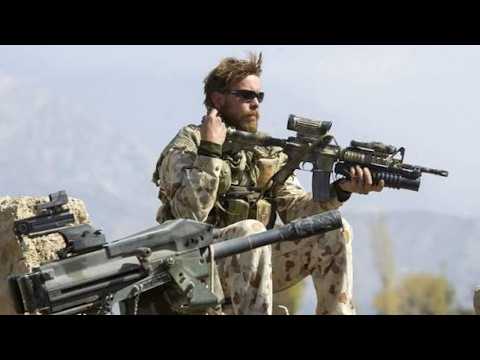
To understand what those men were doing out there, you have to go back to March 2003, to a border in the dark between Jordan and Iraq. The war had not properly started. Across the world, people watched their televisions, waiting for the first bombs to fall on Baghdad. But on that empty western frontier, a small group of Australian soldiers had already crossed into Iraq—ahead of almost everyone, into country nobody had cleared and nobody controlled.
They were among the very first coalition troops on the ground. Some accounts say they may have fired the first shots of the whole war. And they did it in near silence, with no headlines, in vehicles that looked more like something out of a junkyard than a modern army.
These were men of the Australian Special Air Service Regiment—the SAS. Their job was one of the loneliest and most dangerous in the entire invasion: drive deep into the western desert, far ahead of the main force, and hunt. What they were hunting could change the course of the war.
Out in that desert, Saddam Hussein’s army had missiles. Long-range rockets—the kind soldiers called Scuds—that could be fired hundreds of kilometers in any direction. The fear that kept planners awake was simple: if even one missile launched west into Israel, it could drag a whole new country into the war and turn a fight against one nation into a fire across the entire region.
Somebody had to get into that desert before the missiles could fly, find the launch sites, and shut them down. That somebody was a single squadron of Australians.
Picture what that meant. A handful of men in open-topped vehicles driving into hundreds of kilometers of enemy country with no friendly force anywhere near them. No base to fall back to. No wire to sleep behind. No hospital down the road if a man was hit. They carried what they needed on the trucks, and when it ran low, they made it last.
They were as alone as soldiers get. And they would stay out there for the better part of six weeks. 42 days. 42 days of cold nights and burning days. Of sandstorms that swallowed the sky. Of vehicles breaking down a long way from anywhere. Of running gun battles with an enemy who knew the land far better than they did.
42 days in a stretch of Iraq that within about a year would become the deadliest province in the whole war. They were in the killing ground before it had the name.
This is the story of how one of those patrols lived through it. By every cold calculation, a small team that far behind enemy lines, that exposed for that long, should have lost men. That is what the desert was built to do. And yet, across the entire campaign, this squadron did something that still seems hard to believe. They fought their battles. They destroyed their targets. They took ground a force ten times their size would have hesitated to take. And they came home without losing a single soldier to the enemy. Not one.
How a handful of Australians survived 42 days alone in that place and walked out whole is what the rest of this is about. And it starts with understanding exactly who they were—and why their own country had decided they were the right men to throw into the worst ground in Iraq with nothing behind them but open sand.
The men in those vehicles did not come from a famous regiment that marched in parades. Most Australians, stopped in the street, could not have told you the unit even existed. The Special Air Service Regiment is based in Perth, on the far western edge of Australia—about as far from the deserts of Iraq as a man can physically get. It is small on purpose, and it is brutally hard to get into.
Most of the soldiers who try out for it fail. The course that selects them is built to break people—to find the ones who keep thinking and keep going long after the body has begged them to stop. The ones who pass are usually not the loud, square-jawed types from the films. They are quiet, ordinary-looking. The kind of man you would walk straight past in a shopping center. That is the entire point of them.
Their trade is to be in a place long before anyone realizes they are there, and to be gone before anyone works out what happened. For years their work had been watching—lying still for days in a hide, counting trucks, mapping a position, then slipping away with the information that let bigger forces strike. In Afghanistan the year before, they had done exactly that.
But Iraq was a different kind of job. In Iraq, they were not just the eyes. They were the fist. They were being sent in to find an enemy, fight him, and destroy what he had out in the open, on their own.
To get there, they crossed from Jordan. Some patrols simply drove in, rolling over the border in the dark in their long-range patrol vehicles. Those vehicles deserve a moment of their own, because they tell you everything about how these men fought.
They were stripped right back. Open to the weather, bristling with machine guns front and back, loaded down with fuel and water and ammunition and not much else. No armor to speak of, no roof. Speed and firepower and the ability to vanish into the landscape were the only protection they had. And they had to be enough.
Other patrols did not drive in at all. They were carried deep into Iraq by big American helicopters—the heavy twin-rotor machines—flown more than 600 kilometers from the staging base and set down in the dark in the middle of nowhere. Think about that distance for a second. 600 kilometers inside enemy territory, dropped off. And then the helicopters lift away and the sound fades, and you are standing in the dark in a country at war with only the men beside you and what you can carry.
For days, those patrols were the closest coalition troops of any nation to Baghdad itself. The tip of the entire spear was a handful of Australians nobody back home had ever heard of.
And almost at once, the fighting started. This was not the quiet watching of Afghanistan. Within the first days the Australians were in running battles with Iraqi troops. The enemy came at them in their own four-wheel drives with machine guns bolted to the back, trying to overwhelm the small Australian teams with numbers.
The Australians fought back the way they had to—from the move. Hammering with the machine guns on their own vehicles, firing rocket-propelled grenades, and when something bigger and harder came at them, reaching for the shoulder-fired Javelin missiles that could kill an armored vehicle from a long way off. They were a tiny force, and they fought like a much bigger one, because they could not afford to lose a single exchange. Out there, a lost firefight did not mean a setback. It meant the end.
Inside about a week of that, they had done the first part of the job. They had taken control of the main road that ran from the Jordanian border toward Baghdad—the highway an enemy would use to move missiles west or to escape east. They had pushed themselves into the heart of the western desert and made it theirs.
But taking that ground was the easy part, if any of it could be called easy. The hard part was what came next. Now they had to hold it, and survive in it, day after day, while the desert itself went to work on them.
People hear the word desert and picture heat. The men who lived in the western Iraqi desert that spring would tell you the heat was only half of it, and not always the worst half.
By day the sun came up hard and the temperature climbed until the metal on the vehicles was too hot to touch and the air shimmered off the ground. Then the sun went down and the same desert that had been baking them turned bitter cold. Cold enough to crack lips and stiffen hands and rob a tired man of sleep he badly needed.
The body never got to settle. It was always either fighting the heat or fighting the cold, and there was no shelter from either except what the men made for themselves with a sheet stretched off the side of a truck.
Then the wind came. In the last part of March a sandstorm rolled across that whole part of Iraq—one of the worst anyone in the invasion would see. It turned the sky a sick orange, then brown, and then it took the sky away completely. Visibility dropped to a few meters.
Sand got into everything. Into the eyes, the mouth, the food, the water, the weapons, the engines. A machine gun jammed with grit is just a metal club. An engine choked with sand is a coffin waiting to happen.
The men spent hours they did not have cleaning weapons they had just cleaned, wiping down working parts, nursing their vehicles like sick animals—because every one of those machines was the difference between living and dying out there. And they knew it.
And the vehicles broke. Of course they broke. You cannot drive open trucks loaded past their limit across rock and sand and dry riverbeds for weeks on end without things failing.
A patrol a long way from anywhere would find itself stopped, one vehicle dead. Men down on the ground in the open, working on an engine with the tools they carried, knowing that every minute they sat still was a minute the enemy might find them. There was no calling a mechanic. There was no tow truck. You fixed it yourself with what you had, or you stripped it, destroyed it, crammed onto the others, and kept going. Because stopping was not survivable.
Over all of it sat the thing that wore the men down most—which was not the heat, or the cold, or the sand, or even the enemy. It was the knowing. The constant grinding knowledge that they were completely on their own.
In a normal war, when a unit gets into trouble, help comes. Artillery, aircraft, a relief force, a medical helicopter racing in low and fast. Out in that desert, for these men, much of that was simply too far away to count on.
If a patrol was pinned by a larger force, it had to fight its own way out. If a man was badly wounded, his mates kept him alive with their own hands and their own kit—sometimes for a very long time—because the help that would save him was hours away across hostile ground, if it could come at all.
That is the weight you have to feel to understand what these 42 days really were. It was not one dramatic battle. It was a slow, endless test, every single day, with no rest from it.
Stay hidden. Stay moving. Watch the road. Find the launch sites. Kill the vehicles that come for you. Fix the truck. Ration the water. Sleep when you can, which is almost never, and never deeply. Do it again tomorrow. And the day after that, and the day after that.
A test that did not end at sundown, and did not pause for the storm, and did not care how tired you were.
And then, on one of those days, the test stopped being slow.
Out on that road they were watching, the dust of approaching vehicles rose into the air. More than they could easily count. Coming their way.
A small patrol of Australians, a long way from help, watched a force far larger than themselves close the distance—and every man there understood that the next few minutes would decide whether the rule still held. Whether they would all still make it home.
There is a moment in a fight like that where everything a soldier is gets decided in a few seconds. The Australians did not have the numbers. They almost never did. What they had was training so deep it had stopped being thought and become instinct—and vehicles built to put out a wall of fire and move.
They fought from the move, the way they had drilled a thousand times. Machine guns opening together, men reading the ground and the enemy and each other without a wasted word. They picked their targets. They used the rockets, and when the threat was hot enough, the Javelins that could kill a vehicle before it ever closed.
Breaking contact sounds tidy. It is not. One part of the patrol fighting while another moves, then swapping, peeling back through the desert under fire until the gap opens and the enemy is left firing at dust.
The dust settled. The patrol was still moving. The road was still watched. No Scuds went west out of their patch of desert.
Then came Al Asad—an entire airbase, taken by a handful of exhausted Australians without losing a man. They repaired the runways, and on Anzac Day they stood on captured ground, remembering exactly the kind of thing they were doing.
And the arithmetic that matters most: every man who drove across that border in March was alive to drive away from it. Not one missing.
So what do you think—was it the training, the trust, or something quieter that brought them all home?
Report this article
Select a reason for reporting:






