The Russians were already working on an improved next generation of the MiG. This called for a serious response. The response would be the North American F-86 Sabre—a design which had been in the works for some time but had many similarities to the MiG-15.
The Sabre had been developed during the same period as the MiG-15, following roughly the same design principles put forth by the Germans. The Sabre was the first U.S. aircraft to utilize German research from World War II.
Because of its new and untested design, it had been a mystery to the Americans as to whether or not either the Sabre or the MiG would be effective.
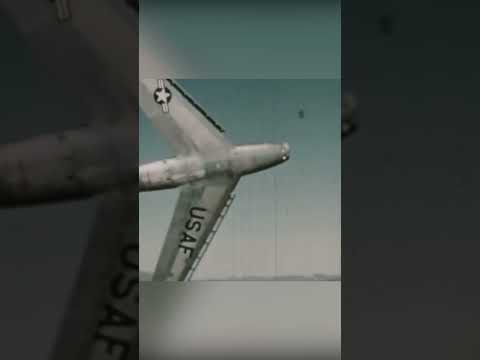
The MiG-15 proved the design was not only effective but more deadly than anything else in the air.
Upon arrival in Korea, it was discovered that the early variants of the Sabre lacked the necessary speed, sealing, and turning rate of the MiG. Improvements were proposed, including modifications to the airframe and changing armament.
But would these changes be enough to turn the tide?
The engineers at North American Aviation worked around the clock, stripping weight wherever they could and re-profiling the wing’s leading edge to squeeze out precious extra miles per hour. Every pound saved was a gamble, every rivet a calculated risk.
The armament question proved just as thorny. The early Sabres carried six .50 caliber machine guns—reliable, but against the MiG’s rugged airframe, pilots whispered that they might as well be throwing rocks.
Some advocated mounting the new 20mm cannons, but that would mean redesigning the nose and delaying deployment. In the end, the .50 calibers stayed, and the pilots would have to make them count.
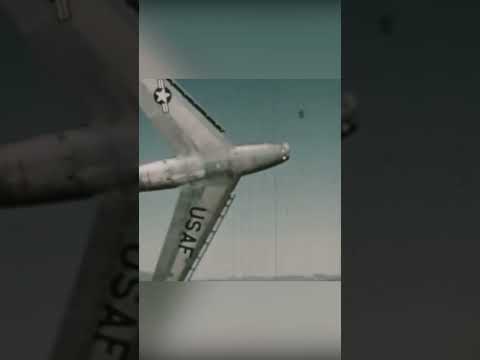
Meanwhile, across the Yalu, the MiG pilots were growing bolder by the week. They had tasted blood, and they liked it. American bomber crews began to speak of “MiG Alley” in hushed, reverent tones—a stretch of sky where the odds turned against you the moment you crossed the river.
Then came the reports that changed everything. Intelligence suggested the Soviets were preparing to field an improved MiG—faster, higher-flying, and deadlier than anything yet seen. The Sabre’s window of opportunity was closing before it had even fully opened.
Colonel Francis Gabreski, a veteran of the European theater, was among the first to fly the modified Sabre in combat. He noted the improved turning rate with grim satisfaction—but also the lingering doubts. The MiG could still climb faster. It could still reach altitudes where the Sabre’s engine gasped for air.
What the Sabre had, however, was something harder to measure. The Americans had trained their pilots to fight as a team, to cover one another, to think two moves ahead. The MiG pilots, by contrast, flew rigid patterns dictated from the ground.
That difference would soon be tested in a way no one had anticipated.
On a crisp October morning, Captain James Horner lifted his Sabre off the runway at Kimpo, his wingman tucked tight off his right wing. The briefing had been short and grim: a formation of MiGs had been spotted massing north of the Yalu, and someone had to go look.
They climbed through the cloud deck and broke into brilliant sunlight. Then Horner saw them—not the four he’d expected, but twelve, strung out in a wide arc like a net waiting to close.
He keyed his radio. “Tally-ho, twelve bandits, high and to the left. We go in pairs, we stay fast, and nobody plays hero.”
The fight that followed was a blur of G-force and instinct. Horner’s wingman, Lieutenant Ray Delgado, called out a MiG sliding onto their tail, and Horner broke hard, bleeding speed to force the attacker to overshoot. The MiG flashed past, and Delgado stitched it with a burst of .50 caliber fire. Smoke trailed from its wing as it dove away.
But the victory was fleeting. Two more MiGs dropped out of the sun, and Horner felt his Sabre shudder as rounds hammered the fuselage behind his seat. His instrument panel flickered, then went dark. The engine coughed once, twice—and then the cockpit filled with the smell of burning metal.
He had seconds to decide. He pulled the canopy release, felt the wind tear at him, and then the world went white as the ejection seat fired.
Delgado’s voice crackled over the radio, desperate and distant. “Jim! Jim, do you copy? I saw a chute—somebody confirm a chute!”
There was no answer. Below, Horner’s parachute drifted toward the frozen hills north of the river—deep in territory where American airmen did not want to land.
The rest of the squadron regrouped and limped home, two planes short. The debrief was tense. The MiGs had fought differently today—looser, more aggressive, as if someone had cut them free of their leash.
Intelligence officers exchanged uneasy glances. The improved MiG wasn’t just a rumor anymore. It was in the air.
That night, a rescue team was assembled for a dangerous low-level sweep along the Yalu. But the weather was closing in, and the clock was already running.
Somewhere in those dark hills, Captain James Horner was alive—and the enemy knew it too.
The rescue team launched before dawn, two Sabres flying top cover while an SA-16 Albatross lumbered low over the frozen riverbed. The weather was foul—snow squalls and a ceiling that scraped the treetops—but nobody was turning back.
Delgado flew on Horner’s wing position, though his leader was gone. He scanned the hills below with a desperation that made his eyes ache.
Then the radio crackled. A weak, static-laced voice, barely audible. “Anybody… anybody copy? This is Horner. I’m in a ditch, south of the bend. They’re close.”
Delgado’s heart hammered. “We copy, Jim! Hold tight—we’re coming!”
The Albatross banked hard, skimming the ridges. Flak began to burst around them—the enemy knew exactly what they were doing. But the crew had trained for this, and the Sabres above dove on the gun positions, silencing them one by one.
The Albatross touched down on the frozen riverbed in a spray of ice and snow. Horner came stumbling out of the treeline, bloodied but alive, half-carried by a crewman who’d sprinted to meet him.
As the aircraft clawed its way back into the sky, Horner slumped in the cabin, clutching a torn flight jacket. “They’ve got new birds,” he rasped. “Faster. I saw one pull a climb I couldn’t follow. We need to tell them.”
The intelligence officers back at Kimpo listened to his report in grim silence. The improved MiG was real, and it was hunting.
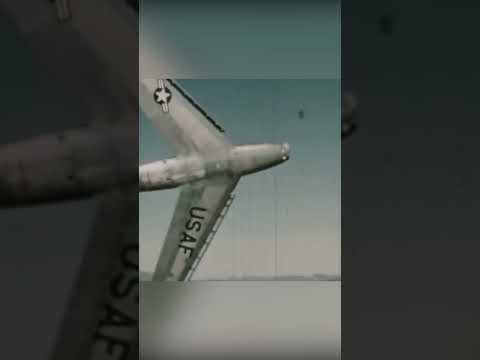
But the Sabre had one more card to play. Within weeks, the first F-86E models arrived, fitted with the new “all-flying tail”—a modification that gave pilots the control authority to match the MiG’s climb and turn.
When the next big fight came over MiG Alley, the Sabres didn’t just hold their own. They swept the sky clean.
Horner, back in the cockpit after a month of recovery, scored his first kill against the new MiG—a hard-fought, twisting duel that ended with a plume of black smoke over the Yalu.
He landed, climbed out, and stood on the tarmac looking north. The war wasn’t over. It never really was.
But the Sabre had answered the challenge—and the men who flew it had made the difference.
What do you think tipped the balance in Korea—the machine, or the men who flew it? Let us know in the comments.
Report this article
Select a reason for reporting:






