April 1941, Tobruk, Libya. General Erwin Rommel—the Desert Fox, the man who had never lost a battle—had just surrounded a fortress with 35,000 troops. Inside were 14,000 Australian soldiers, written off by British generals as doomed. The experts gave them 48 hours. Rommel expected the city to fall in two days. Instead, those Australians were about to do something no army had ever done: make the Desert Fox afraid of the dark.
The sun beat down on the sand like a hammer on an anvil. Inside the fortress walls, 14,000 Australians watched dust clouds rise in every direction. Those clouds meant tanks, trucks—the German Afrika Korps was coming fast. They were trapped, surrounded on three sides by desert and on the fourth by the sea, with German planes owning the sky. Every supply ship that tried to reach Tobruk was a target. Most never made it.
British generals in Cairo did the math and planned for defeat. They would retreat to Egypt, give up more ground. Rommel thought the same. He had crushed bigger armies with smaller forces. “Two days, maybe three,” he told his commanders. Then they would push east toward Egypt, and the war in North Africa would be over by summer.
But inside Tobruk, a man named Leslie Morshead was thinking different thoughts. A former school teacher who had fought in the trenches of France, Morshead had seen what happened when generals followed the rules and did what everyone expected. He had watched thousands of men die walking in straight lines toward machine guns because that was how armies were supposed to attack. He had learned that sometimes the rules got you killed.
Morshead looked at his men and saw something the British generals did not. These were not normal soldiers. The Australians did not salute as much. They asked questions. They made jokes about officers. British commanders hated this, said they lacked discipline. Morshead saw it differently. He saw men who thought for themselves, who would not do something stupid just because someone with medals told them to.
The fortress of Tobruk sat on the edge of the Mediterranean, its walls stretching for 30 miles in a half-circle around the port. The Italians had built those walls before the war, but they had gaps. Concrete was cracked. Trenches were not deep enough. The whole defense was designed to stop an enemy army from the old war—when men attacked slowly and in straight lines. Rommel did not attack slowly. His tanks moved fast, his soldiers rode in trucks and hit hard.
Every military expert knew the truth about sieges: if you were surrounded, you defended the walls and waited. You did not attack. That was suicide. Rommel expected the Australians to follow this rule. He set up his army in a ring around Tobruk and waited for them to stay inside their fortress. Then he would pound them with artillery, smash through weak spots, and pour through the gaps. It would be over fast, just like every other siege in history.
But on the first night, something strange happened. German soldiers on the outer ring heard noises in the dark—footsteps, whispers. They fired at shadows. In the morning, three German soldiers were missing. Two were dead. One was captured. The Australians had come out of their fortress in the middle of the night and attacked. Nobody did that. Nobody left the safety of walls to attack an army that surrounded them. It made no sense.
Morshead had told his men something simple: they would not sit and wait to die. Walls were not enough. The Germans would break through eventually. So the Australians would do something different. They would attack every night. Small groups would sneak out, hit the Germans where they camped, make noise, take prisoners, blow things up, and come back before sunrise. Keep the Germans awake, keep them scared, keep them wondering when the next attack would come.
The British generals heard about this plan and shook their heads. They said it was reckless, that Morshead would lose all his men in pointless night attacks. Everyone knew you cannot win a siege by attacking. But Morshead had seen something in France back in 1917: when you did what the enemy expected, you lost. When you surprised them, sometimes you won. The Germans had a plan for Tobruk—for defenders who hid behind walls. They did not have a plan for defenders who attacked back.
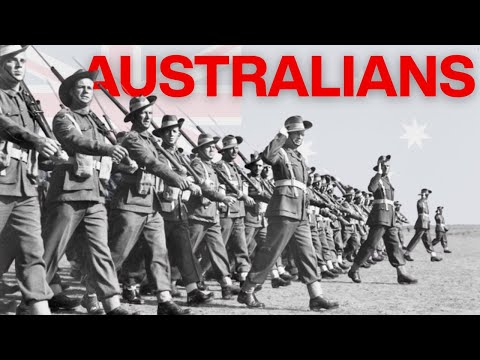
The Australian plan started small. On the second night, 30 men crept out through gaps in the wire. They wore dark clothes and left their helmets behind because helmets reflected moonlight. They moved in groups of eight or twelve, knowing exactly where they were going. During the day, observers inside Tobruk watched the German camps through binoculars, counting tents, marking supply dumps, finding where officers slept. Then they made maps.
The first patrol moved two miles into German territory, crawling on their bellies through sand still hot from the day. They could smell the German camps before they saw them—cigarette smoke, cooking food, unwashed bodies. At 2:00 in the morning, the Australians struck. They had removed the metal plates from their boot heels so their footsteps made no sound. They carried knives and clubs along with rifles—guns made noise, and noise brought more Germans running. Better to be quiet.
They crept into a German camp and found soldiers sleeping in tents. Some Australians stood guard while others cut tent ropes and collapsed the canvas on sleeping men. When Germans stumbled out, confused and half awake, the Australians were waiting. Six Germans died. Three more were captured. The Australians vanished back into the darkness before anyone could organize a response.
The sun came up and German officers counted their losses. 89 German soldiers were dead or wounded in that first week. 12 were prisoners. The Germans had killed 23 Australians, but that math was wrong somehow. Losing was supposed to hurt the defenders more than the attackers. Surrounded armies were supposed to get weaker every day. But these Australians kept coming back night after night.
German soldiers started to have trouble sleeping. You cannot sleep when you think someone might cut your throat in the dark. Sentries fired at shadows, wasting ammunition on bushes that moved in the wind. They got three hours of sleep, maybe four, then had to be ready to fight during the day. By the end of the first week, German troops looked tired. Their eyes had dark circles underneath. They moved slower. They made mistakes.
Rommel noticed. He wrote in his diary every night, and his words showed frustration. He wrote about defenders who did not act like defenders. He used the word unprecedented. That meant he had never seen anything like this before. The Australians were breaking rules Rommel did not even know existed. You were not supposed to attack when you were surrounded. You were not supposed to make the enemy more afraid than you were.
On April 13th, Rommel tried something bigger. He threw 5,000 troops at Tobruk’s walls in a major attack, using tanks and artillery. He pounded the Australian positions for hours. The guns were so loud that men inside the fortress could not hear each other shout. Concrete turned to dust. Metal twisted and broke.
When the artillery stopped, German soldiers rushed forward expecting to find dead defenders and empty trenches. Instead, they found Australians waiting with machine guns. The Germans ran into a wall of bullets. They fell in waves. Officers shouted orders, but men could not move forward through the fire. By April 14th, Rommel pulled back. He had lost 1,200 men. He had gained exactly zero ground. Not one inch of Tobruk fell into his hands.
British generals back in Egypt read the reports and did not believe them. They sent messages asking if the numbers were wrong. Surely the Australians meant to write 120 casualties, not 1,200 German casualties. But the numbers were right. Morshead sent back a simple message: his men were doing fine, and Rommel was not.
The problem was that Rommel fought by rules. He had learned those rules in German military academies. He had used those rules to win every battle in France and Poland and North Africa. The rules said you surrounded an enemy, cut off their supplies, then attacked with superior force. The trapped army would break. They always did. Except the Australians had not read those rules. Or if they had, they did not care.
The Australians invented something they called fighting patrols. These were different from normal patrols. Normal patrols went out to watch and gather information. Fighting patrols went out to hurt the enemy. Groups of eight to twelve men would leave Tobruk between two and four in the morning. That was when human bodies are most tired. That was when guards fall asleep standing up. That was when reactions are slowest.
The Australians did something clever with weapons. They used captured German guns when they could. A German sentry hearing German guns would think German soldiers were doing target practice or cleaning weapons. By the time he realized something was wrong, it was too late. The Australians also learned to move like ghosts. They studied how sound carried across the desert at night. They learned that sand near rocks made different sounds than sand in open areas. They mapped the quietest paths to German positions.
Winston Churchill heard about Tobruk and loved it. The British prime minister needed good news. Britain was losing everywhere else. German bombs fell on London every night. German submarines sank British ships in the Atlantic. The war looked hopeless. Then reports came from North Africa about Australians who refused to surrender. Churchill gave them a nickname in a public speech. He called them the Rats of Tobruk. He meant it as a compliment. Rats survive. Rats fight. Rats do not give up.
The Australians heard the nickname and decided they loved it. They painted rats on their trucks and tanks. They were proud to be rats. But British generals still complained. They sent messages to Morshead saying his tactics were unsustainable. That meant they thought he could not keep attacking forever. Eventually he would run out of men. Eventually the Germans would figure out how to stop the night raids. The smart thing to do was conserve strength and wait for rescue.
Morshead read these messages and ignored them. His men were not getting weaker. The Germans were. By May, Rommel had committed 5,000 additional troops to Tobruk. That meant 5,000 soldiers who could not attack Egypt. Those soldiers sat outside Tobruk trying to hold a ring around a fortress they could not capture. They were stuck. And every night the Australians came out and reminded them that they were not safe.
The weeks turned into months. What Rommel thought would take two days had stretched beyond all reason. Summer arrived with temperatures that made the desert feel like an oven. Still, the Australians kept fighting. Still, they went out every night. Rommel had never encountered anything like this stubborn resistance. He had beaten larger armies in shorter time. Now 14,000 men were tying down his entire eastern flank.
The siege of Tobruk lasted 242 days—the longest in British Commonwealth history. The Australians conducted 596 offensive patrols, killing or wounding more than 3,000 German and Italian soldiers. The attackers were losing more men than the defenders. Wars were not supposed to work that way.
Rommel launched four major assaults between April and August. Each time, the Australians turned him back, with German casualty rates reaching 40 to 60 percent. He stopped trying direct assaults and settled in to starve them out. But even waiting cost him men, because the Australians kept coming out of the dark.
On May 3rd, a dust storm swallowed the desert. Sixty Australians slipped out into the blinding sand, found a German artillery position, and destroyed six big guns with explosives and hammers. They were back inside their walls drinking tea before the explosions even faded. German troops began calling them die Ratten—the rats—and refused to stand night watch without doubled guards.
December arrived cold and clear. A British relief force finally broke through on December 10th. The Australians had lost 832 dead and 2,177 wounded. The Germans had lost over 8,000. Rommel later wrote that the Australian soldier displayed tenacity and fighting spirit that earned his complete respect.
Morshead’s fighting patrols became the foundation for special forces training worldwide. The SAS studied Tobruk and built their doctrine on it. The lesson was simple: being surrounded does not mean being beaten. It just means the enemy is within range in every direction.
So here is the question worth asking yourself: when the experts tell you your position is hopeless, do you retreat like they expect—or do you make the Desert Fox afraid of the dark?
Report this article
Select a reason for reporting:






