Captain Michael Stevens, US Army Special Forces, crouched in the pre-dawn darkness of the Long Hai Hills, studying a map with an Australian SAS warrant officer. It was March 1969, and the combined patrol—four Americans and five Australians—had inserted 18 hours earlier for a joint reconnaissance mission. Stevens was fit, a Green Beret who had passed selection and multiple combat tours. He thought he was prepared for anything. He wasn’t prepared for Australians.
In 18 hours, the patrol had covered just 6 kilometers through dense jungle and steep mountain slopes, moving tactically with frequent security halts, carrying full combat loads and four days of supplies. By American standards, the pace was aggressive. By Australian standards, they were barely moving.
The Australian warrant officer, a man named Thompson with 15 years of SAS experience, glanced at Stevens and made an observation that would haunt the American captain for the rest of his career. “You’re slowing us down,” Thompson said, his tone neither cruel nor mocking—just a matter-of-fact assessment delivered with the same neutrality he’d use to report enemy positions.
Stevens realized in that moment that the Americans weren’t keeping up with the pace the Australians considered normal. The 6 km that had pushed his team to their limits was warm-up movement to Australians accustomed to covering 12-15 km per day through identical terrain while maintaining tactical discipline that American forces couldn’t match even at slower speeds.
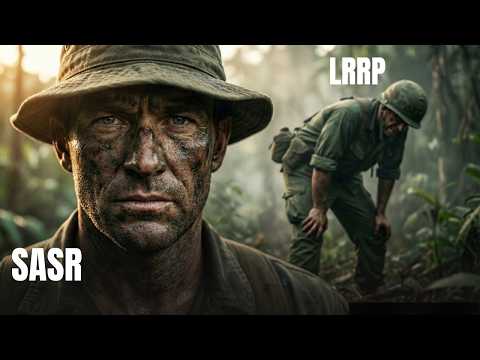
The mission lasted four days. By the end, Stevens and his team were exhausted beyond anything they’d experienced in previous operations. They’d covered 48 km through mountain jungle, established multiple observation posts, conducted reconnaissance that gathered intelligence for later operations, and extracted successfully. Tactically successful, physically devastating.
When Stevens submitted his after-action report, he included an assessment that would circulate through the special forces community for years. The Americans had been in excellent physical condition by American standards. They’d maintained tactical discipline. They’d contributed to mission success. But they’d struggled to match Australian pace and endurance throughout the operation.
The Australians had been patient and professional, adjusting movement speed to accommodate American limitations without complaint or criticism. But the fundamental reality was undeniable. The Australians operated at a level of physical performance American forces couldn’t sustain.
Stevens’ conclusion was uncomfortable but honest: in joint operations with Australian SAS, American forces were the limiting factor. The Australians could move faster, carry more, operate longer, and maintain tactical effectiveness while exhausted in ways Americans couldn’t match.
This wasn’t an isolated incident. It was a systematic pattern documented across hundreds of joint operations between 1966 and 1971. Australian SAS operated at pace and endurance levels that left American forces behind, literally and figuratively.
This is the story of when elite American soldiers discovered they weren’t as elite as they thought. When physical standards that seemed demanding in American training proved inadequate for Australian operational tempo. When the phrase “you’re slowing us down” appeared in Australian assessments of joint operations, delivered without malice, but with an accuracy that American pride struggled to accept.
Don’t click away because you’re about to discover why Australian SAS selection and training produced soldiers whose physical capabilities exceeded American special operations standards. How this capability gap affected allied operations throughout the war and what it revealed about different approaches to physical preparation for combat. This is the untold story of the endurance gap that shaped allied operations and humbled American forces who thought they were prepared for anything.
The physical capability gap between Australian SAS and American special operations forces had roots in fundamentally different selection and training philosophies. American special forces selection in the 1960s tested physical fitness through standardized assessments—timed runs, obstacle courses, road marches with specified loads and paces. Candidates who met standards passed. The system identified soldiers with good fitness and ensured baseline physical capability across the force. Standards were demanding by conventional military measures, but achievable by motivated soldiers with good fitness.
Australian SAS selection tested physical endurance through unstructured challenges designed to break candidates psychologically through physical exhaustion. No standardized tests with passing scores. Instead, candidates faced days of continuous physical activity with inadequate rest, food, and water designed to identify soldiers who could function when exhausted beyond normal limits.
The system didn’t test fitness. It tested the ability to continue performing when fitness was depleted and only mental determination remained. The difference was philosophical. American selection asked, “Is this soldier fit enough for special operations?” Australian selection asked, “Can this soldier function when physically destroyed?”
Both questions were valuable. They produced different outcomes. American special forces candidates trained to pass selection by improving fitness to meet standards. Once standards were achieved, selection was passed. Australian SAS candidates couldn’t train for selection in the same way because there were no specific standards to meet. They could improve fitness, but selection would push them beyond whatever fitness level they achieved. The test wasn’t reaching a standard, but continuing past the point where fitness allowed continuation.
Corporal James Mitchell completed Australian SAS selection in 1966 before deploying to Vietnam. His description of the experience reveals the philosophy. Selection began with administrative processing and initial fitness assessments that were difficult but achievable by fit soldiers. Then candidates entered field phases where physical demands escalated daily. Long navigation exercises with heavy loads, obstacles, river crossings, continuous movement with minimal rest. The physical work increased as candidates became more exhausted.
Mitchell recalled day four of selection when candidates conducted a 40-km navigation exercise carrying 50-lb loads after three days of continuous activity with perhaps six hours total sleep. Candidates were already exhausted. The navigation exercise wasn’t testing navigation skills primarily. It was testing whether candidates could navigate accurately when exhausted beyond ability to think clearly. Multiple candidates hallucinated during the exercise. Some simply stopped moving and had to be removed by directing staff.
Mitchell completed the exercise through determination that overrode physical capacity. He described arriving at the final checkpoint unable to remember portions of the route and uncertain how he’d continued moving when his body had stopped responding to conscious direction. The directing staff’s assessment was simple: Mitchell had demonstrated he could function when destroyed. That was the capability SAS required.
This selection philosophy produced soldiers whose physical and mental endurance exceeded normal military standards. American special forces candidates pushed to exhaustion during selection. But the exhaustion had limits designed to test fitness without destroying candidates. Australian SAS candidates were deliberately pushed to and past destruction to identify the subset who could function in that state. The result was forces with different physical capabilities shaped by different selection philosophies.
The training differences reinforced the capability gap created by selection. American special forces training following selection focused on military skills—weapons, communications, medical, languages, tactics. Physical training continued, but primarily as maintenance of fitness levels achieved during selection. The emphasis was on skill development.
Australian SAS training following selection focused heavily on continued physical development even after candidates had passed selection. The assumption was that passing selection demonstrated basic capability, but operational effectiveness required higher endurance than selection tested. Training pushed soldiers beyond selection standards.
Warrant Officer Robert Henderson, Australian SAS instructor in the late 1960s, described the training philosophy. Selection proved candidates had necessary mental endurance. Training developed physical capacity to match that mental endurance. Training culminated in exercises designed to replicate operational stress—multi-day patrols carrying operational loads through difficult terrain with realistic tactical constraints. These weren’t fitness tests, but operational simulation where physical demands matched or exceeded what soldiers would face in combat.
Henderson noted that American forces who observed Australian training exercises often commented that the physical demands seemed excessive and potentially counterproductive through creating unnecessary exhaustion. The Australian perspective was that combat created exhaustion that training needed to replicate. Training that didn’t exhaust soldiers to operational levels wasn’t realistic preparation.
The load carriage standards illustrated the difference. American special forces trained to carry 60-80 lb loads on road marches and patrols. This was considered heavy but manageable with good fitness. Australian SAS trained to carry 80-100 lb loads routinely and occasionally trained with loads exceeding 120 lb to build capacity beyond normal operational requirements. The philosophy was that training with heavier loads than operations required built capacity allowing soldiers to operate effectively with operational loads even when exhausted.
American trainers observing these standards sometimes assessed them as excessive machismo or poor training design that risked injury. Australian trainers viewed American load standards as inadequate preparation for sustained operations in difficult terrain. Both perspectives reflected different assumptions about what training should achieve and what operational demands would require.
The movement speed expectations differed similarly. American training emphasized moving tactically at a deliberate pace allowing security and coordination. Speed was less important than tactical discipline. Australian training emphasized moving fast while maintaining tactical discipline, building capacity to cover distance quickly without sacrificing security. The goal was soldiers who could move faster than enemy forces expected while maintaining awareness that slower movement required.
American forces trained to move 10-12 km per day through difficult terrain while maintaining tactical effectiveness. Australian SAS trained to move 15-20 km per day through similar terrain at similar tactical standards. The higher speed wasn’t recklessness, but capability developed through training that pushed soldiers to move faster than they thought possible while maintaining discipline.
These training differences produced forces with different physical capability when they arrived in Vietnam. The operational tempo differences in Vietnam reflected the capability gaps created by selection and training. Australian SAS patrols routinely covered 12-15 km per day through jungle and mountain terrain while conducting tactical reconnaissance that required frequent halts for observation and security. This pace continued for 14-21 day patrols carrying all supplies without resupply.
American LRRP teams typically covered 6-8 km per day through similar terrain on patrols lasting 3-7 days with resupply options if missions extended. The pace difference wasn’t tactical choice, but capability limit. Australian patrols could move faster while maintaining tactical discipline. American patrols moved at a pace that balanced distance with tactical effectiveness and exhaustion management. Neither approach was wrong, but they reflected different capabilities.
The load differences were substantial. Australian SAS patrols carried everything needed for 14-21 days—ammunition, rations, water, radios, batteries, medical supplies, specialized equipment. Total loads commonly exceeded 100 pounds per soldier at patrol start. American LRRP teams carried supplies for 3-7 days with loads typically 60-80 pounds. The shorter American patrol duration partly reflected realistic assessment of how long soldiers could operate effectively with lighter loads before exhaustion degraded tactical performance.
Captain David Morrison, an American officer who accompanied an Australian SAS patrol in 1968, documented the capability difference in an after-action report. Morrison considered himself fit, had passed special forces selection and Ranger School, and prepared physically for the patrol. Day one of the 16-day patrol covered 14 kilometers through dense jungle on mountain slopes. Morrison finished the day exhausted but functional. The Australians seemed fresh.
Day three covered 13 kilometers with multiple halts for observation. Morrison struggled to maintain pace. The Australians adjusted movement slightly to allow Morrison to keep up without comment. By day six, Morrison admitted to the patrol commander he was slowing the patrol. The Australian response was diplomatic reassurance, but Morrison recognized the patrol could have moved faster without him. By day 10, Morrison was functioning on determination alone. The Australians, carrying heavier loads, appeared no more exhausted than day one.
Morrison completed the patrol successfully and submitted intelligence reports based on observations made during the operation. His after-action assessment was honest: American soldiers at his fitness level couldn’t maintain Australian operational tempo for extended periods. The Australians operated at a physical level that required either superior fitness developed through more demanding training or superior mental endurance allowing function past physical limits—or both.
Morrison’s conclusion was that joint operations with Australian SAS required accepting that Americans would limit operational tempo or required selecting American personnel who could match Australian capabilities—which would exclude most special forces soldiers who met American standards but couldn’t meet Australian operational tempo.
The combined operations revealed the capability gap through direct comparison. When American and Australian forces operated separately in adjacent areas, the pace differences weren’t directly comparable because terrain, missions, and circumstances differed. When they operated together on joint missions, the differences were unavoidable.
Operation Overlord in July 1969 demonstrated the friction combined operations created. The mission was reconnaissance of a suspected NVA base area in Zion Mock District requiring a week-long patrol through difficult terrain. The patrol comprised six Australian SAS and four American special forces with an Australian warrant officer as patrol commander given his greater experience in the operational area.
The mission planning revealed the first source of tension. The Australians planned to cover 65 km over six days, approximately 11 km per day. The Americans requested reducing planned distance because 11 km daily pace was higher than American planning standards for similar terrain. The Australian patrol commander agreed to reduce planned distance to 50 km but noted this would limit the patrol’s ability to reach all planned observation points within the mission timeline.
The first day covered 10 km and exposed the capability difference. The Americans maintained pace but were visibly more exhausted by day’s end than Australians carrying heavier loads. The second day covered 9 km with similar results. By the third day, the American team leader privately asked the Australian patrol commander to reduce pace. The Australians had already reduced pace below their normal standard to accommodate the Americans. Further reduction would compromise mission accomplishment.
The Australian solution was dividing the patrol. The Australian element would push forward to conduct reconnaissance at more distant objectives. The American element would conduct reconnaissance at nearer objectives requiring less movement. Both elements would coordinate via radio and reunite for extraction.
The split patrol accomplished all mission objectives successfully, but the after-action reports from both sides revealed mutual frustration. The American report noted that Australian operational tempo exceeded American capability for sustained operations. Joint operations required either accepting reduced mission scope to accommodate American limitations or splitting forces to allow Australians to operate at their pace while Americans operated at a sustainable pace. Neither solution was ideal for integrated operations.
The Australian report noted politely that combined operations with American forces required adjusting operational tempo to American capabilities. This wasn’t criticism, but operational reality that affected mission planning. The statement was diplomatic, but the implication was clear: Americans slowed Australian operations.
Other combined operations produced similar patterns and similar reports. The frustration was mutual and reflected genuine limitations, not lack of will or effort. American soldiers who participated in combined operations were typically experienced, fit, and motivated. They weren’t slacking or refusing to maintain pace. They simply couldn’t sustain the pace Australians considered normal while maintaining tactical effectiveness over multi-day operations.
The environmental adaptation differences contributed to the capability gap. Australian soldiers deploying to Vietnam came from a climate similar to Vietnam’s tropics. Heat, humidity, and jungle conditions were familiar from training environments. American soldiers deploying from the continental United States came from temperate climates where heat and humidity were seasonal. Vietnam’s conditions required acclimatization that reduced performance until bodies adapted.
The Australian advantage wasn’t genetic or racial. It was environmental preparation through training in similar conditions. Australian SAS trained extensively in northern Australia and Malaysia, where conditions closely replicated Vietnam. Soldiers arrived in Vietnam already adapted to heat and humidity. American soldiers trained primarily in the United States, where few training environments replicated Vietnam’s combination of extreme heat, high humidity, and dense vegetation. They arrived requiring weeks of acclimatization before performance reached pre-deployment levels.
Major Sarah Williams, an American medical officer studying heat casualties in Vietnam, documented that American soldiers required 10-14 days of graduated exposure before heat performance stabilized. Australian soldiers required 3-5 days. The difference meant Australian units reached full operational capability faster and sustained performance in conditions that degraded American units.
The tactical impact was that Americans operating in Vietnam’s heat and humidity were physiologically stressed beyond soldiers in more moderate climates, even when fitness levels were equivalent. This stress reduced endurance, increased exhaustion from given workloads, and created performance degradation over multi-day operations that affected mission effectiveness. Australian forces operating in conditions similar to their training environment experienced less physiological stress from environmental factors, allowing better performance from equivalent fitness levels.
The solution was obvious but difficult to implement. American forces needed training environments replicating Vietnam conditions before deployment. But most American bases were in the continental United States, where climate couldn’t replicate tropical conditions. Some units trained in Panama or Hawaii to gain environmental preparation, but this was logistically complex and not routine. The result was American forces typically deployed to Vietnam without adequate environmental adaptation and spent their first weeks in country at reduced capability.
The nutrition and sustainment differences reflected different approaches to field operations. Australian SAS carried rations designed for sustained operations—high calorie, dense nutrition, minimal packaging weight. Daily calorie intake on patrol was 3,500 calories designed to maintain body weight during extreme physical activity. American LRRP rations emphasized lightweight and variety—lower calories, more packaging, meal options designed for morale. Daily calorie intake was typically 2,500 calories—adequate for moderate activity, but insufficient for extreme exertion over extended periods.
The calorie difference created a performance gap over multi-day operations. Australian soldiers maintained energy levels and physical capability through adequate caloric intake. American soldiers operated at a caloric deficit during extended patrols, losing body weight and experiencing energy depletion that reduced endurance and physical capacity.
Captain Robert Chen, an American nutritionist studying special operations sustainment, calculated that American LRRP soldiers on a typical week-long patrol would burn approximately 4,000 calories daily through extreme exertion but consume only 2,500-3,000 calories from rations, creating a daily deficit of 1,000—equivalent to 2-3 lbs of body mass lost. This weight loss came primarily from muscle mass depletion, directly reducing strength and endurance. Australian soldiers on similar patrols maintained caloric balance or modest deficit, preserving muscle mass and physical capability throughout extended operations.
Chen’s recommendation was increasing American LRRP ration calories to match Australian levels. But this required heavier rations that American soldiers resisted carrying because additional weight reduced mobility. The tradeoff between lighter loads allowing faster movement and heavier loads allowing sustained energy was resolved differently by different forces based on different assumptions about patrol duration and physical demands.
The recovery time differences revealed the cumulative impact of different operational tempos. Australian SAS patrols returning from 14-21 day operations typically required 48-72 hours rest before being mission ready again. American LRRP teams returning from 3-7 day patrols typically required 48-96 hours before the next mission. The similar or longer American recovery time, despite shorter missions, suggested American soldiers were proportionally more exhausted by their shorter patrols than Australian soldiers by longer patrols.
Lieutenant Colonel David Morrison, an American officer studying special operations readiness, analyzed recovery patterns and found American soldiers reached similar exhaustion levels in 5-7 days that Australian soldiers reached in 14-21 days. The explanation was operational intensity. American patrols operated at a pace that was sustainable for days but not weeks. Australians operated at a pace sustainable for weeks. The American approach maximized capability over short duration but created exhaustion requiring extended recovery. The Australian approach sustained moderate capability over long duration without creating excessive exhaustion requiring long recovery.
Neither approach was superior for all situations. The American approach was more effective for short-duration missions requiring maximum intensity. The Australian approach was more effective for sustained operations requiring extended endurance. But in Vietnam’s operational environment, where missions often extended beyond planned duration and where patrol sustainability mattered as much as intensity, the Australian approach proved more effective for most reconnaissance operations.
The cultural attitudes toward physical performance revealed deeper differences. American military culture celebrated physical fitness and recognized soldiers who exceeded standards. But exceptional physical performance was individual achievement, not organizational expectation. Soldiers who couldn’t match exceptional performers weren’t considered inadequate if they met standards. Australian SAS culture made exceptional physical performance organizational baseline. The minimum standard was higher than American exceptional performance. Soldiers who couldn’t match that standard couldn’t serve in SAS regardless of other capabilities. This wasn’t machismo or unnecessary physical elitism. It was recognition that SAS operational requirements demanded physical capability beyond what standard military training produced. The selection and training systems existed to ensure every SAS soldier possessed that capability.
Sergeant James Thompson, Australian SAS, described the cultural difference through an incident during combined training with American forces in 1968. An American instructor praised Australian soldiers for excellent physical performance during a demanding field exercise. The Australian response was that the exercise was normal difficulty, not particularly demanding. The American instructor appeared confused. From the American perspective, the exercise had been very difficult and Australian performance was exceptional. From the Australian perspective, the exercise was routine training that any SAS soldier should handle easily.
The cultural gap was about baseline expectations. Americans celebrated exceptional physical performance because it exceeded normal expectations. Australians expected exceptional physical performance as baseline, so it wasn’t celebrated, but simply expected. This created frustration in joint operations. Americans felt they were performing well by American standards and didn’t understand Australian dissatisfaction with a pace Americans considered fast. Australians felt they were constantly adjusting operations to American limitations and didn’t understand why Americans couldn’t maintain a pace Australians considered normal.
The legacy of “you’re slowing us down” shaped both militaries’ approaches to physical preparation for special operations. For American special operations, the Vietnam experience contributed to recognition that physical standards needed to match operational requirements rather than satisfying organizational ideas about adequate fitness. Modern American special operations selection includes endurance events more similar to Australian approaches than Vietnam-era American standards. The emphasis shifted from meeting fitness standards to demonstrating capacity for sustained physical performance under realistic operational stress.
For Australian special operations, validation that their demanding physical standards produced operational advantage reinforced institutional commitment to selection and training that pushed soldiers beyond normal limits. Modern Australian SAS maintained the same physical expectation that created the capability gap in Vietnam. The standards that seemed excessive to American observers in the 1960s remain standard today.
For understanding military effectiveness, the experience demonstrated that physical capability matters for small unit operations in ways that organizational fitness standards sometimes miss. Soldiers who meet standard fitness tests may lack endurance for sustained operations under field conditions. Selection and training systems that test and develop field endurance produce capability that standard fitness systems don’t.
Captain Stevens, whose patrol with Australians opened this story, wrote in his memoirs that the experience taught him humility about physical preparation. He’d considered himself fit by American standards and prepared for demanding operations. Four days with Australian SAS revealed American standards were inadequate for sustained operations at Australian tempo. Stevens spent the remainder of his military career advocating for more demanding physical standards in American special operations, arguing that preparing soldiers to meet organizational fitness tests didn’t prepare them for sustained field operations against enemies or alongside allies who operated at higher physical levels. His advocacy contributed to evolution in American special operations training that emphasized field endurance over gym performance.
The phrase “You’re slowing us down” appeared in Australian assessments of joint operations throughout the war. The phrase was typically delivered without malice or contempt. It was an operational assessment that combined operations required adjusting tempo to American capabilities. But for American soldiers who prided themselves on elite status and physical conditioning, the assessment was devastating. Being told by allies that you’re the limiting factor challenges professional identity and organizational confidence.
The healthy response is accepting the assessment as accurate feedback and using it to improve. Many American special operations soldiers did exactly that, returning from Vietnam advocating for more demanding physical preparation. The unhealthy response is dismissing the assessment as Australian machismo or arguing that slower pace was tactically superior. Some American officers took this approach, protecting organizational pride at the cost of learning from allies who demonstrated superior physical capability.
Fifty-five years later, Australian and American special operations forces maintain close partnerships and train together regularly. The physical capability gap has narrowed as American selection and training incorporated lessons from Vietnam about what sustained field operations require. But Australian SAS still selects and trains to physical standards that exceed most American forces. The difference is smaller than in the 1960s but still exists.
The experience from Vietnam demonstrated that elite status requires matching capabilities to operational requirements, not just satisfying organizational standards. When allies demonstrate superior physical capability through more demanding selection and training, the correct response is learning from them rather than defending standards that proved inadequate.
“You’re slowing us down.” The statement is uncomfortable to hear but valuable to learn from. It indicates room for improvement and identifies standards worth striving toward. The Australian SAS in Vietnam were willing to adjust their operations to American pace in the interest of Allied cooperation. But they never pretended American pace was adequate for operations. They knew what was possible at a higher tempo. They maintained their standards while accommodating allies and in doing so showed what elite forces could achieve through demanding physical preparation. The lesson endures: operational capability requires preparation matching operational reality, not organizational assumptions about adequate fitness.
Decades later, Stevens stood at a joint training exercise at Fort Bragg, watching young Green Berets keep pace with Australian SAS soldiers on a brutal ruck march. The gap had narrowed, but not vanished.
“You’ve come a long way,” an Australian sergeant told him, grinning. “But we still finish first.”
Stevens laughed—the old sting now tempered into respect. He’d spent his career chasing that standard, and it had made American forces better.
The lesson wasn’t humiliation. It was a gift: the truth that elite status is earned, not declared.
So what would you do if an ally told you the hard truth about your limits—listen, or defend your pride?
Report this article
Select a reason for reporting:






