In the summer of 1940, a group of engineers gathered at Wright Field to confront a problem no one wanted to touch. The U.S. Army Air Corps needed an engine that didn’t exist anywhere in the world—one that could produce 5,000 horsepower, run for 30 continuous hours without failure, haul a bomber to 40,000 feet, and keep it there while crossing an ocean. Washington planners were secretly preparing for a scenario no one dared mention aloud: if Britain fell, if the United Kingdom collapsed under the German advance, America would have no forward air bases in Europe. Every bomber bound for a German target would have to take off from American soil, cross the Atlantic, strike, and return—all without landing.
That kind of range and endurance demanded an engine on a scale no one had seriously attempted before. The program was designated Project MX232, and the Army began searching for a manufacturer willing to build it.
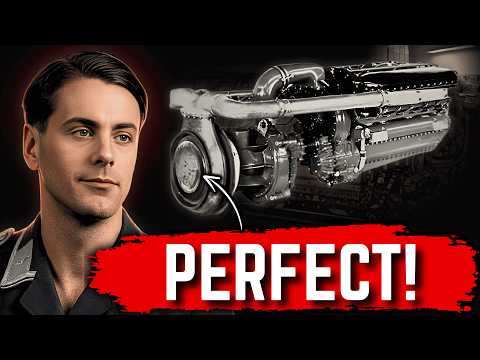
They asked Wright Aeronautical first. Wright refused—they were swamped with orders for the R-1820 Cyclone and the R-3350 Duplex, the engines that would soon power the B-29 Superfortress. Then they approached Pratt & Whitney, which was deep into developing the massive R-4360 Wasp Major, a 28-cylinder, four-row radial nicknamed the “Corncob,” destined to power the B-36 Peacemaker. But Pratt & Whitney declined too—their engineers were stretched to the limit, their factories running around the clock.
Next came Packard, which had adopted the Rolls-Royce Merlin design and was producing thousands of units for the North American P-51 Mustang—a partnership that would make that fighter a terror to the German Luftwaffe over Germany itself. But Packard refused as well.
That left only Studebaker. The company was known for automobiles and trucks, not advanced aircraft engines, though it wasn’t entirely foreign to the aviation world. Studebaker, headquartered in South Bend, Indiana, had been manufacturing wagons and cars since the 1850s—long before anyone imagined the company would one day be asked to design the largest piston aircraft engine ever built on American soil. That legacy of manufacturing, tooling, metalworking expertise, and the vast factory space available after car production slowed for the war effort made Studebaker more capable of completing this project than its size in the aviation world might suggest.
Still, nothing in the company’s history had prepared its engineers for a challenge of this magnitude, and they knew it.
The engineers Studebaker assigned to the project faced a set of constraints that would have discouraged almost anyone. Five thousand horsepower from a piston engine—at a time when the most powerful aircraft engines in the American arsenal, the Pratt & Whitney R-2800 that powered the Corsair and the Republic P-47 Thunderbolt, produced barely 2,000 horsepower. To more than double that output while maintaining fuel efficiency sufficient for a 30-hour flight, the traditional radial design had to be abandoned entirely. A radial engine of that size would have produced an enormous frontal area that would ruin the aerodynamics of any aircraft carrying it.
Studebaker’s engineers chose a different path. They designed an H-configuration engine—two flat, horizontally opposed blocks, one above the other, connected by two counter-rotating crankshafts, which canceled much of the torque and gyroscopic forces that would have made the engine difficult to control. The engine had 24 cylinders distributed across four groups of six, giving the design its name: the H-9350, after its total displacement of 9,350 cubic inches—larger than almost any piston aircraft engine ever built.
Each cylinder had a bore of 8 inches—so massive that the weight of a single cylinder assembly with its piston exceeded 70 pounds. To put that in perspective, a cylinder from a Rolls-Royce Merlin, which powered the Spitfire and the Mustang, could be lifted with one hand. A cylinder from the Studebaker H-9350 required both hands and considerable physical strength.
To supply these massive cylinders with enough air to generate 5,000 horsepower, a turbocharging system on a scale unmatched by any other aircraft of the era was necessary. The engineers turned to General Electric—the same company that supplied turbochargers for engines—and requested turbochargers spinning at up to 20,000 rpm to feed the enormous-displacement engine with compressed air.
The design itself drew inspiration from another unusual wartime engine on the other side of the Atlantic: the Napier Sabre, a British H-configuration engine with sleeve valves instead of conventional valves, developed to power the Hawker Typhoon and later the Hawker Tempest, which participated in hunting German V-1 flying bombs and strafing retreating columns after the Normandy invasion. The Sabre proved that an H-configuration engine could operate efficiently in field service, though it required years of painstaking development and constant maintenance.
Studebaker’s engineers studied every detail of available designs like the Sabre, aware that they were attempting something larger and more ambitious using American manufacturing methods and metals, without the benefit of the years of combat experience British engineers had invested in their own H-configuration design.
This was no theoretical exercise. Studebaker’s engineers built and ran single-cylinder test units to verify combustion characteristics, cooling requirements, and mechanical durability before committing to a full engine. Over the course of the program, they logged more than 4,700 hours of dynamometer testing on these single-cylinder prototypes—a massive investment of time and resources for a company that had never undertaken anything similar.
They also built and tested two-cylinder units—miniature two-cylinder versions of the full engine’s cylinder group—to study how adjacent cylinders interacted thermally and mechanically when assembled in a full 24-cylinder configuration. This methodical, almost obsessive approach to design validation was the same philosophy that guided other ambitious wartime engine programs, including the Lycoming XR-7755, a larger 42-cylinder engine developed for the Convair B-36 that was later tested at Wright Field around the same era. Despite the reliability problems it suffered throughout its short service life, the Studebaker team was determined not to repeat those mistakes.
The reduction gears alone posed a colossal engineering puzzle. An engine producing 5,000 horsepower couldn’t drive a single propeller at crankshaft speed without the blades tearing apart from centrifugal stress and shock. So Studebaker’s engineers had to design gears strong enough to transmit that immense torque to a speed the propeller could safely withstand—a problem the Republic P-47 Thunderbolt and its massive Pratt & Whitney R-2800 had faced on a smaller scale, solved by some late-war designs using pairs of counter-rotating propellers to absorb torque a single propeller couldn’t safely handle. The question remained open when the program was canceled: whether the Studebaker engine would ultimately drive one massive propeller or a pair of counter-rotating propellers—a detail that never progressed beyond the design stage.
Meanwhile, on the other side of the ocean, a parallel—and in some ways stranger—engineering effort was underway. British engineers at Rolls-Royce were experimenting with the Crecy, a two-stroke engine with sleeve valves, designed with entirely different technology but pursuing a similar dream of extracting enormous power from a piston aircraft engine. The Crecy never entered production either, killed by the same technological tide that ultimately doomed the Studebaker project. But its existence showed that engineers on both sides of the Atlantic recognized that piston engine development was approaching its absolute limit, and that only radical designs offered any hope of surpassing it.
Studebaker’s engineers were aware of these parallel efforts, and their sense that they were racing not just against a deadline but against an entire technological era gave the program unusual momentum. As the war progressed, the engine’s specifications evolved. What began as a 4,500-horsepower target grew into the full 5,000-horsepower goal that defined the final H-9350 design. The intended aircraft evolved too. The original justification—an intercontinental bomber launched from American soil in case Britain fell—became less urgent as the war turned in the Allies’ favor.
Britain held. The RAF, flying Hurricanes and Spitfires, won the Battle of Britain in the skies over southern England, and the strategic imperative that had justified Project MX232 began to fade—even as the engineering work continued at full speed. By mid-war, the intended use shifted toward very-long-range bombers capable of striking Japan from bases in the Pacific—aircraft that would ultimately be served by the Boeing B-29 and its four R-3350 engines, which themselves suffered serious overheating problems during their first combat appearance and required years of refinement before becoming reliable.
The B-29 program itself offered a cautionary tale that Studebaker’s engineers watched unfold before their eyes. The R-3350 Duplex-Cyclone engines selected for the Superfortress were rushed into service before their cooling problems were fully solved, and aircrews flying over Japan faced engine fires that burned aircraft out of the sky before they reached their targets. That was stark proof of what happens when an ambitious engine program is pushed into operational service before development is complete—and it reinforced the need for the meticulous, comprehensive testing regimen Studebaker had adopted for the H-9350 from the start.
Yet Studebaker’s engineers pressed on. They completed detailed drawings of the full engine assembly, manufactured components, tested increasingly complex sub-assemblies, and gradually progressed from single cylinders to two-cylinder units to larger test stands combining multiple cylinder groups. The engineering data generated was genuinely pioneering, filling technical reports with information about combustion at extreme cylinder pressures, vibration characteristics of counter-rotating crankshaft assemblies, and the heat management challenges of packing 24 massive cylinders into a design compact enough to fit in a bomber.
Studebaker was approaching the point where a complete, fully assembled prototype engine could be produced and run at full power—assembled as a whole rather than tested piece by piece.
Then the war ended.
Victory over Japan in August 1945 collapsed the wartime momentum that had sustained countless ambitious engineering programs across American aviation. Contracts were canceled by the hundreds as the government moved to demobilize its vast wartime industrial base. The Studebaker H-9350 program was formally terminated in October 1945—just two months after the war’s end—before a complete engine was ever assembled and run under its own power.
The cancellation wasn’t really the result of a single failure, but the confluence of three factors at once. The war that justified the program’s existence had ended, removing the urgent need that had funded years of costly development. Studebaker itself showed limited enthusiasm for pursuing a commercial future for an engine so specialized, so expensive, and so narrowly suited to long-range military bombers—especially since the company’s postwar future clearly lay in passenger cars, not aircraft engines.
Meanwhile, the jet age was dawning, and it arrived faster than most had anticipated. The jet engine had proven itself in combat by the war’s final months. Germany’s Messerschmitt Me 262 showed Allied pilots what a jet fighter could do, outpacing propeller-driven aircraft with a speed no piston engine, however powerful, could match. Britain’s Gloster Meteor had also entered service, giving the RAF its own operational jet fighter before the war ended. American engineers watched closely, and General Electric—the same company that built the turbochargers feeding Studebaker’s massive cylinders—was now devoting its efforts to developing turbojet engines. That work would ultimately produce the J47 that powered the North American F-86 Sabre during the Korean War. In a strange twist of history, it was later manufactured under license by Studebaker itself, the company having turned entirely away from piston engines.
What makes the Studebaker H-9350 story extraordinary isn’t its failure. Many wartime engine programs failed, victims of impossible specifications or insurmountable engineering problems. The Lycoming XR-7755, the massive 42-cylinder engine designed for the Convair B-36, actually reached completion and ran briefly before reliability problems and the pressures of the jet age ended its career, with the Army Air Forces ordering the delivery team to abandon the test unit rather than continue development. The Studebaker project belongs to a rarer—and perhaps more poignant—category. It didn’t fail because of a flaw in engineering design. All available evidence—thousands of hours of single-cylinder dynamometer testing, successful two-cylinder trials, detailed engineering drawings of a complete 24-cylinder assembly—indicates the design was sound in principle and very likely would have run successfully as a complete engine had the program continued a few more months. The project wasn’t canceled because it failed, but because the world it was designed for had suddenly collapsed.
Consider what this engine represented: 9,350 cubic inches of displacement—more than five times the size of a Rolls-Royce Merlin. Twenty-four cylinders across four banks in an H configuration, driving two counter-rotating crankshafts that reduced torque reaction in a way no American production aircraft engine had ever attempted at this scale. Two turbochargers spinning at 20,000 rpm, pumping compressed air into cylinders with an 8-inch bore. Each cylinder assembly weighed over 70 pounds, and the goal was 5,000 horsepower at a time when the most powerful operational American engines, including the Pratt & Whitney Wasp Major, were still in development to reach 3,000 horsepower in their most advanced forms.
It’s worth noting how quietly this story ended compared to its thunderous beginning. When the U.S. Army Air Corps issued the specifications for Project MX232, they carried the weight of a nation preparing for the possible fall of its closest ally—and the possibility that America itself might have to cross the ocean alone. Wright Aeronautical, Pratt & Whitney, Packard, Ford, and Chrysler—five of the most capable engineering institutions in the country—looked at this challenge and walked away. Studebaker, a name remembered today mostly for automobiles rather than aircraft engines, a company whose future as a car manufacturer wouldn’t survive past 1966, accepted the challenge everyone else refused.
Its engineers spent years pursuing the 5,000-horsepower goal, using single-cylinder test stands, two-cylinder test units, and thousands of hours of dynamometer testing to build something unprecedented in American aviation engineering. Then in October 1945, with the finish line in sight, it simply ended. There was no spectacular failure, no catastrophic test stand explosion, no crash that made headlines—just a program that had been racing toward a destination the world no longer needed.
Studebaker’s postwar fate mirrored that of its most ambitious engine in an almost poetic way. The company merged with Packard in 1954—the same Packard that had refused the MX232 contract years earlier in favor of building Merlin engines under license—forming the Studebaker-Packard Corporation in an attempt to survive in an automotive market increasingly dominated by Detroit’s largest manufacturers. The merger bought some time but didn’t solve the fundamental problem. Studebaker closed its South Bend plant in 1963, ending more than a century of manufacturing in the city where the H-9350 was designed. The Studebaker name vanished entirely from the automotive world by 1966 when its last plant in Canada ceased production. The company that accepted the aviation challenge all its major competitors refused didn’t live to see a hundred years as an independent manufacturer.
Today, most people remember it only as a name on vintage cars, not as a company that once tried to build America’s largest aircraft engine.
The Studebaker H-9350 never ran at full power as a complete engine. It exists today mostly in engineering drawings, dynamometer test logs, and the memory of a handful of historians who searched for the story of the largest piston aircraft engine America almost built. It stands alongside other remarkable machines of that era, like the Rolls-Royce Crecy that Britain abandoned for the same reasons, and the Lycoming XR-7755 that ran but never found its place. The machines that represented the ultimate potential of engineering in their field reached their peak at the very moment history decided that limit no longer mattered.
Studebaker returned to automobiles, while General Electric continued producing jet engines—even producing the very engines Studebaker assembled under license within a few years, closing an unexpected circle between the company’s largest piston engine project in its history and the jet age that ended it.
Were it not for the tireless work of aviation historians decades later, who dug through archives and engineering reports and surviving photographs to reconstruct exactly what Studebaker accomplished and how close it came to completion, this story would have been forgotten. A project that took years to complete, because many of the original engineering records were never widely published or even indexed. Without this kind of meticulous historical reconstruction, the H-9350 would have become just a forgotten line item in wartime contract records—another canceled project among hundreds that disappeared when the guns fell silent in 1945.
We should pause for a moment to reflect on how many other ambitious powerplants were quietly erased in the collapse that followed the war. The Wright Tornado, a 28-cylinder radial with enormous displacement, met a similar fate. Numerous compound engine experiments—designs that attempted to recover exhaust energy through turbine stages connected to the crankshaft—were abandoned in the same period. Despite years of promising testing, the field of large-displacement piston aircraft engines effectively stopped evolving within a few years of the war’s end. Not because engineers ran out of ideas, but because turbojets made all those ideas commercially and militarily irrelevant overnight. The Studebaker giant, with its 5,000 horsepower, was among the largest and most ambitious examples of that vanished field. A machine built at the edge of what piston technology could achieve, arriving at the historical moment when that edge no longer mattered.
There is a unique engineering tragedy in a machine that works on paper, passes every test conducted on it, and yet never gets the chance to prove its full capability. The Studebaker H-9350 wasn’t defeated by a design flaw, a test failure, or a fatal accident on the test stand. It was defeated by timing—by a war that ended two years sooner than the pessimists of 1940 had feared, and by a technological revolution that arrived fast enough to render an entire class of machines obsolete before they were completed.
Somewhere in the archives, the dynamometer records of 4,700 hours of single-cylinder testing still survive. Evidence of an engine that was never allowed to prove its capabilities. One of the most highly engineered machines in aviation history, which never got the chance to fly even once.
What do you think—was the Studebaker H-9350 a tragic waste of engineering genius, or a brilliant gamble that simply arrived at the wrong moment in history? Share your thoughts in the comments below.
Report this article
Select a reason for reporting:






