Three RPG-7 rounds slammed into the lead Centurion before D Company had even reached the first row of houses. The 52-ton tank shuddered, its turret armor punched through, crew wounded. It was June 6, 1969, and the intelligence briefing had just been proven catastrophically wrong.
Major Murray Blake, commanding 65 men of D Company, 5th Battalion, Royal Australian Regiment, had been told to expect a platoon of 30 to 40 Viet Cong in a minor disturbance. Instead, his understrength company was about to slam into a dug-in battalion of over 300 NVA regulars and local guerrillas in the village of Binh Ba, 5 km north of Nui Dat.
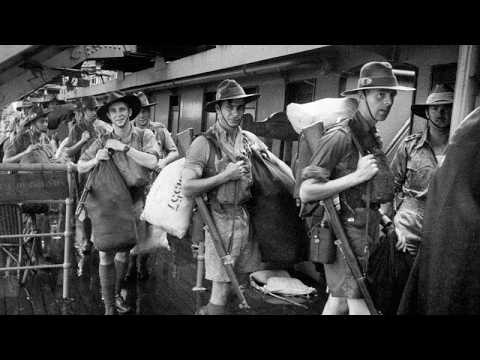
Within the first hour, three of four Centurion tanks took RPG hits at ranges under 50 meters. Fire poured from brick houses, market stalls, and spider holes dug beneath family homes. The narrow streets turned every doorway into a firing position, and the 3,000 civilians trapped inside became a human shield the Australians couldn’t simply level from the air.
Blake had seconds to recalculate. His armor was damaged, his infantry outnumbered five to one. Withdrawal would have satisfied any staff officer watching from Nui Dat. He didn’t take it.
This was the fight that would answer a criticism from the highest levels of American command. General William Westmoreland had looked at the Australian way of war—silent patrols, patient ambushes, low body counts—and dismissed it as producing nothing worth measuring. The Australians refused to adopt the American search-and-destroy model, with its B-52 strikes and village burnings. They kept Phuoc Tuy province quiet for three years, and to Westmoreland, quiet looked like failure.
The NVA had been watching. On the night of June 5, a company from the 33rd Regiment and elements of D440 Provincial Mobile Battalion slipped into Binh Ba. They occupied houses, set up firing positions behind thick walls, and stockpiled RPG-7s inside civilian homes. The village sat astride the main supply route to Nui Dat—taking it would force a reaction on ground they had chosen.
They expected a standard Australian response. Instead, they got Major Blake and 65 men who had no intention of backing down.
Blake pulled his infantry off the carriers and into the drainage ditches. The advance stalled under fire from positions the Australians couldn’t yet identify. He ordered the civilian evacuation before pushing further—loudspeaker broadcasts in Vietnamese, helicopter passes over the southern edge to drive non-combatants toward the Australian lines. Only after the evacuation corridors were functioning did the first assault go in.
Tanks led, following standard combined arms doctrine. Four Centurions advanced down the main approach toward the market square with infantry riding the M113 APCs behind them. The first 200 meters worked. Resistance was scattered small arms fire that the tank-mounted machine guns handled at range.
Then D Company reached the dense core of the village and the trap closed.
RPG-7 teams let the tanks pass through the outer ring of buildings and opened fire simultaneously from the sides and rear. Three of four Centurions took hits within minutes. One round penetrated a turret, another blew a track guard apart, the third detonated against the hull and sprayed the infantry section walking behind with steel fragments. The advance hadn’t reached the market square and three-quarters of the armor was damaged.
Blake understood immediately that the operation had changed. The volume of fire, the coordination of the RPG teams, the prepared fields of fire covering every intersection—D Company was engaged with a force at least five times its size, dug into positions where every advantage armor normally provided was neutralized by geography. The narrow streets turned the Centurions into slow-moving targets. The brick walls stopped small arms fire and forced the infantry to approach each building door by door.
The helicopters overhead delivered the next piece of unwelcome information. Roughly 60 additional NVA and VC fighters were threading through the rubber plantation bordering Binh Ba from the south and west, moving to reinforce the garrison.
Blake split his already thin force. He peeled off a section with APCs and redirected it toward the plantation to intercept. The section made contact almost immediately—a company-strength NVA element forming up for a coordinated counterattack among the orderly rows of rubber trees. The M113s opened up with their .50 caliber machine guns at close range, and the Centurions that could still traverse their turrets added main gunfire into the tree line. The NVA formation broke apart in the open ground between the rows, taking heavy casualties from automatic weapons fire they hadn’t anticipated.
But the diversion cost Blake time and troops he couldn’t afford to spare from the village fight.
By 1400, the situation had stabilized without being resolved. D Company held the southern portion of Binh Ba and had pushed into parts of the center, but the NVA still controlled the northern half and were fighting from every building that hadn’t been physically destroyed by tank fire.
Lieutenant Colonel Colin Khan, commanding 5th Battalion from a command post south of the village, took overall control and committed B Company under Major Rain Herring to seal the perimeter. B Company’s mission wasn’t to assault—it was to close the trap. Armored vehicles and infantry took blocking positions on every road, trail, and footpath leading into Binh Ba from the north and east. The NVA’s reinforcement route was severed. Whatever remained inside the village was staying there, and nothing else was getting through.
Khan ordered a second assault for the afternoon, and this time the Australians changed the method completely.
The first push had sent tanks forward with infantry behind—the textbook approach that gave RPG teams clean shots at armor funneled down narrow streets with no room to maneuver. The second push reversed the sequence. Infantry went first, tanks followed. Each assault element consisted of one infantry section, one Centurion, and two M113 APCs working as a coordinated unit down a single street. The infantrymen identified the building the fire was coming from, the tank put a high-explosive round through the wall at point-blank range, and the assault team went through the breach before the dust had time to settle.
The method was worked out under fire in the space of minutes, and it changed the battle completely.
The first building fell inside 30 seconds of the new approach. The lead section identified automatic weapons fire from a concrete structure on the eastern side of the main street. The Centurion behind them rotated its turret, elevated the 20-pounder main gun, and put an HE round through the front wall at a range of 40 meters. The detonation collapsed half the building in a single blast. The four-man assault team went through the gap with rifles and grenades before the occupants could recover from the concussion. Inside the wreckage they found six dead NVA soldiers in the rubble, their RPG-7 launchers still loaded, their ammunition stacked against the wall they’d been using as a firing position—the wall that had ceased to exist.
The sequence repeated for the next four hours without variation. Fire from a building, tank round through the wall, breach and clear. The Australians advanced through Binh Ba’s center one structure at a time, and the NVA’s advantage—prepared positions inside civilian houses—became the thing that was destroying them. Every building they occupied became a target for a 52-ton tank firing a main gun at ranges shorter than a cricket pitch. The infantry cleared what the tanks opened. The APCs covered the street intersections with automatic weapons. And B Company’s blocking positions meant the NVA couldn’t withdraw, couldn’t reinforce, and couldn’t disperse. They could only hold and be destroyed, or run and be caught in the open.
Private Wayne Teeling didn’t survive the clearing. He took a single round in the neck while approaching the first line of houses during the afternoon assault. His section dragged him clear of the fire lane, but the wound was fatal. Teeling was 20 years old from New South Wales and had been in Vietnam for four months when the RPGs opened up on the road through Binh Ba. He was the only Australian to die across two days of urban combat against a force that outnumbered his company by nearly five to one.
The NVA started breaking by late afternoon. Fighters inside the village began stripping their uniforms, pulling off the green fatigues of the 33rd Regiment and the black clothing of the VC cadre, attempting to pass as civilians among the 3,000 villagers trapped inside the combat zone. This created a problem the American approach to Vietnam had never been designed to solve.
How to fight through a village full of enemy combatants who looked identical to the civilian population. The American answer, applied repeatedly across the country, was to level the village with air strikes and artillery and sort through the wreckage afterwards. The Australians did it the hard way.
They cleared house by house, pulled families out one at a time, moved them to collection points behind the perimeter, verified identities, and kept fighting. Every civilian extracted was a soldier’s life risked at point-blank range. Every door opened could reveal a family cowering in a corner or an NVA squad with loaded weapons—or both simultaneously. The distinction between combatant and civilian was made at arm’s length in buildings half demolished by tank fire in the fading light of a tropical afternoon.
Fighting ran until darkness made further clearing impossible. D Company consolidated into a defensive perimeter on the ground it had seized, with tanks and APCs in hull-down positions covering every approach. The NVA probed through the night—small arms fire, the occasional RPG shot from a darkened building—but no organized counterattack developed. The 33rd Regiment had taken catastrophic casualties during the day’s fighting. The bodies the Australians counted in the cleared buildings accounted for dozens of dead, and the wounded had been carried north by retreating comrades into the half of the village the Australians hadn’t yet reached.
Dawn on June 7 brought the expected counterattack from outside—where B Company was waiting. A company-strength NVA and VC force attempted to enter Binh Ba from the northwest, pushing through the rubber plantation toward the village perimeter. B Company’s blocking positions caught them in the open. Centurion main guns and M113 .50 calibers engaged at range, and the NVA column fragmented before it reached the first buildings. The reinforcement attempt collapsed, and the survivors scattered east toward Long Khanh province.
Inside the village, D Company resumed clearing operations at a slower, methodical pace. Every bunker beneath every house, every drainage culvert, every storage shed and garden wall was searched, cleared, and marked. The tempo had shifted from assault to sweep—grinding through the wreckage of a village that had been a functioning community 48 hours earlier.
By 0900 on June 8, Lieutenant Colonel Khan declared Operation Hammer complete. Binh Ba was under Australian control.
The final accounting was exact. 107 NVA and VC confirmed dead, six wounded and captured, eight additional prisoners taken alive. Australian losses were one dead—Private Wayne Teeling—and 10 wounded across D and B companies. Three of four Centurion tanks had been penetrated or damaged by RPG fire during the first assault, yet none were destroyed and all remained in action. The casualty ratio was 107 to 1.
The operational aftermath went further than the body count. The NVA’s 33rd Regiment had committed a major element to Phuoc Tuy province and lost it in 48 hours against a force one-fifth its size fighting in terrain that should have favored the defender. The lesson was absorbed immediately. The NVA pulled out of Phuoc Tuy entirely after Binh Ba and withdrew into Long Khanh province to regroup. The province that Westmoreland had once criticized as underperforming became one of the quietest in South Vietnam for the remainder of the Australian deployment.
The quiet the Americans had dismissed as inaction turned out to be the result of a counterinsurgency framework that worked so well the enemy eventually stopped attempting to challenge it. The battle honor Binh Ba was awarded to the Royal Australian Regiment, the 3rd Cavalry Regiment, and the 1st Armored Regiment—one of only five battle honors granted to Australian units across the entire Vietnam War. The Australian Armored Corps recorded the engagement as armor’s greatest day in Vietnam. The combined arms clearing method that D Company improvised under fire—infantry identifies, tank breaches, assault team clears—became a studied tactical case in urban warfare doctrine for decades afterwards.
65 men in an understrength rifle company, supported by a platoon of battered tanks and a handful of APCs, had taken a fortified village from a dug-in battalion. They delivered a result that years of B-52 strikes, chemical defoliation, and search-and-destroy operations had failed to achieve anywhere else in the country.
There was a cost the casualty figures didn’t capture. Binh Ba’s 3,000 civilians, trapped inside a village that became a battlefield, suffered losses that were never fully quantified. The official record acknowledged that a large number of civilians had died during the fighting, and the physical destruction was severe enough that the surviving population couldn’t return to their homes. The 1st Australian Civil Affairs Unit organized resettlement for the displaced villagers in the weeks that followed. Australian media ran stories questioning whether the operation amounted to an atrocity. The military’s position was that the assault, for all its violence, had been conducted with greater restraint than comparable American operations. Civilians were evacuated under fire rather than bombed from altitude, and the village was cleared building by building rather than flattened by artillery. Whether that distinction carried weight for the families who’d buried their dead in the rubble was a question no after-action report attempted to answer.
Westmoreland’s criticism had been answered with a ratio no American unit in Vietnam ever matched in urban combat. The tactics he’d dismissed as unproductive had held a province quiet for three years through patience and precision. And when those same Australians were forced into the kind of stand-up fight the American doctrine was supposedly designed for, they won it at 107 to 1 with 65 men. The body count Westmoreland had demanded was delivered in a single village in 48 hours by a company that shouldn’t have been there in the first place.
Phuoc Tuy stayed quiet until the Australians withdrew in 1971. The province didn’t need B-52s—it needed D Company. Wayne Teeling was buried at Rookwood Cemetery in Sydney with military honors. He’d been in Vietnam for four months. D Company went back to patrolling Phuoc Tuy the following week. Silent ambushes, four-man patrols—the work that produced no statistics and won the province. The kind of results that look like nothing on paper and everything on the ground.
So here’s the question worth asking: when the metrics of war measure destruction rather than progress, how many victories go unrecognized—and how many disasters get celebrated as success?
Report this article
Select a reason for reporting:






