For millions, The Three Stooges were pure joy—a whirlwind of slaps, eye pokes, and perfectly timed chaos that defined comedy for generations. But behind the laughter lies a story so dark it was hidden from fans for nearly 25 years. A story of exploitation, suspicious deaths, and a studio that squeezed every last drop from the men who made America laugh.
Their creator, Ted Healy, was beaten to death under circumstances that were quickly buried. The studio that made them famous, Columbia Pictures, never gave them a raise in 23 years. And when one Stooge died, they kept making films with a stand-in, because the contract demanded it. None of this was part of the act. None of it was supposed to reach the audience.
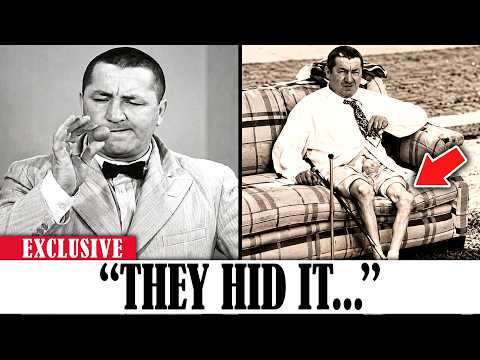
The Three Stooges didn’t start as superstars. They started as props. In the early 1930s, they were part of a vaudeville act called Ted Healy and his Stooges. Healy was the star—a fast-talking comedian who used Moe Howard, his brother Shemp, and Larry Fine as hecklers and punching bags. The audience loved the chaos. But offstage, the dynamic was brutal.
Healy controlled everything, including the money. According to Moe Howard’s autobiography, Healy kept the bulk of the earnings and paid the Stooges whatever he felt like. When Shemp pushed back, Healy threatened to have theaters bombed if the Stooges ever performed without him. Shemp was so frightened, he nearly quit.
In 1934, the Stooges finally broke away from Healy and signed their own deal with Columbia Pictures. Three years later, Healy was dead. On December 21st, 1937, Healy was celebrating the birth of his son at the Trocadero nightclub in Hollywood. By the end of the night, he was gone. The official cause of death was acute toxic nephritis, but multiple accounts from the era point to something far more sinister.
According to these accounts, Healy got into a fight with a group that included actor Wallace Beery, one of MGM’s biggest stars. Beery was known for a violent temper. The story goes that Healy was beaten so badly, the injuries contributed to his death. MGM fixer Howard Strickling allegedly intervened to make sure the real cause never reached the press. Beery was never questioned. The police investigation went nowhere.
What makes this even stranger is that the Stooges owed their entire career to Healy. He had discovered them, put them on stage, and brought them to Hollywood. Without Ted Healy, there are no Three Stooges. And when Healy died, the men he’d bullied and underpaid for over a decade said almost nothing about it. Moe mentioned Healy briefly in his autobiography, but stayed far away from the circumstances of his death. Larry Fine barely discussed him at all. The subject was treated like a locked room that nobody had the key to.
The Stooges had just escaped Healy’s control three years earlier. They had their own deal at Columbia. Whatever they knew about what happened at the Trocadero, and whatever pressure came from MGM to stay quiet, they took it to their graves. The man who created the most famous comedy act in America was beaten to death, and the three men he created stayed silent about it for the rest of their lives.
When the Stooges signed with Columbia in 1934, they thought they’d finally found stability. Instead, they walked into a different kind of trap. Columbia’s president, Harry Cohn, was legendary for two things: making profitable movies and terrorizing his employees. He once told a journalist that running the studio was better than being a pimp.
The Stooges were among his most reliable earners. Their shorts were the highest-grossing comedies Columbia produced, routinely outperforming every other act on the lot. And Cohn made sure they never knew it. Every year, he waited until the very last minute to renew their contract. He told them the shorts division wasn’t profitable. He told them they were lucky to have jobs at all.
The Stooges, terrified of being unemployed during the Depression and then during the war, never pushed back. They never asked for a raise. In 23 years at Columbia, Moe, Larry, and whoever was playing the third Stooge never received a single salary increase. Not one. They started at roughly $7,500 per film, split three ways, and that number never changed.
Meanwhile, their shorts were generating enormous revenue for the studio. Exhibitors begged Columbia for more Stooges content. The demand was insatiable. The contract also contained no provision for residuals. When television arrived and Columbia started licensing the Stooges shorts to local stations across the country, the studio made millions. The Stooges received nothing. Not a single check.
To put this in perspective, the Marx Brothers worked fewer years in Hollywood and retired wealthy. Abbott and Costello earned millions from their radio shows and films. The Stooges were arguably more widely recognized than either of those acts, and they had less to show for it than almost any comparable comedy team of the era.
There was another thing Columbia concealed from audiences. The violence on screen was not entirely fake. Most slaps were real. The eye pokes used a blocking technique, but the timing didn’t always work and real contact happened regularly. Larry Fine lost partial hearing in one ear from years of slaps to the side of the head. Various Stooges sustained burns, cuts, and bruises that would have shut down production on any modern set.
The sound effects department at Columbia enhanced the impact, but the foundation was real physical contact delivered take after take, short after short, for over two decades. The Stooges never complained publicly. Complaining meant risking the contract, and without the contract, they had nothing. Cohn knew what he had. He just didn’t think he needed to pay for it. The Stooges were too afraid to test him, and Cohn exploited that fear for over two decades.
They made 190 films for Columbia. They never shared in the profits of any of them.
Of all the Stooges, Curly Howard was the one audiences loved most. Born Jerome Horwitz, he was the youngest of the Howard brothers. He shaved his head, adopted a high-pitched voice, and became the manic, childlike engine of the act. Curly’s physical comedy was extraordinary. He could spin on the floor, bark like a dog, and take a slap from Moe with timing that made it look effortless.
What the audience didn’t know was that the funniest man on screen was one of the saddest men off it. Off screen, Curly was falling apart. He drank heavily. He overate. He smoked constantly. He went through four marriages, the longest lasting three years. Between takes, according to people who worked on the Columbia lot, Curly was quiet, withdrawn, and lonely. The wild energy he brought to the screen was performance. The man behind it was struggling.
By 1944, the decline was visible on camera for anyone paying attention. Curly’s timing was slowing. His movements weren’t as sharp. The spins and floor slides that had defined his early performances were gone. Directors noticed that he had trouble remembering his lines and following stage directions. His face sometimes looked blank during setups, as if he wasn’t entirely sure where he was. In the later shorts from 1945 and early 1946, Larry Fine quietly picked up many of Curly’s lines because Curly couldn’t deliver them.
If you watch those final films back-to-back with the earlier ones, the difference is stark. The man on screen in 1946 is visibly diminished from the performer who’d been making audiences scream in 1938. But the shorts kept getting made, because Columbia needed product and the Stooges needed their paychecks.
Moe knew something was seriously wrong with his brother. He went to Harry Cohn and asked for time off so Curly could rest. Cohn refused. The schedule was the schedule. There were shorts to deliver and exhibitors to satisfy.
On May 6th, 1946, the crew was filming the final day of a short called Half-Wits’ Holiday. The last scene on the schedule was a pie fight. The set was dressed, the pies were ready, and Moe looked over to where his brother was supposed to be standing and saw him sitting alone in his chair, slumped forward. Moe walked over and said, “What’s the matter, Babe?” Babe was the family’s nickname for Curly. Curly didn’t answer. Tears were streaming down his face. He couldn’t move. He’d suffered a massive stroke right there on the Columbia lot in the middle of a work day. He was 42 years old.
Curly never appeared as a regular member of the Stooges again. Moe wanted to disband the group. Columbia told him no. There were more shorts to make. The studio brought Shemp Howard back to replace his younger brother. In 1947, while filming a short called Hold That Lion, director Jules White noticed that Curly had come to visit the set. White gave Curly a brief cameo, a few seconds of screen time where he sits on a train sleeping with a hat over his face. It was the only time all three Howard brothers and Larry Fine appeared in the same film.
Curly’s health continued to deteriorate. He suffered additional strokes, lost the ability to walk, and eventually lost the ability to speak clearly. His fourth wife, Valerie, cared for him through the worst of it. He was moved to the Motion Picture Country Home, where he spent his final months bedridden. Moe visited his brother whenever he could. By the end, communication was difficult. Curly’s speech was limited, and Moe later described the visits as agonizing—watching his younger brother trapped inside a body that could no longer do the things that had made millions of people laugh.
Jerome Curly Howard died on January 18th, 1952. He was 48 years old. He had been famous since his early 30s and incapacitated since his early 40s. The funniest Stooge spent his last six years unable to perform, unable to walk, and eventually unable to speak. The fans who adored his wild physical comedy had no idea what had happened to him. Columbia never addressed it publicly, and the studio that had refused to let him rest when Moe begged for it moved on to the next contract renewal without looking back.
Shemp Howard had left the Stooges back in 1932 because he was tired of being abused by Ted Healy. He’d built a respectable solo career in Hollywood, appearing in over 75 films on his own. He was comfortable. He didn’t need the Stooges. But when Curly collapsed, Moe called his older brother and asked him to come back. Shemp agreed, reluctantly, out of loyalty to Moe and concern for the act’s survival. He stepped back into the role he’d originally created and stayed for nine years. He was a different kind of stooge—slower and more verbal than Curly, with a style rooted in his vaudeville timing rather than physical acrobatics. Fans gradually accepted him. The shorts kept coming. Columbia kept paying the same rate.
On November 22nd, 1955, Shemp was riding in a car with a friend after attending a boxing match. He lit a cigar, told a joke, and then slumped over. His friend thought he was clowning around. He wasn’t. Shemp had suffered a massive heart attack. He was 60 years old.
Here’s where the story crosses a line that most fans don’t know about. When Shemp died, the Stooges still owed Columbia four more shorts on their annual contract. Columbia had already promised exhibitors eight Stooges films for 1956, and only four had been completed. A normal studio would have renegotiated or absorbed the loss. Columbia was not a normal studio.
Director Jules White came up with a solution. He took old Stooges shorts from the archives, pulled footage of Shemp from previous films, and spliced it together with new scenes featuring Moe and Larry. For the shots where Shemp needed to appear alongside them, White brought in a bit actor named Joe Palma to stand in. Palma wore Shemp’s clothes, was filmed from behind or at odd angles, and never showed his face. The old footage of the real Shemp was cut in around him. Four new Three Stooges shorts were assembled this way and released to theaters as if nothing had happened. The films were Rumpus in the Harem, Hot Stuff, Scheming Schemers, and Commotion on the Ocean.
Audiences who paid to see the Three Stooges were watching recycled footage of a dead man edited around a stand-in. Most of them had no idea. If you watch those four shorts carefully, the trick is obvious. Palma is always turned away from the camera or standing in shadow or obscured by a hat. He never speaks. Every line of dialogue from Shemp in those films is recycled audio from earlier productions. The editors cut between old footage and new footage with the rhythm of a card trick, hoping the audience wouldn’t notice the switch. Most didn’t. These were short comedies shown before feature films in movie theaters. Nobody was studying the credits or examining the frame composition. They just wanted to laugh, and Columbia gave them what looked like a Three Stooges short, even though one of the three men had been dead for weeks when the new scenes were filmed.
The practice became so notorious among film historians that director Sam Raimi later coined a term for it. Anybody double used to replace a dead or unavailable actor became known as a fake Shemp. The term is still used in the film industry today. It is, in a strange way, Shemp Howard’s most lasting contribution to cinema. A man whose entire career was spent in someone else’s shadow became the industry’s permanent name for the trick of pretending someone is there when they aren’t.
In December 1957, after 23 years, Columbia shut down the shorts department and let the Stooges go. Moe was 60, Larry was 55, and they had no residuals, no savings, and no prospects. Then television changed everything—a new generation discovered the shorts, and by 1959 the Stooges were the most popular act on children’s TV in America. Columbia made a fortune. The Stooges saw none of it.
Their contract had been signed before television existed, and Columbia wasn’t offering to renegotiate. The irony was suffocating: more famous than ever, and essentially broke.
Larry suffered a massive stroke in 1970 and spent his final years in the same Motion Picture Country Home where Curly had died. Moe died of lung cancer in 1975; Larry followed months later. Neither left a fortune.
The most recognizable comedy act in American history made people laugh for 40 years—while the studio system kept the difference.
Knowing all this, can you still laugh at the slapstick the same way?
Report this article
Select a reason for reporting:






