For seventy years, he said nothing. Not a word about the inferno he survived, the boys he commanded, or the truth he watched get buried under celluloid heroics. Then, at ninety, Alexander Federovich finally spoke—and what he revealed about Stalingrad was nothing like the film the world applauded.
He was a tank commander in the 31st Tank Brigade, thrown into the cauldron of August, September, October 1942, when the German war machine had already reached the Volga. “I was a tank commander in Stalingrad for three months,” he begins, his voice steady but edged with old anger. What follows is not a story of glory—it is a reckoning.
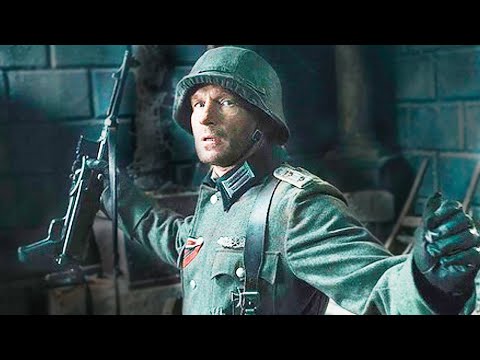
The film Stalingrad by Fedor Bondarchuk, released in 2013, claimed to capture the battle. Alexander watched it and felt only outrage. “The film is heavy, but it’s not Stalingrad,” he says flatly. The Volga—the lifeline that carried supplies under constant fire—was nowhere to be seen. Instead, soldiers huddled in ruins, enemies and allies blurred into a confusing haze. “Where is the enemy? Where are our troops? It’s all mixed up.”
But what cut deepest was the portrayal of the women. In the film, only two appear—one positive, one negative, built around a scandalous affair. Alexander’s voice hardens. “Why did he build this film on the negative? Our women were not like that in Stalingrad.” He remembers the 600 sniper girls of the 64th Army, positioned on an island in the middle of the Volga, who destroyed officers first. They were signalmen, nurses, fighters—thousands of them. None of that made it to the screen.
And the boys. The children who ran messages through the bushes, reporting German tank movements to the factory commanders. “One of them was my messenger from the Tractor Factory to my tank,” Alexander recalls. He gave the boy a captured German machine gun; the boy already knew how to throw grenades. “That’s what kind of hell we had from these guys. None of this is shown in the movie.”
One day, the boy came too late—the Germans were already attacking. Alexander and his crew crawled toward a fence where the enemy had taken position, opened fire, and threw grenades. The Germans, thinking a major counter-attack had begun, fled. “And these young guys also helped us.”
He speaks of food, too—the daily rations from the cauldron, the 100 grams of vodka (he didn’t drink his; a friend from Siberia did), the normal, organized supply that kept the Red Army fighting. “I don’t know how he could bypass this episode,” Alexander says of the director. “It’s a disgrace to our Red Army.” The film showed no commanders, no leadership—just men in quilted jackets drifting through rubble.
Then there were the planes. The German armada flying five kilometers high, their engines producing a sound that “depresses the morale”—a sound Alexander still hears in his memory. He describes watching bombs release from the hatch of his tank: one big one in the middle, five small ones around it. “You look where they fly, and when they come closer, we close the hatch and wait—will it hit the tank or not?” He pauses. “I’m telling you this as a man who fought, who saw with his own eyes.”
The decorations built for the film, the money spent—all for nothing. “There is no sense,” he says. And the attempt to present it to the West? “I’m outraged. What kind of Stalingrad where is our Victory? He didn’t show it.”
But Alexander did not stay silent about his own war. He tells of supporting an attack on a house, firing a shell through a window, watching flame and dust burst out. He processed every window, then saw a green rocket—the signal for the assault group. The fighters rose with a shout of “Ura!” To his left, some twenty Germans were running toward the same house. No one gave him an order. “For the first time I make an independent decision,” he says. He fired a fragmentation shell into the group. They fell. After a while, they rose again—a second shell, and no one got up again.
He speaks of the entire Soviet people, each contributing to the Victory. And then he tells of the feat of Junior Lieutenant Alexander Matorin, whose reconnaissance patrol of three tanks encountered a German Tiger stuck by the river. Matorin acted with cold precision: a fragmentation shell at the three crewmen standing outside, then an armor-piercing round to the Tiger’s turret roof. The projectile ricocheted, but the blow was so terrible that the mechanic and commander jumped out—and were cut down by machine-gun fire. “That’s how Alexander Matorin captured a whole Tiger.”
Matorin’s next victim was a heavy self-propelled gun, rammed by eighteen-year-old driver Ivan Petrov, who tore off its caterpillar. The crew jumped out and was destroyed. But at a forest road, three enemy tanks ambushed the patrol. All three of Matorin’s vehicles broke out, but the enemy shifted fire to the main column. Two tanks caught fire. Then, unexpectedly, Matorin’s burning tank came to life and joined the battle. Three aimed shots—three enemy tanks destroyed. But the crew never escaped the flames. The tank exploded, and all four were killed: Matorin, Petrov, Karagori, and Nikolai Zhyvov. They were eighteen to twenty years old. A monument now stands near the village of Markovsina.
And then there was the moment that stayed with him forever. Checking a long line of railway cars for Germans, he heard a clunk and a plea for help. They opened the cars, and “we were showered with girls.” About three hundred Soviet girls, packed into five cars, being sent west by the fascists. One rushed to hug him and froze, not letting go. “My hands are busy—grenades here, pistol there—and I’m still thinking about the war. Some fruit will throw a grenade at us.” He laughs softly. “So I was confused.”
The memories flow—Kursk, the tank battles, the light T-70s advancing behind the T-34s, the smoke bombs he used to disguise his tank as a burning wreck. On July 11, 1943, he destroyed three German vehicles and saved his own. But the losses were brutal. By evening, only fifteen tanks remained of thirty-nine. “We tankers with limited experience could not correctly assess the actions of our senior commanders,” he admits. They blamed them for the failure. Then came the radio address from General Rotmistrov: Tankers, you have performed a real miracle. You stopped the German Beast here. “It became easier for us,” Alexander says. They prepared for the next day with even more enthusiasm.
He stops. The room is quiet. Seventy years of silence, and still, the truth of Stalingrad is not fully told. There is more—there is always more—and Alexander Federovich is not finished yet.
He shifts in his chair, and for a moment the old soldier’s eyes drift to somewhere far beyond the room—to a place of smoke and iron and boys who never came home. “You want to know what the film got right?” he asks, almost to himself. “Almost nothing. But the worst lie isn’t what they showed. It’s what they left out.”
He reaches for a glass of water, his hand trembling just slightly, and takes a slow sip before continuing. “The Volga. They never showed the Volga. Do you understand what that river was to us?” His voice rises. “Every bullet, every shell, every loaf of bread came across that water. The Germans had it under fire day and night. Boats went out and didn’t come back. Men drowned in the cold water carrying ammunition to us. The Volga was our blood, and the film didn’t even show it.“
He sets the glass down hard. “Instead, they gave us a love story. A German officer and a Russian girl. As if that was the battle. As if that was what we fought for.” He shakes his head slowly. “I’ll tell you what we fought for. We fought for the boy who ran messages through the bushes. We fought for the girls in the railway cars. We fought because there was nowhere left to run.”
Alexander leans forward, and his voice drops to something quieter, more dangerous. “Let me tell you about the night before the counter-attack. November 1942.” He pauses, letting the date hang in the air. “We knew something was coming. Nobody told us—they never told us anything—but you could feel it. The officers were too calm. The orders were too precise. And then, in the middle of the night, they woke us.”
He describes the cold—the kind of cold that gets into your bones and stays there. The tanks were white with frost, engines groaning as they struggled to turn over. “We had to warm them with fires under the hulls. Can you imagine? Fires under the tanks, in the dark, while the Germans were only a few hundred meters away. One spark, one sound, and they would have shelled us to pieces.”
But the Germans didn’t fire. They didn’t know. “That was the difference,” Alexander says. “They had the better tanks. They had the better guns. But we had the surprise, and we had the cold, and we had nothing left to lose.”
He remembers the signal—a red flare rising into the frozen sky—and then the world exploding. “The artillery opened up behind us. Katyushas, guns, everything at once. The ground shook so hard I thought my tank would fall apart. And then we moved.”
His voice quickens, caught in the memory. “Through the snow, through the smoke, through the German lines. We didn’t stop. We couldn’t stop. If you stopped, you froze. If you stopped, you died. We drove until the fuel ran out and the ammunition was gone, and then we drove some more.“
He falls silent. The room seems colder now, as if the memory has brought the winter back with it. “That was Stalingrad,” he says finally. “Not what they showed in the film. Not rubble and confusion and a German who falls in love. It was cold and hunger and fear, and men who kept going anyway.“
He looks up, and there is something new in his eyes—not anger this time, but something closer to grief. “They made a film about us, and they didn’t even ask us what it was like. They didn’t want to know. They wanted a story they could sell.” He pauses. “But I’m still here. And I’m still telling it.”
The old tank commander reaches for his glass again, and his hand is steadier now. “There’s more,” he says quietly. “About the crossing. About what we found on the other side.” He looks at the camera, and for a moment he is not a veteran being interviewed—he is a young man again, staring across the frozen Volga at the burning city beyond. “Do you want to hear it?”
He doesn’t wait for an answer. “We crossed at night, on a barge held together by rust and prayer,” he says. The Volga was churning with ice and oil, and shells walked across the water like a man crossing a room. “Half the men on that barge never reached the bank. They went into the water with their rifles still on their shoulders.”
On the other side, Stalingrad was not a city anymore. It was a furnace with streets. “The station changed hands fourteen times in one day. We didn’t hold buildings—we held corners of buildings, then corners of rooms, then a single wall.” He taps the table softly. “A wall. That was our motherland, that day.”
And then, the quietest thing he has said all afternoon. “When the counter-attack came, we didn’t shout. We were too tired to shout. We just drove forward, and the boys who had died that morning drove with us.” He smiles, and it is almost peaceful. “That is the film no one has made.”
He looks into the camera one last time. “So tell me—if they ever make that film, will you go and see it?”
Report this article
Select a reason for reporting:






