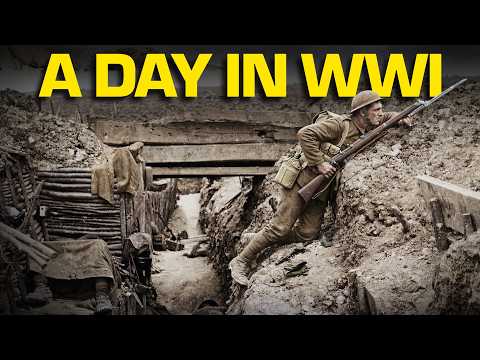
Ask anyone about the First World War, and trenches are never far from their lips. But what was life truly like for the ordinary soldier in those muddy, claustrophobic ditches? For one British section on the Somme in early 1916, a typical day began not with a bugle call, but with a whispered order that sent shivers down every spine: stand-to.
Before dawn, the men fixed bayonets and manned the parapet, eyes straining into the gloom of no man’s land. Enemy attacks often came at first light, and the tension was palpable. Every man held his breath, waiting for the first sign of movement. As the sky turned grey, the order to stand down finally came, but one soldier remained on sentry duty, his eyes the only guard for his exhausted comrades.
Breakfast was a welcome relief. The daily rum ration, nicknamed ‘seldom reaches destination’ by the troops, was followed by a hot meal of bacon, bread, and jam. For a brief moment, the war seemed a world away. But there was no time to linger. Weapons had to be cleaned, uniforms checked, and the trench itself maintained. Half the section cleaned rifles while the other half stood guard, ready for an attack that could come at any moment.
By midday, lunch arrived in dixies, often a stew of meat and vegetables, still warm from the reserve lines. Mail followed, a lifeline to home that brought news, letters, and occasional luxuries shared among the men. For those not on sentry duty, a few precious hours of free time allowed for sleep, letter-writing, or simply staring at the sky.
But as dusk fell, the trenches came alive again. Another stand-to, another hour of silent vigilance, and then the night’s work began. Under cover of darkness, men repaired trenches, filled sandbags, and ventured into no man’s land to fix barbed wire—a task that could turn deadly at the slightest sound. Sleep was a luxury few could afford, with three hours being the most a man could hope for.
And so the cycle continued, a relentless rhythm of danger and drudgery that defined the trench experience. As one veteran later recalled, “For me, the war was 90% bored stiff, 9% frozen stiff, and 1% scared stiff.” It was an exhausting life, but one that demanded endurance above all else.
Yet endurance had its limits, and the British high command knew it. Four days in the front line was considered the maximum a man could endure before his senses dulled and his reactions slowed. After that, he became a liability not just to himself, but to every soldier beside him.
So on the fourth night, the section would receive word to prepare for relief. Under cover of darkness, a fresh unit would file silently down the communication trench to take their place. There were no goodbyes, no handshakes—only a whispered exchange of information. Who was where, which stretches of parapet were weak, where the enemy had been heard working the night before.
Then the men would begin the long walk back. Not a march of triumph, but a shuffling, exhausted stumble through the mud, past the support line and on toward the reserve positions. Some men fell asleep standing up, propped against the trench wall, and had to be shaken awake.
Behind the lines, the world seemed almost obscene in its ordinariness. Farmhouses still stood, fields still grew, and birds still sang. Men who had spent four days expecting death at any moment now found themselves staring at a cup of tea in a barn, unsure whether to laugh or weep.
But rest was never truly rest. There were inspections, drills, and fatigue parties. Battalions in reserve were expected to provide working parties for the front line—carrying ammunition, rations, and building materials up the line at night. A man might march ten miles with a hundredweight of supplies on his back, only to turn around and do it again the next night.
And always, in the background, the guns. Even eight miles behind the front, the rumble of the artillery was a constant companion, a reminder that the war was never far away. Men learned to read the guns the way farmers read the weather—a heavy bombardment meant an attack was coming, and their turn in the line would soon come round again.
It was this relentless cycle, more than any single battle, that broke men. Not the fear of death, but the impossibility of ever truly escaping it. The mind could endure almost anything, a soldier might tell himself, so long as it knew there would be an end. But in the trenches, there was no end in sight—only the next stand-to, the next sentry duty, the next night of work under the stars.
And yet, in that same reserve billets, something remarkable happened. Men who had spent four days in the mud and the cold, who had barely slept and eaten nothing but cold stew, found ways to laugh. A card game sprang up in the corner of a barn, the stakes being nothing more than cigarettes and gossip. A corporal who had been silent for days suddenly produced a mouth organ and played a tune from home.
It was this strange, defiant cheerfulness that outsiders found hardest to understand. How could men who had seen what they had seen still find joy in a cup of tea and a dry pair of socks? The answer, perhaps, lay in the simple truth that they had no choice. Despair was a luxury none of them could afford.
But the high command, in its wisdom, had other plans for these precious days of rest. Parades were held, uniforms were inspected, and men who could barely stand from exhaustion were ordered to present arms with perfect precision. A general might pass by, offering a few words of praise, and the men would stand stiff and silent, their faces betraying nothing.
Beyond the parades and the drills, there was another matter that no one spoke of openly but every man understood. Some soldiers simply could not go back. Not because they were cowards, but because something inside them had quietly broken. They would be found wandering the fields, or sitting motionless in a corner of the barn, their eyes fixed on something no one else could see.
The medical officers called it ‘shell shock,’ a term that did little to capture the horror of it. Men who had once been the backbone of their section were now led away gently, their hands trembling, their voices reduced to whispers. Some recovered and returned. Others were sent home, never to wear a uniform again.
For those who remained, the cycle continued. The eight days of reserve passed more quickly than anyone could have wished. And then came the news that every man dreaded: they were going back up the line. The same trench, the same mud, the same endless waiting. The only difference was that some faces were missing, and new ones had taken their place.
As the section filed back down the communication trench in the darkness, a young private turned to the corporal beside him. “What’s it like up there?” he whispered, for it was his first time in the front line. The corporal, who had seen three of his friends buried in the past month, paused for a moment. “You’ll see,” he said quietly. “And when you do, you’ll understand why we don’t talk about it.”
The young private did see. Within hours of taking his place on the parapet, he understood everything the corporal had not said. The cold that seeped into his bones, the smell of damp earth and unwashed bodies, the constant, gnawing hunger that no ration could fully satisfy. And the fear—always the fear, coiled in the pit of his stomach, waiting to spring.
But he also learned something else. He learned that the men beside him, who had endured so much, still shared their last cigarette. That the corporal who had warned him would stand his own sentry duty without complaint, even when his eyes were red from lack of sleep. That courage, in the end, was not about charging into battle, but about staying put.
One night, as they huddled in the dugout, the corporal spoke again. “You know what keeps me going?” he asked, staring at the candle flame. The private shook his head. “The thought of a hot bath and a clean shirt. Silly, isn’t it?” The private didn’t think it was silly at all. He thought it was the most human thing he had ever heard.
And so the days blended into weeks, and the weeks into months. The war went on, as wars do, but the section endured. They endured because they had each other, and because they had learned to find small comforts where they could. A cup of tea, a letter from home, a joke shared in the darkness—these were the things that kept them alive.
When the private, no longer a private but a seasoned soldier, was finally rotated home for leave, he stood on the deck of the troopship and watched the French coast fade into the mist. He thought of the corporal, who had been killed by a sniper two weeks before, and of all the others who would never leave. He thought of the mud, the cold, the endless stand-tos—and, strangely, he thought of the laughter too.
Years later, when his own son asked him what the war was like, he would pause, just as the corporal had paused, and then he would say: “It was the worst thing I ever did. And the best thing I ever was.” The boy would not understand, not really. But that was all right. Some things could only be understood by those who had been there.
And so the story of the trenches passes from memory to memory, carried by the men who lived it and the families who waited for them. It is a story of endurance, of camaraderie, and of the quiet heroism of ordinary men. A story that, even now, a century later, still has the power to move us.
What would you have found hardest to endure—the boredom, the cold, or the fear? Share your thoughts in the comments below.
Report this article
Select a reason for reporting:






