In the summer of 1940, a small group of young men and their aircraft stood between the British people and invasion by the Nazi war machine. The Battle of Britain was about to begin, and the fate of the free world hung in the balance.
As the sun rose on July 10th, 1940, a German reconnaissance aircraft, escorted by Messerschmitt 109s, approached a British convoy in the English Channel. Six Spitfires from 74 Squadron scrambled to intercept. The ensuing dogfight marked the opening salvo of what would become one of the most legendary air battles in history.
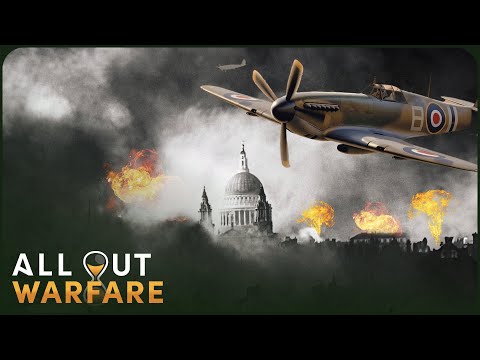
The Luftwaffe, confident in their numerical superiority, sought to lure the RAF into a war of attrition. But Air Chief Marshal Sir Hugh Dowding, commander of Fighter Command, had other plans. He husbanded his resources, committing squadrons sparingly and relying on a revolutionary technology: radar.
“We had a lot of advanced information,” recalled one pilot. “Radar was absolutely vital because it put us in the right place at the right time.”
With radar, British controllers could track incoming raids and vector fighters with precision. The Luftwaffe, unaware of the extent of this advantage, grew frustrated. “Where the hell do they keep coming from?” they wondered.
On August 13th, Adlertag (Eagle Day), the Luftwaffe launched an all-out assault. Massive formations of bombers, escorted by fighters, aimed to destroy RAF airfields and radar stations. But the British were ready. Spitfires and Hurricanes rose to meet them, tearing into the bomber streams.
“The sky was full of things with black crosses on,” remembered a pilot. “We exploded like a bomb, every direction imaginable.”
Despite heavy losses, the RAF held firm. The Luftwaffe’s strategy shifted to bombing London, hoping to break British morale. But the city endured, and the RAF, though battered, remained a potent force.
As autumn approached, the battle reached its climax. On September 15th, the Luftwaffe launched its largest daylight raid on London. Every available RAF squadron was scrambled. “We were outnumbered ten to one,” said one pilot, “but we attacked.”
The German formations were shattered, and the invasion was postponed indefinitely. The Battle of Britain was won, but at a terrible cost.
“Never in the field of human conflict was so much owed by so many to so few,” said Churchill. The few had saved Britain, and their legacy would endure.
Yet the men who fought that summer rarely spoke of legacy. They spoke of exhaustion, of the taste of cordite and engine oil, of friends who vanished into the Channel and were never found. “My overriding memory of the Battle of Britain is tiredness,” one pilot admitted. “Incredible tiredness.”
They slept in their clothes beside their aircraft, waiting for the order to scramble. Some flew five sorties in a single day. Ground crews worked through the night, patching bullet holes and swapping engines by torchlight so the machines would be ready at dawn.
And the enemy was learning too. The Luftwaffe’s fighter pilots, many of them veterans of Spain and Poland, were skilled and cunning. “Don’t forget we only had fifteen seconds worth of ammunition,” a Hurricane pilot recalled. “If you attacked once, twice, three times, most of your ammunition was gone.”
What the Germans never grasped was the web of steel and wire and human will that held the defense together. Thirty thousand volunteers of the Observer Corps scanned the skies from rooftops and hills, reporting every aircraft they saw. In the underground plotting rooms, young women moved colored markers across vast maps, tracking raids in real time.
“Starting from a few aircraft to suddenly having to put out 250 plus was very, very scary,” remembered a plotter. “And then the telephone would still be on, so we would hear them in battle.”
It was this system—radar, observers, controllers, and pilots—that made the difference. The Luftwaffe had more aircraft, more experienced crews, and the momentum of victory across Europe. But they flew blind into a defense that could see them coming from eighty miles away.
By late October, the daylight raids had largely stopped. The Blitz would continue through the winter, and the war was far from over. But the Battle of Britain had been won—not by numbers, but by nerve, by technology, and by the stubborn refusal of a small island to yield.
“We happened to be the right age, the right place, the right time,” said one of the few. “But really, all I am is representing those who died.”
The debt remains, and will increase. The few had held the line—and in doing so, they gave the world something it had nearly lost: hope.
But victory did not end the fighting, and it did not silence the guns. Through the autumn and into the winter, the Luftwaffe returned night after night, and the men who had fought in the summer skies found themselves facing a different kind of war.
Now the enemy came in the dark, guided by the glow of fires, and the defenders could not see them coming. “The worst part was the sound of the air raid warning,” remembered one Londoner. “It’s the most frightening, chilling sound, because you knew then that they were coming over.”
In the cockpits of night fighters, a handful of pilots hunted by a different light. One young flyer, denied the truth about the radar that guided him, was given a strange gift by the Air Ministry. “The Air Ministry said that I had exceptional night vision,” he recalled with a grin. “Cat’s eyes. That was how my name started.”
On the ground, the people of Britain learned to endure. They slept in tube stations and shelters, walked over rubble to reach their offices, and refused to let the bombing break them. “Among everybody was this need to get back into the office,” said one woman. “It was this determination to stay fighting.”
For the pilots, the months of combat had changed them in ways they could scarcely explain. Boys of nineteen and twenty had learned to make decisions that would have crushed older men, and they carried those lessons for the rest of their lives.
“I was immature, scared, afraid to say boo to a goose,” one veteran admitted. “But after the Battle, I could make decisions on anything. I could do anything, and was afraid of nothing.”
Yet many carried a quieter burden. They had survived, while friends and rivals had not, and the survivors often felt the weight of that arithmetic more heavily than any fear they had known in the air. “I feel almost a hypocrite,” said one. “These wonderful people died. I feel enormously privileged, but really all I am is representing those who died.”
In November 1940, Air Chief Marshal Sir Hugh Dowding sent a final signal to the pilots of Fighter Command. He wished he could say all that was in his heart, but he could not surpass the eloquence of the Prime Minister’s words. “Never before has so much been owed by so many to so few.”
The debt remains, and will increase.
Yet even as the fires still smoldered in the East End, the war moved on. The few who had held the line in the summer of 1940 would soon be scattered to new fronts, new commands, and new battles. Some would fly over occupied Europe, some would train the next generation, and some would not return at all.
The Battle of Britain was over, but the men who fought it carried its mark forever. They returned to families who could not understand what they had seen, and to a country that would never fully know what it owed them. “We didn’t know it was the Battle of Britain,” one veteran confessed. “We didn’t know of the historical significance.”
Only later, in the quiet of peacetime, did the scale of it settle on them. More than 900 German aircraft destroyed. Nearly 3,000 of the Luftwaffe’s most experienced aircrew killed, injured, or taken prisoner. And on the British side, 544 pilots dead—almost one in five of those who flew.
They came from Canada and Australia, from New Zealand and South Africa, from Poland and Czechoslovakia, from France and America and Belgium. A quarter of the legendary Few were from overseas, a debt the years have too often forgotten.
In the decades that followed, the Spitfires and Hurricanes were sold, scrapped, or left to rust in fields and museums. The plotting tables went dark, the radar masts came down, and the young men who had scrambled into the dawn grew old.
But on summer evenings, some of them would look up at the sky above southern England and remember. They remembered the taste of cordite, the drone of bombers, the faces of friends who never came back. They remembered the fear, and the strange thrill of it, and the knowledge that they had stood between their country and the darkness.
“We happened to be the right age, the right place, the right time,” said one of the Few. “But really, all I am is representing those who died.”
The debt remains, and will increase. The line was held, the invasion never came, and the world was given time—time to arm, time to hope, time to win. That was the gift of the Few.
And so the question passes to us, who walk the same green fields and look up at the same wide skies: what will we do with the freedom they bought so dearly?
Report this article
Select a reason for reporting:






