In the pitch-black confines of a cell barely wider than a coffin, a prisoner counts the seconds between meals—each one an eternity. “Time passes as if by stealth, and I hardly count the days anymore,” a Holocaust survivor later recalled, his voice a haunting echo from the abyss. This was Dachau, the first concentration camp established by the Nazi regime, where tens of thousands were subjected to unspeakable horrors. From its very inception in 1933, Dachau was a laboratory of cruelty, controlled by the SS and governed by a penal code designed to break the human spirit.
But what made Dachau uniquely terrifying was not just the violence—it was the cold, bureaucratic precision with which suffering was administered. Theodore Eicke, the camp’s commandant, was a fanatic who believed that systematic torment could re-educate prisoners into obedient followers of Hitler. Those who resisted faced a fate worse than death. This is the story of the punishments that defined Dachau—a chilling blueprint for the horrors that would spread across Europe.
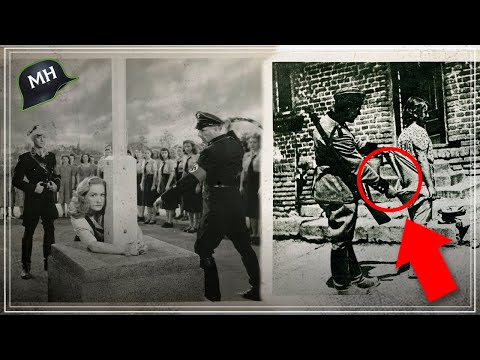
Eicke’s penal code was a masterpiece of sadism. Even the smallest infractions—failing to tidy a barracks, wearing underwear, or writing more than two letters a month—could land a prisoner in the dreaded bunker. These were individual cells measuring just 80 centimeters per side, where inmates were forced to stand for days on end, oxygen scarce and food delivered only once every four days. “Many died in those cells,” the survivor remembered, “their bodies broken by the appalling conditions.” The bunker was a place where time lost all meaning, and hope withered in the darkness.
As the crimes grew more serious in the eyes of the SS, so did the punishments. Teasing a guard or making an insolent remark could earn a prisoner 50 lashes on the back. Attempting to escape meant a public hanging, a spectacle designed to instill terror in every witness. Assaulting an SS officer or refusing an order resulted in immediate execution—a bullet to the head, the corpse left hanging for all to see. The message was clear: disobedience was death.
But Dachau’s brutality extended beyond the official code. Complementary punishments were devised to maximize agony: prisoners were forced to run until they collapsed, their wrists bound behind their backs and hung from poles until their shoulders dislocated. “The pain was indescribable,” one survivor testified. “But the guards just laughed.” Even the slightest hint of rebellion—a whispered conversation, a smuggled item—was met with lethal force. The SS tolerated no threat to their order, and the camp’s iron grip tightened with every passing day.
As the war raged on, Dachau’s commandant Theodore Eicke rose through the ranks, eventually commanding an SS division on the Eastern Front. There, his brutality only intensified, culminating in war crimes that would forever stain his name. In 1943, his plane was shot down by Soviet artillery, and he died instantly—a fate too quick for a man who had inflicted so much suffering. But Dachau itself endured, a factory of death until its liberation in April 1945. When American soldiers entered the camp, they found corpses piled like firewood, the stench of death clinging to every surface. In a fit of rage, they executed surrendering SS guards on the spot. The horror was finally over—but the scars would never heal.
Today, Dachau stands as a museum, a stark reminder of humanity’s capacity for cruelty. The bunker cells remain, their walls echoing with silent screams. What was the most brutal punishment? Perhaps it was the one that broke a person’s soul long before their body gave out. The story of Dachau is not just one of suffering—it is a warning. And as we walk through its empty corridors, we must ask ourselves: could it happen again?
Yet the code Eicke drafted was not merely a list of punishments—it was a psychological weapon. Every rule, no matter how trivial, existed to remind the prisoner that his life belonged to the SS. “We were no longer men,” another survivor wrote. “We were numbers, and numbers do not complain.” The guards understood this. They enforced the smallest infractions with the same cold efficiency as the gravest crimes, because the point was never justice—it was domination.
Consider the daily roll call. Prisoners stood for hours in the freezing yard, motionless, while the SS counted and recounted them. A single missing man meant the entire block would stand until he was found—or until someone collapsed. Those who fell were dragged aside and beaten, their names recorded for further punishment. The roll call was not about accounting for bodies. It was about teaching every prisoner that his time, his comfort, even his body heat belonged to his captors.
Food was another instrument of control. The rations were deliberately inadequate—thin soup, a crust of bread—and the distribution was arbitrary. A guard might tip a prisoner’s bowl into the mud for no reason at all, then laugh as the man scrabbled for scraps. “Hunger made us animals,” one memoir records. “And animals do not resist.” The SS knew exactly what they were doing. A starving man thinks only of his next meal, never of rebellion.
Then there were the punishments that left no visible mark. Prisoners were forced to stand at attention for hours in the snow, bareheaded, while guards walked among them kicking shins and shouting orders. Others were made to kneel on sharp stones until their knees bled. These torments were designed to break the will without breaking the body too quickly—a slow erosion of dignity that left the prisoner hollow. The Nazis wanted workers, after all, and a corpse could not labor.
Perhaps the cruelest invention was the “tree”—a wooden post from which prisoners were hung by their bound wrists, their feet barely touching the ground. The strain on the shoulders and spine was unbearable within minutes. Men screamed until they had no voice left, and still the guards left them hanging. Some were cut down after an hour. Others were forgotten until morning, their arms permanently crippled, their minds shattered by the ordeal.
And yet, even in this abyss, there were those who refused to surrender entirely. Prisoners formed secret networks, shared crumbs of bread, whispered names of loved ones into the dark. “We kept each other alive,” a survivor recalled. “That was our rebellion—that we did not become like them.” The SS could break bodies, but they could not always extinguish the stubborn ember of humanity that flickered in the bunker’s darkness.
But the system was relentless. Every act of solidarity risked discovery, and discovery meant the bunker, the lash, or the rope. The penal code left no room for mercy. It was a machine built to grind men into dust—and for thousands, it succeeded. The question that haunts Dachau’s empty corridors is not whether cruelty can be systematized, but how ordinary people were persuaded to carry it out, day after day, without flinching.
To understand how the SS could run such a machine without hesitation, one must look at the men themselves—not monsters from another world, but ordinary Germans shaped by years of propaganda. Many guards were not sadists by nature; they were bureaucrats of brutality, trained to see prisoners as vermin unworthy of compassion. Eicke’s code gave them permission to act on every dark impulse, and the camp’s isolation from the outside world ensured that no one would ever question them.
New arrivals learned this lesson within hours. “You are here to die, not to live,” an SS officer reportedly told a transport of prisoners in 1940. “And if you survive, it will be because we allow it.” The words were not idle threats—they were policy, spoken aloud without shame. The prisoners who heard them understood that the rules were not meant to be followed but to be broken, because every broken rule justified another punishment.
Even the camp’s geography reinforced this terror. Dachau was designed so that prisoners could see the crematorium from almost anywhere in the compound, its chimney forever smoking. The smell of burning flesh hung over the barracks like a fog, a constant reminder of what awaited those who disobeyed. Guards would point to the smoke and joke about the “baker” working overtime. No prisoner ever forgot that image.
But the most insidious punishment of all was not physical. It was the systematic destruction of identity. Upon arrival, prisoners were stripped of their names, their clothes, their hair—everything that made them individuals. They became numbers sewn onto a striped uniform, and the SS addressed them only by those numbers. A man could be beaten and not know why, because the guard never bothered to explain. He was no longer a person to whom reasons were owed.
This psychological erasure extended to the smallest details. Prisoners were forbidden to salute one another or even to shake hands. Any gesture of human connection was treated as an act of defiance. Families were separated on arrival, and letters home were censored or withheld entirely. The SS understood that a man who cannot remember who he is cannot organize resistance—he can only survive, one gray day at a time.
Yet the code also revealed the Nazis’ deepest fear: that the prisoners might one day rise up. Why else forbid conspiratorial whispers, inflammatory speeches, smuggled items? Why else execute a man for concealing a rock, as if a single stone could topple the Third Reich? The severity of the punishments betrayed the fragility of the system. Dachau was not a fortress of strength—it was a fortress of paranoia, held together by terror alone.
And terror, as the SS would eventually learn, is a weapon that cuts both ways. The prisoners who endured the bunker, the lash, and the hanging pole carried something the guards could never take: the memory of who they had been. “They could kill us,” one survivor said, “but they could not make us forget our own names.” That quiet defiance would outlast the Reich itself—and when the American tanks finally rolled through the gates in April 1945, it was the prisoners who had the last word.
When the American soldiers entered Dachau, they found the survivors standing among the dead—skeletal figures who had somehow held on. “We kept each other alive,” one of them whispered to a stunned GI. “That was our rebellion.” The soldiers wept, and some, in a fury that history still debates, executed surrendering SS guards against a coal shed wall.
The bunker cells were opened. Inside, the Americans found scratches on the walls—names, dates, prayers. Proof that even in an 80-centimeter hole, men had refused to become nothing. The liberators took photographs, gathered testimony, and left the camp standing as evidence.
Today, Dachau is a memorial. Visitors walk past the crematorium and the roll-call square, and they read the words of survivors on the walls. The penal code Eicke wrote is displayed in a glass case—a bureaucratic document that once meant death.
What was the most brutal punishment at Dachau? Perhaps it was the one that made a man forget his own name. But the prisoners left something behind in those cells—a stubborn whisper that no code could silence.
And now, standing before this history, we must ask: what would you have written on that wall?
Report this article
Select a reason for reporting:






