When absolute power serves an extremist ideology, history enters its darkest chapter. Behind war and genocide lies a cold, calculated machine driven by ambition, violence, and blind obedience. Decisions made behind closed doors turned a state into an instrument of destruction, leaving scars that can never be erased from humanity.
In this video, we look back at the 20 most infamous Nazi figures—not to glorify them, but to understand how evil was organized and carried out. From the Führer who initiated World War II to the architects of the Holocaust, each played a role in a system of unprecedented cruelty.
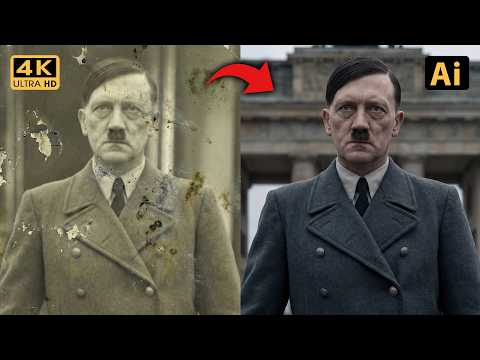
Adolf Hitler, the leader of Nazi Germany, established a totalitarian dictatorship and was directly responsible for the Holocaust. Under his leadership, Europe fell into war and crimes of unprecedented scale. When Germany was defeated, Hitler committed suicide in Berlin in 1945, closing one of the darkest chapters in human history.
Heinrich Himmler, leader of the SS, controlled the police force and the concentration camp system. He directly organized and managed the Holocaust, turning the SS into a tool for industrial-scale oppression and killing. Captured after the war, Himmler committed suicide by poison in 1945 to avoid trial.
Reinhard Heydrich, high-ranking SS and Gestapo leader, was a key architect of suppression and genocide policies. He chaired the Wannsee Conference, where the Holocaust plan was coordinated at the state level. Assassinated by Czechoslovak resistance in Prague in 1942, he became the highest-ranking Nazi official killed during the war.
Adolf Eichmann, SS lieutenant colonel, managed the logistics of deporting millions of Jews to extermination camps with terrifying coldness and efficiency. After the war, he fled to Argentina but was kidnapped by Mossad agents in 1960. Following a historic trial in Israel, he was hanged in 1962 for inexcusable genocidal crimes.
Joseph Goebbels, Minister of Propaganda, used media to spread anti-Semitic ideology and promote total war. When Berlin collapsed in 1945, remaining loyal to Hitler until the end, Goebbels poisoned his six children and then committed suicide with his wife just outside the Führerbunker to evade punishment.
Hermann Göring, Reichsmarschall and head of the Luftwaffe, played a key role in establishing the Gestapo and early anti-Jewish policies. Captured after the war, he was sentenced to death by the Nuremberg Tribunal. However, he committed suicide with a cyanide pill hidden in his cell in 1946, just hours before he was to be executed.
Rudolf Höss, SS officer and the longest-serving commandant of Auschwitz, directly introduced Zyklon B gas to murder over a million innocent people. He viewed mass murder as a technical process to be optimized. After being captured and tried, he was hanged in 1947 right on the grounds of the Auschwitz camp, paying for his horrific genocidal crimes.
As we continue, the chilling details of these figures’ actions reveal how ordinary individuals became instruments of terror. The stories of the remaining men—from the Angel of Death to the butchers of Poland—show the many faces of evil.
Josef Mengele, the SS doctor at Auschwitz, earned the nickname “Angel of Death” for his brutal medical experiments on prisoners, especially children and twins. He personally decided who would enter the gas chambers at the railway platform with a flick of his thumb. After the war, Mengele escaped to South America and lived in hiding under false names. He died in 1979 from a stroke while swimming in Brazil, escaping legal punishment entirely.
Odilo Globocnik, Austrian SS major general, was the man behind the construction and operation of the Belzec, Sobibor, and Treblinka extermination camps. He was directly responsible for the deaths of over 1,700,000 Jews during Operation Reinhard. When captured by the British Army in Austria in 1945, Globocnik immediately committed suicide by poison to evade judgment for his brutal genocidal crimes.
Hans Frank, Hitler’s lawyer and Governor-General of occupied Poland, became known as the Butcher of Poland. Under his brutal rule, millions were forced into labor and sent to slaughterhouses. Frank turned Poland into the genocide center of Nazi Germany. After being captured by the Allies, he was sentenced to death by the Nuremberg Tribunal and hanged in October 1946.
Martin Bormann, Hitler’s private secretary, held absolute power within the Nazi Party. He controlled all information reaching the Führer and directly signed brutal suppression orders. When Germany was defeated in 1945, Bormann mysteriously disappeared while attempting to escape the bunker. His remains were found decades later, confirming he died by suicide by poison on the night Berlin fell.
Ernst Kaltenbrunner, head of the RSHA security agency after Heydrich’s assassination, directly supervised the Gestapo network and the concentration camp system during the most brutal years of the war. Captured by Allied forces in Austria, Kaltenbrunner was brought to trial at Nuremberg. For his crimes against humanity, he was sentenced to death and hanged in October 1946, ending the life of a butcher.
Julius Streicher, founder of the newspaper Der Stürmer, created the most toxic anti-Semitic propaganda tool of the Nazi regime. He poisoned German minds with racial hatred, creating the ideological groundwork for genocide. After the war, Streicher was arrested and brought to the Nuremberg trial. Although he did not directly hold a gun, he was sentenced to death for inciting genocide and was hanged in 1946 amidst public condemnation.
Wilhelm Keitel, field marshal and head of the Supreme Command of the German Armed Forces, blindly obeyed Hitler by directly signing orders that violated international law, such as executing prisoners and civilians. At the Nuremberg trial, Keitel was sentenced to death for war crimes. He was hanged in 1946, ending the career of a general who was turned into an effective killing tool for the fascist leader.
Alfred Rosenberg, the primary ideologue of the Nazi Party, devised the theories of Aryan racial superiority. He was directly involved in cultural looting and religious suppression in occupied territories. After being arrested, Rosenberg was sentenced to death by the Nuremberg Tribunal for his key role in planning invasion and genocide. He was hanged in October 1946, ending the existence of the man who spread evil theories.
Amon Goeth, commandant of the Plaszow concentration camp, embodied individual cruelty. He was infamous for his habit of shooting prisoners from his balcony just for amusement. After the war ended, Goeth was arrested and tried by Polish authorities. For his brutal mass murder crimes, he was sentenced to death and hanged in 1946 near the site of the concentration camp he once ruled with blood.
Franz Stangl, commandant of the Sobibor and Treblinka extermination camps, managed mass killings with the coldness of an administrator. After 1945, Stangl fled to Brazil and lived in hiding for years. In 1967, he was arrested and extradited to West Germany for trial. Sentenced to life imprisonment, Stangl died in prison in 1971 of heart failure, taking his horrific crimes to the grave.
Paul Blobel, the SS officer who commanded the Babi Yar massacre, oversaw the killing of tens of thousands in just a few days. He also led the campaign to destroy corpses to erase traces of Nazi crimes. Blobel was captured by Allied forces and brought to trial at Nuremberg. For his unforgivable acts of brutality, he was sentenced to death and hanged in 1951, closing the indictment of one of the coldest-blooded killers.
Karl Brandt, Hitler’s personal physician and head of the euthanasia T4 program, ordered the murder of tens of thousands of disabled people and conducted inhumane experiments on prisoners. At the Doctors’ Trial, Brandt was convicted of war crimes and crimes against humanity. He was hanged in 1948, paying for the most horrific betrayal of medical ethics of the 20th century.
These twenty figures represent the many faces of evil—the ideologues who built the theories, the bureaucrats who signed the orders, and the killers who carried them out. Together, they formed a machine of destruction that consumed millions of lives.
But looking at this list, one question lingers: how did ordinary people become such efficient instruments of terror? The answer lies partly in the system itself. The Nazi regime deliberately blurred responsibility across layers of bureaucracy, so that no single person felt the full weight of their actions.
Each figure in this list was a cog in that machine, from the Führer who gave the orders to the camp commandants who executed them. Their stories reveal that evil rarely announces itself—it disguises itself as duty, patriotism, or progress.
Some escaped justice entirely, dying in hiding or by their own hand. Others faced trial and were condemned by the world. But no verdict, no punishment, could undo the suffering they caused.
What remains is the responsibility of memory. Understanding how these men rose to power and carried out their crimes is not about glorifying them—it is about ensuring that humanity never forgets what happens when hatred is organized and obedience is absolute.
The scars they left on history are a warning. And the question of how to prevent such darkness from returning is one that each generation must answer for itself.
The final name on our list, Karl Brandt, was Hitler’s personal physician and the head of the euthanasia T4 program. He ordered the murder of tens of thousands of disabled people and conducted inhumane experiments on prisoners. At the Doctors’ Trial, Brandt was convicted of war crimes and crimes against humanity. He was hanged in 1948, paying for the most horrific betrayal of medical ethics of the 20th century.
These twenty figures represent the many faces of evil—the ideologues who built the theories, the bureaucrats who signed the orders, and the killers who carried them out. Together, they formed a machine of destruction that consumed millions of lives.
But looking at this list, one question lingers: how did ordinary people become such efficient instruments of terror? The answer lies partly in the system itself. The Nazi regime deliberately blurred responsibility across layers of bureaucracy, so that no single person felt the full weight of their actions.
Each figure in this list was a cog in that machine, from the Führer who gave the orders to the camp commandants who executed them. Their stories reveal that evil rarely announces itself—it disguises itself as duty, patriotism, or progress.
Some escaped justice entirely, dying in hiding or by their own hand. Others faced trial and were condemned by the world. But no verdict, no punishment, could undo the suffering they caused.
What remains is the responsibility of memory. Understanding how these men rose to power and carried out their crimes is not about glorifying them—it is about ensuring that humanity never forgets what happens when hatred is organized and obedience is absolute.
The scars they left on history are a warning. And the question of how to prevent such darkness from returning is one that each generation must answer for itself. In your opinion, which of these figures most chillingly illustrates how ordinary ambition can be twisted into mass murder? Share your thoughts in the comments below—your voice keeps this memory alive.
Report this article
Select a reason for reporting:






