They climbed through the dark, eleven Green Berets with the best night-vision gear the U.S. Army could field, and not one of them saw the five Australians lying just steps from their boots. The enemy was waiting—a heavy machine gun nestled in a cave, silent and deadly—but the real threat was the invisible patrol that had been watching for six days, hidden in plain sight.
Captain Bressler discovered it at dawn, his rifle still trained on the cave’s yawning mouth when a pile of rocks beside the trail shifted and a sergeant named Keitel rose from the dust, leaning on one leg. His men followed, gray with frost, their breath pluming in the thin, cold air. “We walked right past them,” Bressler said. No one answered.
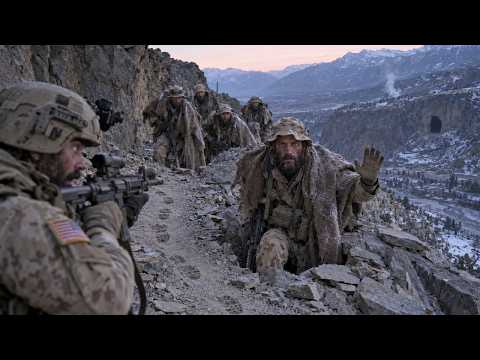
The Australians had been on that rocky outcrop since February 26, 2002, watching a goat track that led into the Shahi Kot valley—a corridor controlled by Taliban and al-Qaeda fighters. Their truck, “Old Mate,” was hidden three kilometers back, stripped of its long-range radio to avoid detection. Every report had to be hand-delivered, crawled through frozen ground and jagged shale.
For six days, they lived under a granite overhang, no one moving in daylight, no one speaking above a whisper. They ate cold rations, let frost drip from the ceiling, and sewed a dirty rug into a curtain to hide their hide from prying eyes. They were ghosts, and they had the coordinates of a DShK heavy machine gun that the Americans desperately needed.
But the gun moved. On the night of February 28, the Australians watched as the enemy dismantled the weapon and carried it across the valley to a cave on the western slope. The red circle on Bressler’s map now pointed to an empty tarp. The patrol had a choice: send a warning that might be wrong, or wait one more day for certainty.
Keitel chose certainty. “I won’t send ‘maybe,’ mate. Not for men on that trail.” That decision would cost them—and save lives.
When a teenage boy stumbled onto their hide, they grabbed him, silenced him, and hid him in a crevice. But his absence would be noticed. The clock was now against them. A militia column of 40 men was already climbing the goat track, heading straight for the cave—and the Australians had one day left to confirm the target before the Americans walked into a kill zone.
As the Green Berets filed past the hidden patrol, Bressler paused at the bend, his night-vision scope sweeping the empty outcrop. He didn’t know that the men he needed were just feet away, or that the gun he sought was now aiming at his men. The first shot would come from the dark, and it would change everything.
The DShK opened up with a sound like a steel door slamming again and again. Tracers left the cave as a flat green rope and crossed the valley in a nearly level line. Heavy rounds smashed into the slope above the bend, sparking off granite in handfuls. Shale on the trail burst upward in layers and hissed over the edge.
A militia fighter near the front turned half around and fell against the cliff. His blanket snagged on the rock and tore away as he slid down. Loden was beside him in a few strides, dragging him by the collar into the corner of the wall. The man gave him nothing back.
The Green Berets flattened against the cliff at the bend. Some lay face-down on the rock with their helmets pressed into stone. Others knelt behind rocks no bigger than a rucksack, firing toward the flashes across the valley. Their rounds struck the stacked wall at the cave mouth and did nothing.
Suddenly a mortar coughed somewhere behind the gun. Its first shell burst short of the open slope below the outcrop and threw gravel across the canvas screen. From his hide, Boomer fired two rounds from the SR-25 at the flash. The gun stuttered, stopped, then swung its muzzle back toward the bend.
Iron Barc had already freed the designator from its cover, then the IR strobe. He had seen the slit the night before, lying beside the screen with his head turned under the roof slab. The designator on its tripod could not be tilted that way. Its beam would hit the overhang before it reached the valley. The strobe faced the same problem.
Forty meters along the slope, the overhang ended at a bare rock shelf under open sky. From there a man could see the cave directly across the valley. But the valley would see him too. Keitel took the designator from Barc’s hands, then the strobe. “Fix the site, my network, move.”
He slid out from under the canvas on his belly toward the open slab. For six days the patrol had moved only when the valley made noise. Now the gun was loud enough to cover a falling house, and Keitel crawled fast. Loose stones skittered under his knees and tumbled down the slope, and no one across the valley could hear it.
Tracers passed beneath him toward the bend, close enough that he felt the air shiver. The mortar fired again. This shell landed above him on the slope he had just left. Something struck the back of his right calf like a boot kick. His leg went numb, then hot, then wet inside the trouser. He kept crawling on his elbows and his good knee, dragging the hurt leg behind him.
He reached the edge and rolled over it. He jammed the strobe into a crack facing the sky and switched it on. Then he set the designator on the rock and put his eye to it. The cave appeared in the sight: pale stone and a black opening covered by a blanket. He did not put the beam on the blanket.
He found the narrow passage on the northern side, the one the donkey had climbed hours earlier. He followed it until it ended beneath a low rock lip to the right of the stacked wall. There, where hands had reached out at knee height to take the boxes. The strobe lit the gap from inside, then again. The faint quartz seam lay directly above it.
He put the invisible beam into the opening and held it there. His leg was shaking, so he braced his right boot against the rock to keep his body still. Cooky saw the strobe working on the screen and keyed the radio. He told the American network in a few words that the target was ready and the laser was on the cave.
At the bend, Bressler lifted his head from the rocks and looked through his scope. There was the gun, still flashing. On this side, high on the bare slope, a small light pulsed in the dark. It sat exactly where the voice out of nowhere had said a man would be. No one plays bait that close to a machine gun by accident.
He took the radio from his operator and passed the target location to the gunship himself. The AC-130 had been circling most of the night, high and quiet, the kind of aircraft the man behind the DShK had learned to fear. The crew found the strobe, then the laser spot at the cave mouth. They asked for confirmation once, and Bressler gave it.
Inside the cave, the gun commander was changing belts. The sky had not answered his first bursts or his second. He had begun to think it would not answer at all. He seated the new belt in the feed tray and closed the cover. He took the gun again and swung the sights toward the bend.
The first shell from the gunship reached the cave before its sound did. The stacked wall blew inward. Rock and dust and blanket vanished together into the dark. A heartbeat later the 40mm followed. A rolling barrage walked the cave mouth back and forth. The gun commander fell beside the tripod. His left hand, the one the rocket had shortened, stayed on the grip. Then the gun stopped. The mortar fired one last wild shell into the valley and went silent too.
The gunship made two more passes over the cave. When it was done, the cave was a heap of broken stone and rising dust under the stars. Nothing moved in the field of view.
On the trail, the Green Berets rose from behind the shale. Two of them were already looking for a way across the valley. The blood was up in their veins, and the men who had pinned them for a quarter of an hour lay hundreds of meters away.
A day earlier, Bressler would have led them himself through the dark to count the bodies and seize the DShK before anyone else took it. But he looked at the slope instead. The ground was loose gravel below and sharp rock above. The mortar team was still out there somewhere, with a tube and a reason to use it. The rest of the fighters had scattered across that hill, and no one knew where.
His men didn’t know which rocks on their path had hit the Australians and which had hit the Taliban. “No one goes up there until we can see our feet,” Bressler said.
The team settled back along the slope. Loden came through the ranks and told Bressler his losses. One man missing, the one who fell against the wall. Twenty-nine remained on the trail. Bressler wrote the number under yesterday’s total. Then he turned his scope across the valley toward where the strobe had been and kept it there.
Above the rock shelf, Keitel switched off the strobe and lay still, his face pressed to the cold stone. The shaking in his leg had stopped. That worried him more than the shaking had.
Niebler came to him across the slope minutes later, low and fast, with Iron Barc behind him. Niebler cut the trouser leg with his knife and found a jagged hole in the back of the calf. The splinter was still inside. He packed the wound by feel and bound it tight with a field dressing, then wrapped the tail of his own bandage over it.
Iron Barc recovered the designator without a word. Together they dragged Keitel on his back across the sliding stones and got him behind the screen. Everyone was back in the hide.
Down on the trail, the eleven beams no longer pointed toward the eastern outcrop. They stayed steady across the valley, waiting for light. No one in the hide slept.
Keitel lay against the back wall with his hurt leg propped on Barc’s rucksack. Niebler kept the flat of his hand on the dressing and felt it warm, then stop warming. Every few minutes he checked the toes through the boot leather, pressing until Keitel grunted.
Cooky lay with the handset in his lap. One word on the American net would tell eleven nervous men that the pile of rocks above the trail belonged to friends. The same word would tell a mortar crew somewhere in the dark that the hidden radio was still on the slope. Their first transmission had already gone out once that night. Two men had carried the tube away from the cave, and no one knew where they had gone.
Keitel shook his head when Cooky lifted the handset. “Leave it,” Keitel said. “No one moves until the Americans can see us clearly.”
That choice had a price. A man stepping out of the rocks at first light in front of rifles that had just been fired might be killed by friendly fire. Keitel preferred the risk in daylight to giving a mortar crew coordinates in the dark.
So the screen stayed in place. His leg stiffened through the night, until bending the knee meant grinding his teeth. The sky above the ridge line turned from black to bruise to cold violet.
At the bend, Bressler stood. He wanted to see the gun himself. No one in his team said what they were all thinking. A day ago, their commander had refused to wait for anyone else’s eyes. Now he would not report a destroyed target until he stood over it.
He left Loden and most of the team on the trail, rifles across the valley. Then he took his scout and two others down through the stones. The descent was slow. The loose rock that had covered Keitel’s path crunched under the Americans’ boots in small, grinding slides. Each man planted his rifle butt as a walking stick. The far side was worse. They climbed the narrow passage the donkey had used, hands on rock, and came out beside the broken wall.
The gun position was a hole with a roof. Broken stone lay spilled down the slope. Some of it had split clean in half. Snow had drifted behind the shattered wall. Brass casings were scattered, and the hot ones had left small black holes in the snow before they cooled. A thread of smoke still rose from the deepest pile.
The DShK lay on its side. One tripod leg was folded under the receiver, so the gun looked as if it were kneeling. The man who had fired it lay beside it, and Bressler stepped over him without a second look. The ammunition boxes had burst and sprayed against the back wall. Belts lay among the rocks.
Bressler swept the cave with his light. A torn blanket hung from a single peg. The floor ran back into the dark, and he followed it until the rock closed. Then he came back to the mouth and found where the mortar had stood. The base plate had left a square print in the frozen dirt. The tube was gone. So was its crew.
Two trails led north through the snow to a bare rock where they ended. The gunship had smashed the gun, but the mortar was still out there. Someone would meet it again farther up the valley.
Below, a donkey stood with its head down, chewing at nothing. The cloth around its neck had worked loose in the night and hung by a single thread. When it shook its head toward the Americans, the bell rang. It was the first sound it had made in days, and it carried across the valley.
Bressler looked back at the trail he had come from. On the far slope, a bare rock shelf showed a dark smear where a man had lain and bled. Below it, the outcrop looked like any other ledge on that cliff. He studied it through his rifle scope and kept watching. He could not yet tell where anyone had hidden.
They climbed back, crossed the valley, and up to the trail below the cliff. Bressler stopped at the edge and raised his rifle toward the cave, watching north where the mortar crew had gone. Loden’s fighters were gathering at the bend behind him.
Then the slope beside him moved.
This time Bressler watched it all happen. The brown fold under the overhang lifted away from the rock and became a curtain. A man pushed it aside and stepped out leaning on one good leg and one stiff one. Iron Barc had his shoulder under the arm. The dressing on the calf was dark and set, and the trouser leg hung open where Niebler’s blade had cut it.
Behind him came a sniper with sunken eyes, a signaller, and a soldier whose M4 came up and dropped again faster than before. He had seen that open hand before. Bressler looked at the bandage, then at the blood-smeared shelf, then back at the leg.
Keitel stopped a few steps away, swaying slightly on Barc’s shoulder. “You walked past us twice, Captain. The second time was better.” Bressler lowered his rifle, unclipped his canteen, and held it out. He said nothing about which pass he meant.
“The next set of coordinates you get, I want them from you personally. Not from an office,” Bressler said. Keitel nodded once.
Loden’s fighters filed past, four of them carrying the man who fell at the bend, and two of them laughed for the first time in days. Bressler pulled the folded image from his pocket. The red circle still sat on the eastern outcrop. Keitel bent over it, and beside the circle someone had printed a grid of small red coordinates and a date beneath it. He read the numbers, then read them again, slower. Cooky opened his notebook to the first page, written by touch in the dark on the twenty-sixth. The grid matched to the last digit. The date was the same.
The circle Bressler had carried up the mountain had never come from a satellite or an analyst. It had come from five men under a rock ledge on their first night. Keitel pressed his taped thumb on the red circle as if to hold it still. He said nothing.
On the back of the image, under the plastic, in a grease pencil, was a line no one had read aloud in the briefing: U.S. patrol requests confirmation on 26 Feb before any action. He had carried that request up the mountain since the twenty-seventh, face down.
What would you have done—wait for certainty, or send the ‘maybe’?
Report this article
Select a reason for reporting:






