The dust on the road resolved into tanks. At 11:30 on the morning of 24 April 1941, the men of the 2/2nd Field Regiment, dug into the escarpment above Bralos Pass, watched the 5th Panzer Division roll north toward them. They waited. “Let them come,” the order had been. And they came—half-tracks, motorcycles, infantry lorries, a steel column snaking through the narrow gorge where Leonidas had once stood against the Persians.
Two thousand Australians of the 19th Brigade, commanded by Brigadier George Vasey, had been told to hold for 48 hours. Behind them, 80 kilometers south, the Royal Navy was preparing to evacuate 50,000 Commonwealth troops from the beaches of Greece. If the pass fell, the evacuation would fail. If it held, the army might live to fight again. “Here we bloody well are,” Vasey had said upon arrival. “Here we bloody well stay.”
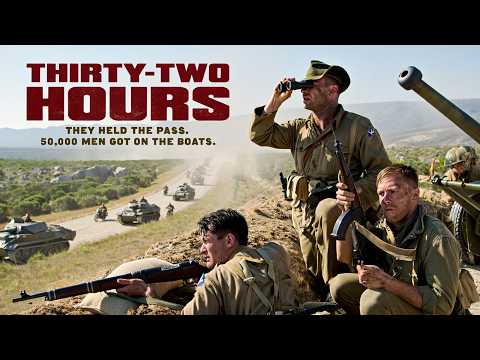
The first salvo from the camouflaged field guns destroyed two German tanks at the head of the column. The second salvo destroyed two more. Within ninety minutes, the gunners had knocked out roughly fifteen armored vehicles, their shells walking up and down the valley floor with deliberate, methodical precision. The German tanks pulled back. The infantry on the slopes held their fire, waiting for the enemy to try to climb.
This was not the battle the Australians had trained for. They were not supposed to use field guns over open sights against tanks. But nothing about Greece had gone according to plan. Ten days earlier, at Vevi, the same brigade had been mauled in the snow, buying another 48 hours with blood. The 2/8 Battalion had lost half its strength. Its commander, Lieutenant Colonel John Mitchell, had been relieved. Now, rebuilt around survivors, the battalion held the center of the line at Bralos, while the 2/4 and 2/11 anchored the flanks.
The German infantry came in the late afternoon, working up the lower slopes through scrub and rock. Bren guns raked the terraces. Mortars ranged in on forming-up places. Section commanders shouted orders by voice. The Australians were outnumbered, outgunned, and fighting on ground they had occupied for barely a day. But they had learned something at Vevi: in mountain country, a small force in the right pass can make a larger force pay for every meter.
As darkness fell, the German infantry withdrew. They had not reached the top of the escarpment. The pass still held. But the Australians knew the worst was yet to come. The Luftwaffe would return at dawn. The panzers would try again. And the evacuation beaches were still 80 kilometers away, their ships not yet loaded.
On the morning of 25 April—Anzac Day—the 5th Panzer Division attacked both flanks. The gun crews on the escarpment, those still in action, accounted for several more tanks. The 2/11 repelled an infantry assault on the western shoulder. The 2/4 held against pressure from the 9th Panzer elements that had come up overnight. For thirty-two hours, the 19th Brigade prevented the German XL Panzer Corps from breaking through.
At dusk, with the embarkation underway to the south, Vasey gave the order to pull out. The men came down through the dark in small parties, leaving their dead where they had fallen. By midnight, the rearguard was clear. The Germans probed forward at 3:00 the next morning and found the pass empty.
The line had bought its 48 hours and a little more. But the cost was not yet fully counted. In the mountains to the south, the evacuation was only beginning—and the men who had held the pass would soon learn what their sacrifice had purchased.
Word of the withdrawal did not travel with the men. It travelled ahead of them, down the wire and through the rear echelons, to the beaches where the boats were waiting. At Nafplio, the destroyers Stuart and Voyager came in on the night of 25 to 26 April and took off roughly three hundred soldiers and a party of nurses who had come down from the field hospitals at Larissa. The nurses carried their own kit. Some of them had been operating on wounded men in cellars while the Stukas circled overhead.
By dawn the ships were sixty miles south. Daylight belonged to the Luftwaffe, and the Luftwaffe knew it. From the 26th onward, the convoys were found and hit. The transport Slamat, a Dutch passenger liner packed with troops, was struck south of Nafplio and set burning. The destroyers Diamond and Ryneck closed to take off survivors. They were sunk in their turn. Of the roughly fourteen hundred men aboard the three ships, fewer than seventy lived.
This was the arithmetic the men in the pass had been buying with their thirty-two hours. They had not known the numbers. They had known only the order: hold until the second night, then break clean. The order had been obeyed. What came after was not theirs to control.
On 26 April, German paratroopers seized the bridge over the Corinth Canal. The road between the two halves of the evacuation was cut in a single morning. Troops still north of the canal—British, Greek, a scattering of Australians who had been moving south through Athens—were trapped. They went into captivity in the days that followed, marching north under guard through the same passes they had fought to hold.
South of the canal, the columns kept moving. Men who had not slept in a week walked toward Monemvasia and Kalamata, and the navy came in for them night after night. The transport Costa Rica was sunk off Kalamata on the 27th with fifteen hundred troops aboard. The destroyers Defender, Hereward, and Hero went in among the sinking and took every one of them off. Not a man was lost from that ship.
At Kalamata, on the nights of the 28th and 29th, the largest single contingents came off—close to ten thousand men in one night, wading out to the boats with their rifles held above the water, the stone jetties crowded, the ships waiting offshore with their gun crews at action stations and their lookouts watching the eastern sky for the first grey edge of dawn.
By the end of 29 April, Operation Demon had lifted approximately 50,700 Commonwealth troops from Greece. Roughly 26,000 of them were landed on Crete, where most would fight again within the month. The rest went to Egypt. The Royal Navy lost the destroyers Diamond and Wryneck and the Greek destroyer Hydra. The Slamat was gone. The Costa Rica was gone. The Australian cruiser Perth, bombed on the way to Crete with Anzac troops aboard, limped into Suda Bay with damage to her hull.
In the mountains above Bralos, the men who had held the pass were already moving south. Some of them would reach the beaches in time. Some would not. The ones who did not would spend the next four years in Stalag 18A at Wolfsberg in Carinthia, or in the work camps that depended on it, cutting timber in the Austrian Alps and waiting for a war that had already ended for them on the night of Anzac Day.
But that counting came later. On the morning of 26 April, the pass was empty and the road south was open, and the German staff officers coming up through the gorge found nothing but abandoned gun pits and the smell of burnt cordite. They had taken Bralos. They had not taken the army. The difference between those two things was the whole of the campaign, and it had been purchased by men who were never told what their thirty-two hours were worth.
Vasey’s brigade came down out of the mountains in trucks with their headlights off, and the men who had held the line looked back at the ridge only once. There was nothing to see. The pass was a dark shape against a darker sky, and the road ahead ran south through Lamia and down toward the beaches where the boats were waiting.
The trucks did not stop for the men who fell out. A man who could not keep up was left where he sat. That was the arithmetic of a fighting retreat, and every soldier in the convoy understood it. They had been told the same thing at Vevi, at Pineios, at every bridge and crossroads between the snow and the sea.
At the embarkation beaches, the naval beachmasters worked by torchlight with the sound of the sea behind them. Men queued in the dark, some of them still carrying their rifles, some of them without helmets. The boats came in and went out, came in and went out, and the destroyers offshore waited with their engines turning over and their lookouts watching the eastern horizon for the first grey line of dawn.
On the night of 28 to 29 April, at Kalamata, the last great embarkation of the campaign came off. Close to ten thousand men waded out through the shallows with their kit on their backs and their rifles held above the water. The stone jetties were crowded, the ships were waiting, and the sky to the east was still black. By the time the first light came, the ships were gone, and the men who had not got aboard were already forming up under German guard.
Those men were the rearguard of the rearguard—the ones who had held the last positions while the others got away. They were marched north through Yugoslavia and into Austria, through the same mountains they had fought across, and they came at last to Stalag 18A at Wolfsberg in Carinthia, where they would remain for four years.
Their war, in the sense of fighting, had ended on the slopes above Bralos on the night of Anzac Day 1941. They had held a pass that the ancient Greeks had held against the Persians. They had held it for less time than Leonidas had. They had held it long enough.
The arithmetic of the rearguard does not balance in the obvious way. It balances in the only way that matters in a fighting retreat. The price was paid. The army got out. And the men who paid it came home in 1945 to a country that had moved on, to families that had grown without them, to a Greek campaign that almost no one in Australia remembered.
There is no monument at Bralos. The mountains have not moved. The road still runs through the gorge between Kallidromo and Othrys, and tourists drive through it on the way from Athens to Thessaloniki. They do not stop. There is nothing to stop for.
Brigadier George Vasey, who said “Here we bloody well are, and here we bloody well stay,” did not stay. He took his brigade off the pass and got most of his men onto the boats. He went on to command the 7th Australian Division in New Guinea and died in an aircraft crash off Cairns in 1945, two months before the war ended.
Lieutenant Colonel Ivan Dougherty, who held the 2/4 together at Vevi, led the 21st Brigade through Kokoda and Gona. He died in 1998 at ninety-one. Lieutenant Colonel John Mitchell, the oldest battalion commander in the AIF, never commanded again. He had been a brave man at fifty in a war fought by men in their twenties.
The men of the rearguard who were taken prisoner spent the war at Wolfsberg. Their diaries are in the Australian War Memorial Collection, and they make for very plain reading. They did not feel heroic. They felt cold and tired and let down by an empire that had asked them to fight in a country they could not have found on a map a year before.
But they had held the pass. Fifty thousand men got on the boats. Most of them lived, and fought again in the Western Desert, in New Guinea, in Italy, in the Pacific. They had careers, families, grandchildren who would never quite understand how close they had come to never existing.
The price was paid. The army got out. The pass is still there. The men are gone.
If you had been on that ridge on the night of 25 April 1941, knowing what your thirty-two hours had bought, would you have looked back?
Report this article
Select a reason for reporting:






