The jungle was a living, breathing labyrinth—a triple-canopy cathedral where sunlight filtered into an emerald haze and sound died in the dense foliage. In this suffocating green world, visibility was life, and every shadow held the promise of death. Near the borderlands of Laos in 1968, two patrols moved through the same deadly grid square, separated by barely 300 meters. One was a 12-man American Special Forces team, faces painted in regulation black, moving with disciplined precision. The other was a four-man Australian SAS patrol, who had simply… vanished.
To the Vietnamese forward observers scanning the area, the sector appeared empty. No Allied forces present. The Americans, with their dark facial camouflage and deliberate movement, were visible enough to be recognized as a patrol. But the Australians? They were not metaphorically invisible. They were, for all practical purposes, gone. Four living, breathing men had erased themselves from the visual universe. When 30 Viet Cong soldiers later walked within five meters of their position—close enough to hear a breath, to see a twitch—not a single one detected a hint of movement, color, or human outline. The Australians watched silently as the column passed, oblivious to the deadly presence at arm’s length. Forty-eight hours later, every member of that enemy unit was dead.
The explanation for this astonishing difference in visibility does not begin with abstract tactical theory or battlefield myth. It begins with a small, unimposing object now kept behind glass at the Australian War Memorial: an ordinary-looking tube of camouflage paste, artifact REL35019. At first glance, it appears no different from countless tubes issued to soldiers worldwide. But this one is special. Its color is not standard American black or dual-tone black and green. Instead, it is a muted, earthy lime-colored paste—a carefully formulated blend of green and brown pigments. This small tube represents a deliberate deviation from conventional military doctrine. It was not standard issue. It was something Australian SAS operators specifically requested, tested, and refined based on real battlefield experience. And it symbolizes one of the earliest, most significant recognitions that the rules of concealment in Vietnam’s jungle were fundamentally different from anything found in Western military manuals.
When the first Australian SAS patrols arrived in Vietnam, they were equipped with the same basic camouflage materials as their American counterparts—particularly the ubiquitous black camouflage stick. This stick was a product of earlier conflicts: World War II, Korea, and European forests, where deep shadows and low-light operations were common. The assumption embedded in American doctrine was straightforward: black paint created artificial shadows, helping to darken the face and reduce shine, making soldiers less visible. But the Australians quickly realized that theory clashed violently with reality. Within weeks of operating in Vietnam, SAS troopers noticed something unsettling. The black paint didn’t make them disappear. It made them stand out. Even when applied carefully, even when used according to the doctrine they had been taught, blackened faces formed dark, unnatural shapes within the overwhelmingly green environment of the jungle.
Under the triple canopy, where sunlight filtered through layers of leaves and every surface carried a green cast, there simply were no true black shadows. Black, instead of blending, became a high-contrast anomaly. A black oval face in a field of green was not camouflage. It was a beacon. These observations were not theoretical musings. They came from hard survival instincts sharpened by patrols deep in enemy territory. SAS teams routinely operated in four-man units, sometimes for weeks, with no support, no artillery within range, and no quick reaction forces that could reach them in time if things went wrong. Their existence depended entirely on remaining undetected. Every movement, every breath, every color on their skin had life-or-death consequences. And so they watched the jungle with an intensity bordering on scientific obsession, cataloging how shadows behaved, how light shifted throughout the day, how close the enemy could come before the first hint of motion or color revealed a hidden presence.
Their conclusion was unequivocal. Black had no place in the Vietnamese jungle. The Australians began experimenting with alternative colors. They mixed mud, crushed foliage, even charcoal diluted with plant oils. Soon they identified a palette that aligned with the optical character of the terrain. The lime-colored paste was the result—a green-brown compound that matched both the ambient light and the vegetation spectrum of their surroundings. Recognizing its effectiveness, SAS leadership formally requested production and supply of this new paste. Unlike the American camouflage stick, which tended to melt under heat or smear when soldiers sweated, the Australian paste remained stable and functional during days of humidity, rain, and physical exertion. And unlike black, loam tones did not create unnatural shadows on the face. Instead, they disrupted facial symmetry and blended seamlessly with the layered greens and browns of the canopy.
The little tube in the museum is more than a piece of gear. It is a distilled symbol of battlefield learning—a moment when soldiers adapted to the environment instead of forcing the environment to conform to doctrine. It demonstrates how a minor adjustment, born from careful observation and necessity, could shift the balance of visibility so dramatically that four men could vanish into the jungle while an entire enemy platoon walked past blind to their presence. Behind that artifact lies a deeper realization: true camouflage begins with understanding the environment, not the handbook.
To understand why the Australians insisted on abandoning the black camouflage paint and replacing it with lime-colored paste, we must examine the jungle itself—not as a backdrop, but as an active, defining force. The Vietnamese triple-canopy jungle was not merely dense vegetation. It was an optical ecosystem unlike anything most Western soldiers had encountered. Its light, its colors, and its shadows obeyed rules that contradicted the assumptions baked into conventional camouflage doctrine. At the heart of this problem was a simple but crucial truth: black did not exist in this environment.
In the European forests and Korean hillsides, where American camouflage practices had been shaped, shadows naturally collapsed into near-black voids. Tall trees, thin foliage, and open spaces created strong contrast. Soldiers operating at dusk, night, or under urban lighting conditions benefited from black paint because it exaggerated shadows and obscured facial contours. But the Vietnamese jungle was another world entirely. Under the triple canopy, sunlight rarely reached the ground in its raw form. Instead, it passed through multiple layers of leaves, each scattering, refracting, and filtering the light until the entire spectrum shifted toward green. The result was an environment where even the darkest recesses—the places that should have been pitch black—were infused with a faint green hue. Tree trunks, exposed roots, and rock faces all reflected light in tones of greenish-brown. Even deep-shadowed undergrowth carried a soft green tint.
In such an environment, a pure black shape did not mimic a natural shadow. It announced itself as an aberration. An American soldier’s face, painted in broad, heavy strokes of black, became a stark, unnatural silhouette. The human head naturally forms an oval shape. And when coated in solid black, it became a high-contrast disc against the mottled green-brown background. Instead of concealing facial features, black paint often exaggerated them—the flat plane of the forehead, the hard curve of the jaw, the protrusion of the nose. Under the filtered green light, these shapes did not disappear. They became more visible. SAS soldiers noticed this phenomenon immediately. They reported that even at moderate distances, the faces of American troops glowed wrong, appearing darker and more defined than the surrounding foliage. A single blacked-out face could reveal the presence, direction, and elevation of an entire hidden patrol. In a jungle where visual detection often relied on the faintest glimpse of color or shape, the Americans were carrying a billboard on their faces.
The Australians approached the problem differently. Rather than forcing their appearance to match preconceived doctrine, they analyzed the jungle’s visual environment with forensic precision. They observed how sunlight behaved at different hours, how plants shifted tone when wet or dry, how shadows never became fully black, and how the background was a mosaic of irregular colors, not uniform patches. From these observations emerged a guiding principle: effective camouflage had to reflect the jungle’s true light spectrum. Loam-colored paste satisfied that requirement. Its green-brown blend absorbed light rather than reflecting it, allowing the face to merge into the tinted shadows. Crucially, the paste was applied not in solid masses like the American style, but in broken, irregular patterns. These blotches disrupted the symmetry of the human face. Cheekbones, jaws, brows, and noses dissolved into asymmetric fragments. The brain, wired to detect familiar patterns, could no longer assemble the features into a recognizable human form.
The result was counterintuitive yet scientifically sound. Green made soldiers disappear more effectively than black ever could. Through thousands of hours in the field, Australian SAS realized that camouflage was not about looking fierce or following doctrine. It was about manipulating contrast, symmetry, and color to exploit how the human eye and brain perceive shapes. In the Vietnamese jungle’s strange green glow, black was a betrayal. Green was salvation. It was this environmental understanding—not superstition or myth—that allowed four Australians to lie unseen while 30 armed men walked by at touching distance.
But the difference in camouflage was not just a matter of color preference. It was the direct consequence of two fundamentally different approaches to warfare. To understand why American soldiers continued using black paint while Australian SAS troopers abandoned it, we must examine the missions each force was designed to carry out. Their objectives shaped their tactics, and those tactics shaped their relationship with visibility.
For American forces in Vietnam, patrols typically consisted of squads or platoons—large formations of 8, 12, or even 30 men. These units were built around the philosophy of aggressive engagement. Their mission was straightforward: find the enemy, fix the enemy in place, and destroy them using overwhelming firepower. The US military’s vast logistical capacity meant that even small units could call upon artillery, helicopter gunships, close air support, and mechanized reinforcements. If a patrol encountered the Viet Cong, the encounter was not automatically catastrophic. It was often the intended outcome. In such a doctrinal framework, complete invisibility was desirable but not essential. Detection did not necessarily mean destruction. For many American units, the discovery of their presence would simply accelerate the battle they were prepared to fight. A firefight was not something to avoid at all costs. It was part of the operational design. The Americans expected to bring superior weaponry, superior communications, and superior numbers to any engagement. Camouflage, therefore, was only one small component of a broader strategy based on dominance rather than disappearance.
The Australian SAS existed in a completely different universe. Their patrols were small—four men, occasionally six, but never more. Their missions were not to draw enemy fire, but to avoid it entirely. They did not roam through the jungle looking for battles. Instead, they slipped deep into enemy-held territory with almost surgical stealth, tasked primarily with reconnaissance. They mapped trails, counted troop movements, identified supply caches, monitored staging areas, and reported on enemy concentrations. In many cases, the intelligence they gathered would later support large-scale American or Australian operations. But the SAS troopers themselves operated alone, unsupported and unseen. If they were detected—if even a single enemy soldier realized a patrol was nearby—they faced an almost certain death sentence. No artillery batteries stood ready to assist them. No rapid reaction force could cross the thick jungle fast enough to rescue them. Helicopter evacuation was often impossible due to canopy cover. Radio transmissions risked compromise. Every sound, every smell, every hint of visual presence could betray their position.
This extreme vulnerability forged a unique tactical mindset. For SAS operators, the goal was not simply to be hard to see. It was to become indistinguishable from the jungle itself. The level of concealment required from them exceeded anything that conventional camouflage doctrine assumed. They could not risk even the faintest motion or glimmer of unnatural color. As one veteran later put it, “We didn’t need to win the firefight. We needed to make sure the firefight never happened.” This is where the black paint became a liability. What served as acceptable camouflage in situations where detection was tolerable became a fatal flaw for soldiers whose survival depended entirely on invisibility. A dark oval face was not just a suboptimal choice. It was a potential death sentence. The Americans, whose operations depended on drawing out the enemy, could tolerate being seen. The Australians, whose operations depended on remaining hidden even at contact-distance proximity, could not. Their missions demanded a level of environmental blending so complete that human senses would fail to detect them even when looking directly at their position.
In this light, the adoption of loam-colored paste was not an aesthetic adjustment. It was a logical adaptation to a mission profile in which visibility equaled vulnerability. The jungle did not forgive mistakes, and the Australians learned quickly that the doctrinal norms of previous wars could not be transplanted wholesale into Vietnam. Their work demanded silence, patience, and above all, invisibility. And invisibility required abandoning the assumptions that black paint would help them hide. Thus, the difference between American and Australian camouflage was not a disagreement over style. It was a reflection of two different ways of fighting a war—one based on overwhelming strength, the other based on not being found at all.
The Australian SAS’s rejection of black face paint was not merely an aesthetic or environmental decision. It was rooted in a deep understanding—whether instinctive or deliberate—of how the human visual system detects faces. The jungle was not their only adversary. The human brain itself, both friendly and enemy, was a battlefield. And effective camouflage meant disrupting the neurological processes that allowed observers to detect and identify human shapes.
Humans are by evolutionary design extraordinarily good at recognizing faces. Long before language or complex tools, our ancestors survived by instantly distinguishing friend from foe, kin from predator. As a result, our brains developed an innate pattern-recognition system that identifies faces faster than any other visual stimulus. This system does not rely on conscious reasoning. It functions automatically in a fraction of a second, using symmetry, contrast, and familiar geometry to assemble meaning from a chaotic array of shapes and colors. A face, to the human brain, is not just eyes, a nose, and a mouth. It is a pattern. And the brain is constantly searching for that pattern, even when it is partially obscured.
Unfortunately for American soldiers, black camouflage paint inadvertently emphasized the very patterns the brain is wired to detect. The standard American method involved covering the face with broad strokes of black paint, often creating a near-solid dark oval. While this seemed logical from a doctrinal perspective—darkening shadows, reducing glare—it clashed with the psychological mechanisms of facial recognition. The high contrast between the blackened face and the green-tinted jungle produced a crisp, defined outline. The shape of the jaw, the curve of the cheek, the symmetry of the eye sockets—all became more pronounced against the uniform darkness of the paint. In other words, black did not hide the face. It exaggerated it.
The Australians, by contrast, approached the problem as one of optical disruption. Their goal was not to imitate shadow, but to dismantle pattern. They understood—whether through experience or intuition—that the brain cannot identify what it cannot assemble. So instead of creating a uniform dark mask, they painted their faces using irregular patches of green and brown. Never symmetrical, never evenly distributed. These blotches intersected with the natural planes of the face, destroying the predictability of its geometry. Yet the Australians went even further. They learned that contouring the face against intuition produced superior concealment. By applying darker colors to protrusions—the nose, cheekbones, and ears—and lighter colors to recessed areas—eye sockets, beneath the jawline, and around the temples—they reversed natural shadowing. This inversion confused the observer’s perception, making familiar shapes appear unfamiliar and breaking the face’s three-dimensional appearance into flat, discontinuous fragments. The enemy’s eyes might pass over such a face multiple times without recognizing what it was seeing.
A Viet Cong forward observer searching the jungle for signs of Allied patrols was not analytically examining every leaf and branch. His brain was scanning for the familiar imprint of a human face. The Australians’ method made that imprint impossible for the brain to resolve. What remained were patches of green and brown that blended seamlessly with the mottled greens of the forest canopy. This was camouflage not as decoration, but as cognitive warfare. The science behind it aligns with modern understanding of visual psychology. Humans detect symmetrical patterns hundreds of milliseconds faster than they detect color variations. They are drawn to sharp contrasts, especially dark concentrations surrounded by lighter tones. An American’s blackened face acted like a magnet for unconscious attention—a stark oval in a field of organic irregularity. The Australians’ patterned face, however, offered nothing for the brain to lock onto. It was not that the Australians were unseen because they were perfectly still. Stillness was part of it, yes, but the deeper truth was that their faces no longer registered as faces at all. This was why 30 armed men could walk past four SAS operators concealed within arm’s reach and notice nothing. The camouflage did not simply hide them. It removed them from the category of human entirely. In the visual logic of the jungle, they no longer existed.
The ultimate validation of the Australians’ camouflage methods did not come from their own after-action reports, nor from statistical kill ratios, nor even from the praise of Allied commanders. It came from the enemy—from the Viet Cong and North Vietnamese units who faced them, hunted them, and more often than not failed to detect them until it was far too late. Captured after-action reports, intelligence summaries, and operational diaries obtained by Australian forces during the Vietnam War reveal a striking dichotomy in how local communist forces perceived American and Australian patrols. These documents—written by officers and political cadres intimately familiar with the jungle—unknowingly served as an independent laboratory of field-tested camouflage analysis.
The first category of reports concerned American patrols. Repeatedly, Viet Cong observers described detecting US squads and platoons by sight alone at distances exceeding 100 meters—an impressive range in any jungle, but especially in the triple-canopy environment of Vietnam. Enemy scouts frequently noted “dark shadows moving,” “faces blackened,” and “dark shapes against green leaves.” These descriptions were not poetic embellishments. They were tactical observations recorded by men whose survival depended on accurately assessing the movements of their enemies. To them, the Americans were visible—not because they were careless or poorly trained, but because the visual signature of blackened faces and dark shapes stood out in an environment where true darkness simply did not naturally occur.
The Australians, however, were described in an entirely different register. In report after report, Vietnamese commanders expressed frustration—and occasionally superstition—when referring to encounters with Australian SAS patrols. Many accounts stated that Australian positions were discovered only after contact began, meaning the first sign of their presence was the eruption of gunfire at extremely close range. Other reports speak of “silent enemies,” “ghost soldiers,” or “invisible units” that seemed to appear out of nowhere. One captured officer wrote that the Australians “fired from the trees themselves,” because his men, having just scanned the area minutes earlier, insisted the terrain had been empty. Another described a patrol wiped out by what survivors believed was an ambush from an elevated position—only for Australian troops, later, to confirm they had been lying flat on the ground the entire time. These reactions were not the result of mythmaking or exaggeration. They were the honest confusion of soldiers who could not reconcile their observations with the reality of being attacked by a concealed enemy.
The jungle was an environment the Viet Cong understood intimately. They lived in it, fought in it, and mastered it. For them to be deceived so thoroughly indicated a level of concealment that was exceptional even by their standards. It was out of this bewilderment that the nickname emerged: “Ma,” loosely translated as “phantoms of the jungle.” The title was not granted lightly. Vietnamese fighters were accustomed to facing American firepower, ARVN units, Korean Marines, and various Allied contingents. But the Australians occupied a separate mental category. They were the ones who seemed to materialize from the foliage, strike with precision, and vanish before any meaningful response could be organized. They left behind dead soldiers, empty shell casings, and confusion. To many Viet Cong troops, they did not merely blend with the jungle. They belonged to it in a way that defied conventional explanation.
The enemy’s inability to detect SAS teams created a psychological asymmetry with profound consequences. Vietnamese patrol leaders began ordering more frequent, more time-consuming reconnaissance sweeps. Soldiers moved more slowly, nerves stretched thin by the possibility that unseen eyes were watching them from meters away. Some reports note that units began avoiding certain sectors altogether, believing them to be “ghost territory.” What American doctrine viewed as a tactical detail—camouflage—had in Australian hands become a psychological weapon. The captured documents also made one thing clear. The Australians’ invisibility was not attributed to superior technology or overwhelming firepower. The Viet Cong attributed it to something far simpler: the environment itself seemed to hide them. In truth, the Australians had merely learned to cooperate with that environment better than anyone else. They understood its light, its shadows, its deceptive colors, and they adapted accordingly. By doing so, they didn’t just avoid detection. They shaped enemy behavior, eroded enemy confidence, and earned a reputation that transcended the battlefield. To their adversaries, they were not soldiers. They were phantoms.
The Vietnamese enemy reports, full of confusion and grudging respect, were not exaggerations born from battlefield chaos. Their accuracy became clear when viewed alongside one of the most astonishing metrics of the entire war: the Australian SAS’s kill ratio. During their Vietnam deployment, SAS operators recorded approximately 600 confirmed enemy kills while suffering only six casualties in return. The resulting ratio—100 to 1—was the highest among all Allied forces in the conflict. This number, often cited but rarely understood in context, did not emerge from superior firepower or overwhelming numbers. Unlike American forces, who frequently engaged with platoons and companies supported by artillery and air power, SAS teams operated in groups of four—sometimes six—armed primarily with light small arms and limited ammunition. Their advantage was not destructive capacity. It was control. Control of when, where, and how each engagement occurred. And that control was granted to them by concealment.
Because SAS patrols could remain undetected at extremely close ranges, they dictated the terms of every fight. They observed enemy movements for hours or days, choosing the exact moment when the enemy was vulnerable—crossing an exposed trail, halting to rest, or moving in column formation. Their invisibility allowed them to achieve classic ambush geometry, firing from positions so close and so unexpected that the enemy could not effectively respond. A four-man SAS patrol could inflict devastating casualties before the first Viet Cong soldier even understood where the shots were coming from. This did not happen by accident. Every component of SAS operations—movement, silence, patience, fire discipline, and camouflage—fed into a single overarching principle: avoid detection until the moment of highest advantage. The Australians were not simply difficult to detect. They designed their missions around the assumption that detection equaled death.
This mindset produced astonishing discipline. Troopers remained motionless for hours at a time. They moved only when necessary, stepping where their boots would leave minimal imprint. At night, they whispered as little as possible. During the day, they positioned themselves at angles that broke up their silhouettes. They selected observation posts based on optical disruption rather than convenience or comfort. But among all tactical considerations, camouflage remained foundational. Without it, every movement risked exposure. Every observation post, no matter how cleverly chosen, could be compromised. Every ambush could turn into a trap sprung too early or revealed too late. Camouflage—especially the lime-colored paste and its irregular application—ensured that the SAS had the luxury of time. Time to watch, wait, assess, and act only when success was assured.
The effectiveness of their concealment shaped not just their kill ratio, but their survival rate. Of the six SAS soldiers killed in Vietnam, several died not because they were discovered while hidden, but because they were maneuvering or under circumstances where concealment no longer applied. In ambush positions, where their camouflage was most effective, casualty rates were dramatically lower. Furthermore, the SAS’s operational model minimized unnecessary engagements. Unlike American forces, they did not seek contact. They did not pursue the enemy across open terrain or rush to exploit initial successes. Their strategy was one of selective violence: strike hard, disappear, and avoid any confrontation that did not serve a precise intelligence or disruption objective. This restraint reinforced their survivability. Their camouflage ensured they were ghosts. Their doctrine ensured they behaved like ghosts—appearing only to cast a shadow over an enemy unit, then fading back into the foliage.
It is tempting to attribute their kill ratio to marksmanship or bravery or equipment, but these elements, while important, were secondary. The true source of their success was positional dominance created by invisibility. When a unit fights from ambush 90% of the time, at a range of fewer than 20 meters, and from a position the enemy cannot detect, the statistical outcome is inevitable. The SAS did not win because they were stronger. They won because they were unseen until the decisive instant—and by then, the fight was already over. Their kill ratio, therefore, was not merely a number, but a testament to a doctrine that recognized one universal truth of jungle warfare: you cannot be killed by an enemy who cannot find you.
While the conceptual and tactical reasons behind the Australian SAS’s camouflage methods were profound, the practical superiority of their loam-colored paste was just as critical. The jungle was not a theoretical environment. It was a living, humid, sweltering, unforgiving reality. Anything soldiers applied to their skin had to withstand constant moisture, sweat, heat, insect bites, rain, foliage abrasion, and long periods without reapplication. In this arena, the difference between the American camouflage stick and the Australian loam paste became not just apparent, but decisive.
For American soldiers, the standard-issued two-color camouflage stick—black and green—performed adequately in temperate climates or short-duration missions. But in the dense humidity of Vietnam, it revealed an array of weaknesses. The black pigment especially tended to melt under heat, turning oily or glossy. As sweat accumulated, paint smeared, ran, and pulled into streaks. This not only degraded camouflage effectiveness but also forced soldiers to touch their faces repeatedly to reapply or correct the smudging—movements that risk detection. The Australians, however, needed camouflage that did not require constant maintenance. Their operations often lasted days or weeks with no breaks for rest or resupply. Once they moved into an observational position, any motion—especially touching the face—could betray their presence.
In this context, the lime-colored paste proved invaluable. Its formula adhered tightly to the skin, resisting sweat, moisture, and friction. Troopers could lie prone for hours as insects crawled across their faces, or wade chest-deep through swamps, or trek under relentless heat without compromising their camouflage. It stayed in place, and because it retained a matte texture, it avoided the sheen that often gave away dark oil-based paints. Equally important was the ease of removal. American sticks, particularly the black pigment, could be abrasive or stubborn, requiring vigorous scrubbing—something impractical and irritating to skin already inflamed by tropical conditions. By contrast, the Australian paste washed off with minimal friction, reducing rashes, infections, and skin degradation. In the long-duration missions typical of SAS patrols, this difference translated directly into combat effectiveness. A soldier concerned with inflamed skin or peeling paint was not a soldier fully focused on the jungle.
Yet the greatest advantage of the loam paste lay in its customizability. Australian SAS operators were innovators out of necessity. Recognizing that even the best factory-produced pigment could not anticipate every micro-environment, soldiers routinely enhanced their paste with local materials. They crushed foliage into the mixture to deepen its green, or blended in mud to match the hue of the forest floor, or mixed in bark dust to mimic the gray-brown texture of tree trunks. Some even incorporated dead insects, whose iridescent hues sometimes matched the specular highlights of wet leaves. These methods did more than mimic the environment. They became the environment. A face meant to blend into the forest floor differed drastically in pattern and tone from one meant to disappear against high-canopy shadows. SAS operators tailored their camouflage not as a one-size-fits-all approach, but as a dynamic adaptation to the precise terrain where they expected to hide. This level of attention to detail far exceeded regulation. It bordered on artistry—but it was artistry informed by survival.
Moreover, the loam paste supported a doctrine of stillness that was central to SAS operations. Because the paste did not run or degrade rapidly, soldiers could remain motionless in observation posts for prolonged periods without adjusting their camouflage. Their faces—often the most recognizable part of the human form—remained fragmented and color-adapted even through sweat, rain, and hours of exposure. In effect, the paste amplified the SAS’s greatest strength: the ability to become a static component of the jungle. Nothing about it signaled human. It did not shine, drip, smear, or crack. It aged as the jungle aged—darkening slightly with moisture, dulling with dust, absorbing ambient coloration like a chameleon’s skin. For a force whose greatest weapon was invisibility, such practical reliability was not optional. It was indispensable. Through durability, adaptability, and environmental harmony, the loam paste was more than equipment. It was a quiet, essential partner in survival.
The Australian SAS’s mastery of concealment did not go unnoticed among their American allies. Although regular US Army units continued using the standard black-and-green camouflage sticks throughout most of the conflict, American special operations forces—those whose missions more closely resembled the SAS’s small-unit reconnaissance—began to recognize the limitations of their own doctrine. The jungle was exposing a fundamental flaw. Camouflage designed for European forests and Korean hills simply did not translate to Southeast Asia’s green-tinted world. For many American units, this realization came slowly. Decades of ingrained doctrine are not easily overturned, especially in the midst of an ongoing war. But as special forces detachments, LRRP teams, and Navy SEAL platoons accumulated more time in the field, patterns began to emerge. They saw the same problems the Australians had identified earlier: the shine and smearing of their black paint, the unnatural darkness it created, and its failure to match the ambient environment.
Moreover, American special operators increasingly encountered stories—sometimes firsthand—of the Australian SAS’s uncanny invisibility. Reports circulated describing how Australian patrols lay motionless while enemy columns walked past them at a distance close enough to count buttons on uniforms. Such stories were not dismissed as exaggeration. They were corroborated by after-action intelligence and by US commanders who had seen the SAS perform their missions with near-mythic stealth. It became impossible to ignore the implications. The Australians had discovered something important about camouflage that the Americans had overlooked.
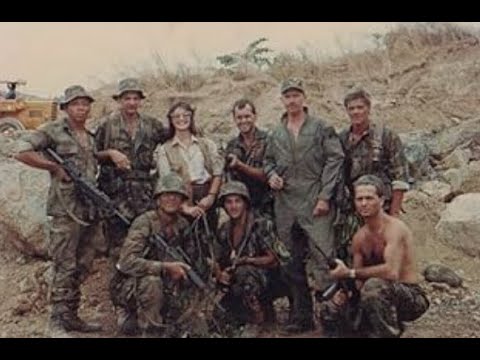
By the late years of the Vietnam War, a gradual but significant shift occurred. Navy SEALs led the transformation. Among American forces, the US Navy SEALs were the first to meaningfully adapt their camouflage practices. Operating in the Mekong Delta—an environment of swamps, flooded paddies, mangroves, and dense riverbank vegetation—they could not afford visual compromise. SEALs often inserted by rowboat, swam submerged for long distances, or lay prone in reed beds watching Viet Cong sampans drift past. Like the Australians, they required camouflage that looked natural in the specific environment, not in a generic theory of jungle warfare. SEALs began experimenting with green-brown smears, mud-based pigments, and even mixtures of crushed vegetation, echoing the SAS approach. Instead of blackening the face, they used lighter, fragmented tones that matched the reflective colors of wet leaves and muddy water. Photographs from later stages of the war show SEAL teams with faces covered in irregular patterns that resemble modern-era multispectral camouflage—decades before such patterns became standard.
US Army Special Forces adapted in the highlands. Elsewhere, American special forces detachments operating in the Central Highlands and other dense jungle areas began adopting similar practices. They introduced three- and four-color face paint applications that better aligned with highland vegetation: dark greens, earth browns, and subdued yellows. Rather than relying on the black-heavy palette, some teams abandoned the standard issue entirely, turning instead to improvised mixtures that mirrored what they saw successful SAS patrols doing. This shift was not uniform across the entire force. But wherever American soldiers performed missions requiring deep concealment—reconnaissance, observation, infiltration—the influence of Australian techniques became unmistakable. A doctrine begins to change where needed.
The American pivot toward environment-specific camouflage represented more than imitation. It signaled a broader evolution in US military thinking—an acknowledgment that camouflage must serve the environment first, rather than doctrine. American operators who adopted these techniques began reporting improved concealment and fewer early detections by enemy scouts. Patrols lasted longer without contact, and ambushes were more often initiated on American terms. In this sense, the Australians reshaped the conceptual foundation of camouflage for both nations. They introduced the idea that a one-size-fits-all approach—particularly one rooted in earlier wars—could not survive contact with the realities of Vietnam. Camouflage had to match the light spectrum, vegetation palette, and psychology of human perception specific to the environment.
By the end of the conflict, the seeds planted by the Australian SAS had taken root. Their approach helped accelerate a slow but inevitable shift away from high-contrast patterns and toward multi-color, environment-tailored camouflage for both face paint and uniforms. The lessons learned in Vietnam would eventually influence not only American special operations units but also global camouflage doctrine in the decades that followed. What began as an Australian improvisation born of survival pressure became a blueprint for modern concealment: blend with the environment, not with tradition.
By the time the last Australian SAS patrols withdrew from Vietnam, the significance of their unconventional camouflage practices had become undeniable. What began as a practical adjustment—a simple change of pigment—evolved into a profound tactical revelation: successful combat operations depend on understanding the environment at its most fundamental level. In the triple-canopy jungle of Vietnam, this meant accepting that traditional concepts of shadow, shape, and color were no longer reliable. The jungle had its own laws, and survival belonged to those who learned them.
The lime-colored paste that now rests quietly in its display case at the Australian War Memorial is a small artifact, almost mundane in appearance. Yet within its green-brown mixture lies the distilled essence of an entire combat philosophy. It symbolizes a moment when soldiers confronted the limitations of inherited doctrine and, through observation and necessity, discovered a better way. It embodies the humility required to discard old assumptions, the adaptability to craft new solutions, and the courage to implement them under the pressure of life-or-death missions. Above all, it represents the idea that camouflage is not a pattern. It is a relationship with the environment.
The Australian SAS understood the jungle not as an obstacle but as a living system they could integrate into. Every leaf, shadow, and filtered ray of light held tactical meaning. Where the American approach emphasized force and dominance, the Australians embraced subtlety, patience, and symbiosis. Their survival depended not on overwhelming the environment, but on becoming indistinguishable from it. This relationship demanded attention to details so small that many soldiers would never consider them: the angle of the sun at 3 p.m., the color of leaf mold at the base of a tree, the slightly lighter green of new growth versus the dark saturated green of shadowed understory, the way moisture changed the tone of bark after rain. These nuances mattered because in a world where distances were measured in meters and detection in milliseconds, small differences decided everything.
The Australian success also illustrates a broader truth about warfare: technological superiority or numerical strength cannot compensate for failing to understand the terrain. American forces brought enormous firepower to Vietnam, but this firepower was reactive. It required the enemy to be found first. The Australians relied on something rarer—positional dominance through invisibility. They leveraged the jungle’s own optical quirks to erase themselves from the enemy’s perception, allowing them to observe, choose the moment of engagement, and disappear again before the enemy could mount a coherent response. This degree of concealment shaped not only tactical outcomes but also the psychological dimensions of the conflict. The Viet Cong did not fear Australian bullets any more than American ones. They feared the uncertainty of not knowing when, where, or even whether Australian soldiers were present. The nickname “Phantoms of the Jungle” was not an attempt to mystify the Australians. It was a reflection of genuine bewilderment. For the enemy, facing a patrol that could not be seen even at arm’s length created an existential anxiety far more potent than artillery or air strikes.
And yet, the Australians never claimed to possess supernatural skills. Their advantage was neither mystical nor accidental. It was the product of careful study, experimentation, and a willingness to accept that the jungle’s logic superseded their own. They discarded the idea that black paint was universally effective because the environment proved otherwise. They tested new blends, observed results, refined techniques, and kept only what worked. Their methods were scientific in the truest sense—based on iteration, evidence, and adaptation. Ultimately, the story of the loam paste and the Australians who used it is a reminder that good soldiers follow doctrine, but great soldiers learn from the ground they stand on. In the triple-canopy jungle of Vietnam, the Australians became masters of that ground. They understood its colors, its light, its shadows, and the psychology of those who moved through it. Their camouflage did more than hide them. It erased the boundary between man and environment. In that world, black made you visible. Green made you vanish.
Decades later, that lesson echoes far beyond Vietnam. Modern militaries now design camouflage around specific biomes—desert, woodland, urban—precisely because the Australians proved that environment, not tradition, must dictate concealment. The tube in the museum is not a relic of a forgotten war. It is a quiet manifesto.
It reminds us that the smallest details—a shade of green, a broken pattern, a willingness to unlearn—can decide who walks out of the jungle and who never does. The jungle did not reward the strongest. It rewarded the most attentive.
So the next time you see a soldier’s painted face, ask yourself: is it designed to look fierce, or to disappear? And which would you rather be when the enemy is five meters away?
Report this article
Select a reason for reporting:






