The engines roared like caged beasts, vibrating through the metal hull of the C-47. Inside, a young paratrooper sat rigid, his heart pounding against his ribs. He was just a rookie trooper, and he surely shook with pride—and fear. He checked his equipment one last time, tugging at the straps of his pack, making sure everything was tight. The static line coiled at his feet, a lifeline he prayed would hold.
Around him, the plane hummed with nervous energy. Men joked and prayed, their faces masks of bravado. The sergeant’s voice cut through the din: “Is everybody happy?” he cried, looking up from his clipboard. A chorus of shaky “Yes, Sergeant!” answered, but the rookie’s voice caught in his throat. He nodded, and they stood him up, shuffling toward the open door.
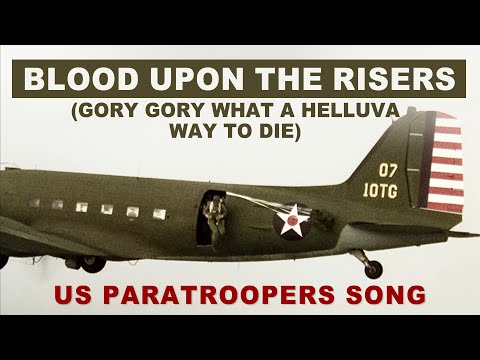
The jumpmaster signaled, and the rookie leaped into the icy blast. The wind tore at his face, the cold bit into his bones. He felt the shock of the static line snapping taut, the jerk as his parachute deployed. But something was wrong. The silk from his reserve spilled out, wrapping around his legs like a shroud. He tumbled through the air, helpless.
Above him, the risers swung around his neck, connectors cracked his dome. Suspension lines tied themselves in knots around his skinny bones. The canopy became his shroud as he hurtled toward the ground. His mind raced—the days he lived and loved and laughed kept running through his mind. He thought about the girl back home, the one he left behind. He thought about the medic and wondered what they’d find.
The ambulance was on the spot, jeeps running wild. Medics jumped and screamed with glee, rolled up their sleeves, and smiled. For it had been a week or more since last the shoot had failed. They were ready for the inevitable.
He hit the ground. The sound was splat. His blood burned high. His comrades turned away, sickened. There was blood upon the risers, brains upon his shoes, intestines dangling from his paratroop suit. He was a mess. They picked him up and buried him in his boots, and he ain’t gonna jump no more.
But the story doesn’t end here. For in the barracks, a song began to spread—a grim, sardonic ballad that would echo through the halls of history. “Glory, glory, what a hell of a way to die,” they sang, and the rookie’s sacrifice became legend.
The song spread like a fever through the camp, passed from bunk to bunk, from mess hall to latrine. Men who had never met the rookie sang his fate with a grin and a shudder, and somehow the singing made the fear bearable. It was a strange kind of immortality, born of blood and bad luck.
In the barracks that night, a grizzled corporal named Haskins picked up a battered guitar and strummed the tune slow and low. The others gathered round, their faces lit by cigarette embers. They sang the verses they knew, and when they ran out, they made up new ones—each more gruesome than the last.
“He counted long, he counted loud,” Haskins crooned, and the men echoed back. The rookie’s story grew in the telling—the faulty reserve, the tangled lines, the girl back home who would never know. Every man there saw himself in the tale, and every man laughed to keep from crying.
But the ballad had a way of traveling farther than the barracks. A war correspondent heard it sung by a replacement trooper at a supply depot near the coast. He wrote it down in his notebook, word for word, and sent it home to his editor. Within a month, the song had crossed the ocean and found its way into the smoky bars of London and the cramped flats of New York.
Back at the airfield, the sergeant who had cried “Is everybody happy?” heard the song for the first time from a group of new recruits. He stood silent through the whole thing, his jaw tight, then turned and walked away without a word. Some said he never jumped again. Others said he jumped a dozen more times, but always with a strange look in his eye, as if he were waiting for the ground to rise up and claim him.
The rookie’s name was never written in any official history. He was just a name on a manifest, a line in a casualty report. But the song kept him alive in a way that medals and monuments never could. They sang him into legend, one verse at a time.
And somewhere, in a small town back home, a girl received a letter that said only that her boy had died in the line of duty. She never heard the song. But on quiet nights, when the wind rattled the windows, she felt a strange chill and wondered why.
The war moved on, as wars do. New faces filled the bunks, new songs replaced the old ones, and the rookie’s ballad faded into the background hum of memory. But Haskins never forgot. He carried the tune with him through two more campaigns, humming it under his breath when the shelling got close and the fear crept back.
After the armistice, he went home to a mill town in Ohio, married a girl with quick hands and a quicker laugh, and tried to forget the things he had seen. He almost succeeded. The guitar gathered dust in the attic, and the song stayed locked behind his teeth.
Then one evening, years later, his youngest boy came home from a school dance with a tune on his lips. “Glory, glory, what a hell of a way to die,” the boy sang, not knowing what the words meant, only that the older kids had taught him and it had a catchy beat.
Haskins went very still at the kitchen table. His wife noticed, and she reached for his hand, but he pulled away and walked out onto the porch. The boy’s voice followed him, innocent and bright, singing the story of a man he would never meet.
He stood there a long time, staring at the dark street, and thought about the rookie’s girl—the one who never heard the song. He wondered if she was still alive, if she had married someone else, if she ever thought about the boy who never came home. He wondered if she knew how he had died, or if the letter had spared her the details.
The next morning, Haskins climbed into the attic and brought down the guitar. He wiped the dust away and tuned the strings, and when he played, his fingers remembered every chord.
His boy found him there, sitting on an old crate, playing the song slow and sad and true. “Where’d you learn that?” the boy asked. Haskins smiled, a little broken, and said, “From a friend. A long time ago.”
He taught the boy the verses, all of them, and told him the story behind the song—the engines, the icy blast, the tangled lines, the girl back home. The boy listened with wide eyes, and for the first time, the rookie’s death meant something more than a catchy tune.
Word got around. Other veterans heard the song again, sung by a boy who had never jumped, and something stirred in them. They began to gather at the American Legion hall on Friday nights, and Haskins brought his guitar, and they sang the old songs—the sad ones, the grim ones, the ones that kept the dead alive.
And so the ballad traveled on, from generation to generation, carried by men who had once been rookies themselves. It was never written in any book, but it lived in the lungs of those who sang it.
Somewhere, in a small town back home, an old woman heard a young man humming the tune at a bus stop. She paused, her hand on her cane, and listened. And for a moment, she was young again, and the wind was rattling the windows, and she felt that strange chill she had never understood.
She never learned the song’s name. But she hummed it all the way home, and somehow, it felt like a kind of goodbye.
The old woman sat by her window that evening, the tune still humming in her chest. She closed her eyes and saw a boy in a uniform, grinning at her from across a crowded dance floor. She had loved him once, before the war took him away. The letter had said only that he died in the line of duty, but now, hearing that song, she wondered if there was more to the story.
She asked around town, but no one knew the song’s origin. Then one day, a young man at the bus stop mentioned a veteran named Haskins who played it at the Legion hall. She wrote a letter, her hand trembling, and waited.
Haskins wrote back. He told her everything—the faulty reserve, the tangled lines, the medics’ grim smiles. He told her the rookie had thought of her in his final moments. “He loved you,” Haskins wrote. “He carried your picture in his helmet.”
She wept, but they were cleansing tears. She had waited decades for closure, and now it came in the form of a song. She asked Haskins to play it at the next Legion gathering, and he agreed.
That Friday, she sat in the front row, her cane across her knees. Haskins played the ballad slow and true, and the old veterans sang along. When they reached the verse about the girl back home, she closed her eyes and smiled. She was no longer just a name in a song—she was there, and she had heard it.
Afterward, Haskins walked her to her car. “He ain’t gonna jump no more,” he said softly. “But he’ll never be forgotten.” She nodded, and they parted as friends.
The ballad continued to spread, but now it carried a new verse—one about the girl who finally heard the song. And in that small town, the rookie’s memory lived on, not just in blood and glory, but in the quiet resilience of those who loved him.
So the story ends, but the song goes on. Have you ever heard a tune that seemed to carry the weight of a hundred untold stories?
Report this article
Select a reason for reporting:






