What if the legends who lit up the silver screen were just as flawed—and yes, as foolish—as the rest of us? We’re not talking about on-screen characters. We’re talking about the real lives of Golden Age Hollywood stars, whose off-screen decisions were sometimes so baffling, so spectacularly misguided, that they became cautionary tales whispered in studio corridors. Their charm and talent were undeniable, but their judgment? Not so much.
From Olympic heroes who couldn’t memorize a line to brilliant actresses who played dumb, these icons were, by many accounts, hilariously human. Their stories reveal that fame doesn’t necessarily come with wisdom—and sometimes, it comes with a whole lot of naivety.
Take Johnny Weissmuller, for instance. Before he swung from vines as Tarzan, he was a record-breaking Olympic swimmer with five gold medals. But once the cameras rolled, his intelligence—or lack thereof—became a running joke. “We just let him swing,” one crew member quipped. “He was better with the rope than the script.” Weissmuller struggled to read scripts, often improvised unintelligible grunts when he forgot lines, and made disastrous financial investments, including a chain of Tarzan-themed restaurants. By the 1960s, he was broke, wandering the halls of a Las Vegas hotel in his robe, still calling himself Tarzan.
Then there’s Ed Wood, the filmmaker who believed every line he wrote was pure Shakespeare. His 1959 film Plan 9 from Outer Space is widely labeled the worst movie ever made—complete with paper-plate flying saucers on strings. Wood was endlessly optimistic and delusional, convinced his failures were ahead of their time. He died penniless, living off cheap whiskey and typewritten dreams, only to find cult fame decades later.
And who could forget Jayne Mansfield? With a reported IQ of 163, she spoke five languages and played classical violin. Yet she built her entire career on playing the dumb blonde, a role she leaned into so heavily that even studio heads believed it was real. She weaponized stupidity to climb ladders that eventually crumbled beneath her. Behind the scenes, her life spiraled into chaotic decisions—affiliations with fringe figures like Anton LaVey, questionable publicity stunts, and a string of low-budget European films. Her accidental death in 1967 sealed her image not as a brilliant woman boxed in by the system, but as a cautionary tale of an actress who couldn’t escape the act when it started to sink.
These stories are just the tip of the iceberg. From Wallace Beery’s violent temper and phonetic script-reading to George Raft’s comically bad career choices—turning down The Maltese Falcon, Casablanca, and Double Indemnity—the annals of Hollywood are filled with legends who were, by all accounts, dumb by nature. Their talent was immense, but their self-awareness? Often nowhere to be found.
Buster Crabbe was America’s golden boy in 1932, winning gold in the 400-meter freestyle. Hollywood came calling, and he became a serial hero—Tarzan, Flash Gordon, Buck Rogers. But behind the action-hero facade was a man who never grasped the machinery of the industry that made him. “I never read full scripts,” he admitted later. “I focused on stunts, not character arcs.” In Flash Gordon, his lines were often dubbed in post-production because he flubbed them during takes.
Director Frederick Stephani had to design scenes with minimal dialogue just to ensure continuity. Crabbe resisted branching out, declining dramatic scripts because he believed audiences only wanted him as an action man. Film historian Richard Bann noted in Serial Kings that Crabbe never evolved because he thought evolution wasn’t necessary. His investments followed similar logic—he poured his earnings into a chain of backyard swimming pool franchises, only to be bankrupted by legal disputes and maintenance issues.
Esther Williams carved out a glittering niche as Hollywood’s Million Dollar Mermaid, dazzling audiences with synchronized swimming and high dives choreographed like ballet. But beyond the water tanks, she had little concern for the mechanics of her stardom. In her memoir, she admitted to rarely reading her scripts before arriving on set. “If it doesn’t involve a pool, I’m not interested,” she once joked. Directors like Charles Walters often had to design scenes around her physical capabilities rather than any dramatic talent.
Her personal life was no less haphazard. She married four times, including to Fernando Lamas, who insisted she give up her career and defer to his. She agreed. When asked why, she simply said, “He was strong. I liked strong.” Friends remarked on her lack of business sense, especially when she passed up television offers, believing the medium was beneath her. Her line of swimwear collapsed due to poor management. By the late 1960s, she was financially insecure and struggling to re-enter the public eye.
Milton Berle was a household name in the 1950s, earning the nickname Mr. Television for his pioneering work in early broadcast comedy. At his peak, he pulled in more than 80% of the national audience. But despite his monumental success, Berle was notorious for egocentric decisions that eroded his legacy. He was known for brazenly stealing jokes from other comedians. Writers on staff complained he would reuse gags from vaudeville routines two decades out of date.
When CBS executives tried to modernize the show, Berle refused. “This is what made me famous,” he insisted, even as ratings began to slide. He demanded approval over scripts he didn’t read and fired writers on a whim. He turned down a lucrative film contract with MGM because he didn’t want to cut back his nightclub appearances, missing his chance to transition into cinema. In 1960, he invested in a series of comedy clubs under his name but refused to visit any of them—they all collapsed within two years. He never grasped the changing humor of the 1960s and 70s, and his later guest appearances were seen as painfully dated.
Frank Fay was once considered one of the greatest stage comedians in America, his timing and voice control earning him top billing in vaudeville and Broadway. But behind the curtain, Fay was a toxic combination of arrogance, prejudice, and stunning social ignorance. George Burns once called him “the funniest man who ever lived and the most detestable human being I ever met.” He openly voiced anti-Semitic and racist views at a time when Hollywood was beginning to distance itself from overt bigotry.
His wife, Barbara Stanwyck, eventually divorced him, citing physical and emotional abuse. Fay turned down offers to appear in sound films after 1931, believing talkies were beneath him. When he finally accepted a role in God’s Gift to Women, his performance was so wooden that critics eviscerated it. Within a decade, he was unemployable in film or radio, performing at second-rate clubs and sleeping in rented rooms. His story isn’t just one of ignorance—it’s about the danger of mistaking applause for infallibility.
William Frawley is best remembered for playing Fred Mertz on I Love Lucy, but behind the scenes he was a volatile, belligerent presence. Before television saved his career, Frawley was a struggling character actor known for being difficult to direct, frequently slurring his lines due to chronic alcoholism. He once had a scene removed entirely from Miracle on 34th Street because he couldn’t stay sober long enough to deliver it properly. His reputation nearly cost him the I Love Lucy role—Lucille Ball initially opposed his casting.
Dezi Arnaz eventually agreed to bring him on under strict conditions: sobriety on set and punctuality. Surprisingly, he complied. But off-set, his old habits resurfaced. He was known for starting bar fights and was banned from several Hollywood lounges. Frawley had little patience for modernizing his craft. “If you need to practice, you shouldn’t be in this business,” he once told a younger co-star. When I Love Lucy ended, producers hesitated to cast him, fearing he’d regress. He coasted on a single great role but never understood how close he came to losing it all.
Jean Arthur possessed one of the most distinct voices and on-screen personas of the 1930s and 40s, shining in classics like Mr. Smith Goes to Washington. Yet behind that charm was a woman who spent much of her career running from fame. Arthur had a well-documented fear of public speaking and social interaction, but more troubling was her inability to navigate the basic functions of the film industry. She refused press interviews, rejected public appearances, and rarely engaged with studio heads. According to Frank Capra, she would leave through back exits and sometimes vanish between projects, avoiding contact for months.
During filming for The More the Merrier, Arthur allegedly had breakdowns over lighting and costumes and insisted on filming without crew members watching. Director George Stevens had to rebuild entire sets to accommodate her discomfort. Despite winning an Oscar nomination, she later dismissed the film as a miserable experience. She turned down His Girl Friday, It’s a Wonderful Life, and even parts written specifically for her. When Columbia Pictures offered her a contract extension in 1944, she rejected it in favor of semi-retirement, retreating to her apartment with no clear plan. Her brilliance was real, but so was her detachment.
Rod Steiger earned acclaim for intense performances in On the Waterfront and In the Heat of the Night, but his extreme devotion to method acting turned him into a cautionary tale. On Doctor Zhivago, director David Lean clashed with him over his refusal to rehearse cold—Steiger insisted on working himself into a psychological state before shooting, sometimes delaying production for hours. Omar Sharif called working with him emotionally exhausting.
He turned down Patton and The Godfather, later admitting regret but continuing to spurn mainstream roles. Director Sidney Lumet once said, “Rod was brilliant, but he made things harder than they had to be on everyone.” In later years, Steiger struggled with depression and financial instability, appearing in low-budget foreign films just to make ends meet. His talent was immense, but it became a cage of his own making.
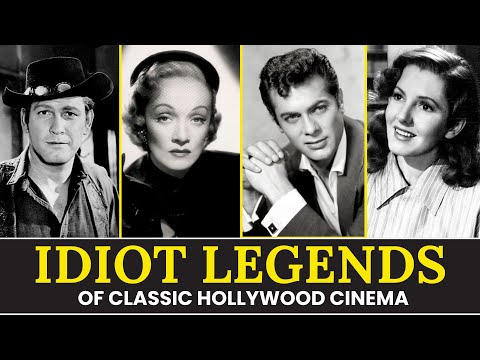
Earl Holliman won a Golden Globe for The Rainmaker in 1956, yet his career plateaued because he never grasped the importance of reinvention. Studio memos reveal he repeatedly turned down roles requiring accent work or emotional complexity, insisting he was better suited for “good old American fellas.” He declined Judgment at Nuremberg, calling it too political. Director Richard Fleischer later remarked, “He wasn’t difficult. He just didn’t stretch.” Holliman invested in a Burbank restaurant that failed within three years and declined television offers, believing film roles would always come. In a town that rewards risk, he built a career on predictability and watched it quietly fade.
Peter Lorre had the mind of a philosopher and the heart of a ghost. Fluent in several languages and classically trained, he nevertheless accepted whatever roles came his way, terrified of unemployment. When John Huston offered him a dramatic role that could have reshaped his image, Lorre turned it down, saying he “didn’t want to confuse people.” Addicted to morphine, he drained his finances on pills and quackery, rarely negotiated contracts, and once borrowed money from Boris Karloff to avoid eviction. His intellect was widely acknowledged, but he was profoundly unsure of his worth—and let that fear keep him locked in the same roles, drifting through a system he never dared to defy.
Marlene Dietrich cloaked herself in strategic ignorance, feigning simplicity to maneuver through an industry that wanted her seductive but silent. Studio records reveal she would pretend not to understand English during contract disputes, though she was fluent. “Men are frightened of smart women,” she once said. “They prefer a whisper to a sentence.” This calculated naivety came at a cost. As the studio system weakened, she had no fallback—no producing, directing, or writing to her name. She toured as a singer, draped in sequins, but the film world had moved on. She played the long game, but in playing it safe, she forfeited her full potential.
Tony Curtis rose from a tough New York upbringing to become a matinee idol, but directors noted he struggled with complex material. Billy Wilder said he had to pull the performance out of him frame by frame. “I never read the scripts all the way through,” Curtis admitted in 1960. He once referred to Laurence Olivier as “that English guy who yells a lot,” passed on serious roles that could have elevated his status, and married six times after whirlwind romances. He had raw talent and undeniable charm, but lacked the introspection to harness it for long-term greatness.
Guy Madison was discovered while working as a telephone lineman—one glance at his chiseled features and he was whisked into stardom. But he became the poster boy for actors who relied solely on appearance. Director William Castle remarked that Madison had “the personality of a bookshelf,” adding that multiple takes were required just to capture passable scenes. He was known for asking producers which way to face the camera, even into his fourth film. He purchased a Wyoming ranch with no staff or income plan, and it quickly failed. By the 1960s, his career had withered into dubbed European films and low-budget westerns. He had every opportunity, but no idea what to do with it.
So there you have it—a parade of legends whose talent lit up the screen while their judgment flickered somewhere off-camera. They were charming, magnetic, and sometimes spectacularly foolish. Fame gave them immortality, but it also masked a staggering lack of awareness. Their stories remind us that stardom doesn’t require wisdom—and sometimes, the brightest stars burn out because they never learned to see themselves clearly.
Which of these Hollywood legends surprised you the most—and do you think their so-called stupidity was genuine, or just another performance?
Report this article
Select a reason for reporting:






