September 1967, Nui Dat base camp, Phuoc Tuy Province. An Australian SAS patrol commander stood in a briefing tent, listening to the American liaison officer outline a joint operation. The American finished. The Australian didn’t move. Then he spoke four words that would echo through military history: “You walk like elephants.”
The tent went silent. The American officer stiffened. “Excuse me?” The Australian didn’t repeat himself. He didn’t need to. Every man knew what he meant. It wasn’t an insult born of ego. It was a tactical assessment delivered as fact.
US infantry patrols in the province were making contact with the enemy at catastrophic rates—not because they couldn’t fight, but because they were loud. And in the jungle, loud meant dead.
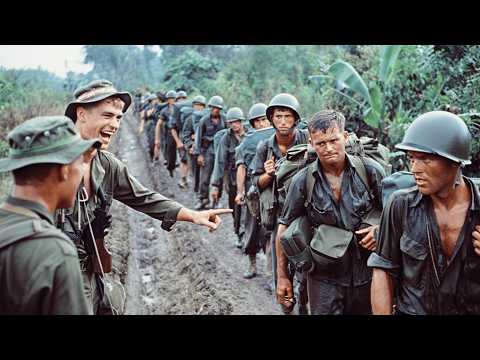
This is the story of two philosophies colliding in the same green hell. The Americans brought overwhelming force. The Australians brought silence. The Americans owned the day. The Australians owned the night.
But first, you need to understand what walking like an elephant actually meant.
Vietnam, 1967. The jungle wasn’t just terrain—it was a living tactical equation that reset every 12 hours. During the day, visibility extended maybe 20 meters before the canopy choked everything into green twilight. At night, you could be three feet from another human and not see them. The floor was a minefield of noise.
The North Vietnamese and Viet Cong operated in this environment like sharks in water. They could hear a patrol coming from 300 meters. And American patrols were giving them plenty to hear.
Standard US infantry doctrine was built on overwhelming firepower and rapid reinforcement—a framework that made perfect sense everywhere except Vietnam. An American infantryman carried 60 to 80 pounds: M16, 20 magazines, grenades, claymore, machete, canteens, poncho, rations. That weight had consequences. Metal clicked. Equipment rustled. Boots hit the ground with the authority of men taught to march in formation.
US patrols moved in columns of 20 to 40 men. They cut trails, took hourly breaks, cooked hot meals, smoked. They talked in low voices after dark—except in the jungle, low voices carried.
The North Vietnamese could track them by sound alone. Once they had the patrol’s location, they had options: ambush, evade, call reinforcements, set booby traps on the return route.
The Australians were fighting a different war entirely. When the Australian SAS arrived in Phuoc Tuy Province in 1966, they brought a philosophy so different it looked like a different military. American patrols were designed to find and destroy. Australian patrols were designed to gather intelligence without being detected.
The Americans wanted contact. The Australians wanted to see without being seen.
This philosophy started with selection. You couldn’t volunteer for the SAS—you had to be invited. Pass rates ran between 15 and 30 percent. The men who passed came from sheep stations, cattle ranches, fishing towns, city suburbs. What united them was an ability to function at the edge of human endurance while making decisions that kept them alive.
And they were small teams—four men. Four men could move through jungle that would alert every enemy within a kilometer if forty tried to pass. Four men could hide where forty would be spotted. But four men also meant zero margin for error.
The weight difference was the first tell. An Australian SAS operator carried 30 to 40 pounds—stripped down, minimalist. No poncho because ponchos rustled. No comfort items because comfort got you killed. They moved at night as standard practice. Darkness was their operational environment.
Their training was obsessive—endless repetition of immediate action drills until they became autonomic. They could execute a contact drill in total darkness without speaking because they’d done it five hundred times.
But the real difference was in how they moved. American patrols walked. The Australians glided. Every step was deliberate. Every foot placement was silent—heel-toe on soft ground, toe-heel on hard, always rolling their weight to test the surface before committing. Speed wasn’t the objective. Silence was.
An American patrol might cover three kilometers in an hour. An Australian patrol would cover three hundred meters in the same hour and leave no trace they’d been there.
They taped down everything that could rattle. They wrapped rifle slings. They painted water bottles flat black because even canteen green could catch moonlight. They never cut trails. If the jungle was too thick, they went around. They stopped constantly—every twenty meters in thick jungle—to listen for five minutes minimum. Sometimes twenty if something felt wrong.
The jungle had a rhythm. Anything that disrupted that rhythm was data.
Their field discipline was absolute. No talking except in whispers. No smoking, no fires. Cold rations. They slept in two-hour rotations with one man always on watch. When they established a lying-up position for the day, they moved in a cloverleaf pattern to ensure they hadn’t been followed, then settled into positions with 360-degree observation. And they could hold those positions without moving for twelve hours, sixteen hours, twenty-four hours if the intelligence value justified it.
They’d lie in the bush fifty meters from an enemy trail and count every soldier who passed. They’d record weapons, equipment, morale indicators, direction of travel. They’d photograph enemy positions with telephoto lenses. They’d map bunker complexes. Then they’d extract the same way they’d infiltrated, and nobody would know they’d been there.
The Americans called it sneaky. The British called it brilliant patrolling. The North Vietnamese called it ghost work.
But the fundamental difference wasn’t just technique. It was psychology. American doctrine was built on aggression—find the enemy, fix them, destroy them. Australian doctrine was built on avoidance—see without being seen, learn without being detected, return with intelligence that would let other units kill the enemy on your terms, not theirs.
That mindset required a completely different personality type. You had to be comfortable being outnumbered. You had to be able to watch enemy soldiers pass within arm’s reach and not shoot them because shooting would compromise the mission.
An American patrol making contact would engage. That was doctrine. An Australian SAS patrol making contact would break contact and extract unless they had no other option. Because once you fired the first shot, the intelligence mission was over.
This created tension with American commanders. Some understood the value. Others thought the Australians were too cautious. There were briefings where American officers questioned whether the SAS was being aggressive enough. The Australians had a simple response: Look at the results.
By September 1967, the pattern was undeniable. Australian SAS patrols in Phuoc Tuy were gathering intelligence that led to kills at ratios the Americans couldn’t match with direct contact. They’d spot a trail, track its usage patterns, report the location. Artillery would interdict it. Later assessment would show twenty to forty enemy casualties from a patrol that never fired a shot.
Australian forces in Phuoc Tuy were achieving kill ratios of 15 to 1. Some operations pushed 20 to 1. American forces in the same province were achieving around 3 to 1. Still favorable, still effective—but the difference was tactical philosophy made visible in numbers.
And some American commanders were starting to notice.
The joint operation briefed in September 1967 was supposed to combine Australian intelligence gathering with American firepower. The concept was sound. Australian SAS would conduct reconnaissance of a suspected enemy staging area near the Nui Hills. Once they’d identified enemy positions, American infantry would conduct a sweep with artillery and air support.
The briefing should have been routine. The American liaison officer presented the US component: company-strength sweep, helicopter insertion, artillery prep fires, gunship support on call. Standard stuff. The Australians would insert by foot, conduct a four-day reconnaissance patrol, report enemy positions, then extract before the American sweep began.
That’s when the Australian patrol commander spoke.
“You walk like elephants.”
The American officer was a captain—three months in country, West Point graduate, good record. He’d come expecting coordination discussion, not an insult. He stared at the Australian sergeant. In the American army, a captain didn’t take operational critique from an NCO, even an allied NCO.
“I’m not sure what you mean,” the American said. His voice had gone cold.
The Australian sergeant was named Tero Farrell, Queensland. Former stockman. Four years in the regiment, two tours in Borneo, six months in Vietnam. He’d spent the last two months listening to American patrols broadcast their positions through the jungle like they were trying to attract attention. He’d listened to firefights that could have been avoided. He’d listened to good soldiers die because they moved like they were on parade.
“Your patrols are loud,” Farrell said. “The enemy hears you coming from three hundred meters. You’re inserting by helicopter. The enemy will hear that from three kilometers. You’re conducting artillery prep fires. The enemy will know you’re coming before your first squad touches the ground.”
The American captain’s jaw tightened. “We’ve conducted seventeen operations in this AO. We’ve achieved favorable kill ratios in every contact.”
“You’ve made contact in every operation,” Farrell said. “That’s the problem.”
Another American officer started to speak. The Australian lieutenant commanding the SAS patrol element raised his hand. His name was David Clark. Sydney, commissioned from the ranks. Three years with the regiment. He’d let Farrell speak because Farrell was right. But now he needed to frame it diplomatically.
“What Sergeant Farrell means,” Clark said, “is that our operational methods differ. We view patrol compromise as mission failure. You view contact with the enemy as mission success. Both approaches have merit depending on objectives.”
“But your approach gets people killed,” Farrell said.
The tent was silent again. The American captain stood. “Sergeant, I don’t know how you run operations in the Australian Army.”
“We walk quietly,” Farrell said. “We move at night. We don’t announce ourselves and we don’t take casualties doing reconnaissance because the enemy doesn’t know we’re there.”
The American major coordinating the operation intervened. He’d worked with the Australians before. He’d seen their results, and privately he agreed with Farrell’s assessment. American patrols were loud—but that loudness was baked into doctrine, training, and force structure. You couldn’t just tell an infantry company to move like the SAS. They didn’t have the training. They didn’t have the experience. And they didn’t have the luxury of four-man patrols.
“Gentlemen,” the major said, “we all want the same outcome. Let’s focus on coordination.”
But the damage was done. The insult was out there. You walk like elephants. It would spread through the Australian SAS. It would spread through American units. It would show up in official reports. And eventually, it would force a conversation the American military had been avoiding.
Were we moving through the jungle wrong?
The operation launched four days later. The Australian SAS patrol inserted on foot at dusk, fifteen kilometers from the suspected enemy staging area. They moved through the night, covering just over three kilometers before establishing a lying-up position at dawn. They passed within two hundred meters of an enemy listening post without being detected.
The American company inserted by helicopter at 0800 the following morning—sixteen Hueys, artillery prep fires hitting the landing zone for ten minutes before insertion. The enemy heard the helicopters from five kilometers away. They heard the artillery from eight. By the time the American infantry was on the ground, every NVA unit in the area knew approximately where they were and what they were doing.
The Americans swept north toward the suspected staging area. They made contact at 1430 hours—an ambush from a well-prepared position. The Americans responded with overwhelming firepower: artillery, gunships, air strikes. They killed fourteen enemy. They took three wounded.
Two kilometers east, the Australian patrol heard the entire engagement. They’d been lying in observation positions fifty meters from the enemy staging area for six hours. They’d counted forty-seven enemy soldiers. They’d photographed bunker positions. They’d identified three separate trail networks. They’d recorded radio traffic. And nobody knew they were there.
The American engagement drew enemy reinforcements. The Australian patrol observed them moving toward the contact. They radioed the information back. American artillery interdicted the reinforcement route. Twelve more enemy killed without the American infantry ever seeing them.
The operation was considered a success: twenty-six enemy killed, three American wounded, the staging area compromised. But the Australian patrol commander filed an after-action report that was brutally direct.
“American insertion methodology compromised operational security before ground forces were in position. Enemy had time to prepare defensive positions and evacuate materials of intelligence value. Reconnaissance objective would have been better served by ground insertion and silent approach. Current American patrol doctrine prioritizes firepower over stealth. This approach is effective for immediate tactical outcomes but limits strategic intelligence gathering.”
Translation: They’re too loud, and it’s costing them intelligence.
The report went up the Australian chain of command. It was read with interest. It confirmed what other SAS patrol commanders had been saying. The Americans were fighting a different war with different assumptions. Those assumptions worked when you had enough helicopters, enough artillery, and enough air support to win through firepower. But those assumptions made it almost impossible to gather intelligence without alerting the enemy.
The report also went laterally to American intelligence officers. Some dismissed it. Some read it carefully. A few started asking questions.
What if we tried it their way?
November 1967, Captain Robert Howard requested permission to patrol using Australian methods. He stripped his eight volunteers to forty pounds, taped every buckle, and trained for two weeks on silent movement. They inserted on foot at night, covered two kilometers, and lay up for three days—watching, recording, never firing.
They counted ninety-three enemy moving south. The intelligence led to an ambush that killed thirty-eight without a single American casualty. Howard’s after-action report was one sentence: ‘Australian patrol methodology works.’
The Pentagon couldn’t transplant the SAS wholesale, but elements seeped into doctrine—noise discipline, night operations, smaller recon teams. The phrase ‘You walk like elephants’ became shorthand for everything American forces needed to fix.
Farrell and Clark returned home. Farrell taught silent movement at the SAS training center; students asked about Vietnam. ‘The Americans were brave,’ he’d say. ‘But they walked like elephants. We taught them to walk like cats. Some learned, some didn’t. The ones who learned survived better.’
By 2012, an American captain training with the SAS heard the story from Farrell’s grandson. ‘That sergeant changed how we operate,’ the American said. ‘He was just telling the truth,’ the Australian replied.
Both nations learned that sometimes the quietest voice carries the furthest. And the jungle still remembers those ghosts who moved like shadows.
What would you have done if you were the American captain in that tent?
Report this article
Select a reason for reporting:






