The sergeant reached the first body before the captain did. He swore and demanded to know what the corporal thought he was doing. It was just past six in the morning, and the helicopters were already turning back toward the extraction point. Someone answered for the corporal, calmly and matter-of-factly: it was a tactical necessity, nothing more.
Captain Andrew Hastie arrived at the same spot moments later. No one on that hillside expected this to end up on a desk at ISAF headquarters in Kabul. But it would—and it wouldn’t stop there.
So who was US command actually furious at in Zabul? And why does the answer barely touch the scalpel at all?
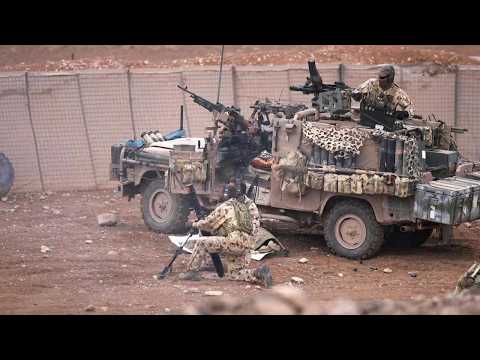
Zabul Province, Afghanistan. April 28, 2013. Zabul is not the province Australians talk about. Uruzgan is the name that echoes in every casualty report—the province Australia formally led, home to Tarin Kowt, the base that became a household name back home. Zabul sits next to it, and by 2013 it had become something worse: rougher, more hostile, and with far less coalition presence.
A few hundred thousand people scattered across thousands of villages and small towns that barely appear on a map. Pashtun tribes, mostly Ghilzai, owing no loyalty to a government most had never seen. Two rivers cut through it—the Arghandab and the Tarnak. Highway 1, the ring road linking Kandahar to Kabul, runs straight through the province too. For a Taliban commander who needed to move men and weapons unseen, that road was worth more than any compound.
For most of the war, Zabul was contested or under Taliban control. Coalition forces entered only when they had a reason. They never stayed. The provincial government operated, where it existed at all, from a handful of administrative centers held by weak, under-resourced Afghan Army and police garrisons. Everywhere else, for long stretches of the war, the Taliban’s shadow administration ran the province’s actual day-to-day affairs. It appointed its own judges in the districts. Sent its men to collect its own taxes. Enforced a version of the law people actually obeyed—partly because obedience was simpler than reaching an administrative center that might not hear the case at all.
By 2013, Task Force 66—the umbrella covering Australian special forces operations in Afghanistan—had spent most of seven years rotating squadrons of the Special Air Service Regiment and the 2nd Commando Regiment through Uruzgan and the surrounding provinces. Zabul was one of the areas those squadrons crossed into when a target justified it. The Afghan forces who had to stay in that province after the raid force left stood beside them on the ground every time they did.
On April 28, they had a reason. The target’s call sign was “Rabbit”—a prominent insurgent commander and a national priority target responsible, in the language of the target file, for numerous attacks. Getting a name onto such a list took weeks of pattern-of-life study, informants, signals intercepts, and cross-referencing movements before anyone approved a helicopter lifting toward him.
About 120 Australian special forces soldiers from the SASR and the 2nd Commando Regiment were about to descend onto his ground by helicopter. Alongside them, on the same aircraft, was a partner element from Afghanistan’s National Directorate of Security—the civilian intelligence agency running the local side of the target file. That partner force mattered for reasons beyond appearances. The NDS had been built, trained, and heavily funded by the CIA since the start of the war, and it carried its own reputation. It had been criticized for years over how it treated detainees in its custody. Comfort was not why Australia partnered with it. No Australian unit could operate credibly or safely in Zabul without an Afghan agency connected to everything happening there. The NDS was the agency that could provide that.
The raid itself went smoothly. Four insurgents were killed in the initial firefight, dropped before they could organize any real defense. The target, Rabbit, was not among them. He had left before the first shot was fired, and no source available today can say exactly how he knew he needed to be elsewhere that morning. Theoretically, the operation accomplished the task it was designed for: a precise raid, an Afghan partner force on the ground beside them, low exposure, and a short window on the target before withdrawal.
There were about four minutes of that window about to be spent on something no plan had accounted for.
Nine days before the raid, at the special forces forward operating base, a civilian fingerprint expert stood in front of the assault force and pulled out the actual device. They called it “HIDE”—pronounced “hide.” A unit roughly the size and weight of a thick hardcover book. He pressed a volunteer’s four fingers flat against the glass plate and waited for the iris capture; the screen gave a clear reading in under two minutes. That was the demonstration.
No one ever agreed on what he said next. Some men in that room would later say he told them that if a fingerprint couldn’t be taken cleanly, cutting the hand off the corpse was the optimal solution. Best means, not the only one. The fingerprint expert himself denied saying anything of the sort. A scientist from the defense team was in the room too, further from operational pressure than anyone else present. He remembered it only as a set of techniques that could be used to collect evidence from a scene. No one wrote any of it down.
What the room produced instead was a loose, deniable kind of permission. The kind that leaves a soldier under pressure to decide the rest himself. The kind no written policy would have to own if things went wrong.
This is the variable no one factored into the April 28 plan. Not the enemy. Not the terrain. A nine-day-old training session still lodged in one corporal’s mind as the helicopters flew in.
The raid order, like any target-based raid, carried identification requirements baked into it. Kill the right man. Confirm you killed the right man. Prove it in a way a headquarters 6,000 kilometers away could log in a database. No one said, in any written order anyone has produced since, exactly how that evidence was supposed to be collected from four dead men on a hillside with a helicopter already turning back toward them.
That requirement existed because by 2013 the war in Afghanistan had stopped being just a fight on the ground. It had become a struggle over who a person really was.
The United States and its coalition partners had, over the previous decade, built one of the largest biometric identification systems ever assembled in a war zone. Alongside HIDE, two other families of devices did the collecting. The BAT system, a laptop-based platform used mostly at fixed checkpoints, and SEEK, a smaller field unit designed for the same task. By the early 2010s, more than 7,000 of those devices were in use across Afghanistan. Roughly one per platoon-sized element the coalition had in the field.
Everything they collected—fingerprints, iris scans, facial data—fed the Pentagon’s Automated Biometric Identification System. A database run out of West Virginia and shared with the FBI and the Department of Homeland Security. A parallel program with an unfortunate name, “Afghan 1000,” aimed to enroll nearly 80 percent of the total population. Some 25 million people, a number close to Australia’s own population, by the end of 2012.
By 2011, the Pentagon already held close to 4.8 million biometric records tied to Afghanistan and Iraq. Imagine one in five Australians on file, and you’re in the right range. About 630,000 of those records came specifically through HIDE, scanned by hand one at a time. That’s enough scans to cover everyone living in Canberra at the time, with hundreds of thousands to spare.
Field commanders leaned on the program heavily because there was no effective alternative. Afghanistan had no national identity registry worth the name. The paper document most Afghans carried, the tazkira, was easy to forge. It was issued so inconsistently that it lost meaning the moment its holder moved from one province’s informal record-keeping system to another. The coalition, trying to tell a farmer from a fighter, and a fighter from a corpse no one could identify, needed something better than paper. In a country with almost no reliable written record, a fingerprint was sometimes the only unforgeable fact about a person.
A corpse in Afghan heat does not cooperate the way a living volunteer does. Rigor mortis sets in within hours. Skin dries and tightens around the fingertips within a day, degrading the ridge detail the scanner needs to register a usable print. A patrol with a short window on target, holding a body that would be unreadable by the time anyone could return to it, was working against a forensic clock as much as a tactical one. No order started that clock. It started on its own.
The doctrine behind all of it had a name too. Identity dominance. Colonel Craig Osborne, who led the task force established to run the program, put it plainly in 2010. The goal was to know the true identity of the population and to link every act to the actor who committed it. Because unlike a name or a face, iris data cannot be changed, duplicated, or faked. Anyone on a coalition watch list could be flagged the moment their fingerprints touched a scanner anywhere, automatically checked against 90 million DHS records and 55 million FBI records through the National Ground Intelligence Center in Virginia.
Afghan courts, when they had a biometric match, convicted in nearly every case they heard. Field commanders remembered that conviction rate. In a legal system where almost nothing survived contact with a judge, a fingerprint survived.
There was a second, harder reason pushing field commanders to intensify biometric collection, one rarely mentioned in public explanations of the program. Latent prints lifted from unexploded ordnance, from IED wiring, from weapons caches buried in compounds, are only useful if there is something to match them against. A print taken from a dead man on a mountainside becomes a permanent addition to the database investigators search every time they lift a print off a bomb. If the dead are identified accurately and repeatedly, the unit has done more than close a single raid file. It has built the haystack that let a forensic team, months later and in another province, find the needle that tied a bomb-maker to his bomb.
So when four men fell on a slope in Zabul, the helicopters were already on their way. The biometric requirement had real operational weight. It was the difference between a confirmed kill the coalition could log and defend, and four unidentified bodies no one could later prove were anything more than four dead Afghans.
The corporal kneeling over the first body was closing that gap exactly, in a race against a clock no one had given him any other way to beat. That, at least, is what he explained afterward.
When US officers finally learned what happened in Zabul, the thing that angered them was the calendar. Not the moral argument that later played out in Canberra. A calendar. And it would be three more days before anyone at Tarin Kowt knew there was a reason to be angry.
Captain Hastie led the patrol on the ground that day. He would later leave the army, win the seat of Canning in a 2015 by-election, and serve as a shadow minister in the federal parliament. Few Australian veterans of his generation ended up more familiar to the public.
On April 28, 2013, none of that had happened yet. He was still a special forces commander with his men on the ground and a mission not yet finished.
The insertion went as planned. Helicopters skimmed low over broken ground, a short flight from the forward base across the provincial boundary into terrain the Afghan partner forces knew better than the Australians. About 120 men on the ground, spread wide enough to cover the target without bunching into an easy mark. Dust rising in layers from rotor wash, hanging in the dark long after the aircraft left. Weapons up, night vision washing compound walls in grainy green.
You don’t think about April 19, or the man with the device, or the words “golden plate.” You think about the ramp and the ground and how fast you can get off both. Breathing steady. Boots touching down fast and quiet.
Then the compound itself, mud-brick walls a meter thick in places, built to keep out weather as much as other people’s wars. The NDS unit moved alongside the Australians, carrying local knowledge no coalition intelligence cell could match alone. That difference isn’t cosmetic. Australia did not have an Afghan signature on a piece of paper authorizing this raid. Australia had an Afghan partner inside the assault force at every stage, on purpose.
The firefight was quick and it was over. Four insurgents engaged, four insurgents killed. No Australian casualties. By 6:20 a.m., the site was quiet. By the standards that mattered at the headquarters reading the after-action report that night, this was a clean partnered operation that achieved what it set out to do. The target himself had slipped the net, but four of his fighters had not. And the raid force was already moving toward the extraction point on schedule.
Somewhere on the flank, the rotor noise was building. That sound that tells every man on the ground exactly how much time is left. And in those last moments on that ground, a corporal knelt beside the first body with a scalpel in his hand.
Hastie was not the first person to reach it. A sergeant was. He swore and demanded to know what the corporal thought he was doing. Someone answered for him, a peer, calmly and immediately. “It’s a tactical necessity,” he said. “It’s a procedure for taking latent fingerprints in the lab, and collecting explosive residue.”
That phrase comes from defense documents journalists obtained years later. It matches exactly what investigators relayed for years afterward, word for word. The corporal kept working while the words were spoken. Moved to a second body. Then a third.
Hastie reached the same site shortly after and saw what had replaced the dead man’s hand. Describing that moment years later, he spoke in an almost flat tone. He said his instinct told him it was a strange practice. He told his men not to repeat it. There was no confrontation, nothing that would end up as a scene frozen in anyone’s memory.
The next day, back at the forward base, Hastie reported what he had seen to his superiors. By the time the patrol left that hill, three dead insurgents had each lost a hand. And in the full account, it was a scalpel working under an extraction timeline no one on that ground could stop.
There were no written orders covering what he did on that ground. The corporal made the decision himself in the field under time pressure, drawing on a training session nine days earlier and a military principle—identity dominance—that told him identification mattered as much as killing the target. He believed, in that moment, that he was solving the only problem the mission plan hadn’t solved for him. That’s what he said afterward, and his account is the only one anyone has.
This is the choice this story turns on. Not whether the four insurgents deserved to die. No one who examined this incident in any of the subsequent investigations argued the firefight itself was unlawful. The choice was about what happened to their bodies afterward. In the few minutes before the helicopter arrived, and whether solving the identification problem justified the method he chose to do it.
The international law governing the treatment of the dead is old and specific. The rule at its core has remained essentially unchanged since the first Geneva Convention of 1864, and it survives today as customary international humanitarian law, binding on every armed force on earth whether that state signed a particular treaty or not. Parties to a conflict must search for, collect, and protect the dead, regardless of which side they fought for, and must take all possible measures to prevent them from being despoiled. Identification is required under that framework, not merely permitted, because a state that cannot identify its dead cannot notify the families waiting for news. Mutilation of bodies for any purpose other than identification is not acceptable.
That distinction alone—the why—is the entire legal question the Australian Federal Police spent years trying to answer about one corporal on one hillside in Zabul.
Word reached the senior command at Tarin Kowt within three days. It did not stay inside Afghanistan longer than that. No one shouted. Whatever the phrase “command fury” suggests, raised voices and public dressing-downs were not part of what followed. Command responded with paperwork instead, and moved at a speed paperwork usually doesn’t.
Within days of the report reaching Tarin Kowt, the special operations task group was stood down. Not disbanded, not withdrawn—its operations suspended. A task group of more than 100 men, plus every Afghan partner element attached to it, went from active rotation on raids across two provinces to a full stop overnight. For nearly a week, that force sat in place while investigators from the Australian Defence Force Investigative Service, and later the Australian Federal Police, established exactly what happened out there and what it meant, if anything, under the law of armed conflict.
A week doesn’t sound momentous in a partnered counterinsurgency campaign running on fast targeting cycles, where a target package might go stale in days. Which is why a week is very long indeed. The stand-down sidelined far more than one unit. The ripple reached a broader coalition operation involving US forces working in the same general area—an operation no published source has named—and that operation stopped entirely while Australia processed its internal procedures.
Whatever was driving the mounting frustration in the chain of command in early May 2013, it did not surface in any public statement from either government. Not yet.
On May 8, 2013, ten days after the raid, the Chief of the Australian Defence Force, General David Hurley, put the matter on the public record in a defence statement. “A report has been raised regarding an incident of potential misconduct during the operation through the national internal command chain,” he said. A sentence crafted to say almost nothing while confirming something serious had happened. Hurley himself would become Governor-General of Australia six years later.
The American general speaking in Kabul that same day was on his own upward trajectory too. In Kabul, the commander of the International Security Assistance Force addressed the same incident. Nothing General Joseph Dunford said publicly carried an off-the-cuff quality. Within two years, he would run the entire US Marine Corps as its commandant. Within three, he would become Chairman of the Joint Chiefs of Staff, the highest-ranking officer in the US military.
In 2013, he told reporters that ISAF would conduct a very thorough investigation and would take action against the individuals involved if appropriate. “We take all allegations of misconduct by our personnel seriously,” he said. “ISAF will fully investigate this incident and will keep the Afghan government informed.”
Neither statement described what actually happened that morning. No scalpels, no hands, no bodies. Two commands, Australian and American, closed ranks around wording precise enough to satisfy the press and vague enough to protect an investigation still in its first days. That is what command fury looks like from the outside before the public has any idea what the fuss is really about.
By 2014, the public still didn’t know the truth. Command, by then, did.
Most people who know the case of the severed hands have never heard the next part of it. Command was not angry about the act itself. It was angry about the disruption the act caused, which is a different thing entirely. Though the public narrative of this story spent more than a decade treating the two as one and the same.
On October 29, 2014, journalist Michael Brissenden of the ABC reported that the corporal responsible could face criminal charges. His report identified three hands cut from three bodies and included a detail never published publicly before. It noted that the week-long operational pause had upset US command, because it directly affected a wider ISAF operation involving US forces. The complaint recorded there was operational, not moral.
That detail surfaced more than a year after the raid itself, tucked inside a story most readers would have skimmed looking for mutilation news, and thus missed entirely. Buried in a subordinate clause most editors would have cut to save space if they’d known what it was actually explaining. That clause is the hidden variable in this whole affair.
The coalition command structure, built on speed and targeting cycles that don’t stop for internal investigations, collided with an Australian legal and disciplinary process designed to do exactly that.
The Combined Team Uruzgan had moved from US to Australian command six months before the raid, on October 18, 2012, when the US 76th Infantry Brigade Combat Team handed command responsibility to Australian Colonel Simon Stuart. Even after that handover, Combined Team Uruzgan still contained roughly twenty-four sub-units from Australia, the US, Slovakia, and Singapore. American soldiers were still there, embedded within the force, operating on the same targeting cycle the special operations task group paused for a week.
None of this was happening in a campaign with time to spare. By 2013, ISAF’s transition plan, known within the coalition as Inteqal, had already set a hard deadline. Full security responsibility was to transfer to Afghan forces by the end of the following year. Every targeting cycle still running in Zabul and Uruzgan that spring was working against that countdown, not against an open-ended war.
A week lost to an internal investigation in April was a week the withdrawal clock did not pause for. The special operations squadron on rotation in Uruzgan and the surrounding provinces wasn’t running one mission and waiting for the next request. Targeting cycles moved in a continuous, sequential flow. Develop intelligence, build a target package, set a window, launch a raid. Results fed the next cycle within days. Standing down an entire task group for a week cancelled far more than a single mission. It broke that sequential flow at every stage at once, and rebuilding a target package that had gone cold for seven days sometimes meant starting large parts of the intelligence work from scratch.
That, and not anything to do with a surgical scalpel, is exactly what the two cold statements issued the same day in May 2013 were designed to cover.
If you found something here you weren’t expecting, this is the moment to subscribe. One account of the men on that hill has been told for a decade. This is the other account, and it deserves the same audience the first one got.
Meanwhile, the target Rabbit was still at large. No one has ever explained, in any source available today, how a man classified as the top priority in the entire province simply wasn’t in the place where four of his fighters died defending him. Investigations ran in parallel after Brissenden’s report, and only one of them became known to the public in any real detail.
The first track investigated what the corporal did to the bodies. Had he committed a war crime under the laws of armed conflict by despoiling the bodies of men already lawfully killed? The second track investigated something entirely different. How had details of the raid leaked to journalists at all, given that the defence documents describing it carried an “AUSTEO” classification—Australian Eyes Only, the sternest caveat Defence places on a document meant to keep this kind of material inside a very small closed circle and far from newsrooms.
Two investigations into two different failures. One asked whether a soldier had gone too far under pressure. The other asked who inside Defence had broken the seal on a classified file. For years, both stayed inside the system without disclosing anything beyond the bare fact of their existence.
That changed on July 11, 2017, when the ABC published what became known as the “Afghanistan Files,” an investigation built by journalists Dan Oakes and Sam Clark from a trove of leaked Australian Defence Force documents covering more than a decade of special forces operations in Afghanistan. The most complete public description yet of the Zabul incident, the training session nine days before the raid, was buried inside that report. The disputed language of “solving the golden plate,” Hastie’s challenge at the scene, and the corporal’s calm reply about tactical necessity and lab procedures. Three hands cut from three bodies under an extraction clock that was running out.
The Afghanistan Files did far more than re-air the case. It directly fed a much larger public accounting of special forces conduct in Afghanistan. An accounting that wouldn’t finish for years.
The second investigation, the one chasing who leaked AUSTEO material, didn’t fade either. It continued for years alongside the coverage it was supposed to explain, and eventually led to one of the most controversial moments in modern Australian journalism history. In June 2019, Australian Federal Police officers spent nearly nine hours inside the ABC’s Sydney headquarters executing a search warrant tied directly to the Afghanistan Files leaks, searching emails, story files, and internal records related to Oakes and Clark’s reporting. No journalist was ever charged. Not one.
The raid itself became a national controversy over press freedom that lasted longer than the details of the story it was meant to protect. The fight over who gets to know what happened on a hillside in Zabul didn’t really end in 2017. It just moved into a newsroom in Sydney.
A rapid public argument followed. Neil James, executive director of the Australia Defence Association, defended the corporal’s conduct publicly on grounds of military necessity, arguing that identifying dead enemy fighters in a war zone lacking reliable civil records was a legitimate operational requirement, regardless of how brutal the method looked from outside. That wasn’t the only view put forward, but it was among the few stated by name and on the record, by someone with no direct stake in the outcome.
The AFP had held the criminal file for about two years by the time it finally closed it on September 14, 2017. No war crimes charge would be brought against the corporal. The reasons, when announced publicly, were specific rather than general. He had not acted on the reports of disclosure in a spirit of revenge or brutality with intent to despoil the body, but for the purpose of identifying the deceased insurgent under a genuine time constraint to recover biometric material and return to the helicopters before the evacuation window closed. The force did not expand publicly beyond confirming the matter had been referred to Defence. The matter, once closed as a potential war crime, went back to Defence for any internal disciplinary action it saw fit to take. That process, unlike the criminal investigation, was never described to the public at all.
Four and a half years. That’s how long it took this single incident to travel from a hillside in Zabul to a final published outcome. Throughout that time, the man who issued the most consequential instruction, the trainer who described hand amputation as the optimal solution, was never publicly named. Nor was the corporal himself. Nor the NDS officer who stood on the same ground as an equal partner in the raid, whose government, in General Dunford’s own words, was kept informed throughout an investigation into the conduct of the very ally who brought him there.
One thing should be made plain before we go further. This is not the Brereton story. Seven years after the Zabul raid, in November 2020, an inquiry led by New South Wales judge Paul Brereton, on behalf of the Inspector-General of the Australian Defence Force, delivered its findings on a separate and far graver set of allegations. 39 alleged unlawful killings across 23 incidents. Most attributed to a single special forces squadron across multiple rotations between 2009 and 2013. That inquiry asked whether Australian soldiers had killed people who were no longer a threat, or prisoners, or civilians, or men already out of the fight. The Zabul hands case asks a different question: whether a soldier went too far in identifying men the inquiry accepted were lawfully killed in combat. A different legal question, a different evidentiary standard, a different outcome, and a case investigated, closed, and largely forgotten three years before the wider inquiry delivered its findings. Treating them as one story blurs a distinction that matters, legally and morally.
The biometric infrastructure that put a corporal on his knees with a scalpel that morning kept expanding for another eight years after 2013. That expansion was not slowed by what happened in Zabul. By the time the coalition began its final withdrawal in the summer of 2021, the same system of scanners, watch lists, and cross-referenced databases held records for millions of Afghans—not just fighters, but interpreters, contractors, government employees, and anyone whose data had been enrolled, sometimes without fully understanding why, to get into a coalition base, collect a government salary, or simply pass through a checkpoint.
When the Taliban swept into Kabul in August 2021, some of that equipment fell into their hands. The handheld scanners designed to run against a database of roughly 40 separate data points per person—fingerprints, iris scans, photographs, biographical details—were reportedly seized intact at some sites, along with servers and paper records no one had time to destroy before the government they served collapsed. Reports in the months that followed raised a specific and uncomfortable question: could a militant movement that had spent 20 years being hunted by the very identity system now turn it around and use it to hunt the Afghans who helped build it?
An investigation published by MIT Technology Review in August 2021 could not establish a single confirmed case of an Afghan tracked down and harmed specifically because of a biometric record inherited by the Taliban. But the reporting established something else. That the capability to attempt exactly that had passed into other hands for the first time. Aid organizations spent the following weeks in frantic efforts to help former local staff delete their biometric enrollment records from systems never designed with the possibility of adversary capture in mind.
The war ended with a doctrine called identity dominance, designed to make it impossible for insurgents to hide behind unregistered names, eventually becoming a potential liability for the very people it was originally built to protect. A system engineered with exquisite precision around finding people had never been seriously engineered to let those people disappear from its records again.
US command’s fury at Zabul tells you less about one corporal with a scalpel than about the machine he was operating inside. A coalition that built its entire architecture of identification on the premise that a fingerprint equals more than a name. A command structure that measured allied friction in lost operational tempo rather than moral metrics. And an ally like Australia, whose accountability mechanisms—however slow or imperfect—stood as a barrier between a rushed soldier’s decision on a mountainside and a war crimes trial the facts didn’t support.
In almost every telling of this story, the three dead men remain a file rather than three people. Stop there for a moment. No one ever published their names. No source record shows which insurgent cell they fought for, beyond the general description attached to Target Rabbit, or their ages, or who was waiting for them in a village in Zabul when the helicopters left.
What is known is narrower and colder than that. Four men held a compound against 120 attackers long enough to be engaged and killed rather than captured, which tells us something in itself about how the fight actually went. They were not executed. They were not surprised in their sleep. They fought on ground they had likely chosen because it favored them against a force that outnumbered them by a margin most professional soldiers would call overwhelming, and still they lost.
Target Rabbit, the man the entire raid was built around, was not one of them. Whatever else he was, he knew to be somewhere else that morning—perhaps through a warning passed by foot, or a watcher on high ground who made a phone call, or simple luck. His own information network served his purposes that day better than the network of 120 men backed by helicopters served theirs. And whoever he was, he was skilled enough at survival that it would be worth launching an entire raid around him a second time if anyone got the chance.
The identification process the corporal was trying to complete never became public in the usual way identities do. Whether the three families in that province ever learned which of their men the coalition confirmed by name is not in any file published in Australia or anywhere else. “Rabbit” went into a database run from West Virginia and shared with two law enforcement agencies in America on the other side of the planet. No one said where they went otherwise, or whether any of them ever came back to a door in Zabul to speak a name aloud in front of the family standing behind it.
The civilian fingerprint expert who stood before the assault force nine days before the raid, the one some men in that room say used the phrase “golden plate solution,” was never publicly named. Nor was the Afghan intelligence officer who shared that morning with the Australians, whose service was already facing a kind of scrutiny that doesn’t get heard in a story built around someone else’s scalpel.
Four dead insurgents. One missing target. One unnamed trainer. One unnamed partner officer. One corporal never charged. Of the five men closest to what actually happened there, none spoke publicly under his own name about how he felt standing on that ground.
In a province of a few thousand villagers that no coalition map bothered to name, that silence is closer to the rule than the exception.
The identification problem in Zabul wasn’t only a problem for the dead. Go back to that hill a few minutes after six in the morning. The helicopters are inbound. Four men are down. A corporal is on his knees with a scalpel, and a captain who will one day sit in Australia’s federal parliament stands over him demanding an answer.
The corporal had about four minutes on that ground. The AFP held the file for nearly two years, and the whole incident took four and a half years to reach a final outcome. Both institutions were doing the work they were built to do, and neither could do the other’s.
He knelt. He cut. He moved to the second body, then the third, and was back on the aircraft before anyone above him knew a decision had been made. The men who judged him worked a different way entirely. Sworn statements. Legal opinion. Years of files. An outcome reported on September 14, 2017, resting, according to the only account anyone published, on three words: not revenge, not brutality, but identification. Three words that took years to reach. About a decision the corporal made in less time than it takes to boil a kettle.
US command was never furious at that corporal. The record doesn’t support that story, however satisfying it is. Command was furious that an allied investigation cost the coalition a week it couldn’t get back, and it said so carefully. In the dry language of two official statements issued the same day in May 2013, each designed to reveal as little as possible while an investigation neither government controlled ran on someone else’s timetable.
None of that justifies despoiling the dead. The law did not bend for the corporal, and the report never suggested it should. It said only that the intent was not the intent the charge required, which is narrower than innocence and far harsher than absolution.
Closing the file ended the matter for the institutions involved. It did not change, and could not change, what happened to three men who were no longer able to object. “Objective Rabbit,” as far as the public record shows, is a man never captured. Not that day, and not in anything published since. Four of his fighters died for his war. What was done to their bodies afterward made headlines around the world for a decade. He paid no price at all.
The corporal went home. He was never named, never charged, and the internal process that judged him, whatever it actually decided, was never disclosed in any form. Andrew Hastie entered politics carrying the memory of a hill in Zabul that most of the people who eventually voted for him never heard about. And at ISAF headquarters in Kabul, when US command’s frustration finally settled on its real target, it wasn’t the scalpel. It was a week.
If someone in your family served with SASR in Vietnam, or on the Kokoda Track, or at Gallipoli, or in any other unit, tell me about them in the comments below.
Report this article
Select a reason for reporting:






