The Pacific was a Japanese lake. From Pearl Harbor to the Coral Sea, the Empire of the Rising Sun had swept all before it. But on a tiny atoll called Midway, the tide would turn in a single, cataclysmic day.
In June 1942, the world’s first carrier-versus-carrier battle unfolded hundreds of miles from any shore. No battleship guns thundered. Victory would depend on dive-bombers and torpedo planes launched from flight decks, searching vast ocean for a hidden enemy. Midway was the dawn of a new era in naval war.
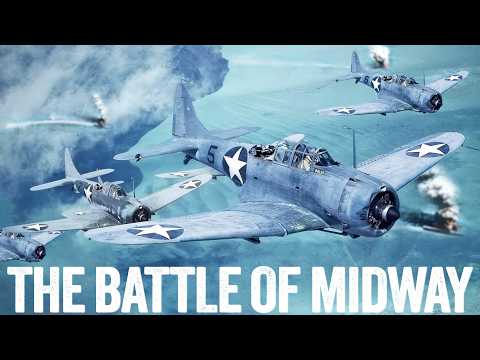
For Japan, Midway was the centerpiece of a grand strategy to expand its empire deep into the Pacific. The plan: seize the island, ambush the U.S. Pacific Fleet when it rushed to defend it, and annihilate America’s precious few aircraft carriers. If successful, Japanese dominance in the Pacific would be unassailable for generations.
Instead, the battle would become Japan’s greatest defeat in over 300 years. In one day, the fate of the Japanese Empire was sealed.
The road to Midway began with oil. Since the early 1930s, Japan’s invasions of China had strained relations with the United States. In July 1941, America led an international oil embargo and froze all Japanese assets. The effect was devastating. Japan imported 90% of its oil, and its reserves were rapidly depleting.
With time running out, Japan’s leadership made a fateful choice: seize resource-rich territories in Southeast Asia. First, they had to eliminate the U.S. Pacific Fleet at Pearl Harbor.
In the early hours of December 7, 1941, 360 Japanese aircraft launched from carriers 230 miles north of Hawaii. In two hours, 18 American warships were sunk or damaged, nearly 200 planes destroyed, and over 3,500 men killed or wounded. Japan lost just 29 aircraft. It was a stunning victory.
The next day, America declared war.
In the months that followed, Japanese forces swept through the Pacific: Guam, Wake Island, the Philippines, Thailand, Burma, Malaya, Borneo, and the Dutch East Indies. By March 1942, Japan had achieved every immediate war aim.
But one threat remained: three American aircraft carriers that had escaped Pearl Harbor.
In April 1942, those carriers—Hornet and Enterprise—sailed boldly to within 825 miles of Japan and launched 16 B-25 bombers in the Doolittle Raid. The attack caused little physical damage, but it shattered Japan’s sense of invincibility. The need to protect the Emperor had become paramount.
Japan’s military leaders concluded that the empire’s defensive perimeter must be pushed further into the Pacific. The target: Midway Island, 1,136 miles west of Hawaii. Its capture would provide a staging ground for future operations against Hawaii and, more importantly, lure America’s carriers into a decisive battle.
Admiral Isoroku Yamamoto, commander of the Combined Fleet, was the architect of the plan. He knew America’s industrial might and had opposed war with the U.S. But once committed, he was determined to win—his way. His gamble: a massive carrier strike force, a diversionary attack on the Aleutian Islands, and a submarine cordon to catch any American ships fleeing Pearl Harbor.
On the American side, Admiral Chester Nimitz took command of the Pacific Fleet after Pearl Harbor. He believed the age of the battleship was over. The future lay with aircraft carriers. His principle: for carriers, attack is the best defense.
But Nimitz had only four carriers. Yamamoto had eleven, including the four that would lead the Midway strike. Japan’s confidence was absolute. Some officers even worried the Americans might refuse to fight.
Then came a breakthrough. U.S. Navy codebreakers, led by Commander Joseph Rochefort, had partially cracked Japan’s JN-25 code. They suspected a major attack was planned, but the target was designated only as “AF.” Rochefort devised a simple trick: Midway was ordered to send a fake message that its water distillation plant had broken down. Soon after, a Japanese message was intercepted: “AF is short of water.” The target was confirmed.
Nimitz now knew the date—early June—and the location. He could concentrate his outnumbered forces and ignore the Aleutian diversion. Midway itself, with its bombers and radar, would serve as an unsinkable aircraft carrier.
The stage was set for the most consequential naval battle of the 20th century.
By late May, the Japanese fleet was at sea. Admiral Nagumo’s carrier strike force—Akagi, Kaga, Soryu, and Hiryu—sailed east through the fog, their decks packed with some of the finest aviators in the world. They were confident, battle-hardened, and utterly unaware that their every move was being watched.
On Midway, the defenders worked feverishly. Catalinas flew long patrols, scanning the empty ocean. B-17s and Marine fighters stood ready. The garrison had been reinforced, but no one told them that the largest fleet in history was bearing down on them.
On June 3, a Catalina spotted the Japanese invasion force far to the southwest. Reports flooded into Midway and to the American carriers waiting 325 miles northeast. Nimitz was certain the sighting was only the transport group—the real threat, Nagumo’s carriers, was still hidden to the northwest.
That night, B-17s attacked the transports but scored no hits. The first shots of Midway had been fired, but the decisive blow was yet to come.
At dawn on June 4, Nagumo launched 108 aircraft against Midway. As the strike force droned toward the island, the Japanese admiral kept a reserve of planes armed with torpedoes, ready in case American ships appeared. But he doubted they would.
His scout planes took off late, and one reported nothing but clouds. Nagumo had no idea that two American carrier groups were already within striking distance.
At 0530, a Catalina spotted the Japanese carriers. The report crackled over the radio: “Carrier sighted, bearing 320, distance 180.” On the American decks, pilots scrambled to their planes.
Spruance, commanding Task Force 16, decided to launch immediately. He would hit the Japanese while their decks were crowded with planes returning from Midway. Hornet and Enterprise turned into the wind and began launching their strike groups.
But the American attack was uncoordinated. Torpedo bombers from Hornet flew off in the wrong direction. The dive bombers climbed high, waiting for orders. The first wave to find Nagumo would be the slow, vulnerable Devastators—and they would pay a terrible price.
Meanwhile, the Japanese strike on Midway had returned. The pilots reported that the island’s runways were still operational. Nagumo now faced a dilemma: rearm his planes for a second strike on Midway, or prepare for a naval battle. He chose to rearm for Midway—just as the first American torpedo bombers appeared on the horizon.
The Devastators attacked without fighter cover. Zeroes pounced from above, and anti-aircraft fire filled the sky. One by one, the American torpedo planes fell. Not a single hit was scored.
But the sacrifice was not in vain. The Japanese combat air patrol had been drawn down to the deck, chasing the torpedo bombers. The skies above the Japanese carriers were momentarily empty.
At 1020, the Dauntless dive bombers from Enterprise and Yorktown arrived. They dove from 15,000 feet, unseen and unopposed. The first bomb hit Akagi’s flight deck, turning it into an inferno. Kaga was struck next, then Soryu. Within minutes, three of Japan’s four carriers were blazing wrecks.
The last, Hiryu, launched a counterstrike that crippled Yorktown. But by late afternoon, American dive bombers found Hiryu and left her burning. In one day, the Japanese Navy had lost four fleet carriers and the cream of its aviators.
Yamamoto, aboard the battleship Yamato, received the news in stunned silence. He ordered a retreat. Midway was over. The tide of the Pacific War had turned.
For the Americans, the cost was heavy: Yorktown sunk, 307 dead. But the strategic victory was absolute. Japan would never again take the offensive in the Pacific.
As the sun set on June 4, the surviving American carriers sailed east, their decks crowded with exhausted pilots. On the Japanese side, the survivors drifted in the water, watching their mighty fleet burn. The myth of Japanese invincibility was shattered, and the long road to Tokyo had begun.
The road to Tokyo would be paved with a new kind of horror. By 1944, Japan’s empire was in retreat. The perimeter they had hoped to build across the Pacific was collapsing, and the Americans were island-hopping ever closer to the home islands.
Japan’s aircraft production could not keep pace. Their experienced pilots were gone, replaced by boys who had barely learned to fly. And so a desperate strategy was born—one that would shock the world and change the psychology of war forever.
They called it Kamikaze. The Divine Wind.
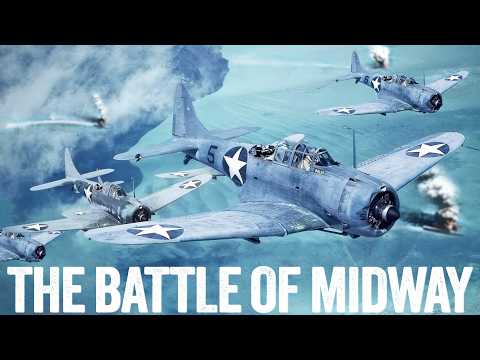
As American forces closed in on the Philippines, Vice Admiral Takijiro Onishi proposed a radical plan. Since Japan could no longer sink American carriers with conventional attacks, they would turn their planes into guided missiles. Pilots would fly their aircraft directly into enemy ships, trading their lives for one devastating blow.
The first volunteers were young men, many still in their teens. They wrote farewell letters to their families, drank ceremonial sake, and climbed into cockpits for a one-way mission. Some were eager. Others were terrified. All were expected to die for the Emperor.
On October 25, 1944, Lieutenant Yukio Seki led the first official kamikaze attack against the escort carrier USS St. Lo. His plane crashed into the flight deck, igniting ammunition and fuel. The ship sank within minutes. The age of the suicide attacker had begun.
The psychological impact on American sailors was profound. Radar might detect the incoming planes, but nothing could stop a pilot who had no intention of pulling up. Gunners who had trained to shoot down aircraft now faced enemies who seemed to welcome death.
Between October 1944 and the end of the war, nearly 4,000 kamikaze pilots would fly their final missions. They sank or damaged over 300 American ships, killing thousands of sailors. But they could not stop the American advance.
At Okinawa, the Japanese unleashed the largest kamikaze campaign of the war. Over 1,900 suicide attacks were launched in a desperate attempt to break the invasion fleet. Thirty American ships were sunk, hundreds more damaged. But the island fell.
In Washington, the casualty figures horrified President Harry Truman. The battles of Iwo Jima and Okinawa had shown that the Japanese would fight to the last man. Planners estimated that an invasion of Japan itself could cost a million American lives.
Then came a weapon that promised to end the war without an invasion. On August 6, 1945, the Enola Gay dropped the first atomic bomb on Hiroshima. Three days later, a second bomb fell on Nagasaki. Japan surrendered. The war was over.
But the kamikaze legacy would endure. Were they heroes or fanatics? Martyrs or victims? The answer depended entirely on which side of the Pacific you called home.
And yet, for all the terror they inspired, the kamikaze revealed something deeper about the Pacific War. It was a conflict where two nations, separated by an ocean and a universe of culture, fought with a ferocity that neither had ever known.
In the decades since, historians have debated whether the kamikaze were a military necessity or a symptom of a dying empire’s refusal to face reality. What is certain is that they failed to change the outcome of the war. The atomic bombs, not the suicide attacks, ended the conflict.
Meanwhile, the Mitsubishi Zero, the legendary fighter that had once ruled the Pacific skies, ended the war as a shadow of its former self. By 1945, most Zeros were used as kamikaze platforms, their pilots barely trained. The aircraft that had once been the terror of the Pacific was now little more than a guided missile.
In the end, the Pacific War was decided not by individual heroism or sacrifice, but by industrial might, codebreaking, and the cold calculus of strategy. Japan’s gamble at Midway cost them the war; the kamikaze only delayed the inevitable.
What lessons can we draw from the men who flew to their deaths, and the men who shot them down? Perhaps that the line between courage and fanaticism is thinner than we like to think.
And that the most important battles are fought not just with weapons, but with intelligence, logistics, and the willingness to adapt. What do you think—were the kamikaze a noble sacrifice or a tragic waste? Share your thoughts in the comments.
Report this article
Select a reason for reporting:






