On October 13, 1972, a Uruguayan Air Force plane carrying 45 people, including a rugby team and their families, crashed into the heart of the Andes. The world watched in horror as survivors battled freezing temperatures, starvation, and impossible choices. But how much of the acclaimed film Society of the Snow is true? The answer will shock you.
Director J.A. Bayona went to great lengths for authenticity, but the movie still takes liberties. From the crash sequence to the rescue, the truth is even more harrowing than fiction. What you’re about to read will challenge everything you thought you knew about this harrowing tale of survival.
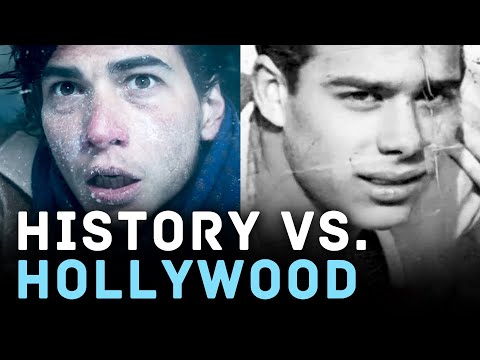
The film begins with the rugby team’s plans for a trip to Chile, but in reality, the plane made an overnight stop in Mendoza, Argentina, due to bad weather—a detail omitted from the movie. The crash itself is depicted with visceral accuracy, but the aftermath reveals key deviations. For instance, the co-pilot, Dante Lagurara, was pinned alive and begged passengers to end his suffering with his gun—a grim detail left out of the film.
Another major fabrication involves Numa Turcatti’s leg injury. In the movie, he heroically kicks out a cockpit window to save the group, but in truth, he was simply stepped on in the dark, leading to a fatal infection. This change turns a tragic accident into an act of heroism, altering the narrative. The avalanche scene also differs: the film shows Numa digging out, but in reality, it was Roy Harley who pushed the window free after hours of collective effort.
The rescue sequence is similarly simplified. The film shows all 14 survivors rescued at once, but in real life, only six were airlifted on the first day due to helicopter weight limits. The remaining eight were rescued the next day. These changes, while minor, highlight the film’s need to streamline an already complex story.
As the survivors face their darkest hour, the film accurately portrays their descent into cannibalism, a decision driven by necessity and faith. But the true story is even more nuanced, with Numa Turcatti’s reluctance to eat meat contributing to his death. His passing inspired the final expedition that led to rescue.
Stay tuned as we delve deeper into the facts behind Society of the Snow and uncover more hidden truths.
But the most striking departure from reality isn’t in the crash or the avalanche—it’s in how the film handles the unthinkable decision that kept sixteen men alive. After weeks of starvation, the survivors learned from a radio broadcast that the search had been called off. The movie shows this revelation with brutal clarity, and here, the filmmakers actually underplayed the truth.
In real life, the survivors had already begun eating the flesh of their dead companions before the radio announcement. The film compresses the timeline, making it seem as though the news triggered their choice. In truth, the decision came earlier, after they tried to eat leather from belts and shoes and found it useless.
Roberto Canessa later wrote that he prayed for guidance in the snow, asking God’s forgiveness before taking the first bite. The movie captures this spiritual agony, but it omits a crucial detail: the survivors made a pact. If they died, they gave one another permission to use their bodies. It was an act of posthumous generosity, not desperation alone.
The film also glosses over the group’s initial attempts to preserve dignity. They laid the bodies out in the snow, said prayers, and only then—after a collective discussion—did they proceed. Some survivors still refused for days, including Numa Turcatti, whose refusal weakened him further and contributed to his fatal infection.
When the avalanche struck on October 29th, it killed eight more people and trapped the survivors for three days. The movie shows Numa kicking out a cockpit window to save the group, but that’s pure fiction. In reality, Gustavo Zerbino, Roberto Canessa, and Roy Harley took turns digging. Harley finally shoved the window free, then climbed up through feet of snow only to see the storm still raging. They waited two more days before emerging.
These changes matter because they reshape who gets credit for survival. Numa Turcatti was indeed a moral compass for the group, but his real heroism lay in his compassion and his refusal to compromise his principles—not in a dramatic window-kicking scene that never happened.
The film’s final act, however, delivers its most significant departure from the truth. In Society of the Snow, the rescue unfolds in a single, triumphant sweep: all 14 survivors are lifted from the glacier at once. But reality was far more fragmented and agonizing.
Only six survivors were airlifted on December 22, 1972. The helicopters, limited by altitude and weight, could carry no more. Four medics and rescuers stayed behind with the remaining eight, who spent another freezing night on the mountain. They were rescued the following day.
Why did the filmmakers simplify this? Likely to avoid extending the already lengthy runtime. But the two-stage rescue underscores the survivors’ prolonged ordeal—a detail that would have added another layer of tension and relief.
Equally overlooked is the role of the three men who first spotted the survivors: Sergio Catalán and two others. The movie shows only Catalán, but in truth, he was accompanied by Armando and Enrique, peasants who provided food and shelter to Nando Parrado and Roberto Canessa while Catalán rode for help.
When Catalán returned with policemen, Canessa and Parrado rushed to embrace him. “There is no need to thank me,” he whispered. “Thank God.” That moment, captured in the film, is one of the few unaltered truths.
As for the cannibalism, the film handles it with sensitivity, but it omits the survivors’ pact: they gave one another permission to use their bodies after death. This act of posthumous generosity transformed a desperate measure into a sacred covenant.
Society of the Snow is a powerful tribute, but it is not a documentary. The real story is messier, more painful, and ultimately more inspiring. The survivors’ courage wasn’t in dramatic gestures—it was in the quiet, daily choice to live.
What do you think? Did the filmmakers owe us the full truth, or does artistic license serve the story better? Share your thoughts in the comments below.
Report this article
Select a reason for reporting:






