August 1969, Saigon. A cramped briefing room crackled with tension. A two-star Pentagon general, face flushed purple, demanded an explanation. A 34-year-old Australian major had just uttered five words that shattered the room’s fragile decorum: “We don’t count bodies.” The silence that followed was deafening—eight seconds of disbelief before the shouting erupted.
The general, a career officer who had never set foot in the jungle, sputtered for clarification. Surely the major meant a different methodology, a more accurate system. The Australian looked at him as if he’d asked why water was wet. “No, sir. We don’t count them at all.”
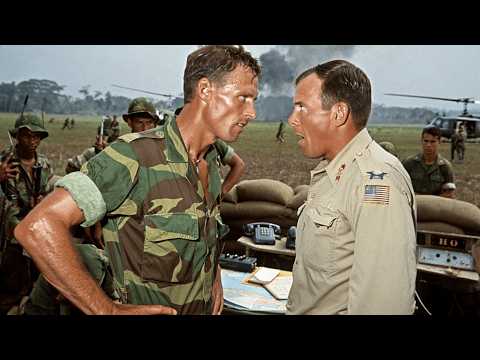
This was the height of the Vietnam War, a conflict that would claim 58,000 American lives. The body count had become the defining metric of American strategy—a single number that generals used to prove they were winning, that politicians used to justify the war. Field units inflated their numbers, counted civilians, counted the same bodies twice, turning warfare into a sick accounting game where higher numbers meant promotions and lower numbers meant failure.
Into this madness had walked 8,000 Australians who treated the body count like a joke. Not because they weren’t killing the enemy—they were killing at ratios that made Pentagon statisticians check their math three times—but because they understood something the Americans had forgotten: you don’t win guerrilla wars by counting dead farmers. You win by making the enemy irrelevant.
The Australian task force in Phuoc Tuy province wasn’t just fighting a different war; they were fighting a different kind of war. Same jungle, same enemy, same weapons mostly, but the philosophy, the tactics, the entire approach—it might as well have been a different planet. This is the story of that difference. The story of what happens when you stop measuring success by how many people you kill and start measuring it by whether the enemy can still function.
Vietnam in 1969 was a war being lost in metrics. The American command had convinced itself that body counts told the story. Kill more enemy than you lose, maintain a favorable exchange ratio, and eventually you grind them down. It was industrial warfare logic applied to guerrilla conflict. McNamara’s Pentagon loved numbers. They could graph body counts, show trends, prove to Congress that progress was being made. “Look, we killed 40,000 this month. We’re winning.” Except they weren’t.
The Viet Cong and North Vietnamese Army kept coming. Villages that were pacified on Monday were hostile again by Friday. Enormous sweep operations that generated massive body counts changed nothing strategically. The Americans would roll through an area with overwhelming firepower, count the dead, declare victory, and leave. Two weeks later, the enemy was back like they’d never left.
The Australian task force arrived in Phuoc Tuy province in 1966 with 4,500 men—a single province. They weren’t trying to win the whole war, just make one province genuinely secure. One province where the enemy couldn’t operate freely, couldn’t tax the villages, couldn’t recruit, couldn’t move supplies. The Americans thought this was adorably modest, quaint even. The Australians were allies, sure, but they were small-time. They’d handle their little province, and the grown-ups would fight the real war.
Three years later, Phuoc Tuy province was the most secure province in III Corps—not secure in the American sense, big sweeps that looked good on paper, but actually secure. The enemy infrastructure dismantled, the supply routes cut, the political cadres eliminated or fled, villages that stayed pacified because the VC couldn’t get back in. And the Australians had done it with kill ratios that made the numbers look like typos. First Australian Task Force lost 521 killed in action during their entire deployment. They inflicted an estimated 30,000 enemy casualties. That’s a kill ratio of roughly 58 to 1. Some operations went higher—100 to 1, 150 to 1. The Battle of Long Tan in 1966: 18 Australians killed, enemy losses estimated between 500 to 500, depending on the source.
But here’s the thing the Pentagon couldn’t grasp: the Australians didn’t care about those numbers. They cared about whether the enemy could still function.
Major Harry Smith wasn’t supposed to be the one to say it. The briefing was routine—Australian liaison officers attended American command briefings weekly. Coordination, intelligence sharing, the usual inter-allied bureaucracy. Smith was there because his CO was dealing with a crisis back at Nui Dat, and someone had to represent the task force.
Smith had joined the Australian Army in 1952. He’d served in Korea. He’d spent the late 50s training in jungle warfare. By 1969, he was a veteran of three years in Vietnam, a company commander who’d led patrols deep into VC-controlled territory, a man who understood what worked and what didn’t. He was also blunt to the point of career damage.
The briefing covered the previous week’s operations. An American division had conducted a major sweep through Binh Duong province. The numbers were impressive: 432 enemy killed, significant bunker complexes destroyed. The briefing officer presented this as a clear success. Then came the question period. A colonel asked about follow-up operations. What was the plan for maintaining pressure? The briefing officer looked confused. “Sir, we’re already redeploying to the next AO. The operation achieved its objectives.”
Smith, sitting in the back row, made a sound. Not quite a laugh. Not quite a cough. Just a sound. The two-star general running the briefing looked up. “You have something to contribute, Major?”
Australian junior officers did not normally contradict American generals, not in formal briefings, not in front of a room full of field grade officers. Smith knew this. He waited for maybe two seconds. “What were the objectives, Sir?”
The general’s eyes narrowed. “Attrition of enemy forces, as stated.”
“And the province after you left?”
“I’m sorry?”
“The province, Sir, after your forces redeployed, who controls it?”
The room had gone quiet. You could hear the air conditioning. The general’s voice dropped to that dangerous register that career officers recognize instantly. “We killed 432 enemy combatants, Major. I’d say we control it.”
“For how long?”
Now the general was angry. “What exactly are you implying?”
Smith stood up, not aggressive, just the basic courtesy of addressing a senior officer from a position of attention. His voice stayed level, almost friendly. “I’m asking, sir, how you measure success because if those 432 enemy are replaced next week and the province looks exactly like it did before the operation, then what did you achieve? You got a big number, but did you win anything?”
The general’s face was doing interesting color changes. “We maintain operational pressure through continuous body counts.”
Smith said, “You count bodies. We’ve read your after-action reports. It’s the primary metric. How many did we kill? It’s a valid measure of attrition.”
“Is it, though?”
That was the moment. That was when Smith crossed the line from impertinent to insubordinate. You didn’t interrupt a general. You definitely didn’t question their strategic framework in front of their staff. Smith did it anyway. “Sir, with respect, the Australian task force doesn’t count bodies. We never have. We measure completely different things.”
The general leaned forward. “Such as?”
“Can the enemy still operate? Can they still tax villages? Can they still move supplies? Can they still recruit? Can they still execute political control?” Smith ticked them off on his fingers. “We don’t care how many we kill unless killing them changes those things. And most of the time it doesn’t.”
A lieutenant colonel tried to salvage the situation. “Major, the body count is a measurement of—”
“Of nothing that matters,” Smith said flatly. “You can kill a thousand VC and if their infrastructure is still intact, you’ve accomplished exactly nothing. They’ll replace the dead in a month. But if you kill 20 of the right people—the political officers, the logistics specialists, the local commanders—and destroy the supply caches and interdict the trails and make the villages genuinely hostile to enemy presence, then you’ve won something real.”
The general’s voice was ice. “And you’ve achieved this in your province?”
“Yes, sir.”
“With what? A fraction of our forces.”
“We’ve made Phuoc Tuy the most secure province in your corps area. Not by killing the most people, by making enemy operations impossible.”
The room erupted.
To understand why Smith’s words detonated like a claymore, you need to understand what the Americans had invested in body counts. It wasn’t just a metric; it was the entire justification for the war’s conduct. Politicians needed proof that American deaths meant something. Generals needed proof that their strategies worked. Field commanders needed proof that their operations achieved results. And in a guerrilla war where there were no front lines to advance, no cities to capture, no territorial gains to measure, the body count became everything.
It became promotions. It became funding. It became the difference between a successful operation and a failed one—which meant it became corrupted immediately. Units started inflating numbers. If you found three dead VC, you reported five. If you called in artillery on a suspected position and heard secondary explosions, you estimated twenty killed. If you swept through a village after a firefight and found six civilian bodies, well, they were probably VC sympathizers anyway. Count them.
The corruption wasn’t malicious. It was structural. The system demanded numbers, so numbers appeared. Commanders who reported low body counts got questioned. Commanders who reported high numbers got medals. Meanwhile, the war got worse.
The Australians had watched this unfold with something between bafflement and disgust. They’d come to Vietnam with a completely different framework—British Commonwealth counterinsurgency doctrine developed in Malaya, Kenya, and Borneo. Lessons learned from fighting communist insurgencies in actual jungles against actual guerrilla forces who actually knew what they were doing.
The Malayan Emergency had taught them: “You don’t win by killing insurgents faster than they recruit. You win by separating the insurgents from the population, destroying their supply networks, and making guerrilla operations logistically impossible.” Hearts and minds, yes, but backed by ruthlessly effective small unit operations that targeted the enemy’s infrastructure, not his manpower.
The Americans were fighting a war of attrition. The Australians were fighting a war of systems. And Major Smith had just said it out loud in a room full of officers whose careers depended on pretending the American approach worked.
The shouting match lasted ten minutes. Three different colonels tried to explain to Smith why body counts were a valid metric. Smith responded with questions they couldn’t answer. If body counts meant progress, why wasn’t the war getting better? If attrition worked, why were enemy recruitment rates stable? If killing VC faster than they could replace them was the strategy, why were there more enemy in country now than in 1965?
The general finally shut it down. He told Smith his observations were noted, and he could return to his task force. The tone suggested Smith should expect a diplomatic incident. Smith saluted and left. He expected to be reprimanded, maybe recalled to Australia. You didn’t tell American generals their entire strategic framework was wrong and walk away clean.
Instead, something strange happened. Three days later, a Pentagon analysis team showed up at Nui Dat. They wanted to observe Australian operations, understand the tactical differences, see what this different approach looked like in practice. The Australian Task Force Commander, Brigadier Stuart Graham, was skeptical. He’d dealt with American observers before. They usually showed up, watched for a day, concluded that small-scale operations were fine for small allies but America needed to think bigger, and left.
But these analysts were different. They’d actually read the after-action reports. They’d noticed that Phuoc Tuy’s security indicators were trending opposite to everywhere else in III Corps. They wanted to know why. Graham assigned them to follow a rifle company on patrol—Delta Company, 6th Battalion, Royal Australian Regiment, commanded by Major Smith, the company that didn’t count bodies.
They came from suburbs and farms and coastal towns most Americans couldn’t find on a map. Private Kevin “Dasher” Wheatley had been a jackaroo, a ranch hand working cattle stations in rural New South Wales. Before the Army, his world was dirt roads, stock horses, and fencing wire. He’d never left Australia, never seen combat, never fired a weapon at another human being.
Corporal Barry “Blue” McKenzie had shaped surfboards in Torquay, Victoria. His hands knew foam and resin, not rifle stocks and grenades. His biggest worry had been whether the surf would be good on the weekend. Private Jim Richmond had been a diesel mechanic’s apprentice in suburban Brisbane. Fixed trucks, drank beer with his mates, dated a girl named Sharon who worked at the chemist.
Six months of training turned them into something else. Not overnight, not through magic—through a specific, deliberate process that the Australian Army had refined over decades of jungle warfare. The training centered at Canungra, in the mountains behind the Gold Coast: the Jungle Warfare School. Six weeks that broke down everything you thought you knew about combat and rebuilt it for an environment where you couldn’t see fifty meters, couldn’t hear properly, and couldn’t trust anything.
They learned to move silently through vegetation so thick you had to feel your way forward. They learned to shoot accurately in three-second windows when the jungle opened up enough to see a target. They learned to listen—really listen—because in the jungle hearing an AK safety click off might be the only warning you got.
But the real transformation wasn’t physical; it was mental. They learned patience. American doctrine emphasized speed and violence of action. Get in, hit hard, get out. Overwhelming firepower applied rapidly. It worked in conventional warfare. In the jungle, it got you killed. The Australians learned to wait, to watch, to spend eight hours lying motionless observing a trail junction, to follow enemy tracks for three days without engaging, to ambush with such discipline that the first shot fired was the only shot needed.
Dasher Wheatley, the jackaroo who tracked cattle, became a tracker who could follow VC spoor through jungle that Americans thought was impenetrable. He could read disturbed leaves, notice grass bent the wrong way, spot a footprint in mud that was six hours old. Blue McKenzie, the surfboard shaper with artist’s hands, became a scout who could move through the jungle like smoke. He learned to see patterns—the way vines hung, the way clearings formed, the thousand tiny signals that meant ambush ahead or bunker complex nearby. Jim Richmond, the mechanic, became a machine gunner who could field strip his M60 in darkness, clear a jam by touch, and lay down suppressing fire with such precision that his tracer rounds bracketed enemy positions without wasting ammunition.
They weren’t transformed into super soldiers. They were transformed into professionals who understood their environment and their enemy. The difference was everything.
The Pentagon analysts followed Delta Company for nine days. They watched Dasher read tracks like scripture, Blue melt into the vegetation, Jim clear a jammed M60 in total darkness. They watched Smith refuse three separate engagements because the targets didn’t matter. “We’re not here to collect scalps,” he told them. “We’re here to break things that can’t be replaced.”
Their report hit Saigon like a grenade. In careful bureaucratic language, it admitted the unthinkable: the Australians had secured their province with a fraction of the resources, and the body count had nothing to do with it. Three generals tried to bury it. The numbers wouldn’t die.
Smith never faced a reprimand. Instead, he was promoted and spent his career teaching the lesson: “Don’t count bodies. Count results.” Phuoc Tuy fell in 1975 like everything else—but the doctrine survived, filtering into American special operations for decades.
Dasher went back to cattle stations. Blue shaped surfboards for forty years. Jim fixed diesel engines and never once tallied the men he’d killed. “Numbers lie,” Blue told a nephew late in life. “Results don’t.”
So here’s the question that still haunts every war since: if we know what actually works, why do we keep counting the wrong things?
Report this article
Select a reason for reporting:






