The autumn light filtered through the dusty windows of the old Victorian house in Philadelphia, casting long shadows across the wooden floor. Dr. Sarah Mitchell carefully lifted another box from the pile, her hands protected by white cotton gloves. As a historian specializing in 19th-century American women’s lives, she had spent countless hours in attics like this one, but something about this particular collection felt different.
She had been called to evaluate the estate of a reclusive family, and the sheer volume of artifacts was overwhelming. Boxes upon boxes of letters, diaries, and photographs filled the dimly lit space. Sarah’s eyes were drawn to a small, ornate frame tucked away in the corner of the attic, its gold leaf peeling with age.
She picked it up and wiped away the dust with a gentle cloth. The portrait showed two women, their expressions serene, dressed in the high-collared fashion of the 1880s. On the back, a faded inscription read: “To my dearest Eleanor, with love, Margaret.” Sarah smiled at the intimate gesture, but her historian’s instinct told her there was more to this image than met the eye.
She turned the frame over and studied the women’s faces. The one on the left, presumably Margaret, had a soft smile and kind eyes. The other, Eleanor, stood slightly behind her, her hand resting on Margaret’s shoulder. But something about Eleanor’s hand caught Sarah’s attention. It was clenched, not relaxed like Margaret’s. And was that a faint outline of something in her grip?
Sarah’s heart quickened. She had seen enough old photographs to know that poses were deliberate, every detail carefully arranged. Why would Eleanor’s hand be clenched? She zoomed in on the image, but the resolution was too low to make out any specifics. She needed a closer look.
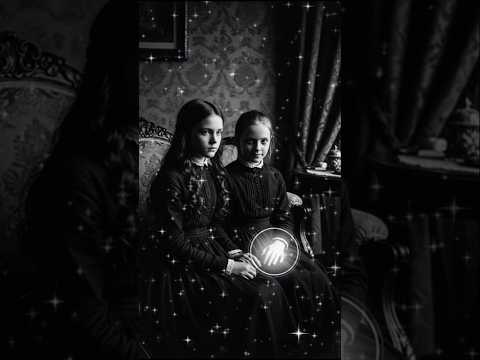
She carefully removed the photograph from its frame, hoping to find a higher-resolution copy or perhaps a note hidden behind it. Instead, she found a small, folded piece of paper wedged between the photo and the backing. Her fingers trembled as she unfolded it.
The paper was brittle, the ink faded but still legible. It was a list of names, dates, and locations—all women, all from the same era. At the bottom, a single sentence was scrawled in a different hand: “They thought we were just wives and mothers, but we were so much more.” Sarah’s mind raced. Was this some kind of secret society? A network of women?
She turned her attention back to the photograph. Eleanor’s clenched hand now seemed ominous. What was she holding? A key? A weapon? Sarah knew she had to find out. She carefully placed the photo and the note into an evidence bag and continued searching the attic, her pulse pounding with excitement and a hint of fear.
Hours later, Sarah sat in her office, the photograph scanned at high resolution on her computer screen. She had enhanced the image, focusing on Eleanor’s hand. The object was still blurry, but its shape was unmistakable: a small, ornate key. But what did it unlock? And why was it hidden in a portrait?
She thought about the list of names. Were these women connected to the key? Were they part of some underground movement? Sarah’s research into 19th-century women’s history had uncovered many hidden stories, but this felt different. This was personal. She was holding a piece of a puzzle that had been deliberately concealed for over a century.
As she delved deeper into the lives of the women on the list, Sarah uncovered a pattern: all of them had been involved in the suffrage movement, but not publicly. They were the silent supporters, the ones who funded the cause and sheltered activists. But there was one name that stood out: Margaret Ashford, the woman in the portrait. She had been a wealthy widow, known for her philanthropy, but her diary revealed a darker side.
Sarah spent the next week tracking down descendants of the women on the list, hoping to find more clues. Most had no knowledge of their ancestors’ secret activities, but one great-granddaughter mentioned a locked chest that had been passed down through generations, never opened. “We were told never to open it,” she said. “It was supposed to be cursed.”
Sarah’s heart raced. Could the key in the photograph open that chest? She arranged to visit the family, her mind swirling with possibilities. What could be inside? Documents? Artifacts? Or something more sinister?
As she drove to the small town where the chest was kept, Sarah couldn’t shake the feeling that she was being watched. The autumn leaves rustled in the wind, and the sky grew dark. She glanced in her rearview mirror, but the road behind her was empty. Still, the unease lingered.
She arrived at the old farmhouse and was greeted by the great-granddaughter, a woman in her sixties with wary eyes. The chest sat in the corner of the living room, a heavy wooden box bound with iron straps. Sarah inserted the key from the photograph, and with a satisfying click, the lock opened.
Inside, she found a stack of letters and a small journal. The first letter was addressed to Margaret, and the handwriting was shaky, as if written in haste. “They know about us. We must hide everything. The key is in the portrait. Trust no one.” Sarah’s blood ran cold. Who were “they”? And what had happened to these women?
She opened the journal, and the first entry sent a shiver down her spine. “Today, we buried the evidence. If anyone finds it, our lives are forfeit.” Sarah realized she had stumbled upon a secret that had been buried for generations—and someone might still be willing to protect it.
She looked up from the journal, her eyes meeting the great-granddaughter’s. “We need to talk,” Sarah said, her voice steady despite the fear creeping into her heart. “There’s more to this story than we ever imagined.”
But before the woman could respond, a loud knock echoed through the house. They both froze. The knock came again, more insistent. Sarah’s hand instinctively went to her phone, but she hesitated. Who could it be? And how had they found her so quickly?
The great-granddaughter, whose name was Ruth, moved toward the window and peered through the faded curtains. Her face went pale. “It’s a man in a dark coat,” she whispered. “I don’t recognize him.” Sarah’s grip tightened on the journal. The knock came a third time, harder now, rattling the old door in its frame.
Sarah motioned for Ruth to stay quiet and crept to the hallway, her phone finally in hand. Through the frosted glass she could make out a tall silhouette, hat pulled low. Then a voice, muffled but calm: “Mrs. Calloway? I’m from the historical society. We received a call about a disturbance.” Ruth’s eyes widened. She hadn’t called anyone.
Sarah’s mind raced. The historical society had no idea she was here—she’d told no one except her assistant. She gestured to Ruth to stay back and cracked the door just enough to speak. “There’s been no disturbance,” she said evenly. “May I see some identification?” The man hesitated, and in that pause, Sarah noticed his shoes: polished, expensive, far too new for a county historian.
He produced a badge, but the laminate caught the light wrong, the seal slightly off-center. Sarah had spent years authenticating documents; she knew a forgery when she saw one. “I’ll need to verify that with the main office,” she said, and closed the door before he could answer. She turned to Ruth, her voice low and urgent. “We need to leave. Now.”
They gathered the chest’s contents into Sarah’s satchel and slipped out the back, through a kitchen door that opened onto a muddy garden. The autumn wind bit at their faces as they hurried toward Sarah’s car. Behind them, a shadow moved along the side of the house.
They drove for twenty minutes in silence before Sarah pulled into a gas station and finally exhaled. Ruth was shaking. “Who was that? How did he know I was here?” Sarah shook her head. “I don’t know. But someone has been watching this family for a long time. The question is why.”
She pulled out the journal again, flipping past the first entry to the pages that followed. The handwriting grew tighter, more frantic. Margaret had documented meetings held in cellars and church basements, funds smuggled through millinery shops, and a network of women who forged documents to protect suffragists on the run. But one entry made Sarah’s breath catch.
“Eleanor has taken the ledger. If they find it, every name will be exposed. I told her to burn it, but she says the truth must survive us.” Sarah looked up. “There’s a ledger,” she said. “A record of everyone involved. If it still exists, it could rewrite what we know about the suffrage movement—and expose the people who tried to bury it.”
Ruth stared at her. “My grandmother always said the chest was cursed. Maybe she meant it was dangerous.” Sarah nodded slowly. The men who had buried this evidence a century ago might have descendants—descendants with something to lose. She glanced at the gas station’s security camera and wondered how long it would be before the man in the dark coat found them again.
She reached for her phone and dialed her assistant. “I need you to pull every record you can on the Ashford estate and any litigation involving the family between 1885 and 1920,” she said. “And check if anyone has tried to access the archive in the last month. Anyone at all.” There was a pause on the line, then a hesitant voice: “Dr. Mitchell, someone already did. Two days ago. They used your credentials.”
Sarah’s blood turned to ice. Someone had been inside her account, watching her every move from the start. She thanked her assistant and hung up, her mind racing. The man in the dark coat wasn’t a lone actor—he was part of something larger, something that had been guarding this secret for generations.
She turned to Ruth, her voice steady despite the fear. “We can’t go to the police. Not yet. We don’t know who we can trust.” Ruth nodded, her hands trembling. Sarah opened the journal again, scanning the final pages. There, in Margaret’s shaky hand, was a name: Thomas Ashford, Margaret’s own brother-in-law, a man who had built his fortune on the very industries the women had fought against.
“He knew,” Sarah whispered. “He knew about the network, and he tried to destroy it.” The ledger Eleanor had hidden was the key—not just to the past, but to a present-day conspiracy. If the ledger still existed, it could expose the descendants who had inherited not just wealth, but the determination to keep their ancestors’ crimes buried.
Sarah made a decision. She would find the ledger, no matter the cost. She looked at Ruth, who was now watching her with a mix of fear and hope. “Your grandmother was right,” Sarah said. “The chest is cursed—but only for those who have something to hide.”
They drove to Sarah’s office, where she locked the journal and the photograph in her safe. Then she began to dig into Thomas Ashford’s descendants, following a trail of shell companies and offshore accounts that led to a single name: a reclusive billionaire with a passion for collecting historical artifacts—and a reputation for making problems disappear.
As dawn broke over Philadelphia, Sarah stared at the screen, the weight of the discovery pressing down on her. The story of Margaret and Eleanor was no longer just history; it was a living, breathing danger. And she was now part of it.
She picked up her phone and dialed a number she hadn’t called in years—an investigative journalist known for taking on impossible cases. “It’s Sarah Mitchell,” she said. “I have a story you won’t believe. But we have to move fast.”
What would you do if you held the key to a century-old secret—and someone was willing to kill to keep it hidden?
Report this article
Select a reason for reporting:






