How close do you have to get to an enemy soldier before you can count the buttons on his shirt and still not be seen? In the jungles of Vietnam, the Australian SAS answered that question in a way no textbook, no training manual, and no Hollywood movie has ever truly captured. They didn’t just get close to the enemy. They slipped into their blind spots, breathed their air, smelled their sweat, studied the stitching on their uniforms, and then melted back into the foliage without leaving a single trace behind. These weren’t encounters measured in meters. They were measured in inches. A handful of centimeters of humid jungle air separated life from death.
This is not exaggeration. This was the strange, terrifying reality of men who learned to move so silently that even the jungle didn’t notice them passing. To understand how the SAS became capable of pulling off something that sounds like myth—getting close enough to read the faded lettering on a canteen dangling from an NVA soldier’s belt—you first have to imagine the world they operated in.
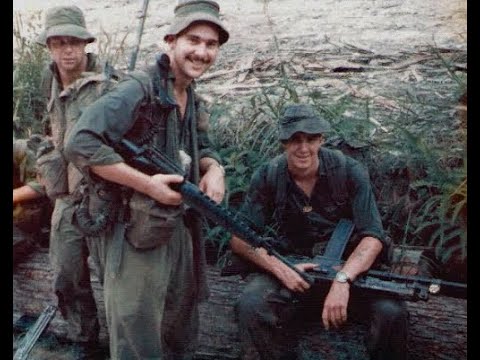
The Vietnamese jungle was not just a battlefield. It was a sensory overload of dripping vines, thick mud, rotting leaves, and shadows that moved even when nothing was there. Sound carried unpredictably. Smell lingered. A single snapped twig could mean the difference between a successful reconnaissance mission and a firefight against a battalion-sized force. Most soldiers did everything they could to avoid getting anywhere near the enemy without overwhelming firepower at their side. The SAS, on the other hand, often crawled toward them—not to attack, not to ambush, but simply to observe, to gather intelligence so precise, so close, so detailed that commanders back at headquarters could hardly believe how the information was obtained.
Imagine lying flat against the wet earth, chest pressed into the soil, sweat mixing with mud until your skin blends with the ground beneath you. Imagine crawling forward an inch at a time, pushing your body forward only when the wind rustles the leaves, or a distant bird call masks the faint scrape of a sleeve brushing against a vine. Imagine every muscle controlled, every breath measured, your heart beating so loudly in your own ears that you’re convinced the enemy will hear it too.
This was the world the SAS lived in. This was their craft. American soldiers, especially LRP teams and SEALs, were impressed by the Australians’ ability to disappear. But even they knew there was a difference between being stealthy and being invisible. The SAS didn’t just hide in the jungle. They became part of it. They didn’t just avoid detection. They made detection impossible. And because of that, they found themselves in situations no one else would dare approach. Close enough to see the pattern of sweat rings on an NVA soldier’s collar. Close enough to count the small metal buttons on his chest pocket. Close enough to see the tiny frayed thread hanging loose from his uniform before silently slipping away into the green darkness once more.
The Vietnamese jungle wasn’t just terrain. It was a teacher, a punisher, a filter for the unworthy. For the Australian SAS, it wasn’t enough to survive in it. They had to become fluent in its language. Every leaf, every patch of moss, every shaft of filtered green light held meaning. The jungle didn’t care about rank or training. It didn’t care how many push-ups you could do or how good you looked in uniform. It cared only about silence, patience, and respect. If you moved too fast, it punished you with noise. If you breathed too hard, it echoed your presence through the underbrush. If you carried too much, it sapped your strength and left you vulnerable. The SAS learned quickly. Either you adapted or you disappeared permanently.
Unlike open terrain, where movement could be rapid and force could be masked, the jungle broke down warfare into fragments. Visibility was rarely more than a few meters. Light didn’t behave like it did in the open. The triple canopy filtered everything into a kind of surreal green haze. Sunlight fractured and bent, casting distorted shadows and creating illusions. There was no such thing as a clear line of sight, only gaps in the chaos. Every footstep had to be deliberate. Even your own breathing became the enemy.
The SAS understood that in this world, technology had limits. Radios gave away positions. Large backpacks made you clumsy. Shiny metal reflected light. Even the smell of soap or canned food could give you away to an NVA tracker with a sharp nose. So they stripped themselves down to the essentials. Gear was modified, wrapped, dulled, or abandoned altogether. Belts were padded with cloth to prevent metal-on-metal clinking. Weapon slings were wrapped in black tape to eliminate friction noise. Their faces weren’t painted for intimidation. They were painted to match the exact hues of moss and tree bark. Some even darkened their teeth to avoid a flash of white when they smiled or grimaced. The goal wasn’t just to blend in visually. It was to disappear entirely from the enemy’s senses.
But even camouflage wasn’t enough. The real mastery came from movement—or rather, the lack of it. The SAS moved like ghosts, not men. Patrols operated with an almost unnatural slowness. Ten men could take thirty minutes to move ten meters. They waited for the jungle to give them permission. A gust of wind, a bird call, the distant crack of a branch under something else’s weight. Only then would they shift inch by inch, elbow pulling, toe pressing, never rising, never exposing a silhouette. Every step was calculated, every noise rehearsed. And often they’d halt for hours, motionless, faces in the dirt, just to let a passing NVA unit walk by within arm’s reach. If you twitched, you died.
And yet, the jungle could be an ally, too. But only if you earned its trust. The SAS learned how to use tree roots as cover, how to crawl through streams without rippling the surface, how to track wind direction by watching the movement of ant columns. They learned to spot trails not by footprints, but by subtle changes in the way vines were pushed aside, or how bark had been recently scraped. They became readers of a living language most soldiers didn’t even know existed. Where others saw the jungle as an obstacle, the SAS saw it as a partner. And in return, the jungle gave them concealment so perfect, so total that even the NVA—themselves masters of guerrilla warfare—feared what they could not see. The Australians weren’t hiding. They were hunting. And they did it by becoming what the jungle demanded. Slow, silent, and invisible. Because in that world, guns were optional. Presence was power. Absence was dominance. And silence was the deadliest weapon of all.
To outsiders, it looked absurd. Grown men armed to the teeth, crawling through the mud like snakes, their faces pressed into the jungle floor. Their movement so slow they seemed frozen. But to the Australian SAS, this was no madness. This was mastery. Crawling wasn’t just a movement technique. It was a philosophy, an obsession, a ritual of control. In a place where sound traveled like wildfire, and a single mistake could mean instant death, how you moved was everything.
The jungle floor was no friend. It was a shifting minefield of dead leaves, twigs, broken bamboo, thorn vines, ant nests, and animal droppings. Each square meter had the potential to betray you with the faintest snap or rustle. But the SAS trained for this. They didn’t just crawl—they ghosted. The motion began not with legs, but with breath. One slow inhale through the nose, one exhale through clenched teeth or damp cloth. Then—only then—a slow pull of the forearm. Not lifting, never lifting, but dragging, letting the body slide over the terrain, toes pointed, knees kept flat. Movement was distributed across the chest, elbows, and thighs, keeping pressure low and contact even. They practiced this for hours, days, months. In training, instructors would place dry leaves beneath soldiers and listen for the tiniest sound. Fail, and you did it again and again until every inch of movement became instinctive, until your body knew how to glide without your brain needing to think.
In the field, that discipline paid off. An SAS patrol might spend three hours crawling 100 meters to reach an observation point. They would study the wind, timing their moves with gusts. They would wait for bird song or distant mortar fire to mask the faint shift of a limb. If a leech slid into a sleeve, you ignored it. If a mosquito bit your eyelid, you let it—because even swatting could mean death. Some say SAS teams crawled so close to enemy positions that they could hear NVA soldiers breathing, snoring, whispering. One veteran recalled a moment during a deep reconnaissance patrol when he crawled within five meters of an NVA jungle sentry post. The soldier inside was smoking, cleaning his fingernails with a bayonet. The SAS scout froze. The scent of the tobacco drifted into his nostrils. He could see the stitching on the man’s tunic. A single movement and it would all be over. But he didn’t move. He didn’t blink. And after twenty minutes, when the sentry left to relieve himself, the scout slid silently past his position and vanished deeper into the jungle.
To call it patience would be an understatement. This was stillness as survival. And it was only possible because every patrol operated with an understanding: the mission comes before the self. If that meant lying in a muddy ditch for eight hours without moving, you did it. If that meant crawling through thorn vines with blood soaking into your fatigues, you didn’t complain. There was no room for ego, no glory. Only the objective: observe, survive, report, strike if necessary—but only if necessary.
American LRPs and SEALs were elite in their own right, and many developed exceptional fieldcraft. But even among them, the Australians had a reputation. Stories circulated—quiet ones—about men who could appear from nowhere, take notes five meters from a VC base camp, and disappear again like mist. The Americans called them phantoms of the bush. The NVA had another name: Bóng Ma—ghosts. And it was in the crawl, in that slow, deliberate surrender of speed for silence, that those ghosts were born.
There are stories among the Australian SAS that sound like exaggeration until you hear the same details repeated by different men from different patrols in different years of the war. One of the most famous is the button story. Not because it involved gunfire or explosions or ambushes, but because it perfectly captured the terrifying closeness in which the SAS operated, and the terrifying discipline required not to act.
It happened during a deep reconnaissance mission along a narrow ridge line thick with bamboo and dripping vines. An SAS patrol—just five men—had intel that an NVA supply column used the trail ahead. Their task was simple: confirm numbers, equipment, direction, and timing. No contact, no engagement, no heroics—just eyes on target. But the jungle rarely respected intentions.
The team moved into position before dawn, crawling into a natural fold in the terrain—almost a shallow ditch created by decades of monsoon wash. They lay flat, motionless, listening to the forest breathe. Hours passed. Humidity wrapped around their bodies like a blanket soaked in sweat. Leeches crawled freely across their sleeves. No one reacted. No one whispered. They waited.
Then the jungle changed. The sound was subtle at first—just a faint rhythm, like someone brushing against grass. Then whispers, then boots grinding softly into soft mud. The patrol leader raised one finger. Freeze. And every man became part of the earth.
Through gaps in the vines, the point scout saw them. North Vietnamese soldiers. Not a squad, not a platoon—a column. They marched slowly, weapons slung, smoking, talking in low tones. The SAS men watched from the dirt as the first NVA soldier walked so close that his boot nearly brushed the scout’s hand. The smell of sweat, oil, and damp canvas filled the air. The scout didn’t blink.
Then it happened. The moment that became legend. One NVA soldier stopped directly in front of the scout. He turned slightly to adjust his pack, and his tunic shifted into view. The patrol scout found himself staring at the man’s chest from less than two meters away. He could see the buttons—small, metal, slightly tarnished. Four of them, one hanging by a thread. He noticed the soldier’s rank patch, the faded cloth, even a tiny cigarette burn on the uniform pocket. He could easily have reached out and grabbed the man’s ankle, but he didn’t move. The mission wasn’t to kill. It wasn’t to disrupt. It was to gather intelligence and, above all, to remain undiscovered. Killing this soldier would expose the entire patrol, spark a search they could not win, and doom the mission. So the scout lay still, counting those buttons in his head, feeling the earth vibrate under the column’s footsteps.
The NVA soldier lingered for an agonizing twenty seconds. Then he shouldered his pack and continued walking. Dozens more followed. One stopped to urinate in the bushes not ten meters away. Another squatted to tie his sandal, humming under his breath. The SAS patrol remained frozen, faces in the mud, eyes tracking every movement, memorizing details. Company strength, weapon types, direction of movement—even the pattern of their march. It took twenty-six minutes for the entire column to pass. Twenty-six minutes of absolute stillness.
Only after the last soldier vanished into the foliage did the patrol leader tap twice on the scout’s boot. Withdraw. And just as silently as they had arrived, the SAS men crawled backward, inch by inch, retracing every movement so they wouldn’t disturb a single leaf. When they finally reached a safe distance, the patrol leader whispered the first word spoken in hours: “Good job, boys. Let’s go home.”
Back at base, when intelligence officers asked how they got such detailed information—the exact number of men, the size of their packs, the condition of their clothing—the scout simply shrugged and said, “We got close.” No one ever knew just how close. But the SAS men did. Close enough to count the buttons. Close enough to feel the soldier’s breath on the air. Close enough to kill, but disciplined enough not to. And that discipline is what kept them alive.
To reach that level of stillness—to hold position just meters from an enemy force for nearly half an hour without trembling, twitching, or giving away even the faintest hint of life—required more than stealth. It required mastery over one’s own biology. In the Australian SAS, this wasn’t a skill you were born with. It was forged over time.
Breathing was the first lesson. In the jungle, breath wasn’t just a function. It was a sound, a signature, a betrayal. SAS operators were taught to breathe shallow and low through the nose, exhales muffled through damp cloth or pressed into the earth. They’d even time their breathing to the rhythm of the jungle, blending it with wind gusts, bird calls, or the rustling of bamboo.
Odor discipline was sacred. No deodorant, no aftershave, no food with strong smells. Some even rubbed charcoal or crushed vegetation into their clothing and skin to match the jungle’s scent profile. If you smelled like a human, you were dead. If you smelled like the jungle, you belonged.
Even pain was controlled. Insects were constant. But the rule was simple: don’t react. To move was to be noticed, and to be noticed was to invite death. All of this—breath control, pulse discipline, scent camouflage, pain tolerance—wasn’t about toughness. It was about precision. It was about making the body disappear so that only the mission remained.
The Australian SAS in Vietnam didn’t operate like warriors in the traditional sense. They weren’t hunting glory. Their measure was in what didn’t happen. The ambush that never triggered. The patrol that passed unaware. The soldier who lived because no one ever knew they were there.
They weren’t shadows in the jungle. They were the jungle. And their silence will echo longer than any gunshot ever will.
What would you have done, lying in that mud, staring at those buttons—kill, or disappear?
Report this article
Select a reason for reporting:






