The rumble of engines grew louder, a mechanical thunder that shook the ground. Inside the cramped turret, the commander’s eyes were glued to the optics, his breath shallow. This was the moment of truth. The Panzer III, Germany’s workhorse, was about to prove its worth—or be forgotten as a footnote in history.
It had already stormed through Poland and France, its 50-mm gun tearing through Allied armor with chilling efficiency. But now, on the vast plains of Russia, the stakes were higher. The tank’s ergonomic design and superior optics gave its crew an edge, but the ever-growing Soviet resistance tested every bolt and gear.
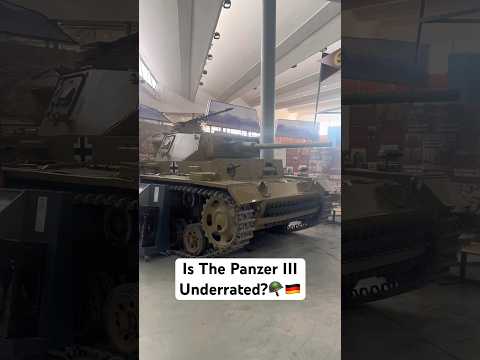
For months, the Panzer III had dominated early encounters, its balanced armor and firepower a deadly combination. Crews praised its reliability, and commanders relied on its speed. But the tide was turning. Newer enemy tanks, with thicker armor and larger guns, began to appear on the horizon. The Panzer III’s reign was slipping.
Yet, even as it faced obsolescence, the Panzer III was far from done. Its chassis became the foundation for later designs, and its lessons in mobility and crew efficiency echoed in future German armor. It was a tank that had punched above its weight, and its legacy was just beginning.
As the sun dipped below the horizon, the crew of the Panzer III knew they were part of something bigger. The tank had done its job, and now it was up to others to carry the torch. But for now, they had a mission to complete—and the Panzer III would see them through.
The radio crackled with static, then a voice cut through the noise. “Enemy armor, twelve o’clock. Two kilometers and closing.” The commander’s jaw tightened. He knew what that meant—the Soviet T-34s had arrived.
He swung the optics toward the horizon. There they were, angular silhouettes crawling across the steppe, their sloped armor gleaming under the fading light. The Panzer III’s 50-mm gun had torn through lighter tanks with ease, but these were different beasts entirely.
“Load armor-piercing,” he ordered, his voice steady despite the knot in his stomach. The loader slammed the shell home. The gunner adjusted the elevation, hands moving with practiced precision.
The first shot rang out. The shell struck the lead T-34’s turret and ricocheted off into the sky. Nothing. Not even a dent. The commander cursed under his breath. The 50-mm gun simply wasn’t enough anymore.
But the crew didn’t panic. They had trained for this—not for invincibility, but for survival. “Driver, hard left! Get us behind that ridge!” The Panzer III lurched, its engine roaring as it kicked up a cloud of dust and grass.
The T-34s fired, their 76-mm shells screaming past. One clipped the Panzer III’s side armor, sending a shudder through the hull. The crew held on, teeth clenched, as the driver threaded the tank through a narrow gap between two low hills.
Out of sight, the commander exhaled. They couldn’t win a straight fight, but they could still fight smart. “Radio the platoon. Tell them to flank wide and hit the infantry behind the armor. We draw the T-34s, they break the line.”
The Panzer III wasn’t the strongest tank on the field anymore. But its crew knew its strengths—speed, coordination, and the element of surprise. As the engine idled, the commander patted the turret wall. “You’ve still got a few tricks, old girl.”
Then the radio crackled again. This time, it was the platoon leader. “We’re in position. On your signal.” The commander grinned, a cold, sharp expression. He raised his hand, fingers spread. The gunner tensed. The driver gripped the controls.
And then, with a roar, the Panzer III burst from cover—not to meet the T-34s head-on, but to dance around them, buying time for the rest of the company to strike where it hurt most.
The steppe blurred past the vision slits as the Panzer III swung wide, its tracks biting into the dry earth. The commander counted the seconds, watching the T-34s pivot to track them. Their turrets were slow—slower than ours. That was the gap. That was the opening.
“Gunner, target the trailing tank—tracks only, don’t waste rounds on the hull!” The 50-mm cracked once, twice. The first shell threw up dirt. The second sheared through a drive sprocket, and the T-34 slewed sideways, blocking its comrade’s line of fire.
The commander allowed himself half a breath. “Now! Break right and get behind them!” The driver slammed the throttle, and the Panzer III lunged across the open ground, engine screaming, exhaust trailing like a torn banner.
Over the radio came the platoon leader’s voice, tight with urgency. “Infantry’s dug in behind the armor—machine guns on the ridge. We’re moving. Keep those T-34s looking at you.”
That was the bargain they’d struck: the Panzer IIIs would play bait, and the rest of the company would tear the soft underbelly out of the Soviet advance. It was not a glorious role. It was a necessary one.
The second T-34 finally got its turret around. The commander saw the muzzle flash before he heard the report. “Brace!” The shell hammered the front plate, and the whole hull rang like a struck bell. The driver cried out—not in pain, but in fury, wrestling the controls as the tank skidded.
“Still running!” the driver shouted. “But that was close—too close!” The commander tasted copper and realized he’d bitten his tongue. He spat, wiped his mouth, and forced his voice level. “Then let’s not give them a second shot.”
He keyed the radio. “Platoon, we’ve got two T-34s fixated on us. Status on the infantry?” A pause. Static. Then: “First squad is through the wire. Second is right behind. Give us ninety seconds.”
Ninety seconds. An eternity.
The Panzer III darted between two shallow depressions, using the terrain the way a boxer uses ropes—never taking a clean hit, always slipping away. The gunner kept up a steady, disciplined fire, aiming for vision blocks, periscopes, anything that might blind the hunters.
Then the lead T-34 stopped dead. Its turret hatch popped open, and a figure scrambled out, smoke pouring from the vents. “Hit! We got one!” the gunner yelled, disbelief cracking his composure.
But the commander wasn’t celebrating. He was watching the ridge behind the enemy line, where tiny figures were already breaking cover, falling back in disorder. The infantry had done their work. The T-34s, suddenly unsupported, began to reverse, their engines whining as they withdrew.
The commander lowered his hand from the trigger intercom and let out a long, slow breath. “Cease fire. Let them go.” The gunner started to protest, then thought better of it. The Panzer III idled in the dust, scarred and shuddering, but still whole.
He patted the turret wall again, softer this time. “Not bad for an old girl past her prime.” Then he keyed the radio to report, already wondering what the next horizon would bring.
The commander’s report crackled over the battalion net, his voice flat but steady. “One T-34 destroyed, one damaged. Infantry objective secured. Panzer III combat effective.” A pause, then the battalion commander’s reply: “Good work. Fall back to the rally point. We’ll need every runner we can get.”
As the Panzer III rumbled rearward, the crew exchanged glances—no cheers, just the quiet nod of men who had stared down a bigger, deadlier machine and lived. The driver wiped sweat from his brow. The gunner flexed his cramped fingers. They had done the impossible with a tank that was supposed to be obsolete.
But the commander knew the truth. The Panzer III’s days on the front line were numbered. The T-34 had shown them the future, and it was armored with sloped steel and a gun that could punch through anything they had. “She’s a good tank,” he murmured to himself, “but she’s not the future.”
Yet even as they retreated, the lessons of the Panzer III were already being written into the next generation. Its chassis would become the StuG III, a tank destroyer that would claim thousands of kills. Its ergonomic turret and three-man crew layout would influence the Tiger and Panther. The Panzer III was never meant to be the hero—it was the teacher.
Back at the rally point, the crew dismounted, patting the dusty hull like an old horse. The commander lit a cigarette, his hands finally trembling. He looked at the tank—its armor dented, its paint scarred, its gun still warm. “You did good, old girl,” he whispered. “Better than they’ll ever know.”
And as the sun set over the steppe, the Panzer III sat silent, its engine ticking as it cooled. It had fought its last great battle, but its legacy would roll on—in the shadows of newer, deadlier machines that owed everything to its design. The workhorse had done its job. Now it was time for the war to change.
What do you think—was the Panzer III truly underrated, or just a stepping stone to greater German tanks? Share your thoughts in the comments below.
Report this article
Select a reason for reporting:






