They once ruled the airwaves, their faces plastered on bedroom walls, their voices the soundtrack to our lives. Now, the spotlight has dimmed, but the legends remain. In this exclusive look, we revisit the giants of music—the ones who sold out stadiums, smashed guitars, and defined eras—to see how time has treated them. Some have gracefully aged, while others battle health scares and personal demons. But one thing is certain: their music still echoes.
From Phil Collins to Stevie Nicks, from Roger Waters to Joan Jett, these artists have lived lives of excess, triumph, and tragedy. As we pull back the curtain on their current realities, you’ll be surprised by who’s still rocking and who’s quietly retreated. But be warned: some transformations are shocking, and some stories will break your heart.
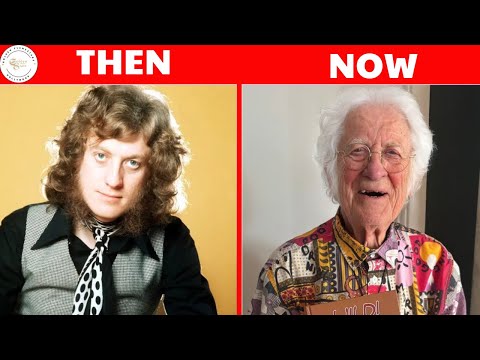
Take Phil Collins, for instance. The man who gave us ‘In the Air Tonight’ now lives a life of quiet seclusion, his health too fragile for the stage. At 74, he’s a far cry from the drum-thundering showman of the 80s. Yet his music outlives every chart and tour. Similarly, Queen’s Roger Taylor and Brian May have traded relentless touring for selective appearances, their legendary energy now channeled into projects that honor their legacy.
But not all have stepped back. Billy Idol, at 69, still storms festival stages with the same sneer and rebel yell. And Stevie Nicks, the enchanting voice of Fleetwood Mac, continues to tour at 77, proving that magic and rock can coexist forever. However, the road hasn’t been easy for everyone. Alice Cooper, the godfather of shock rock, now battles hearing loss after decades of loud performances. And Ian Anderson of Jethro Tull fights chronic obstructive pulmonary disease, making each performance a physical feat.
Some stories are more poignant. Steve Perry, the soaring voice of Journey, rarely performs live, choosing a private life away from the touring grind. And Brian Wilson, the genius behind the Beach Boys’ harmonies, lives under conservatorship due to dementia. Yet even in frailty, his legacy of sound innovation continues to inspire. These artists remind us that true greatness outlives youth, charts, and fame. But their journeys are far from over—some are still writing, recording, and fighting. As we delve deeper, you’ll discover how these icons adapt, endure, and keep their fire alive.
Stay tuned as we explore the dramatic transformations, the untold health battles, and the enduring passions of the legends who shaped our world. Which music legend’s story will surprise you the most?
While some legends fade quietly, others refuse to dim. Dolly Parton, at 79, still releases albums, writes novels, and funds medical research—her rhinestone sparkle undiminished. She jokes that she’d rather ‘wear out than rust out,’ and her schedule proves it. From her theme park to her charity book program, she’s built an empire on relentless optimism.
Then there’s Mick Jagger. At 82, the Rolling Stones frontman still struts across stadium stages with the swagger of a man half his age. His secret? A strict fitness regimen and a refusal to acknowledge the word ‘retirement.’ Keith Richards, 81, remains the band’s weathered soul, his guitar riffs as gritty as ever. Together, they’ve outlasted nearly every peer—and some say they’ll outlast us all.
Paul McCartney, 83, continues to sell out arenas, his voice slightly rougher but his charm intact. He’s released new music, curated archival projects, and even headlined Glastonbury in his 80s. For McCartney, performing isn’t a job—it’s a lifeline. He once said, ‘I’ll keep going until I drop.’ And so far, he hasn’t.
But not everyone embraces the spotlight. Grace Slick, 86, retired from music decades ago and now paints in her California home. She’s turned down lucrative reunion offers, preferring canvas to concert halls. ‘I did my time,’ she says. ‘Now I do what I love.’ Her psychedelic art sells for thousands, and she remains fiercely outspoken on politics and animal rights.
Similarly, Peter Gabriel, 75, has become a reluctant elder statesman. He releases music on his own schedule, often years apart, and devotes himself to human rights causes. His latest tour was a rare event—fans flew from around the world. ‘I’m not chasing the charts anymore,’ he admitted. ‘I’m chasing ideas.’
Then there’s Bob Geldof, 74, who traded punk stages for global activism. The Boomtown Rats frontman and Live Aid architect still speaks out on poverty and climate change, his sharp tongue undimmed. He tours occasionally, but his real stage is now the world’s political arena. ‘Rock and roll gave me a voice,’ he says. ‘I’m using it.’
And what of the quiet ones? Mark Knopfler, 76, hasn’t toured since 2019, preferring studio work and soundtracks. He lives a low-key life in London, writing songs that critics call ‘autumnal.’ Yet his Dire Straits catalog still sells millions. ‘I never wanted to be a celebrity,’ he once said. ‘I wanted to be a musician.’
As we move deeper into their stories, the pattern becomes clear: some fight time, some accept it, and some reinvent themselves entirely. But the fire—the raw, unquenchable love for music—never truly dies. It just changes shape.
Stay with us as we explore the most dramatic transformations yet—the health battles, the second acts, and the legends who refuse to go gently.
Consider Elton John, 78, who announced his farewell tour in 2018 and then spent five years proving he meant it—night after night, city after city, until the final curtain fell in Stockholm. Since then, he’s kept a lower profile, splitting his time between Atlanta, London, and his family. His sons, Zachary and Elijah, are his world now, and he’s spoken openly about wanting to be present for them in a way his own touring schedule never allowed.
Yet even in retirement, Elton can’t quite sit still. He’s continued to release new music, championed young artists, and lent his voice to AIDS charities that have defined his legacy as much as his songs. His health has had its scares—hip surgery, a bout with a serious infection—but he’s emerged each time with his humor intact. ‘I’ve had a good run,’ he told an interviewer. ‘Better than good. Extraordinary.’
Then there’s Rod Stewart, 80, who still struts and kicks footballs into the crowd like a man who missed the memo about aging. His voice has lost some of its raspy bite, but his showmanship hasn’t dimmed. He tours in shorter bursts now, careful to pace himself, and spends his off-hours with his large, sprawling family. Model trains, of all things, remain his great escape—his Los Angeles mansion houses one of the world’s most elaborate private railways.
And what of Cher, 79, who has somehow made reinvention look like a birthright? She’s dabbled in ABBA covers, fashion lines, and a biopic that reintroduced her to a new generation. Her voice, once a powerhouse, now carries a knowing weariness that suits her. She jokes about aging but never apologizes for it. ‘I’m not old,’ she says. ‘I’m just not young anymore. There’s a difference.’
Perhaps the most striking transformation belongs to David Gilmour, 79, who has spent the years since Pink Floyd’s final curtain cultivating a quiet, almost pastoral existence. He records in his floating studio on the River Thames, sails with his wife Polly, and releases music at his own unhurried pace. His guitar playing remains immaculate—every note a meditation. ‘I don’t miss the circus,’ he admitted. ‘I miss the music. But I can make music anywhere.’
His former bandmate Roger Waters, 82, remains a far more restless figure. Still staging elaborate, politically charged tours, Waters seems incapable of stepping back. His concerts are events—sprawling, divisive, unforgettable. Yet the years have brought a certain weariness, too. He speaks more softly now, though his convictions remain as sharp as ever. Controversy follows him like a shadow, but so does a devoted audience that refuses to abandon him.
And then there are the voices that time has treated most cruelly. Art Garfunkel, 83, whose angelic tenor once defined a generation, now speaks of his vocal cord damage with a quiet dignity. He can no longer sing the way he once did, but he hasn’t stopped performing entirely—he reads poetry, tells stories, and lets the audience fill in the melodies. ‘The voice is a gift,’ he said. ‘You don’t get to keep it forever. But the songs? They belong to everyone.’
His old partner Paul Simon, 84, has faced his own struggles with hearing loss. He’s retired from touring, but he still writes—fragments, ideas, verses that may never become songs. He walks in the woods near his Connecticut home, plays with his children, and accepts the silence that has crept into his life. ‘There’s a kind of peace in it,’ he admitted. ‘A different kind of listening.’
The pattern repeats itself across generations: the body falters, but the spirit adapts. Some rage against the fading light; others embrace it. And a few—the rare, stubborn few—simply refuse to acknowledge that the light is fading at all.
And then there are those who have left us entirely, their absence a reminder that the music outlives us all. We lost Tina Turner in 2023, her fire extinguished but her legacy eternal. David Bowie, Prince, Tom Petty, Aretha Franklin—gone, yet somehow still present every time a radio crackles to life. Their voices echo through speakers, through memories, through generations who never saw them live but feel them nonetheless.
For the survivors, the choices vary. Some tour relentlessly, chasing the roar of the crowd like a drug. Others retreat into silence, letting the songs speak for them. Ringo Starr, 85, still tours with his All-Starr Band, grinning that boyish grin, proving peace and love never ages. Willie Nelson, 92, remains a road warrior, his guitar Trigger as weathered as his voice, his braids now silver but his spirit unbroken.
Dion, 85, creates from home, his blues and spiritual songs a testament to faith and recovery. Frankie Valli, 91, still performs selectively, his falsetto a ghost of its former glory but his resilience undeniable. Each of these legends has made peace with time in their own way—some gracefully, some grudgingly, some with a guitar in hand and no intention of stopping.
What unites them isn’t youth or vitality. It’s the songs. The anthems that scored our first kisses, our heartbreaks, our road trips and revolutions. They gave us the soundtrack to our lives, and in return, we gave them immortality—not of the body, but of the spirit. The fire may dim, but the flame never dies.
So as the curtain falls on this journey through rock and roll’s golden ages, one truth remains: legends don’t fade. They just change key. Their faces may wrinkle, their voices may crack, but the music—the glorious, defiant, life-affirming music—plays on.
Which of these legends do you still listen to? Whose story moved you the most? And who do you hope never stops performing? Share your thoughts in the comments below—because the conversation, like the music, should never end.
Report this article
Select a reason for reporting:






