For seventy years, he kept silent. The memories were too heavy, the scars too deep. But now, at ninety years old, Alexander Fedorovich, a tank commander who survived the hell of Stalingrad, is ready to speak. What he reveals will shatter everything you thought you knew about the battle that turned the tide of World War II.
He watched the famous film Stalingrad and was outraged. “It’s not Stalingrad,” he says flatly. “I was a tank commander there for three months. What they showed is a disgrace.” The movie, he claims, is a distortion—a fabrication that ignores the truth of what really happened on the Volga River.
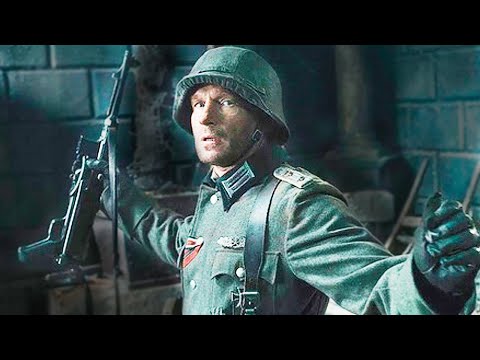
Alexander’s voice trembles with emotion as he recalls the reality. “Where is the enemy? Where are our troops? It’s all mixed up,” he says of the film’s chaotic battle scenes. But the real chaos was far worse—and far more heroic. He remembers the boys, some as young as fourteen, who acted as messengers, running through the bushes to report enemy movements. “They went with machine guns, grenades. That’s what kind of hell we had. None of this is shown in the movie.”
He speaks of the women—nurses, snipers, signalmen—who fought alongside the men. “In the 64th Army alone, there were 600 sniper girls,” he says. “They destroyed those who went in officer’s uniform. But in the film, they showed only two women—one positive, one negative. Why build the film on the negative? Our women were not like that.”
And then there’s the food. “We ate normally,” Alexander insists. “Every day, morning and evening, we got food from the cauldron. In the morning, 100 grams of vodka. I didn’t drink, but my friend from Siberia drank mine.” He shakes his head. “It’s a disgrace to our Red Army that they didn’t show the truth about how well we were organized.”
But the most painful part is the portrayal of leadership. “No one controlled anyone in the movie,” he says. “Everyone is walking around in quilted jackets doing something, but no commanders, no leadership is visible. That’s a lie.”
Alexander’s own story is one of courage and quick thinking. He recalls a moment when his crew supported an attack on a house. “I fired a shell through the window, and not only flame flew out but also dust. I processed all the windows.” Then, he saw a group of Germans running toward a house where his comrades were fighting. Without orders, he made a decision. “I fired a fragmentation shell into the group. They lay down. After a while, they got up again. I fired a second shell. No one else got up.”
He also tells of Alexander Matorin, a tank commander who captured a Tiger tank. “Matorin fired a fragmentation shell at the three fascists standing near the tank, then hit the armor-piercing on the roof of the Tiger’s turret. The projectile ricocheted, but the blow was so terrible that the mechanic and commander jumped out and were immediately shot.” Matorin’s tank later destroyed three enemy tanks in a burning vehicle before exploding, killing the entire crew. “They were 18, 20 years old,” Alexander says quietly. “A monument now stands at the place of their death.”
But the most emotional moment came when his company liberated a train full of Soviet girls being sent to the West. “About 300 girls were in the tightly packed cars,” he recalls. “One of them rushed to hug me and froze, not letting go. My hands were busy—grenades, pistol—and I’m thinking, what if someone throws a grenade? But I was confused.”
As Alexander’s story unfolds, it becomes clear that the truth of Stalingrad is far more complex and heroic than any film could capture. And he is just getting started.
He shifts in his chair, the old soldier’s eyes drifting to a point somewhere beyond the room. “You want to know about Prokhorovka?” he asks, and the name alone seems to change the air. “I commanded a platoon of light T-70 tanks. Two-seaters. Thin armor. A 45-millimeter cannon that could barely scratch a Tiger.” He pauses, letting the weight of that settle.
“We advanced in the third line, behind the T-34s of the 32nd Brigade. They crashed into the German formations and beat them with cannons. We followed a hundred, two hundred meters back.” His hands sketch the battlefield in the air. “The advance was slow. We kept stopping to repel counter-attacks. Then the German tanks began to break through to us.”
He describes the confusion of that day without flinching. “Our tanks and theirs got mixed up in the counter-battle. In front, on the right, on the left—tanks burning. Ours and theirs. You had to watch the target carefully, because if you missed, your shell would hit your own comrade.”
Then comes the detail that makes him almost smile. “I disguised my T-70 as a burning tank. We put smog bombs on the armor. When I fired, we threw a smoke grenade ahead of the tank.” He taps the armrest. “Thanks to that, on the eleventh of July, 1943, I destroyed three German vehicles and saved my own.”
But the victory came at a cost he still carries. “By evening, our battalion had fifteen tanks left out of thirty-nine. We tankers, with our limited experience, thought it was the fault of the senior commanders. We were depressed. We thought we had failed.”
His voice drops. “Then, over every radio network, General Rotmistrov spoke to us. He said: ‘Tankers, you have performed a real miracle. You stopped the German beast here.'” Alexander looks up. “It became easier for us. We began preparing for the next day with even more enthusiasm. During the night, trenches were dug for tanks, ammunition and fuel replenished. In the morning, we were ready to attack again.”
He leans forward now, and something in his expression sharpens. “But there is one thing I have never told anyone. Not the historians, not my own children.” The room falls silent. “It happened after the battle. When we were counting the dead.”
He stops. For a long moment, the only sound is the ticking of a clock somewhere in the house. “We were walking through the field,” he says at last. “The smell of burnt metal and fuel. Everywhere, bodies. German and ours, tangled together.” His jaw tightens. “And then I saw him.”
“A boy. No older than sixteen. He was wearing a German uniform, but it was too big for him—the sleeves hung past his hands.” Alexander’s voice is barely a whisper. “He was lying on his back, eyes open, staring at the sky. In his hand, he was clutching a photograph.”
He pauses, the memory clearly as vivid as the day it happened. “I bent down and took it from his fingers. It was a picture of a woman—his mother, I think. On the back, someone had written in German: ‘Come home soon, Hans.'” He looks up. “He was just a child. They sent a child to fight us.”
Alexander reaches for a glass of water, his hand unsteady. “That night, I couldn’t sleep. I kept thinking about that photograph. About my own sons, who were still small then. About what kind of world we were fighting to build.” He sets the glass down. “The next morning, I made a decision. I would not hate the enemy. I would fight them, yes. Kill them if I had to. But I would not hate them.”
His eyes meet yours, and there is a fierce clarity in them. “The film showed a German who fell in love with a Russian girl and protected her. They wanted us to feel sympathy for him. But that’s not the truth. The truth is, I felt sympathy for the boy in the field—not because he was German, but because he was a child. And I killed him.”
“You see,” he continues, “the real horror of war is not that the enemy is evil. It’s that the enemy is human. Just like you. And when you understand that, you understand why we must never let it happen again.”
He shifts in his chair, the weight of the confession lifting slightly. “Now you know. That’s why I never told anyone. Not because I was ashamed of what I did—I was defending my country. But because I was ashamed of what I felt. Pity. For a German soldier.”
He shakes his head slowly. “But I’m telling you now, because the film they made—it’s not about the truth. It’s about making us look weak, divided, confused. And that’s a lie. We were not confused. We knew exactly what we were fighting for.”
Alexander leans back, exhausted but resolute. “And what we were fighting for was not just our country. It was the future. The chance for boys like that German boy—and boys like my own—to grow up without war. That’s what Stalingrad was about. And no film will ever take that away from us.”
He looks at the camera one last time, his eyes clear despite the years. “So when you watch these films, remember the truth. Remember the boys who ran messages through the bushes. Remember the girls who sniped from the trenches. Remember the tank crews who burned so others could live.” His voice grows stronger, almost defiant. “Remember that we won. Not because we were weak, but because we were strong. Not because we were divided, but because we stood together.”
Alexander Fedorovich falls silent, his hands resting on his knees. The interview is over. But the story he has told—of courage, of loss, of a boy in a field with a photograph in his hand—will not soon be forgotten.
“The truth of Stalingrad is not in the rubble they showed in the film,” he says as a final thought. “It’s in the hearts of those who survived. And in the memory of those who didn’t. That is the real Stalingrad. That is what we must never forget.”
He rises slowly, an old soldier with a lifetime of memories, and walks to the window. Outside, the sun is setting over a quiet street. Somewhere in the distance, a child is laughing. “You see that?” he asks. “That is what we fought for. That is our victory.”
And with that, he turns and disappears into the shadows of his home, leaving behind a truth that no film could ever capture—and a question that every generation must answer for itself.
What do you think? Should films like this be judged by their historical accuracy, or do they serve a different purpose? Share your thoughts in the comments below.
Report this article
Select a reason for reporting:






