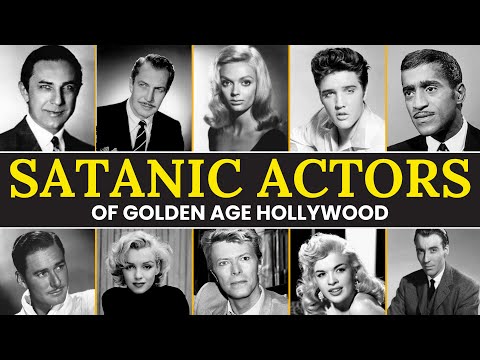
In the glittering golden age of Hollywood, where spotlights chased away shadows and fame seemed the ultimate prize, a whisper of something far darker slithered beneath the surface. Behind the silver screen’s shimmering facade, legends were born not just of talent and beauty, but of whispered pacts, occult rituals, and a chilling fascination with the devil himself. Some of the most beloved stars of the era—icons whose names still echo through history—were rumored to have dabbled in the black arts, their meteoric rises and tragic falls fueling speculation of unholy bargains.
From the seductive allure of Jayne Mansfield to the rebellious spirit of James Dean, from the King of Rock ‘n’ Roll to the queen of scream, these were not just performers; they were said to be seekers of forbidden knowledge, drawn to the edge of darkness in pursuit of ultimate stardom. Some claimed they paid a terrible price. Did they truly embrace Satan, or were they merely caught in the era’s obsession with the macabre? The truth remains shrouded in mystery, but the stories persist—each one a tantalizing glimpse into a world where fame and fear intertwine.
Take Jayne Mansfield, the blonde bombshell who seemed to have it all. In the mid-1960s, she became entangled with Anton LaVey, the enigmatic founder of the Church of Satan. Rumors swirled that their relationship went beyond friendship, with some hinting she served as a priestess in his inner circle. Photos emerged of Mansfield draped in a black cloak beside LaVey, an inverted pentagram often looming in the background. Whispers of animal blood, incantations, and curses followed her every move. Even LaVey himself was said to have placed a curse on her lawyer and lover, Sam Brody, after Brody mocked his beliefs. Shortly after, in 1967, Mansfield and Brody were killed in a horrific car accident—a coincidence, skeptics say, but others believe it was the execution of a dark pact that granted her fame and fortune at a steep price.
Then there was Elvis Presley, the King himself. Raised in a deeply religious household, he sang gospel in church as a boy, yet rumors persist that he harbored a secret fascination with the occult. Some say his quest for musical innovation led him beyond traditional faith into the realm of mystical teachings. He allegedly amassed a personal library filled with esoteric books on numerology, hermetic philosophy, and even the works of Aleister Crowley—often called “the wickedest man in the world.” According to some accounts, Elvis believed he was spiritually guided by the spirit of his stillborn twin, Jesse Garon, heightening whispers of supernatural influence. A few close to him claimed he practiced ritualistic prayers to protect his voice and ensure success. When he died in 1977, conspiracy theories erupted, suggesting his death was not an accident but the ultimate price for a deal with dark forces.
And who could forget James Dean, the rebel without a cause? His passion for speed and danger fueled speculation that something darker lurked beneath his cool exterior. The most famous element of this legend is his Porsche 550 Spyder, ominously nicknamed “Little Bastard.” Rumors swirled that he was warned the car had a sinister aura, but he ignored it. After his fatal crash in 1955, the wreckage was sold for parts, yet accidents and injuries plagued everyone who handled it. Some claim Dean’s dabbling in séances or Ouija boards opened a gateway to malevolent forces, sealing his tragic fate. His death at 24 only fueled stories of a pact with the devil for instant fame—or that he was targeted by dark entities he inadvertently provoked.
These are just a few of the stars whose names became entangled with tales of Satanism and the supernatural. Whether truth or urban legend, their stories continue to captivate, reminding us that in Hollywood’s golden age, the line between stardom and the sinister was often blurred.
Errol Flynn, the swashbuckling hero of the silver screen, was another whose off-screen life was as dramatic as any script. Handsome, charming, and utterly irresistible, he was also a notorious hell-raiser whose hedonistic lifestyle spawned countless rumors—including whispers of involvement in occult circles. His private yacht parties were legendary, featuring a mix of Hollywood starlets, eccentric artists, and reputed practitioners of the arcane arts. Black candles, strange symbols, and enigmatic rituals were said to sometimes form part of the midnight revelries, though few dared speak openly of it.
Stories emerged suggesting Flynn was fascinated by forbidden knowledge. Some believed he possessed an extensive private library covering everything from alchemy to ceremonial magic, drawn to secret societies that promised ultimate thrills and the harnessing of otherworldly powers. Flynn’s rebellion against social norms fueled the belief that he was dabbling in dark forces as part of his defiance against conventional Hollywood and the moral codes of his era. Even his death in 1959 at age fifty was embroiled in mysterious rumors, with some speculating he paid the ultimate price for his indulgence in sinister energies.
Sammy Davis Jr., the multi-talented entertainer who dazzled audiences as a member of the Rat Pack alongside Frank Sinatra and Dean Martin, was also said to have delved into Hollywood’s occult underbelly. During the late 1960s, he allegedly gravitated toward Anton LaVey’s Church of Satan, with some accounts claiming he briefly became a member. Friends dismissed it as a passing phase, pointing to Davis’s love of exploration and theatricality, but others close to him whispered of a darker, more profound experience that shook the normally composed artist.
Tales circulated of midnight ceremonies in secret locations, complete with robed figures and cryptic symbols. The stories grew more controversial when Davis suddenly distanced himself from LaVey and the Church of Satan, as if he had witnessed something that forced him to retreat. Whether he toyed with dark forces or it was merely a bold diversion in an era of experimentation and rebellion, the mystery endures—adding another fascinating layer to the legend of one of Hollywood’s most magnetic performers.
Marilyn Monroe, Hollywood’s ultimate screen goddess, remains the most haunting example. Some theorists claim she was selected—even groomed—by an elite group practicing dark rituals, granting her fame in exchange for compliance. Her ties to powerful figures, including President John F. Kennedy, only deepened suspicions of covert manipulation. When she was found dead in 1962 from a barbiturate overdose, the official ruling was probable suicide, yet the suddenness and secrecy surrounding the investigation fueled theories of a sinister cover-up.
Whispers of occult ceremonies, coded symbols in her final photos, and missing diary pages were cited as evidence of Hollywood’s darkest secrets. Some claim Monroe tried to break free from these entanglements—or threatened to expose them—sealing her fate. Whether mere speculation or a chilling possibility, her story endures as a captivating chapter in the world of conspiracies and magic.
Vincent Price, Barbara Steele, Christopher Lee, Bela Lugosi, and David Bowie all carried similar whispers—each drawn to the arcane, each leaving behind a legacy wrapped in gothic mystery. From Price’s alleged locker of occult curios to Bowie’s white witch cleansing his pool, the line between performance and belief blurred. Were these icons true devotees of the darkness, or merely performers captivated by its drama? The question lingers, unanswered.
What do you think—did these stars truly make deals with the devil, or were they simply brilliant storytellers caught in the spotlight of rumor? Share your thoughts below.
Report this article
Select a reason for reporting:






